NZ economic data impacts kiwi

The kiwi pair is showing mid-trend on today early morning after publication of the New Zealand economic data. The pair has rose to the highest level since August 4 this year, in doing so, the kiwi pair pays a little heed to the domestic data and broad US dollar weakness as the COVID-19 fears renew. The country’s export prices rose again in the second quarter, from -0.8% to 8.3%. This is a stronger performance than the average estimate of 3.0%. At the same time, exports declined by 2.9% to 2.9% in the previous quarter. The same trend happened on the import side. The country’s import prices returned 4.8% as prices of most commodities rose worldwide. As a result, total trading terms rose from 0.1% to 3.3%, well above the average estimate of 2.5%. These numbers show that New Zealand’s economy did relatively well. Besides, data published in July showed that the country’s unemployment rate declined substantially during the quarter.

It is against this backdrop that the Reserve Bank of New Zealand (RBNZ) turned substantially hawkish. It ended its massive bond-buying program and hinted at higher interest rates. However, recently, the country’s outlook has changed as the number of Covid-19 cases has surged. The country has continued to report a gradual increase of cases even as the government implements its lockdown. Therefore, there is a possibility that the RBNZ will maintain a wait-and-see attitude in the next few weeks.

After overcoming a previous drop in corona virus numbers, market players fear another blockbuster number to push the national number to over 700. However, New Zealand Prime Minister Jacinda Ardern is playing down the fear that New Zealand may not be able to follow New South Wales and Victoria as per the NZ Herald, remove Covid-19. In the same vein, the World Health Organization (WHO) is monitoring another strain of the virus, namely Mu, which is vaccine resistant and presents serious challenges.

New Zealand’s Terms of Trade Index for the second quarter (Q2) jumps to a fresh high since the quarter ended on May 2017 while rising 3.3% versus 2.5% expected and 0.1% prior.  It is noteworthy that the downturn signals of the US Employment Report stimulated NZD / USD prices by controlling Fed tapping chats the previous day. On Wednesday, the US dollar dropped after the ADP National Employment Report showed private payrolls rose by 374,000 in August, up from 326,000 in July but well short of the 613,000 forecasts.  The next major move for the NZD / USD will be the latest employment numbers from the US. On Thursday, data shows that the private sector added 374k jobs last month. The figures increase the odds of the Reserve Bank of New Zealand’s (RBNZ) rate hike in 2021 and should have favored the NZD/USD prices to extend the previous four-day rise. However, the virus-led challenges at home probe the bulls. Numbers of official U.S. non-farm payrolls will be released Friday. 

NZD/USD 4 Hour Chart:
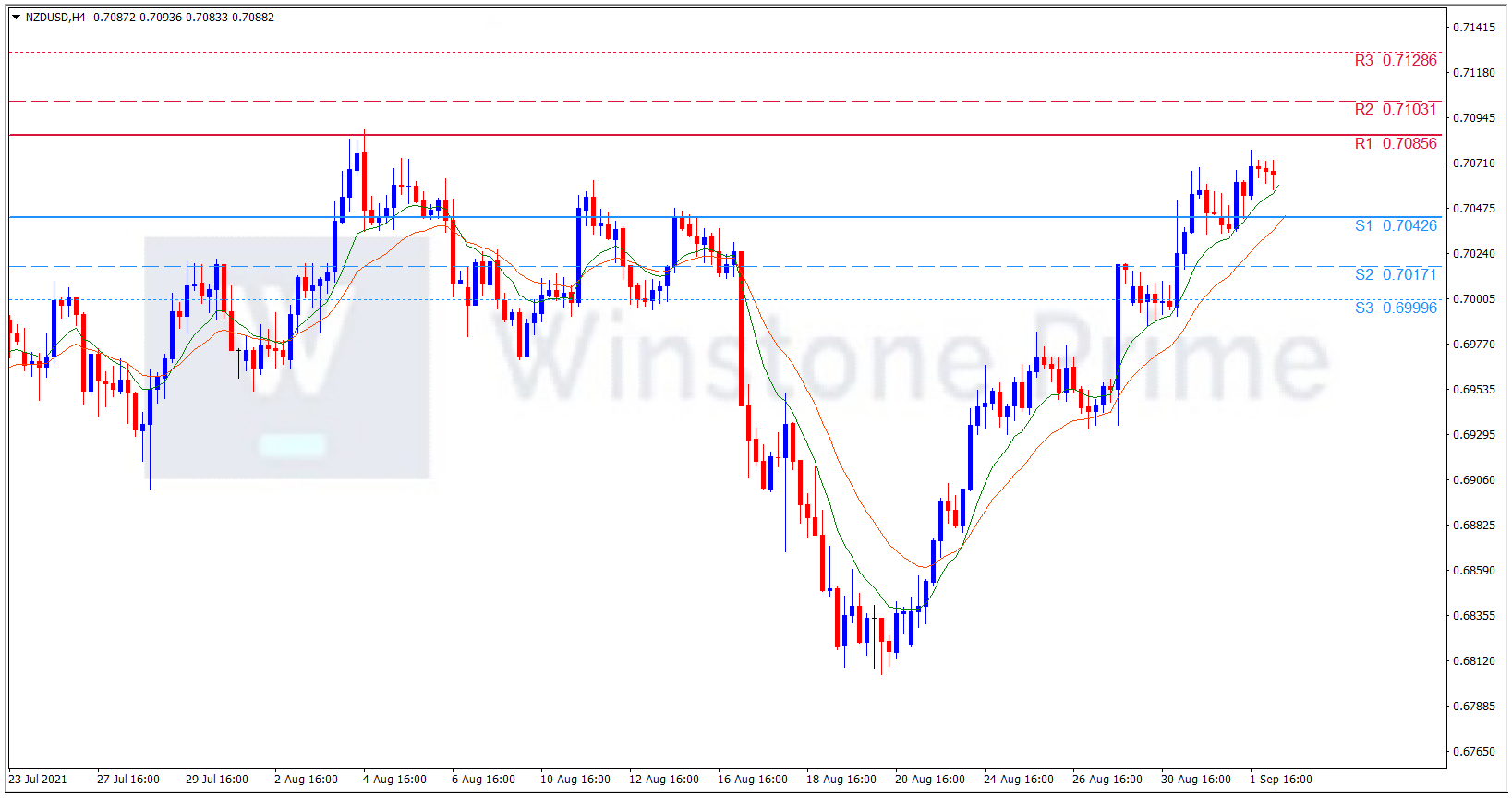
Support: 0.7043 (S1), 0.7017 (S2), 0.7000 (S3).

Resistance: 0.7086 (R1), 0.7103 (R2), 0.7129 (R3).

Amidst this above catalysts New-Zealand showing strong economic data but virus woes worries the bullish moment. We expect a mid-trend for NZD/USD.


How Non-Farm Payroll impacts the Fx Market?

The most-anticipated economic news reports in the Forex market are the Non-Farm Payrolls report. It is normally released once on the first Friday of every month and is an in-depth look at employment trends in the U.S. by U.S. Bureau of Labor Statistics. Understanding this data release can help to set up forex trades and can take advantage of unexpected changes in employment.

This article will explain the role of NFP’s play in economics and how to apply NFP release data and how it impacts the FX market in detailed.

What are NFP?

The NFP report provides the relevant employment statistics from the previous month. For example, numbers that are released on the first Friday in February will include data for the month of January and it is released on every month on first Friday. The report contains key information on the Unemployment Rate, Average Hourly Earnings, and the Participation Rate.

NFP is the main driver of market movement and is often times the single most-watched economic event. Not all economic news events are created equal. Some events produce a lot of hysterical and knee-jerk reactions, while others do not cause corrosion on the radar. So much attention is paid to the NFP report that pundits from across the financial blogosphere attempt to predict its eventuality and impact across a variety of financial instruments.

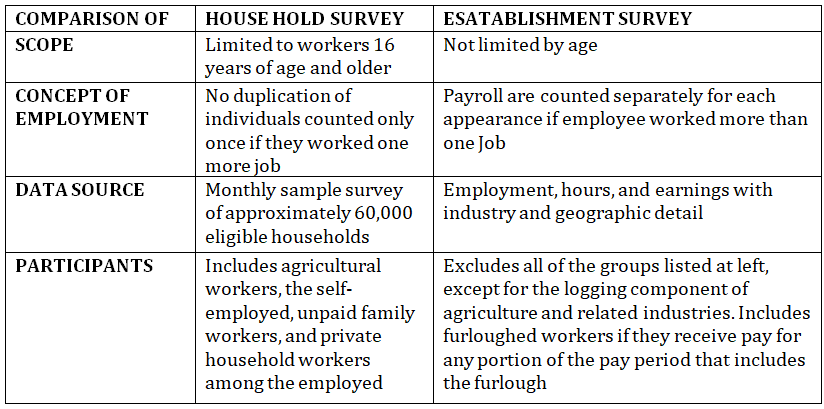
On every month each NFP report looks back the last month NFP data by taking into consideration of two surveys. The Bureau of Labor Statistics (BLS) has two monthly surveys which is the Current Population Survey (CPS; household survey) and the Current Employment Statistics survey (CES; establishment survey).

1. The Household Survey– The Current Population Survey (Household Survey) is a monthly survey of households conducted by the Bureau of Labor Statistics. It provides a comprehensive body of data on the labor force, employment, unemployment, persons not in the labor force, hours of work, earnings, and other demographic and labor force characteristics.

2. The Establishment Survey– This provides the headline number of new non-farm payroll jobs to the economy. It provides the number of jobs added by industry, hours worked, and average hourly earnings of employees on nonfarm payrolls; BLS collects these data each month from the payroll records of a sample of nonagricultural business establishments. The active sample includes approximately one-third of all nonfarm payroll jobs.

How both surveys are differentiated from each others.

For both surveys, the data for a given month relate to a particular week or pay period. In the household survey, the reference period is generally the calendar week that contains the 12th day of the month. In the establishment survey, the reference period is the pay period including the 12th, which may or may not correspond directly to the calendar week.

How traders understand NFP?

Like other economic indicators, the difference between actual non-farm data and the statistics expected by economists will largely determine the overall market impact. Economists and politicians assess the US economy by NFP report and unemployment data. The Forex traders particularly watch some areas of the report are.

  • Unemployment data: This is a very closely watched figure because it has the greatest influence on the judgment of the Federal Reserve on economic health.
  • Sector growth: The report shows which sectors are expanding by adding jobs and which are contracting, contributing to unemployment. This can give an idea of which stocks, indices and ETFs could rise and fall in the future.
  • Hourly earnings: Wage increases and decreases are another part of the attention to get. As wage growth shows economic health, while wage decreases reduce prosperity and reduce consumer spending. This will affect the revenue of the company.
  • Revisions of the previous NFP report: Any changes to previous growth expectations can create market movements as traders re-assess their current positions.


NFP Impacts on Forex markets

If there are any major surprises or disappointments away from expectations, the Forex market will react to the new reality by adjusting prices and exchange rates. NFP report has a substantial impact on forex markets because it’s used by traders as a leading indicator of economic growth, alongside inflation, gross domestic product (GDP) and the monthly payroll report.

If the NFP shows a healthy US economy – with high employment, job growth and wage increases – it’s likely to attract investment from around the world. This could drive up the price of the US dollar and impact major currency pairs.

However, if the NFP shows an unhealthy US economy – with high unemployment, low job growth and wage stagnation – then investment rates will fall. This would likely cause the US dollar to fall in comparison to other currencies.

Keep an eye on pairs such as GBP/USD, EUR/USD and USD/JPY, as well as the US dollar index.

How to trade non-farm payrolls and NFP news releases

  • Open a trading account with Winstone Prime today
  • Research economist’s predictions for NFP numbers
  • Choose which currency pair to trade and enter your trade
  • Watch the Market and news releases to trade
  • Adjust and close positions as necessary


Conclusion

While concluding it there is no doubt that NFP is an important monthly data point and one of the hardest to handicap. Before the NFP release, economists and analysts will attempt to predict what the headline NFP number will be, and eventually arrive at a consensus estimate. Once the real figures are released, the market response will depend on how close the estimate was to the actual figure – as any surprises will cause traders to rush in and out of positions.

The volatility involved means it can deliver a large short-term profit, but hand-in-hand with that also goes the risk of greater short-term losses, so placing risk-management orders can be very useful in this instance. If you’ve never traded the non-farm payrolls, you could start by trading in small amounts, with the appropriate stop-losses in place to protect your position.

Yen seems supressed by Covid

Global markets are worried about the political woes in Tokyo as viral concerns resurfaced in early September and tapping chats are increased among this. Now the market’s wait for key US data and the hope that major central banks will have more time before easing monetary policies. Elsewhere, Japanese Prime Minister Yoshide Suga told reporters that he had no current plans to dismantle the lower house of the country due to the severity of the corona virus situation. However, the national leader showed readiness for a national election.

Local media reported this week that he wanted to dissolve the lower house of parliament in mid-September after next week’s cabinet and party administration reshuffle. According to reports, the premier is considering holding a general election on October 17. Suga’s denial of these statements came after several days of tense negotiations and the intrigues of the infamous prime minister involving the most powerful politicians in Suga and the ruling camp to staying the job. “We can’t dissolve the lower house in this current situation,” said Suga, speaking of the severity of the coronavirus pandemic. Suga’s support ratings are very low because he failed to invest in delivering the Olympics amid a new wave of corona virus infections. The government has declared a fourth state of emergency in most parts of Japan.

As per reuter report “The Bank of Japan must avoid reducing stimulus even if rising raw material costs push up inflation”, deputy governor Masazumi Wakatabe said, reinforcing expectations it will fall behind major counterparts in dialing back crisis-mode policies accompanied by strong domestic demand, cost-push inflation alone will not generate a sustained pick-up in prices toward the central bank’s 2% target. Japan’s economy emerged from last year’s pandemic-induced slump helped by robust global demand. But resurgence in infections and supply chain disruptions have dashed hopes among policymakers for a strong rebound in July-September growth.

Wakatabe said in a speech that “Even if the Fed were to shift to a tightening phase, that alone won’t prod the BOJ to adjust monetary policy,” he said. “It’s crucial to avoid tightening easy monetary conditions prematurely by looking just at near-term moves in the core consumer price index”. Japan’s core consumer prices fell 0.2% in July, slowing to a three – month low on rising food.

The bad news is that Japan’s Kanagawa prefecture has found another bottle of Moderna Inc.’s MRNA.O Covid-19 vaccine, which is suspected to contain foreign substance and has stopped the rest. On Tuesday report, tests on foreign materials before using the vaccine revealed the presence of several black particles in a vial. Japan stopped using 1.63 million doses of modern shots last week and about 3,790 people have already received shots from it. Lots more Modern scenes were suspended in two regions of Japan this week. Mixed catalysts are confusing traders, but with slight optimism printing, US ATP data and ISM production BMI for the month of August will be close to the market ahead of Friday’s job report.

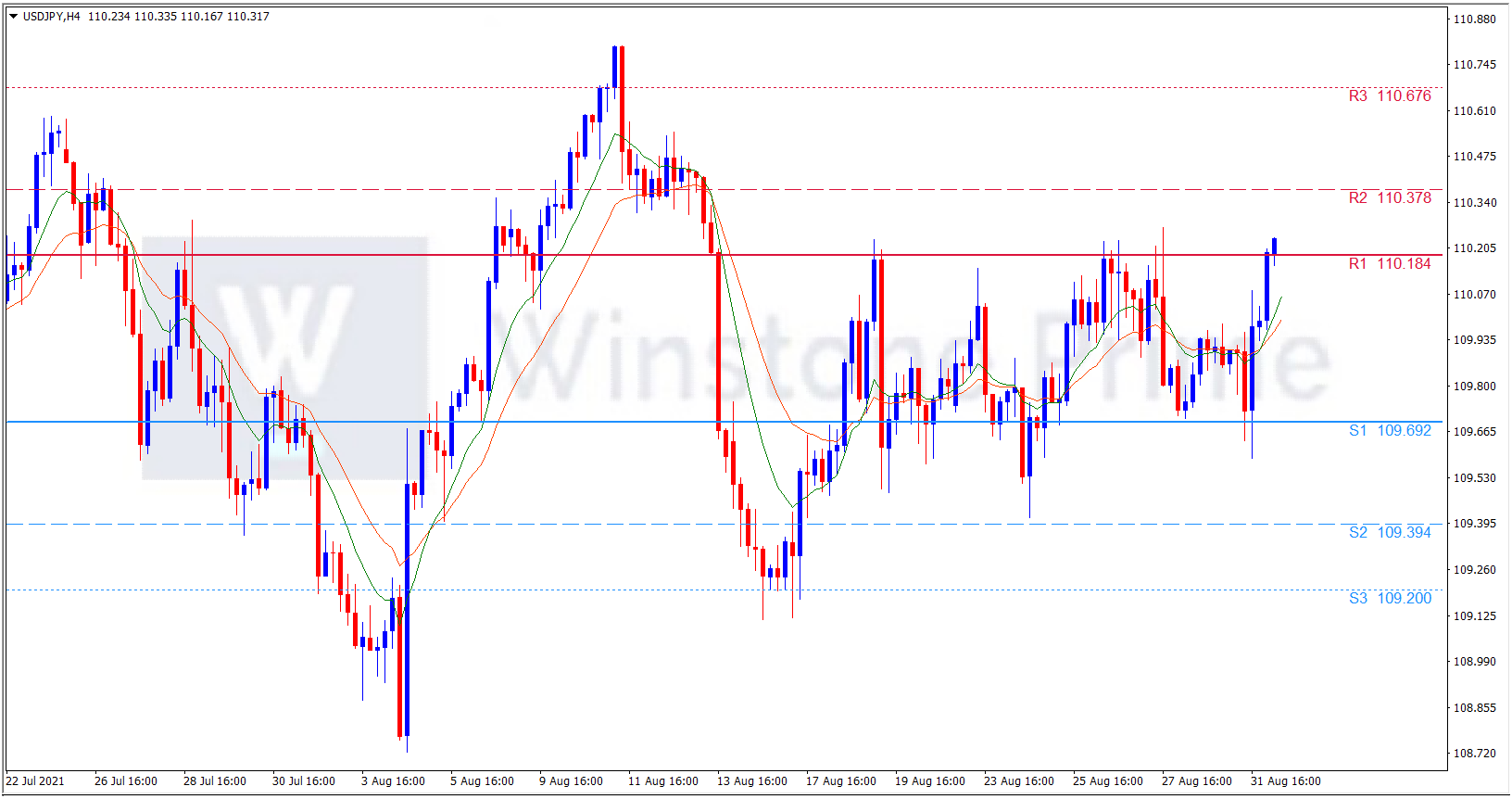
USD/JPY 4 Hour Chart:

Support: 109.69 (S1), 109.39 (S2), 109.20 (S3).

Resistance: 110.18 (R1), 110.38 (R2), 110.68 (R3).

Amidst this above catalysts the traders seems confused on yen. We expect a bullish trend for USD/JPY.

Expectation of CPI reading favors Euro

Euro pair is showing a bullish trend ahead on European session. The Currency pair is showing uptrend due to the losses in greenback and strong preliminary reading of Eurozone Consumer Price Index. Comments from the European Central Bank (ECB) policymakers, suggesting an extension of easy money policies, offer an extra boost to the EUR/USD upside.

European Union countries voted to subject the U.S. to fresh restrictions on nonessential travel amid a surge in new coronavirus cases, dealing a blow to the tourism industry. A qualified majority of ambassadors voted to reintroduce the curbs, which had been lifted in June, according to an EU statement on Monday. Airline stocks dropped in the U.S., likely in anticipation of the EU move. A Standard & Poor’s index of the country’s nine largest carriers was down 3% at 12:25 p.m. in New York.

On the other hand US dollar index has been drops among a bit of consolidation in virus figures. Weighing in on the greenback gauge and supporting the Euro pair is on bull and the Treasury yields are low. While an easy Eurozone CPI print should provide an additional reason to the EUR/USD bulls, second-tier US Chicago PMI, Consumer Confidence and housing figures may direct follow-on moves. Though, nothing will be more important than the US jobs report for August, which will justify Fed Chair Jerome Powell’s cautious optimism and determine the future of Fed’s tapering. However, the market’s anxiety ahead of today’s Eurozone CPI and Friday’s US Nonfarm Payrolls (NFP) seems to challenge the pair buyers. It’s worth noting that geopolitical fears from Afghanistan and China also probe the EUR pair is on upside.

A study released on Tuesday showed that Alphabet Inc’s (AAPL.O) Google unit, Facebook Inc (FB.O) and Microsoft Corp (MSFT.O) are the three biggest lobbying spenders in Europe in a battle against tough new laws aimed at curbing U.S. tech giants’ powers. Such efforts should be a wake-up call to EU policymakers to further beef up the draft laws and lobbying rules, the study by campaign groups Corporate Europe Observatory and LobbyControl warned. The tech sector outspends even the pharma, fossil fuels, finance and chemicals sectors, which used to dominate lobbying, the report said. “The rising lobby firepower of big tech and the digital industry as a whole mirrors the sectors’ huge and growing role in society,” the study said.

The study found that 612 companies, groups and associations spend more than 97 million euros ($114.4 million) annually lobbying on EU digital economy policies. The data was submitted by companies to the EU Transparency Register up to mid-June this year. Google topped spending at 5.75 million euros, followed by Facebook at 5.5 million euros, Microsoft at 5.25 million, Apple (AAPL.O) at 3.5 million, Huawei Technologies Co Ltd (HWT.UL) at 3 million and Amazon.com Inc (AMZN.O) in sixth place with 2.75 million, the study said. Google and Huawei responded that they submit their lobbying data to the EU transparency register. Recently, Governing Council member Robert Holzmann, as well as Governing Council member and Bank of France Head Francois Villeroy de Galhau rejected the reflation fears. Hence, today’s inflation data from the bloc, expected to double from 0.7% YoY previous readouts to 1.5% YoY, will be the key to watch.

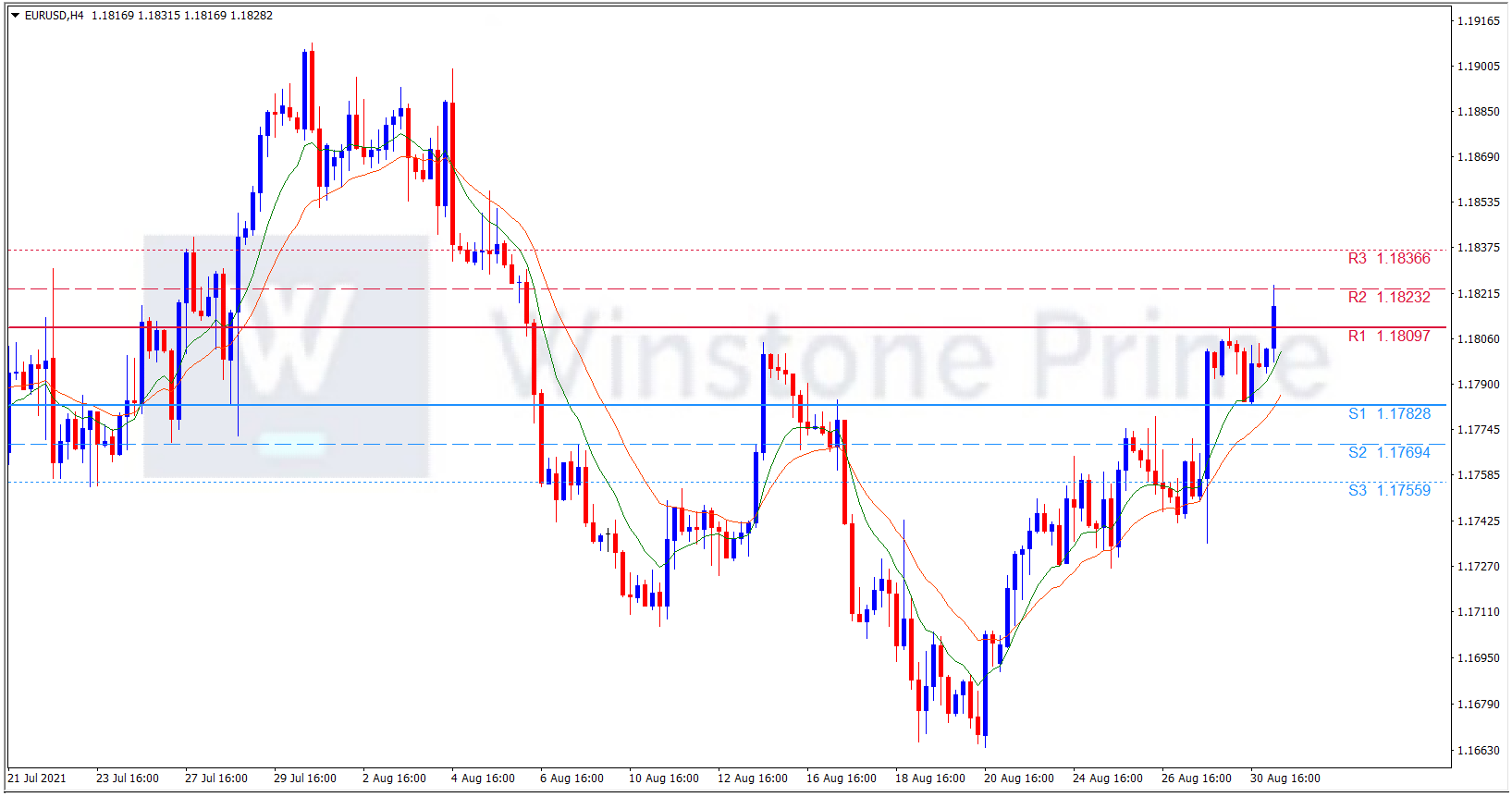
EUR/USD 4 Hour Chart:

Support: 1.1783 (S1), 1.1769 (S2), 1.1756 (S3).

Resistance: 1.1810 (R1), 1.1823 (R2), 1.1837 (R3).

Amidst this above catalysts greenback softening moment and Expectations of Europe CPI monthly report favors Euro. We expect a bullish trend for EUR/USD.