The cautious market mood favors Yen

  • The falling yields and the risk-off mood benefitted the safe-haven JPY.
  • Following the US, the UK has also announced fresh sanctions on Russia after its war in Bucha.
  • Market is ignoring the impact of hawkish stance of the Fed.


The yen pair traded low on Thursday trading session on falling yields and the prevalent cautious market mood.

The prevalent cautious market mood had drove some haven flows towards the Japanese yen and exerted some downward pressure on spot prices amid a softer tone surrounding the US dollar. After the US,  the UK has announced fresh sanctions on Russia after its war crimes in Bucha, Ukraine. The UK administration has imposed an outright ban on all new outward investment into the country, as per Reuters. Additionally, UK also made an announcement of an asset freeze on Russia’s Sberbank and Credit Bank of Moscow, which hold more than one-third of Russia’s total banking assets.

Bank of Japan board member Asahi Noguchi said that the central bank must maintain its ultra-easy monetary policy, even as rising commodity prices are expected to push inflation higher. Asahi Noguchi said on Thursday that the benefits of a weak yen outweigh the demerits for Japan’s export-oriented economy, brushing aside the view the currency’s recent decline would hurt the economy by boosting import costs.

He said “Unlike other countries worried about surging inflation, Japan’s primary goal is to end deflation and prop up inflation to more desirable levels.”A weak yen is more favourable for achieving this goal than a strong yen, which would push down prices and hurt exports, he added.

On the other hand, It looks like market participants are ignoring the impact of the hawkish stance from the Federal Reserve (Fed), which is likely to be revealed in May’s monetary policy. The minutes of March’s Federal Open Market Committee (FOMC) released on Wednesday dictated that the Fed is looking to hike the interest rates by 50 basis points once or more this year. To contain the inflation mess, the Fed is left with no other option than to paddle the lending rates.

USD/JPY 4 Hour Chart:
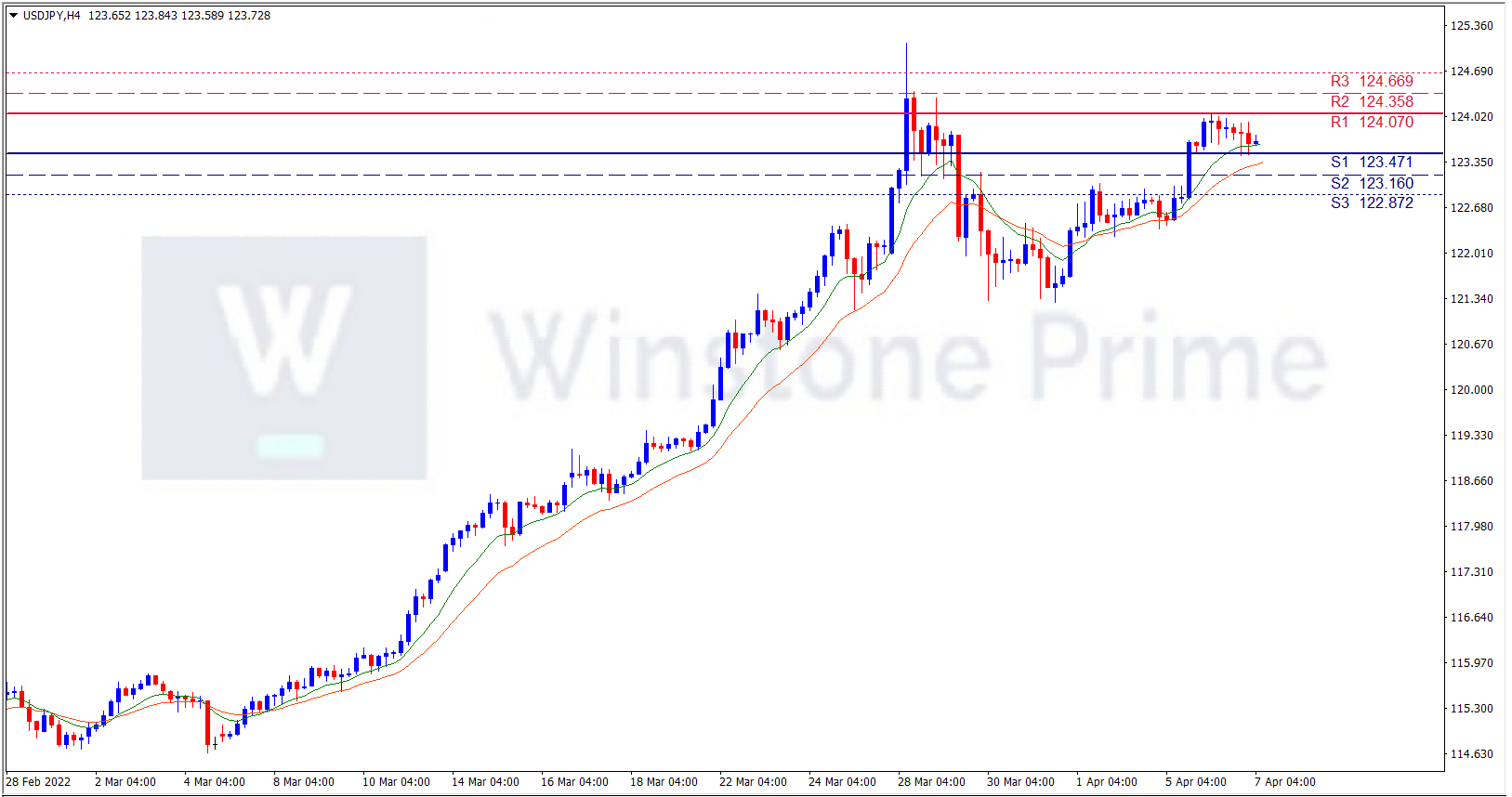
Support: 123.47 (S1), 123.16 (S2), 122.87 (S3).

Resistance: 124.07 (R1), 124.36 (R2), 124.67 (R3).

Investors are cautiously optimistic for yen amidst prevailing risk off market sentiment; we expect a bearish trend for USD/JPY.

Hawkish Fed weighs on gold

  • Hawkish Fed is boosting the US dollar and weighing on gold.
  • Federal reserve Brainard was hawkish on balance sheet reduction, and expect rate hike at aggressive pace.
  • Geopolitics is at the focus after the EU announced new sanctions on Russia and Putin threatened restrictions on agricultural exports.


Gold is trading sideways as the US dollar weighed. The hawkish stance from the Fed policymakers favors the US dollar.

The Fed Vice Chair Brainard spoke of potential aggressive action from the Fed in anticipation of hawkish minutes. Brainard said the central bank could start reducing its balance sheet as soon as May and would be doing so at “a rapid pace.” He also added that interest rate hikes could come at a more aggressive pace than the typical increments of 0.25 percentage points.

The hawkish stance from various Fed policymakers in recent days raises the bar for a hawkish surprise from the minutes is high. But the direction of Fed policy remains clear, with the big question now how high the terminal rate will be. However, geopolitics and ongoing angst about the inflationary impact of the Russo-Ukraine conflict might be enough to keep gold supported.

The European Union talked up the prospect of more sanctions on Russian oil imports, and Russian President Vladimir Putin announced in response that he might look at restricting agricultural exports to so-called “unfriendly” countries (like those in the EU).

The ongoing geopolitical tensions and the upside risks posed to global commodity prices as a result of de-globalisation between the West and Russia continue to remain a key reason on why investors are attracted towards gold.  But A stronger dollar makes gold more expensive for the holders of non-USD currency, while higher yields increase the opportunity cost of holding non-yielding assets like precious metals.

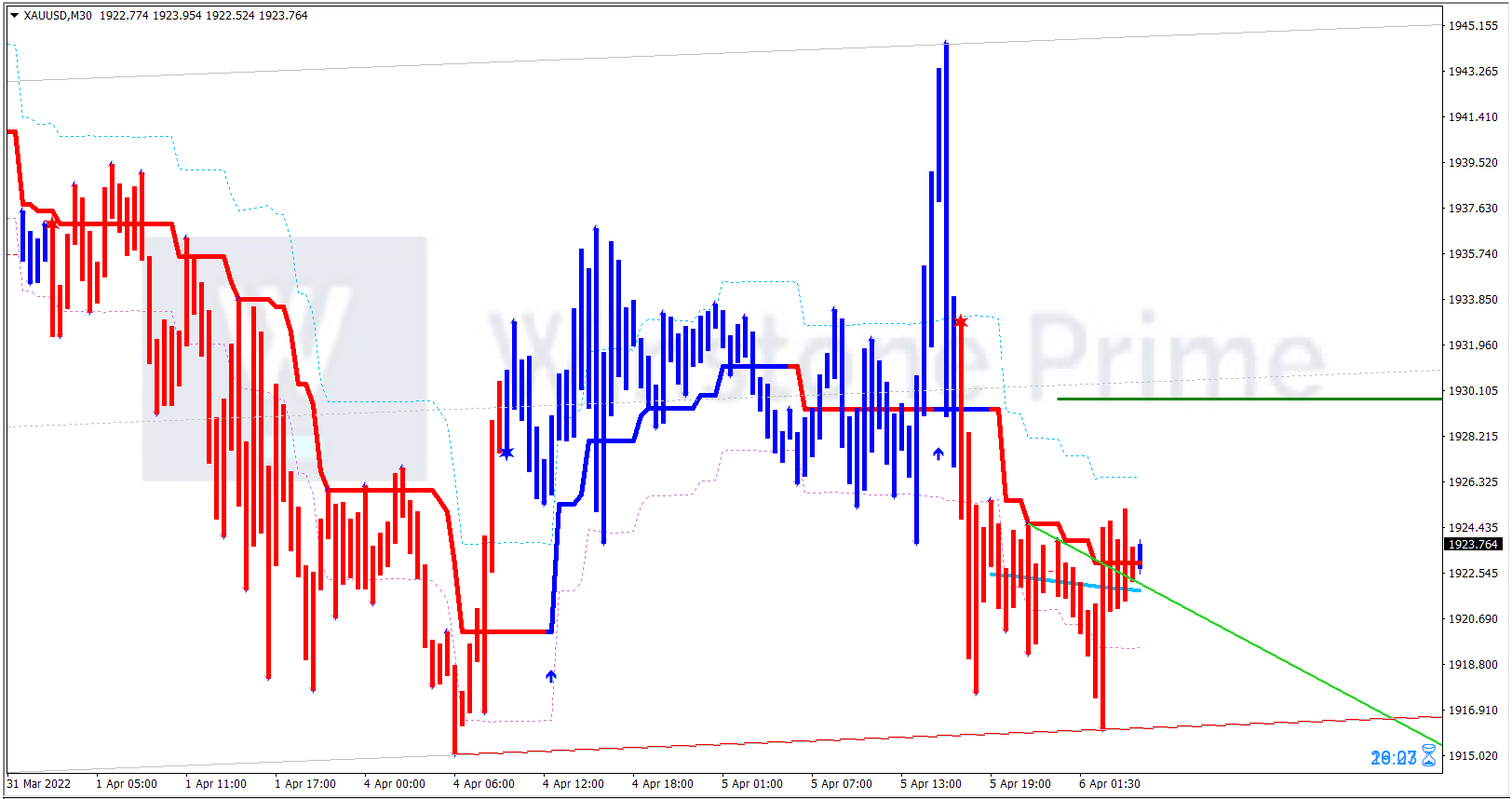
XAU/USD 4 Hour Chart:

Support: 1912.0 (S1), 1901.4 (S2), 1885.2 (S3).

Resistance: 1938.8 (R1), 1955.1 (R2), 1965.7 (R3).

Fed speak will be the key catalysts for  gold traders to monitor,  In the meantime, Stronger US dollar weighs on Yellow metal, we expect a bearish trend for XAU/USD.

Aussie climbs up with hawkish RBA tilt

  • The AUD jumped to a nine-month high on Tuesday after the RBA signalled higher interest rates were closer.
  • In April policy meeting, Reserve Bank of Australia (RBA) kept its cash rate at 0.1% as widely expected.
  • Lack of progress in the Russia-Ukraine peace negotiations, may cap the gains of Aussie.


The Australian dollar jumped to a nine-month high against the American dollar on Tuesday and is trading around 0.7160 level now after Australia’s central bank on Tuesday opened the door to the first interest rate increase in more than a decade by dropping a previous pledge to be “patient” on policy.

In wrap up of April month meeting, the Reserve Bank of Australia (RBA) kept its cash rate at 0.1% but noted inflation had picked up and was likely to rise further, while unemployment had fallen faster than expected to 4.0%.

RBA Governor Philip Lowe in a statement said “Over coming months, important additional evidence will be available to the Board on both inflation and the evolution of labour costs.” “The Board will assess this and other incoming information as its sets policy,” he added, omitting any reference made in previous statements to the Board being patient.

Markets are now been priced for a June rate rise to 0.25% 0#YIB: , and imply no less than six more hike to 1.75% by year end.  That aggressive outlook in part reflects expectations the U.S. Federal Reserve will hike by 50 basis points in both May and June, adding to pressure for other central banks to follow.

Talking about the Ukraine developments, Ukraine accused Russian forces of carrying out a massacre in the town of Bucha, where a mass grave and tied bodies of people shot at close range were found in a town seized back from Russian forces. In response, The United States and European countries pledged on Monday to punish Moscow. New sanctions could include restrictions on the billions of dollars in energy that Europe still imports from Russia. The Kremlin denied accusations related to the murder of civilians. The lack progress in the Russia-Ukraine peace negotiations, may cap the gains of Aussie.

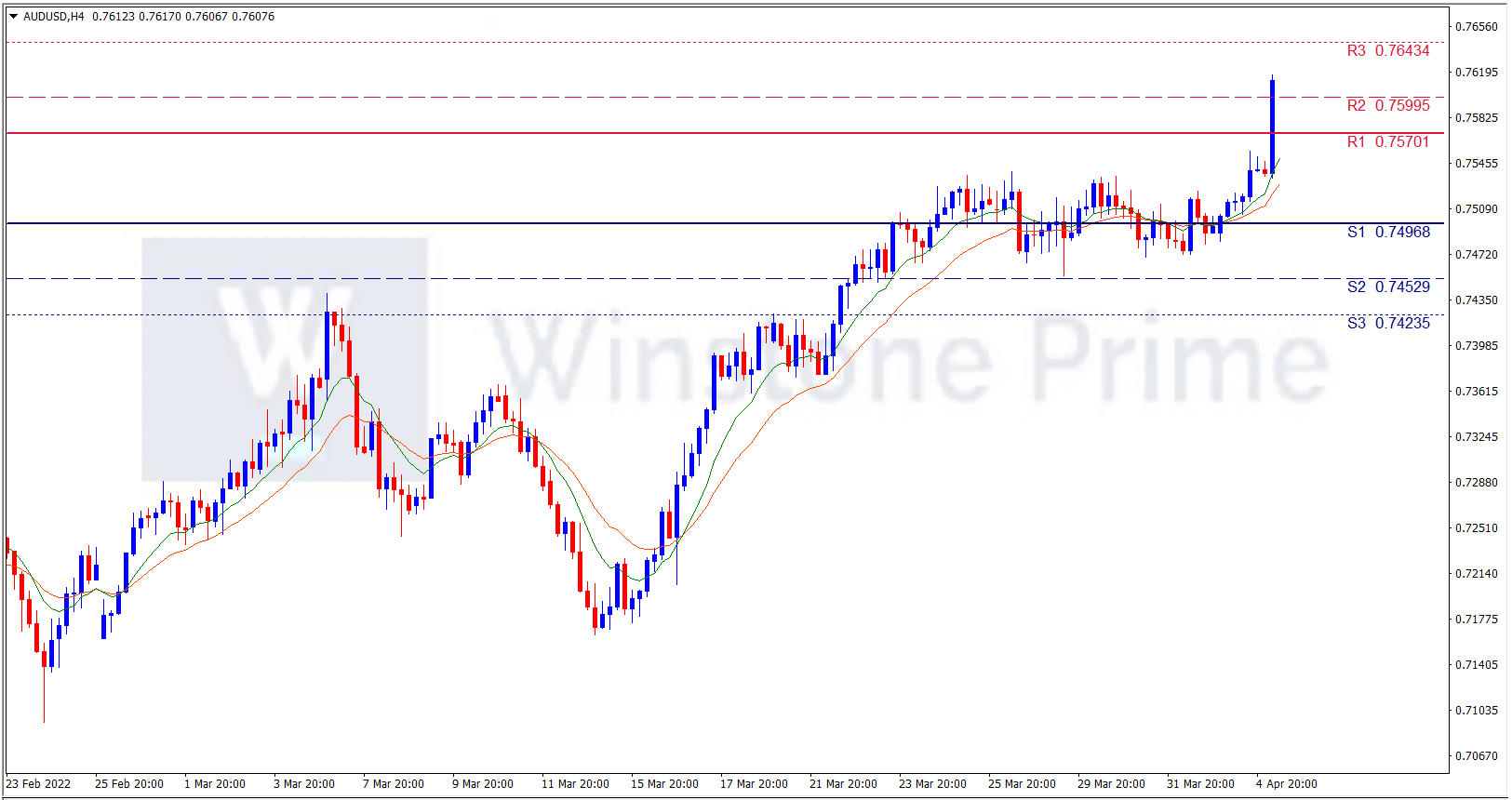
AUD/USD 4 Hour Chart:

Support: 0.7497 (S1), 0.7453 (S2), 0.7424 (S3).

Resistance: 0.7570 (R1), 0.7600 (R2), 0.7643 (R3).

The Reserve Bank of Australia signalling high interest closer favors Aussie. We expect a bullish trend for AUD/USD.

Euro struggles with sanction risks

  • The rising expectations that the Federal Reserve will deliver bigger rate hikes in the months ahead to tame inflation favors the greenback.
  • Talks on fresh Russia sanctions weighs on the Euro.
  • ECB’s Schnabel comments that Central bank will hike rates but depending on incoming data.


The US dollar was strengthened at the start of the week due to rising bets on rate hike whereas Europe banning Russian gas amidst worries about economic damage from war in Ukraine weighs on Euro.

Germany said that the West would agree to impose more sanctions on Russia in the coming days after Ukraine accused Russian forces of war crimes. There seems to be momentum for at least discussing an embargo on energy imports, which would likely come with price pain since Russia supplies some 40% of Europe’s gas needs.

German Defence Minister Christine Lambrecht said the European Union should talk about ending Russian gas imports. Meanwhile, Ukraine accused Russian forces of carrying out a “massacre” in the town of Bucha, which was denied by Russia’s defence ministry. Reuters saw corpses strewn across the town.

Talking about Fed, Friday’s strong jobs report for March hitting a two-year low of 3.6% last month supported the view that the Fed will need to aggressively hike rates to stem soaring inflation and a tight labor market.

As per reuters, European Central Bank (ECB) Governing Council member Isabel Schnabel made some comments on monetary policy normalization over the weekend, “We will hike interest rates sometime after, as appropriate, in light of incoming data.” “The speed of normalization … will depend on the economic fallout from the war, the severity of the inflation shock and its persistence.” “Inflation risk was skewed towards even higher readings given sharply rising producer prices, structural economic changes like de-globalization and likely wage hikes.”

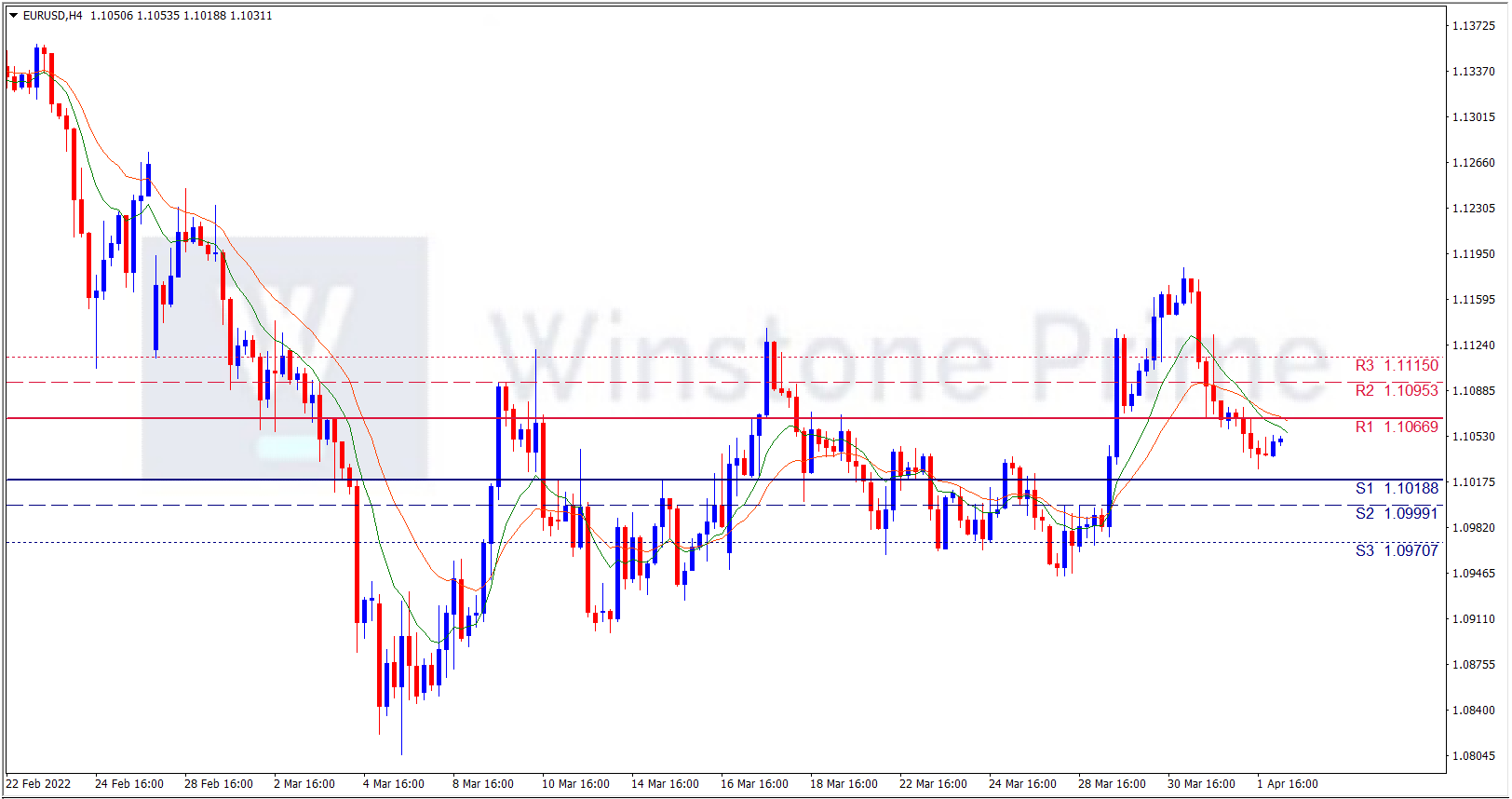
EUR/USD 4 Hour Chart:

Support: 1.1019 (S1), 1.0999 (S2), 1.0971 (S3).

Resistance: 1.1067 (R1), 1.1095 (R2), 1.1115 (R3).

The expectation of aggressive rate hike from Fed and Ukraine war crisis weigh on Euro. We expect a bearish trend for EUR/USD.