Covid lockdown impacts yen

Today Bank of Japan board member Toyoaki Nakamura warned of the risks to the economic outlook posed by the recent rise in the Covid-19 pandemic, but expressed hope that consumption would increase once homes felt safe to spend. Nakamura said the world’s third-largest economy would recover as the impact of the pandemic fades, encouraging growth from strong global demand and pointing to a recovery in capital spending. Risks of “highly uncertain” bent forward as the emergency situation to fight the epidemic hurts retailers, the former corporate executive said.

But Nakamura signalled hope that once vaccinations proceed, consumption may get a boost from pent-up demand with Japanese households having loaded up a record 1,056 trillion yen ($9.61 trillion) in cash and deposits. Nakamura said in a speech that “the resurgence in infections may have somewhat delayed the timing for when pent-up demand materialises,” and added there was a chance economic activity may strengthen more than expected once the pandemic’s impact eases.

Japan wants to extend the state of emergency to eight more provinces, taking the total to 21, to prevent a rapid increase in corona virus infections, said the minister in charge of anti-Covid. After Japan’s economy collapsed in the first three months of this year, higher than expected in the second quarter, a symptom is that consumption and capital expenditure are recovering from the initial success of the corona virus epidemic. Some of the researchers expect growth to be moderate in the current quarter as controls are re-expended to control the increase in infections.

Risk appetite in global markets has strengthened since the U.S. Food and Drug Administration granted full approval to the COVID-19 vaccine developed by Pfizer PFE.N and BioNTech 22UAy.DE in a move that could accelerate U.S. inoculations. The United States could get COVID-19 under control by early next year, Dr. Anthony Fauci, the country’s top infectious disease expert, said on Tuesday.

The greenback has rallied in recent weeks, with the dollar index hitting a 9 1/2-month high of 93.734 on Friday, not just on fear about Delta’s economic impact, but also an the Federal Reserve signalled a tapering of stimulus was likely this year.

The US economy is putting out a lot of mixed signals and the Delta variant is weighing on economic data and consumer sentiment, the recovery is still chugging along and plenty of businesses remain optimistic about the future. Investors awaited Federal Reserve Chairman Jerome Powell’s speech this week for guidance on the central bank’s taper plans. The coronavirus curve in some hotspots is easing and the U.S. Food and Drug Administration’s approval of vaccinations. The U.S. drug regulator granted full approval on Monday to the Pfizer /BioNTech COVID-19 vaccine, raising hopes inoculations could accelerate. Risk sentiment was also underpinned by remarks from top U.S. infectious disease expert Dr. Anthony Fauci that the nation could get COVID-19 under control by early next year if vaccinations ramp up.

USD/JPY 4 Hour Chart:
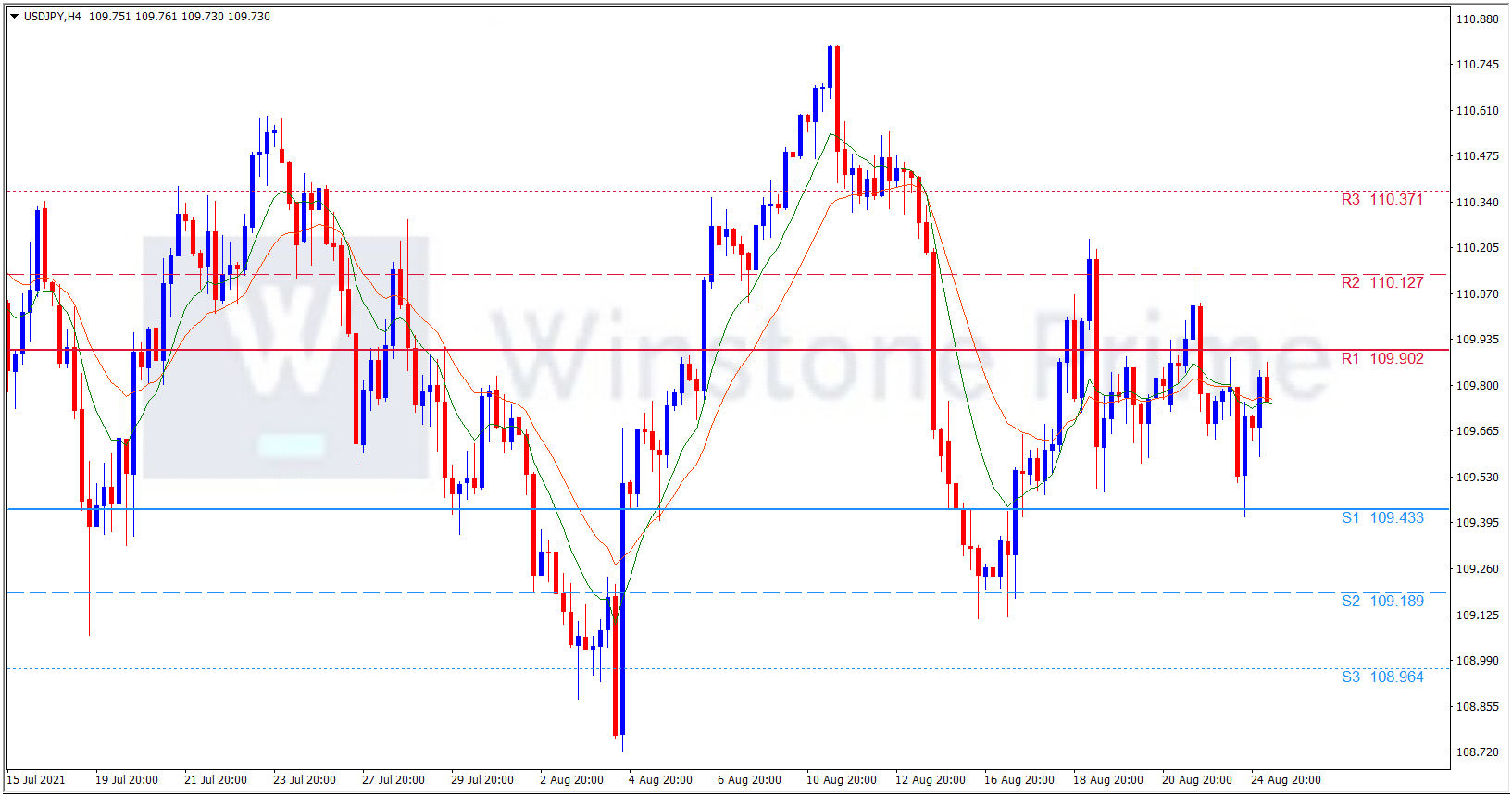
Support: 109.43 (S1), 109.19 (S2), 108.96 (S3).

Resistance: 109.90 (R1), 110.13 (R2), 110.37 (R3).

Amidst this above catalysts the dollar is on uptrend today. We expect a bullish trend for USD/JPY.

PMI report favors Euro

The selling pressure in the US dollar pushes wake of delayed Fed taper’s talk. The dollar was brilliant on Tuesday following a one-day fall from May, despite traders being cautious in chasing a mood-driven move ahead of a Federal Reserve symposium to put an end to incentives and property purchases. The US data showed strong, but sluggish services and manufacturing activity overnight in Europe, while business activity growth in the United States slowed for the third month in a row due to the spread of the delta virus variant. For some investors, that casts enough uncertainty over the outlook to make it unlikely that the Fed delivers much of a signal at all during the symposium, putting pressure on the currency because it has gained with taper expectations.

Jackson Hole Symposium preview will be held on this month August and this year’s event, titled “Macroeconomic Policy in an Uneven Economy” will be held Thursday-Saturday, with Fed Chairman Powell’s keynote speech taking place at 10:00ET on Friday, August 27th. With the top policymakers from the ECB and Bank of England skipping this year’s event, traders’ focus will be almost exclusively on the US Federal Reserve, specifically any hints about the central bank’s timeline for tapering its asset purchases. Previous week’s FOMC minutes showed a split group, which preceded last month’s mix of optimism (strong NFP job report) and distrust (poor consumer sentiment, doubling of U.S. COVID cases). In that context, traders will be interested to see if Powell continues to hint at announcing Fed’s Taper plans after next month’s FOMC meeting, or if he will continue to sound more cautious, which will push traders back on their expectations.

Growth cooled for the third consecutive month in the United States, falling to its lowest level since December due to increased spread of delta variation due to material and labor restrictions and increasing viral infections. The service sector was severely affected by the increase in Covid cases, however production was severely curtailed and manufacturers lost momentum again unable to meet the strong demand.

On the other hand flash PMI surveys showed the eurozone enjoying the strongest expansion of the major developed economies in August. The eurozone is also benefitting from fewer supply and labour market constraints than the UK and US, where growth slowed sharply due to these shortages, with prices rising commensurately higher as a result. The eurozone enjoyed the fastest growth of the world’s major economies for a second month running in August, according to the flash PMIs, with growth slowing sharply in both the US and UK while Australia and Japan slipped into deeper downturns. Service sector growth held close to 15-year highs as lockdown measures were eased to the lowest since the pandemic began, helping offset some of the slowing in manufacturing, where eurozone producers reported ongoing supply constraints to have been a principal cause of weakened performance. The overall pace of manufacturing expansion nevertheless remained one of the strongest recorded over the past two decades.

The US dollar could also see a strong reaction to any unexpected comments. As for now, traders are waiting for the US Existing Home Sales data to trade fresh trading impetus and Europe GDP Quarterly report for further moment.

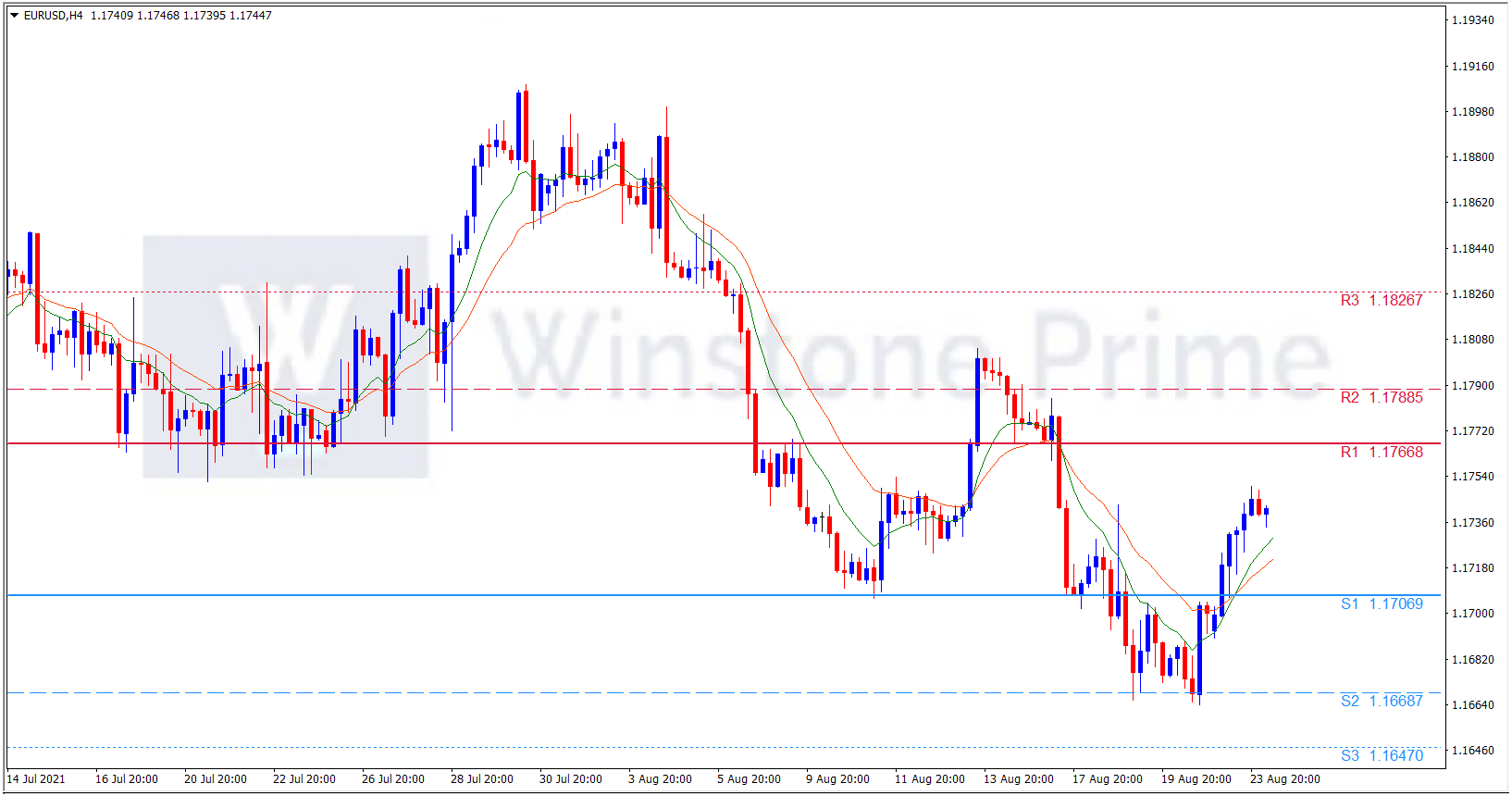
EUR/USD 4 Hour Chart:

Support: 1.1707 (S1), 1.1669 (S2), 1.1647 (S3).

Resistance: 1.1767 (R1), 1.1789 (R2), 1.1827 (R3).

Amidst this above catalysts US dollar soften moment and Europe yesterday PMI data kept the Euro pair into strong moment. We expect a bullish trend for EUR/USD.

Things you need to know about Bank of England

The Bank of England is the central bank of United Kingdom and is located in city of London which is the central financial district of UK.  The BoE is one of the oldest banks in the world, so it has been used as a model for central banks around the world. It has broad liabilities like most central banks around the world. The BoE issues currency and most importantly oversees monetary policy. It acts as the government bank and the lender of last resort meaning it provides loans to banks and other institutions that are in financial difficulty.

The Bank of England was incorporated by act of parliament in 1694. Less widely known is the fact that for the first 40 years after its foundation in 1694 the Bank did not have its own building and that Threadneedle Street is the third site on which the Bank’s business has been transacted. This exhibition marks the 250th anniversary of the move to Threadneedle Street in 1754 and the building of the first ‘Bank’ on this famous site. The nickname, “The Old Lady of Threadneedle Street” first appeared in print in James Gillray’s cartoon published in 1797 during the wars against Revolutionary France. The Government had been making continued demands upon the Bank for gold, which led ultimately to the Bank being forced to suspend payment of its own notes in gold and the issue of £1 and £2 notes for the first time. Until 1844 when the Bank Charter Act gave the BoE exclusive rights to issuing the bank notes.

 The BoE was nationalised after World War Two and has been setting the UK’s interest rate since 1997. Following the 2007 – 2008 financial crisis, the responsibilities of the Bank of England have expanded. The government introduced new regulatory frameworks aimed at creating a much stricter regulatory framework for the financial services industry. Under the Financial Services Act of 2012, created the Financial Policy Committee – which identifies, monitors and acts on systemic risks to the UK financial system – and Prudential Regulation Authority, which is responsible for the supervision of banks, building societies and major investment firms.

With Britain’s exit from the European Union, the Bank of England played a more active role. Although the UK, like other countries, is not subject to the monetary policy of the European Central Bank – as it does not use the euro – the BoE will still need to control any fiscal consequences of leaving the Union, such as inflation and the collapse of the pound.

MAIN OBJECTIVES OF THE BANK

The bank has two main objectives as monetary stability and financial stability. The Bank of England works closely with HM Treasury, Financial Services Authority and often other central banks to achieve its goals of monetary and financial stability.

1. Monetary Stability

The first one is to maintain monetary stability. The monetary stability of a country is manifested in stable prices and high level of confidence in the country’s currency. The Bank of England is responsible for setting the UK’s official interest rate, in order to meet the inflation target set yearly by the Chancellor of the Exchequer. The Bank of England Monetary Policy Committee makes the interest rate decisions, and applies them through its financial market operations. The bank strives to achieve high economic growth in a low-inflation environment.

2. Stability

The Bank of England’s second main objective is to improve financial stability in the UK. When there is a threat to the financial stability of the UK financial system, the Bank of England must act to avoid it. The latest example of a threat to the stability of the UK financial system is the Northern Rock Bank Run, in which case the Bank of England had to lend North Rock as a last resort.

BoE MONETARY POLICY COMMITTEE

The Bank of England’s Monetary Policy Committee (MPC) is the body in charge of setting monetary policy. The Committee is made up of nine members: The Governor of the Bank of England, three Deputy Governors, a Chief Economist and four external members appointed directly by the Chancellor of the Exchequer. Each member will have previous expertise in the field of economics and monetary policy – the external members of the MPC ensure that the Committee’s knowledge pool is diversified beyond the Bank of England.

The MPC sets and announces monetary policy eight times a year – roughly every six weeks – usually always at noon on a Thursday. It’s estimated that the decisions made by the MPC will take two years to fully take effect – which means all announcements have to consider future events as well as historic and current economic circumstances. The BoE releases base rate announcements, quarterly monetary policy reports, which set out their economic analysis and inflation projections. These reports are useful for traders as they explain the decisions behind interest rates in more detail.

HOW TRADERS USES THE MONETARY POLICY DECISION

MPC announcements affect financial markets as any changes to interest rates will affect the value of currency pairs, indices, stocks, bonds and other securities. Most traders will attempt to predict what the MPC will decide so that they can change their positions ahead of the announcement to minimise risk and even make a profit.

For example, if the MPC decides to increase interest rates, this could cause the value of the pound to rise and reduce the value of stocks, bonds, indices and other securities. And if they decide to lower interest rates, GBP could fall in value and cause other asset classes to rise.

Most traders will monitor Forex pairs such as EUR/GBP and GBP/USD, UK stock indices including the FTSE 100 and FTSE 250, as well as any UK based banking stocks such as Barclays, Lloyds and HSBC.

CONCLUSION

Following the economic indicators monitored by the MPC and performing thorough fundamental analysis can reveal the potential BoE interest rate hikes and cuts. With professional support from a broker like Winstone Prime, you can take advantage of the opportunities that arise from the Bank of England central bank meetings. Checking the Winstone Prime economic calendar to learn the time and date of the next BoE event. Trade GBP/USD currency pair and British assets and index with great trading conditions and trade both directions of the price with Long and Short positions, and without having to physically purchase them. The Bank of England has its wealth and monetary affairs. Now that you know how the BoE takes care of the economy and how the MPC interest rate decisions affect the value of GBP and other British assets, get yourself prepared with Winstone Prime state of the art trading tools and start trading with confidence!

RBNZ’s monetary policy favors kiwi

Kiwi is recapturing the bullish trend after the release of monetary policy today. A senior central bank official said that the delta variant of the corona virus in New Zealand is not yet a “game changer” and there is no pressure to act on monetary policy. At this point, our basic economic analysis and vision should be thrown out the window and we do not see it as a game changer in the sense that we have to start all over again. “We weren’t like 12 months ago,” said Yuang Ha, chief economist at the Reserve Bank of New Zealand (RBNZ) in a telephone interview with Reuters.

And he also said that there is no pressure to act on monetary policy and say New Zealand going into nationwide lockdown at a better economic starting point. The comments come after the RBNZ held its cash rate unchanged at its meeting last week. In the weeks and days leading up to the decision, there was a near-unanimous consensus the bank would hike the rate by 25bps and even 50bps was a not unusual view. However, the fresh outbreak of COVID-19 in the country just prior to the Bank’s meeting saw analysts trash their calls for a hike. The RBNZ duly held steady.

When asked if pressure was growing on RBNZ to act on policy, Ha said: “I don’t think so. I think we are in a really good position in terms of optionality.” Ha said the central bank has learnt from previous lockdowns that demand and household spending tend to bounce back quite quickly especially given the level of fiscal support that’s also been activated at present.

New Zealand’s successful elimination of COVID-19 fired a hot economic recovery and stoked inflation, which had prompted analysts to forecast at least two hikes before year-end. But the latest COVID-19 outbreak has led many analysts to push out their tightening calls, with the market pricing a 60% chance of a hold at the RBNZ’s next meeting on Oct. 6.

Last week, the RBNZ delayed raising rates after the country was put into a COVID-19 lockdown following the outbreak, although policymakers flagged tightening was on the cards before the year was out. New Zealand has reported 35 new cases of Covid-19, of the 107 cases in the cluster, 72 are already epidemiologically linked to other community cases identified in the outbreak. Investigations are continuing to determine whether and how the remaining 35 cases are linked to the outbreak. Meanwhile, the kiwi could come unstuck if the sentiment sours further.

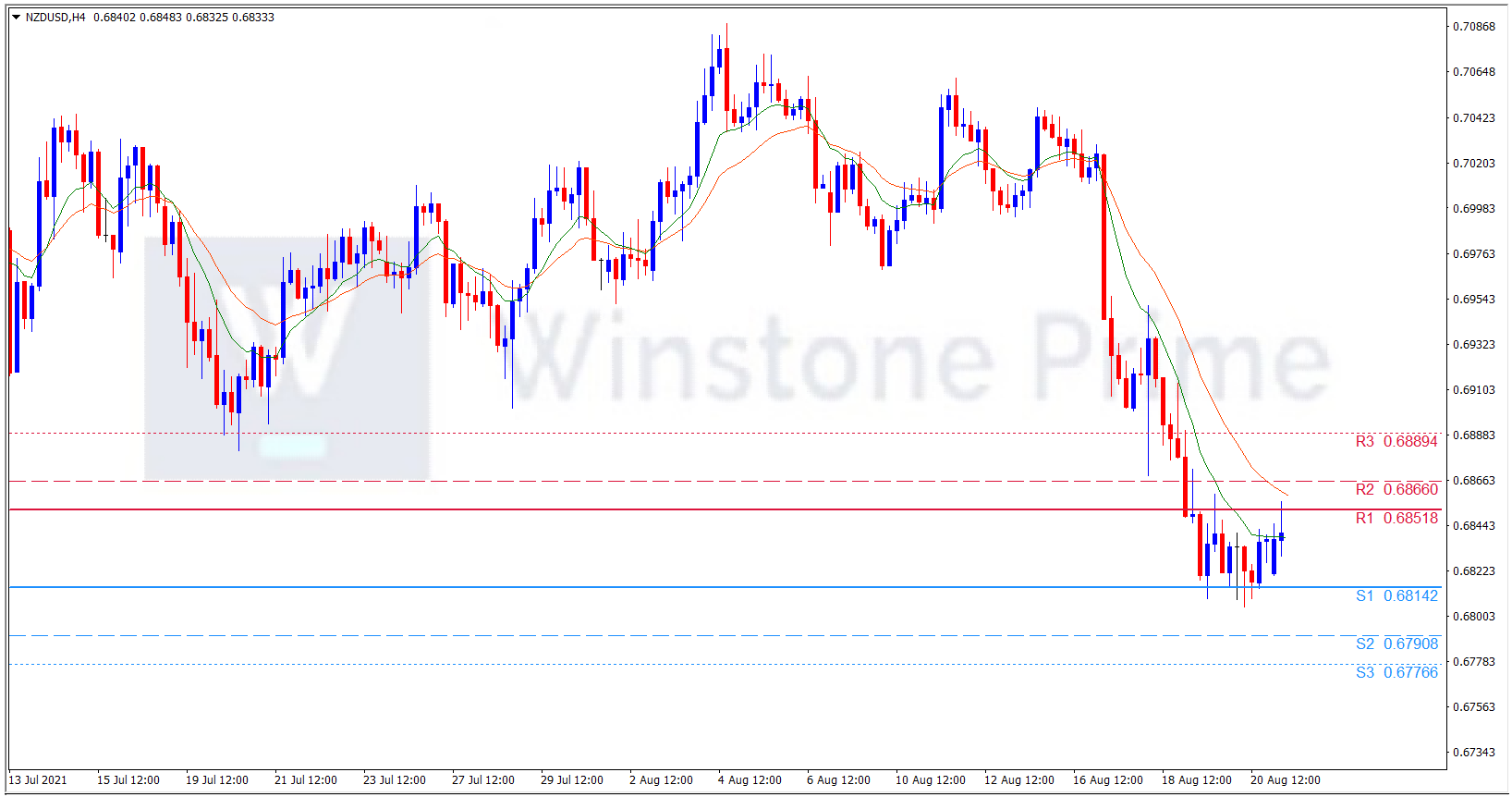
NZD/USD 4 Hour Chart:

Support: 0.6814 (S1), 0.6791 (S2), 0.6777 (S3).

Resistance: 0.6852 (R1), 0.6866 (R2), 0.6889 (R3).

Amidst this above catalysts Kiwi is on upward moment today. We expect a bullish trend NZD/USD.