Fed Inflation expectation favors dollar

The EUR/USD pair is currently trading on the consolidated downward trend against US dollar. This could be the certain reason among US traveler restriction in Europe and last week strong US Jobs data suppress the Euro pair.  Traders awaited for U.S. inflation data and wagered a high reading could pressure the Federal Reserve to wind back policy support. The greenback has already caught a boost from last week’s strong U.S. jobs data and from recent remarks by Fed officials indicating that asset purchase tapering is on the cards. Hot inflation may also add to expectations for next year’s rate hike. The dollar is supported by long- and short-dated treasury yields, which peaked in mid-July.

On the other hand Germany’s coronavirus vaccination drive has slowed and “The bad news is that the vaccination rate has lost pace substantially,” Merkel told a news conference after the meeting. Merkel agreed that so long as the vaccines work, any further restrictions must be different to previous lockdowns. “What is clear is that this fourth wave is coming, and definitely in the autumn,” said Soeder. “The current infection rates are not sufficient to be carefree.”

The United States has not yet lifted Trump-era regulations banning most European travelers after “post-pandemic” trips for newly vaccinated tourists but the European Union has offered to lift its restrictions. The State Department is telling citizens to avoid 10 countries on the continent, and the European Union is considering closing its doors to Americans again as US cases escalate. The EU’s official recommendations are that countries on its “safe list” should not have recorded more than 75 new Covid-19 cases per 100,000 residents in the past 14 days. But US rates are too high.

The most recent data from the European Center for Disease Prevention and Control lists the United States at nearly 270 cases per 100,000 people. Those numbers, though, are out of date — last updated Aug. 1. They obscure the worst of the most recent surge. The current number is closer to 400, or more than five times the E.U. threshold, according to a Washington Post tally.

On Monday, following rumors that the EU would re-impose restrictions on American travelers, it now decided against it, and for now, Americans continue to flock to European cities and beaches, wanting to revive the tourism-starving economies. An official said the EU Council, through its member states’ coordinate policy, would continue to monitor countries, including the United States, where the “cowardly situation has worsened”. If the picture does not progress in the next two weeks, the council may remove the United States from the safe list, the official said, speaking on condition of anonymity as he did not have the authority to discuss the matter publicly.

“Traveling and mobility is fundamental for the European Union economy,” said Luís Araújo, the president of the European Travel Commission, an organization that seeks to promote travel to the European Union. Any sudden change in regulations negatively affects trust in the tourism sector, Araújo said, and the European Union may be increasingly wary of taking action that could damage the industry.

EUR/USD 4 Hour Chart:
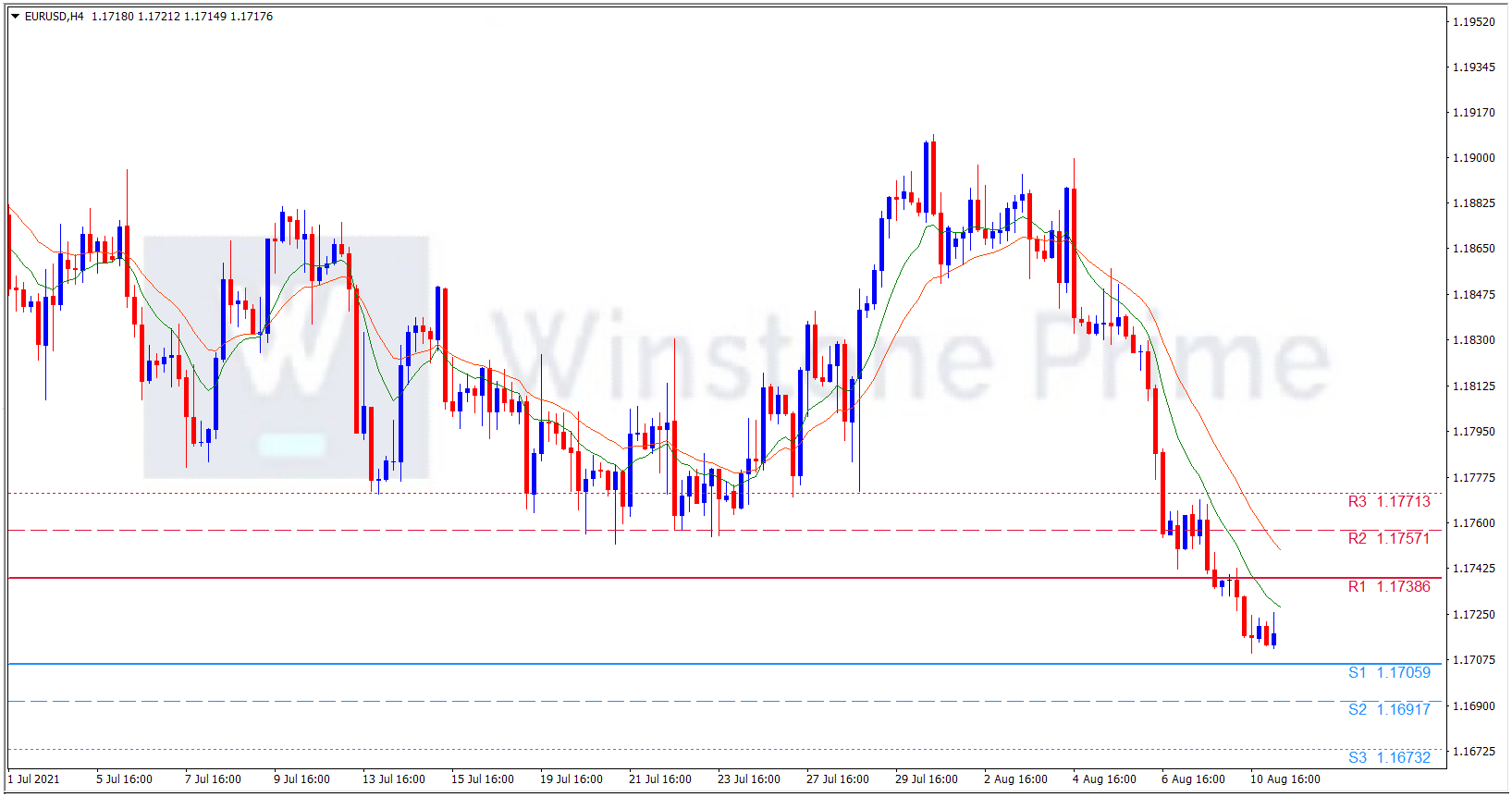
Support: 1.1706 (S1), 1.1692 (S2), 1.1673 (S3).

Resistance: 1.1739 (R1), 1.1757 (R2), 1.1771 (R3).

Amidst this above catalysts Fed’s hot inflation expectations keeps the greenback as safe heaven while Europe’s Covid restrictions for US travelers and low vaccination counts kept Euro into downtrend. We expect a bearish trend for EUR/USD.

Covid lockdown pressurises aussie

AUD/USD is extending its downward trend on today morning ahead of the persistent bullish mood around the US dollar, coupled with growing covid concerns in Australia, weighs negatively on Fed’s tight and narrow expectations. As of Tuesday, New South Wales has become new covid epicenter in the country, with about 350 new cases registered. The latest move comes on the heels of an unexpected drop in the Australian NAB business confidence gauge for July, which came in at -8 vs. 15 expected and 11 previous.

The level of Australian business conditions worsened sharply for the second month in July as corona virus lockdowns hit service industries and confidence in general. National Bank of Australia’s NAB.AX cut its trading position index by 14 points to +11 in June, although it is still above the long-term average. The survey’s confidence level dived to 19 points -8 led by the state of New South Wales, where most of Sydney was closed for the entire month.

“The survey shows that the strength of the business sector, which has been seen since the beginning of mid-2021, has faded in the wake of new challenges in the economy but it has not yet worsened to the low level seen at the beginning of 2020. The survey showed a very strong momentum before the recent lockdowns, it is hoped that the economy will recover relatively quickly once restrictions are relaxed.

The Reserve Bank of Australia (RBA) last week argued that the economy could recover quickly once the locks were lifted and forecast strong growth next year. However, such relaxation in Sydney is still a few weeks away as governments struggle to increase vaccine levels. A separate survey of consumers from ANZ, down 3.1% last week, took the index below 100, which is higher than sentiment believers.

Australia’s unravelling “zero Covid” strategy will cost its economy more than £500m (NZ$992 million) every week of lockdown as analysts warn restrictions in some of its most populous states could last until October. Forecasters warned that renewed lockdowns and the glacial pace of its vaccination programme will trigger a sharp drop in GDP in the third quarter as Delta cases threaten to explode. Australia has been held up as a success story during the pandemic, but countries that pursued a “zero Covid” approach are now struggling to contain the fast-spreading Delta variant. An outbreak in China is also threatening its zero tolerance stance as the UK, US and Europe are forced to learn to “live with Covid”.

George Tharenou, a UBS economist, warned the “looming very large economic cost of the lockdown is already evident” in recent retail sales and payrolls data. He estimated that up to A$1.5bn of government support every week will be needed to prop up the economy. Mr Tharenou added: “A third Covid-19 wave in Australia, especially in New South Wales, materially increases uncertainty of the economic outlook, with hard lockdowns by state governments each time cases appear.”

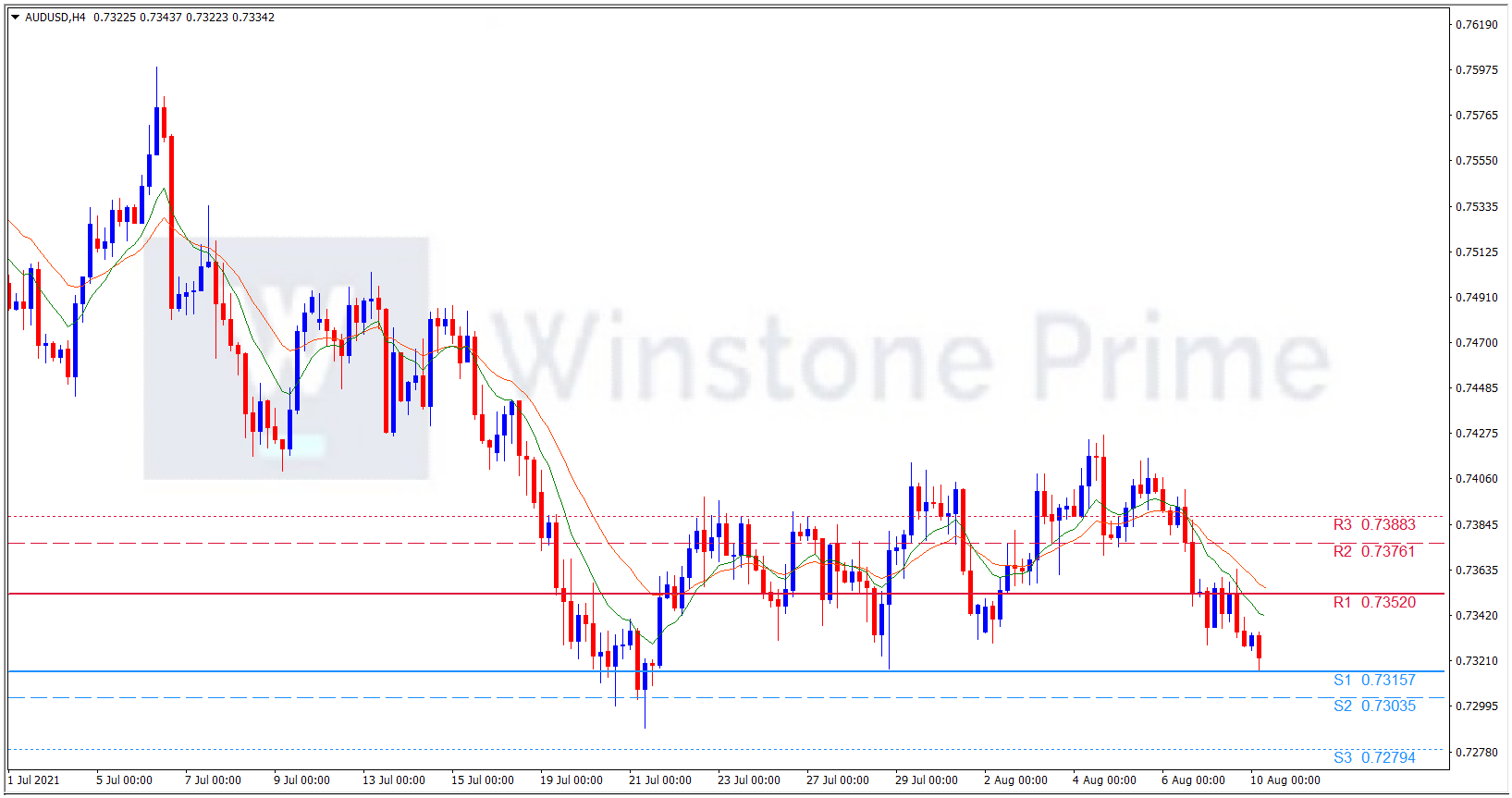
AUD/USD 4 Hour Chart:

Support: 0.7316 (S1), 0.7304 (S2), 0.7279 (S3).

Resistance: 0.7352 (R1), 0.7376 (R2), 0.7388 (R3).

Amidst this above catalysts of Australia economic conditions and strong US dollar pushes the pair into downtrend. We expect a bearish trend for AUD/USD.

7 Myths about Cryptocurrencies Debunking

Bitcoin using blockchain technology and generated 155% annual gain over the last 5 years. Blockchain technology has gained momentum since 2009. Not only has the value of bitcoin increased, but awareness of its importance and greater confidence among investors has also increased. Crypto is used for everyday purchases more than what the general public is aware of. Larger retailers around the world are now accepting cryptocurrencies as a form of payment.

Overall, only 16% of consumers familiar with cryptos have invested in them, showing that crypto’s stereotypes may be impacting its adoption potential. Speculations are often followed whenever the world welcomes something huge and disruptive. To add commercial credibility to the mix, gossip mills find enough fodder to keep unheard and unheard of. Around the world, the same is true of the rise of cryptocurrencies. As these digital assets continue to grow in importance, market demand and value, so do rumors. While this may mislead users, it is important to do the right research and separate the facts from the mere thirsty rumors. Let us break down some of the best myths that cover up the growth of cryptocurrencies.

1. No value for Cryptocurrencies

Skeptics question the value of cryptocurrencies and ridicule investors for supporting unrestricted, speculative assets. But the truth is, cryptocurrencies are infinite, global currencies that fluctuate in terms of demand and supply. Cryptocurrencies are cashless, and many supporters believe they are the future of the fund. The general trend around the world is the move towards cashless communities. 

More than 90% of Fiat money held by people, such as the pound, the euro or the dollar, is already in digital form. Bitcoin-like cryptocurrencies cannot be raised by easing the amount of physical currencies. Since Bitcoin is a currency of deflation and scarcity, it is a much better treasure trove than Fiat coins.

2. Cryptos are too volatile and purely speculative in nature

The dramatic increase in the value of cryptocurrencies with continuous bursts and bubbles in 2018, 2019 and 2020 led to the rejection of many as a speculative property without any purpose or intrinsic value. Like all Fiat currencies, cryptocurrencies are worth having someone willing to pay. Even if prices fall, they are different from physical assets such as the house a person still owns.

Just because a coin is not regulated, does not mean that it is completely speculative in value. Although the US dollar has no intrinsic value, it is universally believed. Cryptocurrencies are experiencing increased stability despite short-term fluctuations in their prices. Currently, Bitcoin products are more stable than many financial products. Cryptocurrencies have become an essential alternative used to facilitate international payments and to operate independently of government policy. They are known to offer a secure tariff option to emerging markets with vulnerable currencies.

3. Cryptocurrencies Are Illegal

Mostly Wrong. Many people need to know that the intent behind transactions doesn’t make a currency illegal. Criminals can also use paper currencies to carry out illegal activities. The anonymity behind blockchain transactions contributes a lot to this myth. Since crypto transactions do not have any “finger information” associated with a specific person, wrongdoers get attracted to this digital currency more and more. 

But it doesn’t mean that no one can trace them back using the transaction data. Blockchain transactions do not contain specific information, but they include the user’s wallet address, which can be further linked to a real-world identity.

Reports indicate that bitcoin transactions of less than 1pc are used for illegal activities. While the original purpose of blockchain was to power Bitcoin, the community is beginning to benefit from the many uses brought about by its transparency and is digitally accessible to everyone from verifying the stability of diamonds to monitoring contaminated food.

As for precious stones, like food, blockchain can help build trust by providing a complete and transparent record. De Beers, which makes up more than 30 percent of the world’s diamond supply, trade and markets, plans to use a blockchain ledger to find its precious stones for the customer to buy from the mine. This transparency will help the industry as a whole and especially individuals who want to check whether the diamonds they buy are free from conflict.

4. All data are in public

Mostly Wrong. On a public blockchain, transactions are visible; however, identity is decoupled from the transactions. The parties in the transaction are represented by blockchain addresses (which look like a random string of characters). If the owners are careful, they will not be connected to any identifying information. Additionally, a piece of data, like a document, can be stored in a traditional secure cloud with a hash that would provide no value to other users as they would not be able to connect it to the document in the cloud. In a private/permissioned blockchain, access is restricted and managed by an administrator like any internal system.

5. Blockchains Are Costly and Inefficient

Mostly False. This depends on the structure of the blockchain, e.g. permissioned blockchains are usually more cost-effective and energy efficient compared to alternatives. Blockchains leverage a consensus mechanism known as proof of work (PoW), usually associated with permissionless networks mining cryptocurrency.

However, permissioned networks and even some permissionless networks use consensus mechanisms other than PoW.

6. Cryptocurrencies can be hacked easily

Cryptocurrencies platforms are best platform is just like any other platform for trading. Increasing security in wallets that facilitate the way to secure your wallet and enable secure transactions.

7.Cryptocurrencies can’t be accepted as a mode of payment

The rise of Cryptocurrencies began on 2008. Slowly and steadily, their virtue was realized by the people who invested in it. Big companies like Microsoft, Fiverr, Dell and Expedia have started to accept Bitcoin.

Conclusion

To sum up, cryptocurrencies are an explored avenue in the Global market. Despite all the speculations and rumours, the value of Bitcoin has been on a consistent rise, reached almost peak level 64980$ on April 2021. Now bitcoin value is $43831 on 8th August 2021. Furthermore, a number of other cryptocurrencies have been developed, and are increasingly becoming popular with the users and investors alike. The demand is expected to surge, given the huge demand in the market, the user-friendly and decentralised attributes of cryptocurrency, making it immune from the demonetisation etc. With these myths debunked, and users growing to understand and appreciate the extent of cryptocurrencies, these digital assets will become a part of our daily lives in the times to come.

Hiring in July helps Dollar

GBP/USD tooks the sluggish moment ahead of frin NFR data and demotion of Rishi Sunak. The US economy added more jobs than expected in July as employment rose by 943,000. There were gains in sectors including leisure and hospitality, education and professional services. Forecasts for jobs created last month had varied widely from 350,000 to 1.6 million, with a consensus of 870,000. But the figures mainly pre-date the rise of the Delta variant of Covid in the US which has led to a surge in infections. There are also fears new restrictions could be imposed.

The hiring in July helped lower the unemployment rate by 0.5 percentage points to 5.4%. In all, 8.7 million people remain unemployed, down considerably from the highs seen in April last year. However, that is still well above the pre-pandemic measure of 5.7 million in February 2020. Despite the concerns about Delta, economists said the figures hinted at the underlying strength of the economy’s recovery.

The Fed has made the labor market recovery a condition of tighter monetary policy, and most officials back the view that a jump in inflation will prove transitory, though there is debate over how prolonged it could be. Last week, Fed Vice Chair Richard Clarida suggested that conditions for hiking interest rates might be met as soon as late 2022. The U.S. Senate on Sunday took two more steps toward passing a $1 trillion bipartisan infrastructure bill by blessing the details of the largest U.S. investment in roads and bridges in decades and by moving to limit debate on the overall measure.

The central bank has turned the labor market recovery into a condition of tighter monetary policy, and most officials support the idea that the impact of inflation will be temporary, although there is debate as to how long it will last. Last week, central bank vice president Richard Clarida suggested that the conditions for raising interest rates could be met in late 2022. The US Senate on Sunday took two more steps and blessed the $ 1 trillion bipartisan infrastructure bill with details of the largest US investment in roads and bridges in decades and by moving to limit debate on the overall measure.

On the other hand Rishi Sunak ‘will not take a demotion’ despite claims of a rift between him and Boris Johnson, a source has said. Allies of the Chancellor warned that sacking Mr Sunak would see the Prime Minister ‘lose direction completely’ as they hit back at claims Mr Johnson threatened to demote him to Health Secretary. It comes after Mr Johnson reportedly ‘went tonto’ in front of staff at a Downing Street meeting last week about the leak of a letter from the Chancellor calling for the easing of travel restrictions ahead of the relaxations announced last Wednesday.

The Prime Minister reportedly told allies that Mr Sunak was guilty of ‘a failure of political judgment’ in writing the letter.  He suggested demoting the Chancellor to Health Secretary – seen as one of the least desirable jobs in Government – at a meeting last Monday, it was reported.  However an ally of Mr Sunak has said the chancellor he would never agree to such a move and would opt for the back benches over a demotion. If he loses Rishi, he loses direction completely. The sources have been found on the Times.

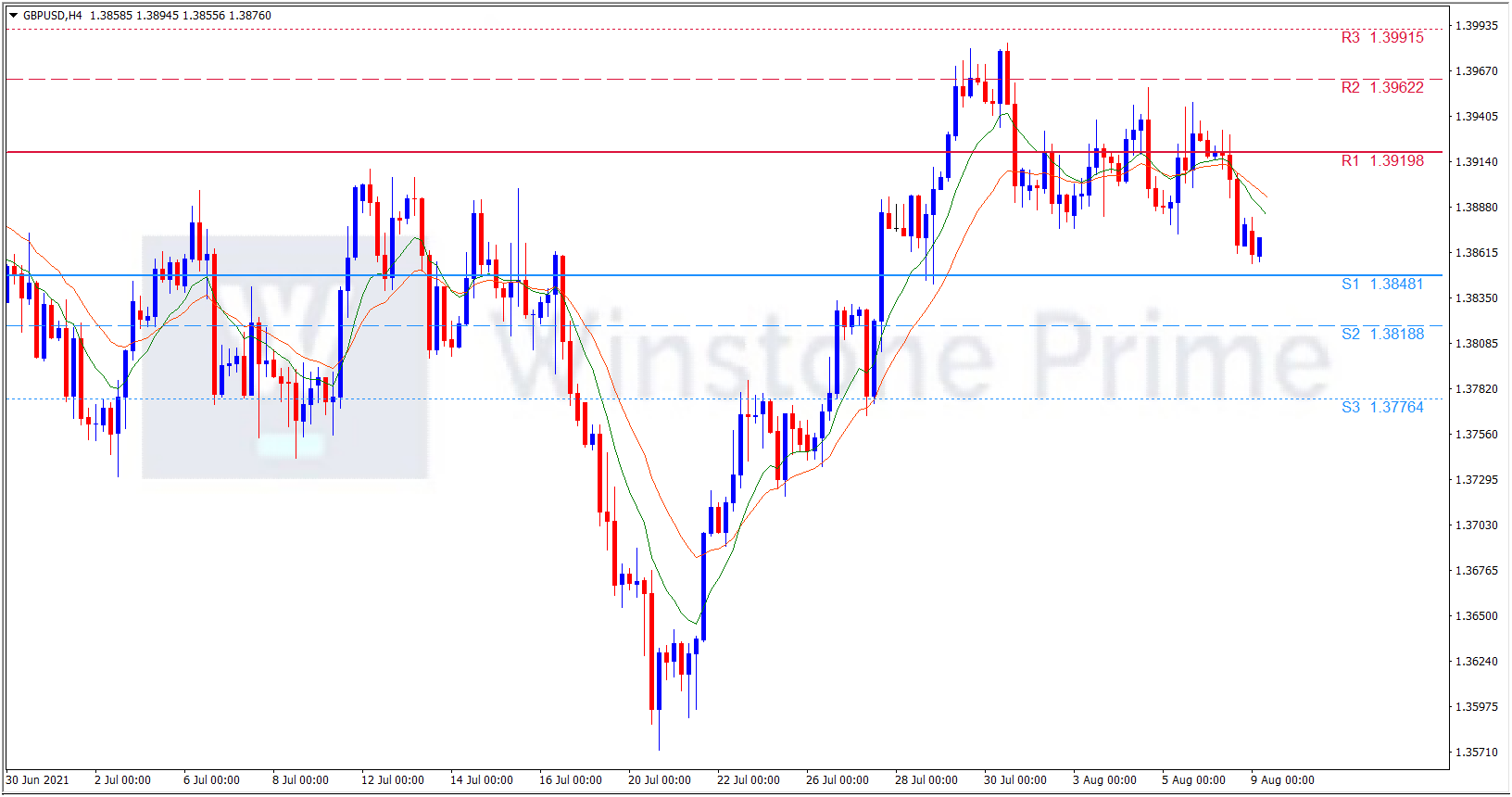
GBP/USD 4 Hour Chart:

Support: 1.3848 (S1), 1.3819 (S2), 1.3776 (S3).

Resistance: 1.3920 (R1), 1.3962 (R2), 1.3992 (R3).

Amidst this above catalyst the hiring in July helped lower the unemployment rate which is favor for US dollar. We expect bearish trend for GBP/USD.