Low bond yield pressurizes dollar

Gold are showing higher from yesterday itself and hitting daily highs today. In quieter summertime trading, the metals market bulls are awaiting some kind of spark to break the markets out of their doldrums. The U.S. economic data point of the week yesterday saw the consumer price index report for May come in at up 0.6%, which was a bit higher than the 0.5% rise expected. Year-on-year the CPI rose to 5.0% in May versus April’s rise of 4.7%. And the report falls into the camp of those who think inflation could get too hot in the coming months.

On a near-term basis, the gold are placing more emphasis on the uptick in bond yields after the CPI report, and less on the bullish implications of rising inflation down the road. The weekly U.S. jobless claims report showed a drop in claims in the latest period, which was also deemed a bit negative for the safe-haven metals. The global marketplace remains calm at present, amid no major geopolitical flareups in play and some typical summertime trading occurring.

What has possibly flown under the radar screen of many in the marketplace recently is the quiet, steady decline in U.S. Treasury yields, which this week dropped to more-than-three-month lows. The yield on the benchmark 10-year U.S. Treasury note is presently fetching 1.52%. Rising raw commodity prices and some supply shortages, combined with major economies busting out of their pandemic shackles, have raised the specter of rising and possibly problematic price inflation in the coming months. However, the big element that does not jibe with the steepening inflation theory is U.S. government bond yields that remain near historically low levels. The stubbornly low U.S. bond yields support the Federal Reserve’s assertions that the rising trajectory of inflation is only transitory.

Expectations that the Fed will maintain its accommodative monetary policy stance, even though the US inflation ran hotter than the forecasts, keeps the bullish undertone intact around gold price. Treasury yields dropped alongside the US dollar in the aftermath of the CPI report, as the Fed is still likely to consider the price rise as transitory.

XAU/USD 4 Hour Chart:
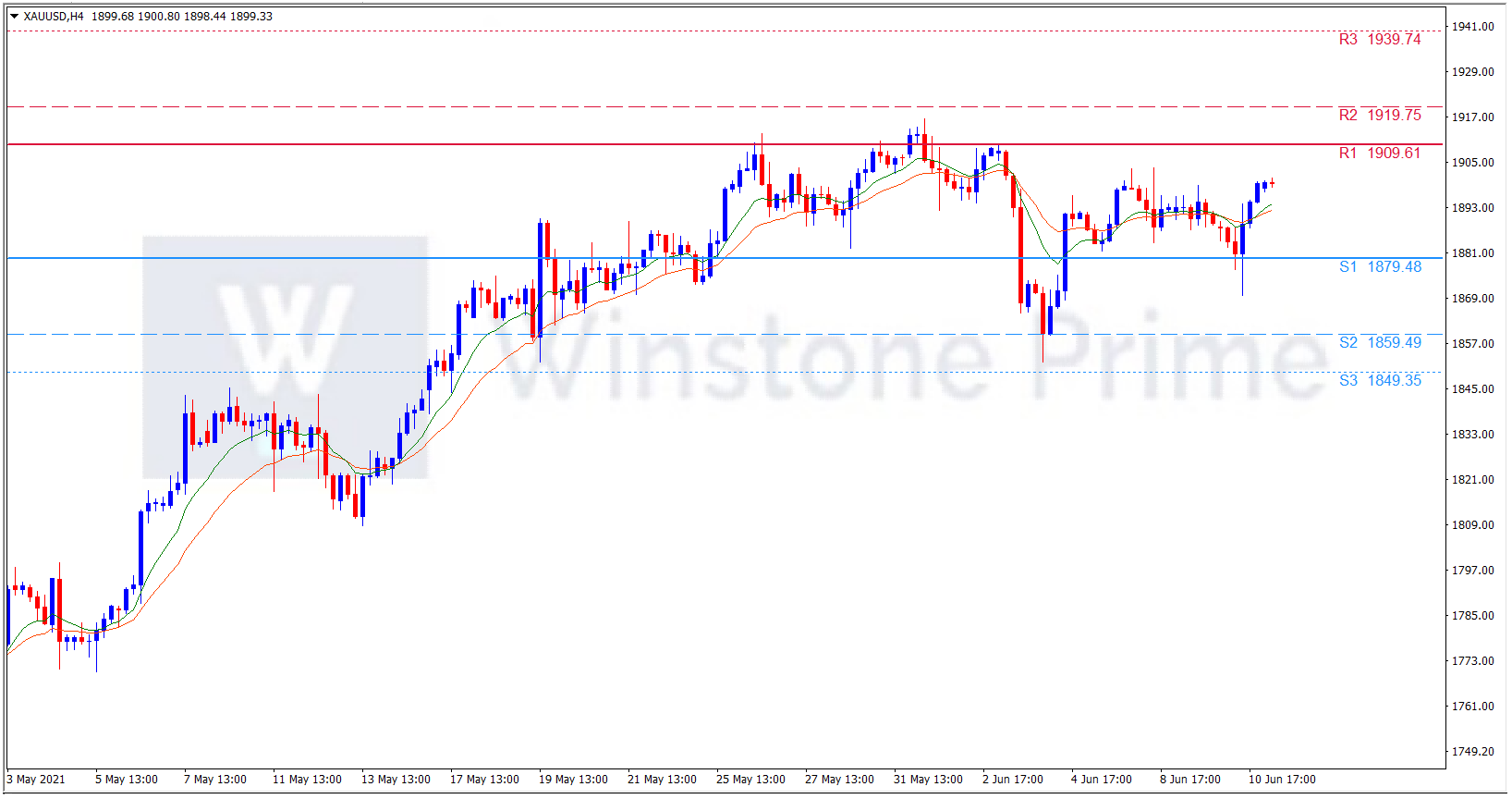
Support: 1879.5 (S1), 1859.5 (S2), 1849.4 (S3).

Resistance: 1909.6 (R1), 1919.8 (R2), 1939.7 (R3).

With all the mentioned catalyst, yellow metal is showing the bullish trend. We expect a bullish trend for XAU/USD.

Risk from covid puts pound under pressure

A rush by home-buyers to beat an end-of-June deadline for a tax break and a shortage of properties on the market helped to push a measure of British house prices to its highest level since 1988 in May, a survey showed on Thursday. “With the economy performing better than could have been expected even a short while ago and the cost of money still at rock bottom levels, the principal drivers supporting demand will remain in place even after the expiry of the stamp duty holiday,” RICS chief economist Simon Rubinsohn said.

British finance minister Rishi Sunak, seeking to soften the COVID-19 hit to the economy, last year exempted the first 500,000 pounds ($707,500) of property purchases in England or Northern Ireland from the stamp duty tax. In March he extended the incentive until the end of June after which there will be a 250,000 pound tax-free allowance until the end of September. Bank of England Chief Economist Andy Haldane said on Tuesday that Britain’s housing market was “on fire” which would probably aggravate wealth inequalities in the country. Deputy Governor Dave Ramsden has said there was a “risk that demand gets ahead of supply and that will lead to a more generalised pick-up in inflationary pressure.”

Among them, The Times update over the last-ditched efforts to resolve the Northern Ireland (NI) issue by UK Brexit Minister David Frost and European Commission vice-president Maros Sefcovic gained major attention. “The Brexit minister Lord Frost today said there had been “no breakthroughs” with the EU after “frank and honest” discussions about the Northern Ireland impasse, including policies on sausages and chilled meats,” said The Times.

On the other hand, the combination of factors weighs on the sterling’s performance. The growing tensions between UK and EU, as the two sides failed to reach an agreement on implementing the Northern Ireland Protocol, impact the sterling negatively. The British Prime Minister Boris Johnson is considering all options amid an emerging trade war after Brussels threatens to impose sanctions over the UK’s exports to NI. It’s worth noting that the upbeat comments from BOE’s Chief Economist Andy Haldane couldn’t win over the bears discussing a third covid wave in the UK, backed by comments from UK epidemiologist Neil Ferguson the previous day.

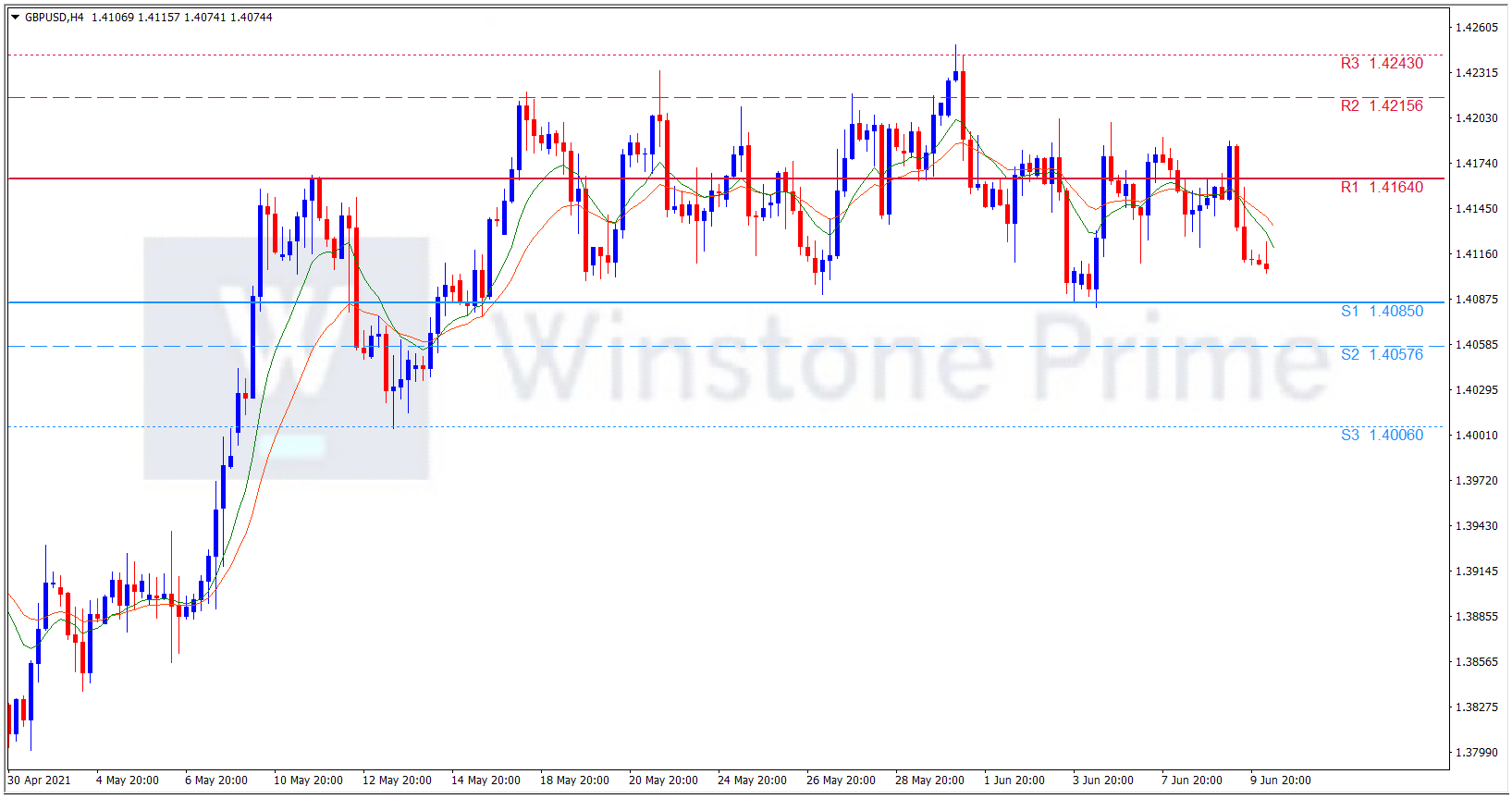
GBP/USD 4 Hour Chart:

Support: 1.4085 (S1), 1.4058 (S2), 1.4006 (S3).

Resistance: 1.4164 (R1), 1.4216 (R2), 1.4243 (R3).

Amid all the recent catalysts, we expect a bearish trend for GBPUSD.

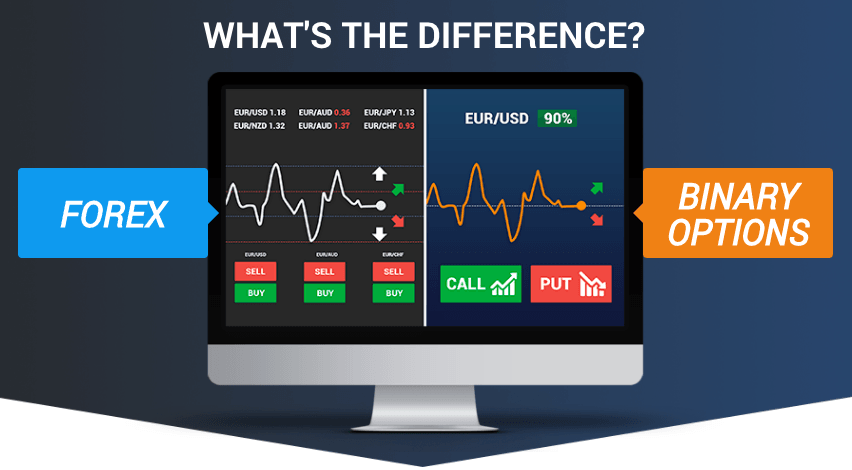
Forex Trading Vs Binary options

If you are new to the world of trading, you may be feeling bamboozled by all the terminology and the options open to you. There are many ways to trade in the modern world. We will answer one of the most frequently asked questions in the world of trading: Which trading is better Forex or Binary Options?.

Discussions of which trading instrument is the best can go on for ages, but sooner or later, trader should choose the most suitable option. In this article you will find detailed answers to the questions with in you.

Instant Profit

About 10 years ago, most brokerage companies specializing in exchange markets suddenly started promoting a new «super service» – binary options. At that time, few people understood what they were, but the thirst for instant profit made this tool very attractive. It was an exclusive offer for that time, because it was basically a pocket casino, but with constant online access and a low starting amount. Enough time has passed now for the consumers to start realizing that binary options is not such a brilliant tool, and that you lose more often than win. In order to assess this tool, you need to understand what it is.

What is a binary option?  

So what is a binary option? To answer this question, let’s look at its structure. The name itself consists of two words – binary and option. The word binary is a derivative of the concept of “binary model” – a model that has only two options for the occurrence of an event: either “yes” or “no”. This model is one of the foundations of the tool: you either win or lose, there are no other options. The word option however derives from real stock options. Stock option is a derivative financial instrument, which is based on the rule that the contract is executed in the future in case some pre-agreed condition is fulfilled.

By combining these two concepts we get a tool that works according to the rules of the stock contract and has only two options for the occurrence of the event. In other words, if you conclude such a contract, you either win or lose.

What is term of Forex Trading:

By the term Forex trading, we refer to an international platform where the currency will be exchanged. This happens to be the biggest marketplace on the planet so far, with over USD 6 trillion being traded regularly. Trading will take place in pairs, while a trader will be comparing the value differentials between 2 currencies like the Euro and the US dollar. There is a high variability when it comes to forex trading. Apart from deciding the direction in which a currency will move, it is also imperative for the traders to guess how high or low it will be going.

There is no limit on the profits or losses made in Forex trading. There isn’t any specified time for expiry when it comes to the forex trades. As compared to trading binary options, forex trading is less diverse in nature. It is possible to do forex trading 24 hours a day, 5 days a week. There is a potential for high levels of leverage.

Difference between Forex and Binary Options

The main differences between forex and binary options are:

  • Forex is a real trading asset; binary options are a fictive asset.
  • Forex can be traded with no limit on the profits or losses; binary options trading is limited by time.
  • Forex offers leverage; binary options do not.
  • Forex trade duration can be unlimited; binary options have expiring time.

Nevertheless, if you cannot predict correctly, you’ll be losing the entire amount of investment made by you in Binary Options.

Are binary options the same as forex? 

Binary options are not the same as forex because binary options are not real financial assets such as forex, bonds, stocks, commodities, futures, etc. It is used in theoretical asset pricing, and binary options are prone to fraud in their applications and hence banned by regulators in many jurisdictions as a form of gambling.

Are you ready to take bigger risks?

Any trading involves a certain degree of risk and might not be suitable for all types of investors. That’s something you learn right away, but the degree of risk differs depending on your risk management strategies.

When applied to Forex, a non-aggressive trading strategy can help you rationally portion your investments and cover a certain percentage of your losses. However, when it comes to binary options, there are no such options as Stop Loss. You either get your profit or lose your investment entirely.

Some traders consider binary options more rewarding and less time-consuming. However, many more experts believe that this approach makes trading more of a game of guess than analysing the market and building an effective strategy, especially when it comes to shorter expirations.

Conclusion

Binary options offer fixed risks and fixed rewards, but they are not real financial assets such as forex, bonds, stocks, commodities, futures, etc. Forex trading is better than binary options trading because it provides higher returns and smaller drawdowns. If you’re looking for a real financial trading system Forex trading is more profitable than binary options. Open account in  Winstone prime and start trading forex

Mixed New Zealand data impacts kiwi

The kiwi has dropped against the greenback amid broad US dollar strength and the mixed NZ data ahead of China’s headline inflation figures, namely the Consumer Price Index (CPI) and the Producer Price Index (PPI) for May.

New Zealand’s Q1 Manufacturing Sales eased from 0.5% to 0.4% but the Manufacturing Activity rose 2.1% versus -0.2% prior on a seasonally adjusted basis but it is less than the forecast of 3.7%.

ANZ Business confidence shows an improvement of -0.4 which is better than forecast of -6.5. whereas ANZ activity outlook shows a drop of 29.1 against the forecast of 29.8

Elsewhere a recent news seems to favor the kiwi lightly, The pandemic has shaken up the rankings of the world’s most liveable cities, a study released yesterday showed, with metropolises in Australia, Japan and New Zealand leaping ahead of those in Europe.

Auckland tops The Economist’s annual survey of the world’s most liveable cities in 2021 followed by Osaka and Tokyo in Japan, Adelaide in Australia and Wellington in New Zealand, all of which had a swift response to the Covid pandemic.

 The Economist Intelligence Unit said “Auckland rose to the top of the ranking owing to its successful approach in containing the Covid-19 pandemic, which allowed its society to remain open and the city to score strongly.”

Another news was recorded,  About 30,000 nurses in New Zealand walked off their jobs on Wednesday (Jun 9) in a nationwide eight-hour strike after negotiations with the government for better pay and working conditions failed.

The strike action came after the New Zealand Nurses Organisation (NZNO) rejected a 1.4 per cent pay hike proposed by the District Health Board earlier this week.

On the other hand, The US decision makers are about to pass a $200 billion stimulus to have machines ready to compete with China. Elsewhere, market players remain divided over the reflation and the Fed’s action amid policymakers’ rejection of strong data.

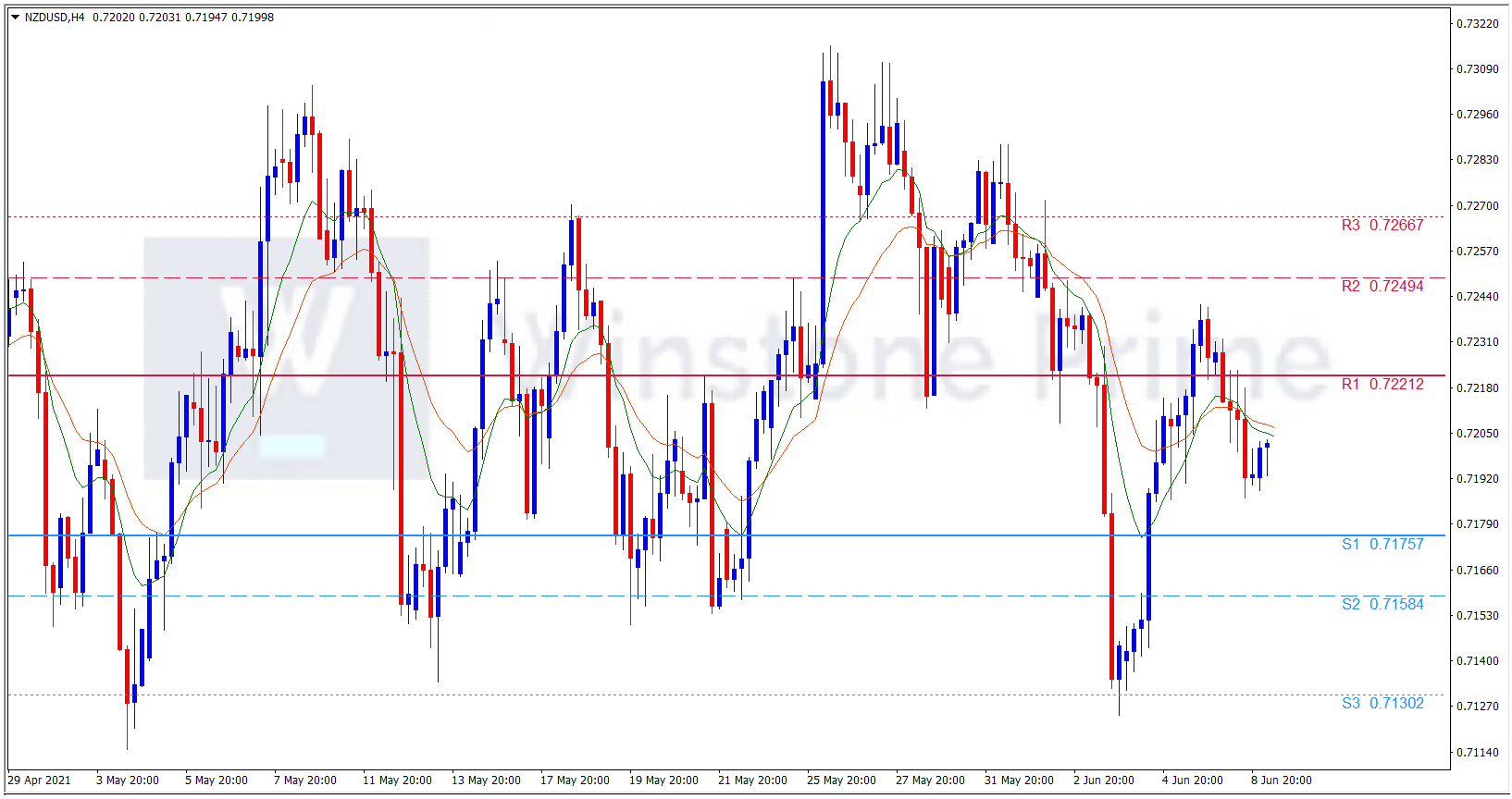
NZD/USD 4 Hour Chart:

Support: 0.7176 (S1), 0.7158 (S2), 0.7130 (S3).

Resistance: 0.7221 (R1), 0.7249 (R2), 0.7267 (R3).

Despite all the catalysts creating mixed sentiment for NZD, the US dollar strength seems to weigh on the kiwi and we expect a bearish trend for NZD/USD.