Rising Us yields pressurises Gold.

Gold is trading low on Friday morning due to strengthening dollar and rising U.S. yields. As an uptick in the dollar and U.S. Treasury yields pressured bullion, while investors are awaiting crucial U.S. inflation data later in the day.

Data released on  Thursday showed the number of Americans filing new claims for unemployment benefits has dropped more than expected last week as layoffs subsided. A separate report from the Commerce Department confirmed economic growth accelerated at a 6.4% annualised rate last quarter.

Elsewhere, Federal Reserve Bank of Dallas President Robert Kaplan said the labour market was more tighter than levels of employment suggest. Investors are waiting for the monthly U.S. personal consumption report due later in the day to gauge inflationary pressure.

Whereas Fed officials have recently downplayed rising price pressures and made a affirmation on their support to keep monetary policy accommodative for some time.

“While inflation fears have stalked the markets across the month, the Fed has been consistent and vocal in reining in expectations of a move to tighten policy.” The Fed has targeted an annual inflation of 2% over the past decade but it has barely met that goal.

On the other hand, the CPI, which includes food and energy components, registered a 4.2% growth in April for its largest increase in almost 13 years after intense cost increases in an economy rapidly recovering from the coronavirus pandemic. Prices of almost everything, from houses to the lumber that goes into building them, soared in recent months, scaring economists into believing that inflation growth in 2021 could be the highest in 35 years.

XAU/USD 4 Hour Chart:
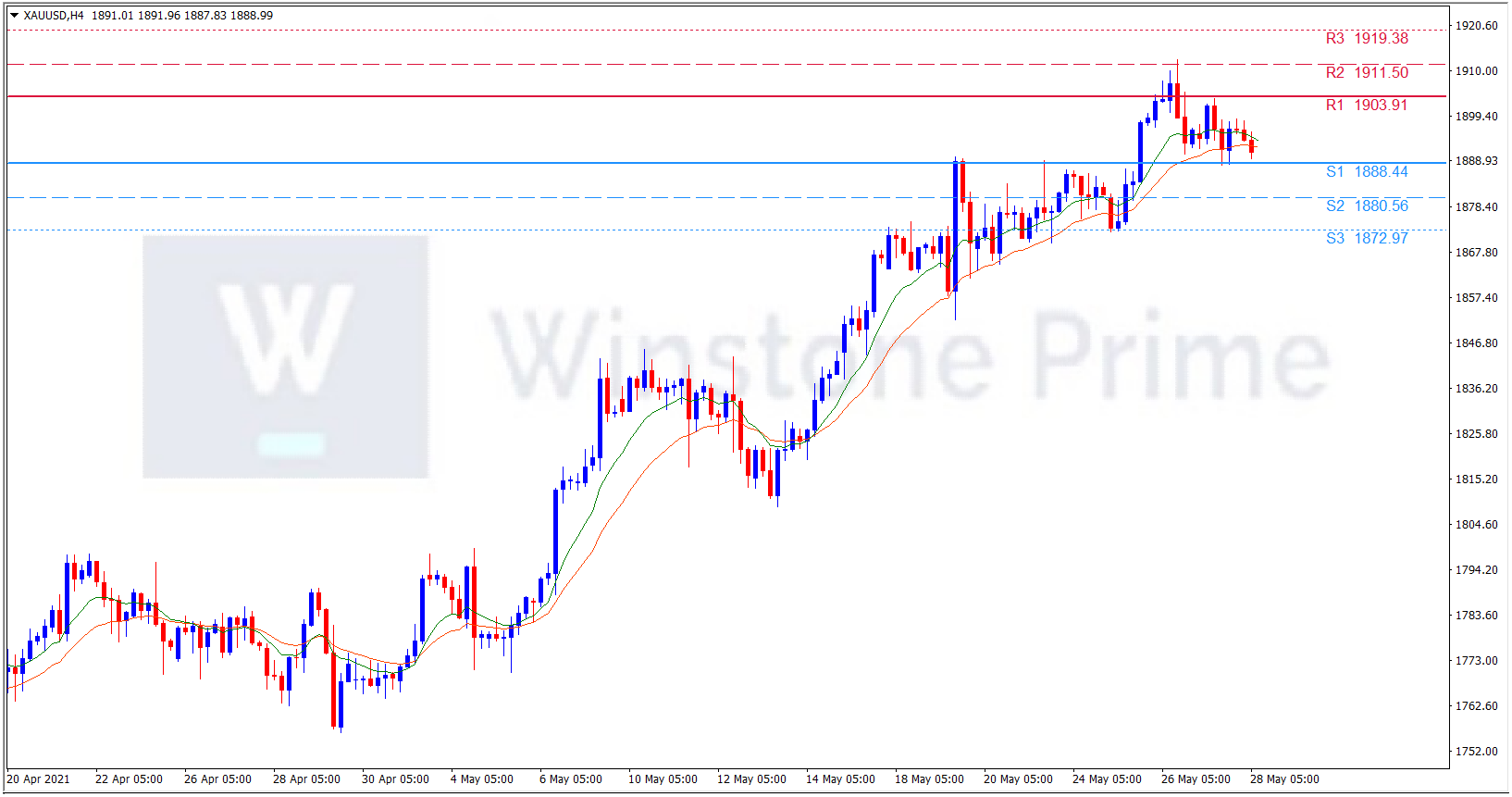
Support: 1888.4 (S1), 1880.6 (S2), 1873.0 (S3).

Resistance: 1903.9 (R1), 1911.5 (R2), 1919.4 (R3).

Gold is trading low due to hopes on US dollar.

Lockdown announcement puts pressure on Aussie

Aussie seems to struggle against the dollar during early Thursday. Recovery in the US dollar and the coronavirus (COVID-19)-led lockdown in Victoria weighs down the Aussie pair.

The US dollar index (DXY) extends its recovery moves from early January lows, up 0.13% intraday, while following the firmer Treasury yields.

The recent increase in the covid infections led the Australian government to make an announcement on a seven-day lockdown in the second-largest state Victoria. Acting Premier James Merlino announced this move today morning, after the case recorded another 11 new cases in the last 24 hours.

The lockdown will apply to the entire state and will be in place until June 3, with people only allowed to leave their houses to get food, go to authorised work, give care, exercise or get a vaccination.

Prime Minister of Australia said that “Right now every support has been given to the Victorian government … and I have made it very clear to the Premier that any other additional support he requires he will receive.”

The Reserve Bank of Australia (RBA) is expected to reiterate that no tightening is likely before 2024 at its June policy meeting next week. Analysts also suspect the RBA will formally commit to another round of bond buying at its July meeting.

As per the recent data, Australia’s Private Capital Expenditure for the first quarter (Q1) has crossed the 002.0% market consensus and 3.0% previous readouts with a 6.3% jump. Elsewhere the latest payroll job numbers released on Tuesday showed that the number of jobs is just over 1%. Whereas China’s Industrial Profits eased to 57.0%, below 92.3% YoY previous readouts in April.

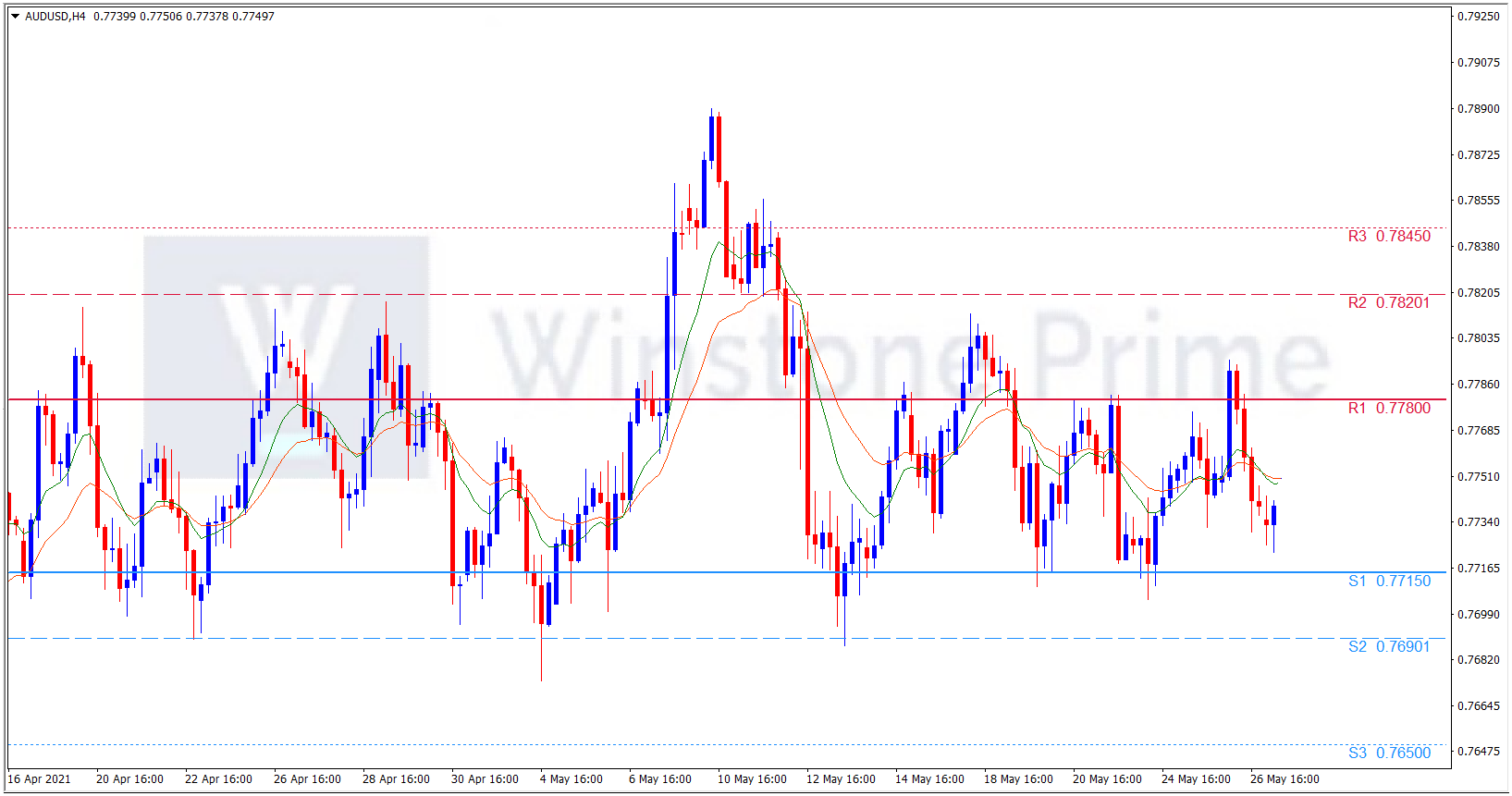
AUD/USD 4 Hour Chart:

Support: 0.7715 (S1), 0.7690 (S2), 0.7650 (S3).

Resistance: 0.7780 (R1), 0.7820 (R2), 0.7845 (R3).              

US Durable Goods Orders for April and Weekly Jobless Claims may give further direction to the pair. In the meantime we expect a bearish trend for AUD/USD.

1992 – Black Wednesday & George Soros

Black Wednesday - 1

This article deals with Black Wednesday in politics and economics. George Soros became one of the most famous currency traders in the world, his timely and brave bet against the Bank of England in 1992 on what became known as Black Wednesday. With costs of around £3.3 billion, Britain’s central bank was unable to defend itself from an attack in the currency markets, and Mr. Soros made an estimated $1 billion in profit as a result.

What is mean by Black Wednesday?

Black Wednesday refers to the 16th of September 1992, when a crash of the pound sterling forced Britain to exit the European Exchange Rate System (ERM). The United Kingdom was pushed out of the ERM because the value of the pound could not keep it from falling below the lower limit defined by the ERM.

Black Wednesday had been globally criticized at that time as a massive waste of money. Black Wednesday, on the other hand, helped the U.K. come out of the eurozone and save itself from all the future economic problems.

In the late 1970s, the European ERM was formed to stabilise European currencies in preparation for the Economic and Monetary Union (EMU) as well as the adoption of the Euro. Countries trying to substitute their currency with the Euro had to maintain their currency’s value for several years within a defined range. 

The U.K. was with ERM for over two years before the Black Wednesday. The pound gradually depreciated and fell near the lower limits set by the ERM. The British government had taken measures to support the pound, including raising interest rates and allowing the purchasing of pounds using foreign currency reserves.

But George Soros, a Hungarian-American billionaire investor and philanthropist had believed that the U.K. would fail in its attempts to prop up the pound. Soros secretly stacked up a short position against the British currency. He, then, started addressing publicly about his belief that no one could defend the pound. Market speculators such as George Soros felt the government’s position was untenable and at some time they would have to devalue. They say this as an opportunity to make a profit selling Pounds at a high price and buy them back at a lower price. Therefore, the speculators kept selling pounds, forcing the treasury to keep buying them and the government also had to keep raising interest rates. Many speculators also began betting against the pound, while investors hedged against a crash in the exchange rate.

The Soros-inspired gathering against the pound had many of the characteristics of a prophecy that fulfilled itself. A recession became more likely as more people began to assume that the British pound would fall out of the European ERM. Businesses and investors needed to prepare for this because it became more probable. Their plans then pressurized the pound further to sink.

Soros’ Quantum Fund started selling massive sums of pounds on the market the day before Black Wednesday, leading the price to plunge further. The Bank of England took action to stop the sell-off but could not succeed. The Bank of England finally announced that the U.K. was going to leave the European ERM on the day of black Wednesday.

Hence, George Soros is known for “breaking the Bank of England” because of Black Wednesday. Media reports suggest that he made a USD 1 billion profit that day, which has cemented his reputation as a great forex trader.

The Bank of England said they were buying £2bn of Sterling very hour. Within a short space of time, the UK Treasury spent £27bn in buying sterling on the foreign exchange markets.

It was estimated the final loss of the government’s intervention was £3.4bn.

Black Wednesday and Its Aftermath

The UK’s prime minister and cabinet members authorized the spending ​of billions in Pounds Sterling as an attempt to contain the short selling by speculators. The Black Wednesday rate rise was sudden and the first for three years and therefore the market either panicked in confusion or lacked confidence in the government’s ability to bring the pound under control. Moreover, the British government announced that it would raise its interest rates from 10 percent to 15 percent to try and attract currency traders looking for greater yield on their currency holdings.

Unfortunately, currency speculators didn’t believe the government would make good on these promises and continued shorting the Pound Sterling. After an emergency meeting among top officials, the country was ultimately forced to withdraw from the ERM, to let the market revalue its currency to more appropriate, lower levels.

The country was arguably thrown into a recession afterward, with many British citizens referring to the ERM as the “Eternal Recession Machine.” While the government lost a lot of money, some politicians are glad the ERM disaster occurred, since it paved the way for more conservative polices that would ultimately be credited for reviving the economy.

What Black Wednesday teaches

Black Wednesday teaches a number of important lessons to both currency traders and governments, including some lessons that may surprise readers. For instance, statistical data suggests that the British economy was growing faster in the ERM than published figures suggest, and the resulting recession may have instead been due to the aftermath of the Lawson boom—a period of economic growth that preceded 1992.

Lessons for governments might include :

  • Don’t dictate interest rates: ​The ERM interest rates were set for Germany when they should have been set by Europe for Europe.
  • Pick your fights against speculators: Taking extreme measures to counteract decisive market action often becomes a futile and expensive endeavor.


Lessons for currency traders could include :

  • Nothing’s impossible: The departure of Britain from the ERM was unthinkable to many during the crisis, but even governments make big mistakes.
  • Be ready for extreme measures: Britain’s decision to raise interest rates from 10 percent to 12 percent to 15 percent in a single day demonstrates potential government resolve.


Conclusions

On positive side of the Black Wednesday fundamentally reshaped both the political and economic landscapes in the UK and wider Europe and some lessons are still being learnt over a quarter of a century later. Black Wednesday also showed the importance of the BoE’s operational independence and the separation of long-term, stable economic policy and the shorter, more tumultuous terms of governments that come and go. 

Black Wednesday is widely known as the day that billionaire currency trader George Soros broke the Bank of England and made over $1 billion. But, the real lessons are found by analyzing the underlying causes of the crisis and how they quickly led to problems. By understanding these issues, central banks can avoid future crises sparked by regulatory constraints.

RBNZ’s move favors kiwi

The dollar has reached near to its weakest level since early January as Treasury yields eased amid Federal Reserve insistence that stimulus will continue despite current inflationary pressures.

Whereas New Zealand’s currency rose after the central bank said it would maintain stimulatory monetary policy settings until its inflation and employment targets are achieved.

The RBNZ has matched broad forecasts of announcing no change in the benchmark rate of 0.25%, and there are not any changes in the bond purchase programs. However, the NZ central bank’s statements suggested a rate hike in late 2022.

Elsewhere, Westpac expects the RBNZ to upwardly revise its economic forecasts for 2021. It  is also projecting that inflation will easily surpass 2 per cent this year, but adds that the RBNZ has anticipated this and will view higher inflation as transitory. But Federal Reserve, which has dismissed a recent surge in inflation as merely temporary. Finally, Westpac does not expect the central bank to hike rates before 2024.

On the other hand, A host of Fed officials overnight echoed the sentiments of Chair Jerome Powell that a spike in inflation will be transient and ultra-easy policy continues to be warranted. “I have not seen anything yet to persuade me to change my full support of our accommodative stance,” Chicago Fed President Charles Evans said in a speech on Tuesday.

“Right now, policy is in a very good place,” San Francisco Fed President Mary Daly told CNBC the same day. “We need to be patient.”

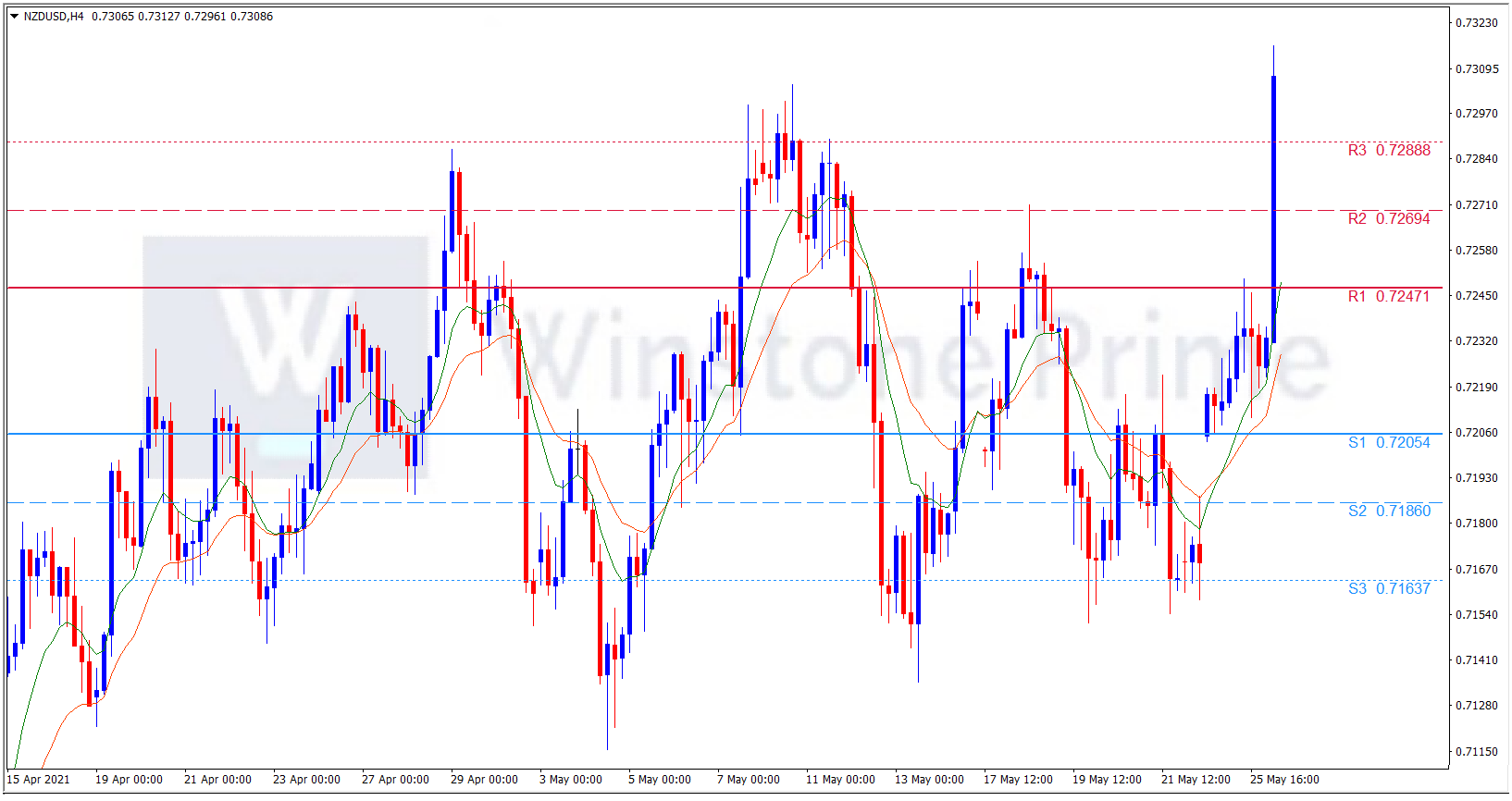
NZD/USD 4 Hour Chart:

Support: 0.7205 (S1), 0.7186 (S2), 0.7164 (S3).

Resistance: 0.7247 (R1), 0.7269 (R2), 0.7289 (R3).

RBNZ’s move has helped the kiwi whereas the Fed’s dovish move weakness dollar. We expect a bullish trend for NZD/USD.