
All traders in the global trading community will always have an opinion concerning the Forex market. Everyone has a personal perception of why the Forex market is moving in a particular way, and it’s during trading that traders reveal this view in any trade they take.
A trader must understand that the Forex market is a synthesis of different views, ideas, and opinions.
What is Market Sentiment?
When we think of market sentiment, we should think on how the humans usually respond to events along with human emotions. The perception of what is taking place in the market and how trades are executed plays a big role with market sentiment.
Forex trading is about prediction on the markets along with utilizing the right technical indicators. When a forex trader has a good idea on where many traders are positioned, the key to earning money within the forex markets is centered on positioning himself in the direction where market sentiment is the strongest.
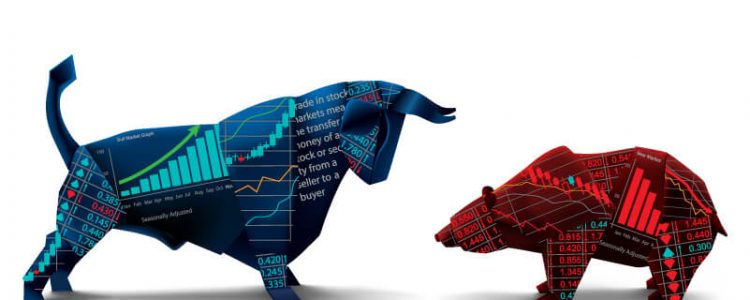
Each and every trader has a mind of their own when it comes to the direction that the market is heading and their opinions are what drive the markets. There are traders that think the market is either bullish or bearish and it is these beliefs which force the market in either direction.
There are either bullish forex traders or bearish forex traders. The bullish forex trader thinks that the markets on whole are headed into positive territory and the overall markets are on an uptick. On the other hand, there are bearish forex traders who believe that the markets are turning south and that everyone should run for cover.
What is Sentiment Analysis?
After understanding Market sentiment, let’s look on Sentiment analysis Sentiment analysis is a kind of FX analysis that concentrates on indicating and consequently measuring the overall psychological and emotional state of all participants in the foreign exchange market.
This kind of Forex analysis strives to quantify what percentage of FX market participants are bullish or bearish, in other words, being optimistic or pessimistic. When the majority market sentiment in Forex is successfully identified, a certain analyst will take up a position on the opposite side of the hypothesis that the crowd is mistaken.
Trading only on sentiment is a contrarian technique, depending heavily on bear and bull ratios, and other sentiment indicators. Instead, sentiment analysis is frequently applied in synthesis with fundamental or technical analysis, to add more depth to a trader’s comprehension of the Forex market. You should be aware that utilising all three types of analysis simultaneously can be overwhelming, but is certainly worth the effort.
Sentiment Indicators
It would be a mistake if we skip sentiment indicator in this Article ,so what is sentiment indicator. Sentiment indicator is a numeric or graphical indicator made to show how a certain group feels about the market or a business environment, and perhaps also about other factors. Sentiment indicators aim to gauge the mood of the Forex market. You can find a lot of them on the internet. We are going to outline three particular indicators that you may find useful as examples:
Crowd behaviour is the basis of contrarian investing. That is, to sell when optimism is at its peak, and purchasing when pessimism has peaked, and the market has actually bottomed out. This approach exists only due to the fact that prices are defined by market sentiment. The behaviour of the crowd is a combination of a large amount of biased thoughts and processes, and therefore, is virtually impossible to quantify.
There are some tools which are included in the category of sentiment indicators that we may use to define bullish or bearish sentiment. There are a lot of them, and an unlimited number of ways to interpret them.
The COT (Commitment of Traders Report) can provide up to date information about trends, and the power of the commitment traders have towards this trend, by detailing the actual positioning of speculative and commercial traders in the diversity of future markets. You should bear in mind that Forex is an over-the-counter market (OTC), so the future market is utilised here as a proxy for the concrete spot market.
Additionally, the Commodity Futures Trading Commission (CFTC) publishes a new COT report every Friday. You may use it to get an idea of Forex market sentiment for a particular time period. The COT report in fact contains a lot of other useful information, however, the essence of the report is that it provides data that shows the net long or short positions for every available futures contract, for both commercial and non-commercial traders.
The VIX has a fair amount of popularity within the Forex trading community. This is generally because VIX is a sentiment indicator used to measure implied volatility. As you already know, volatility is the magnitude of move that a price diverges from the mean price over a set period of time.
While some sentiment indicators will also fall under the heading of a technical indicator, or vice versa, sentiment indicators are meant to show how consumers or investors have positioned themselves—or what their current beliefs are about the economy or market. A technical indicator is a broad term used to describe formulas that manipulate price or volume data (and sometimes other types of data) of an asset to provide a different perspective on what is happening on a price/volume chart.
Sentiment indicators are not timing signals. An extreme reading on the Commitment of Traders report doesn’t mean the price of the asset will immediately reverse. Extreme reading can remain in place for a long time, or the price may stay where it is while traders unwind their positions and the extreme reading disappears without a significant price reversal.
Sentiment indicators are best used in conjunction with other forms of technical and fundamental analysis to help confirm market or economic turning points. For example, an extremely bullish sentiment reading, coupled with an extremely high price/earnings ratio (and/or deteriorating fundamentals), as well as a breakdown in price, provides more conclusive evidence of an impending downtrend than acting on sentiment alone.
Sentiment page
Many brokers have sentiment analysis page in their website where you can find how much percentage of traders are going long and short, the percentage change over time, and whether market signals are bullish or bearish.
You can find the Market sentiment tool and Market sentiment page in Winstone Prime which will be a valuable tool for traders to analyze the market sentiment.
Final words
Forex sentiment plays a huge role in Forex trading and investing. The mainstream mood in the foreign exchange market is an identifier of market direction. Adhere to what traders talk about, whether they are bullish or bearish. It actually helps in gauging the psychological and emotional attitude of all market participants. You can apply this analysis to predict market movements based on the current situation.
Instead of using Market sentiment or tool alone while trading, We would advise to use Market sentiment analysis or tool along with fundamental analysis and technical analysis to trade in a better way.