RBA monetary policy favors Aussie

Global economic optimism created due to the covid vaccine rollout weighs on the safe haven asset – greenback. Along with that, the RBA monetary policy, Lower Treasury yields seems to favor the Aussie.

As per the Australian RBA minutes, Australia’s economic recovery has surpassed all expectations with an “above-trend” expansion likely this year. The country’s central bank is still in no hurry to tighten policy settings, minutes of its April policy meeting showed on Tuesday.

The Reserve Bank of Australia (RBA) left the rates at a record low at 0.10% at its April 6 meeting while reiterating its commitment to keep policy accommodative for as long as is necessary to pull down unemployment and push inflation higher.

The minutes showed the RBA would maintain this supportive policy stance until actual inflation is sustainably within its 2-3% target range, a goal it does not expect to meet before 2024.

“Overall, preliminary data suggested that GDP in the March quarter was likely to have recovered further to around its pre-pandemic level, earlier than previously expected,” the minutes showed.

“Despite these generally positive developments, wage and price pressures had remained subdued and were expected to remain so for several years,’ according to the minutes.

Elsewhere, People’s Bank of China (PBOC) matches wide market expectations of keeping the benchmark rates unchanged. The PBOC keeps one-year and five-year around 3.85% and 4.65% respectively during the latest monetary policy meeting.

US President Joe Biden’s readiness to alter some parts of his $2.25 trillion infrastructure spending to favor the market optimism.

AUD/USD 4 Hour Chart:
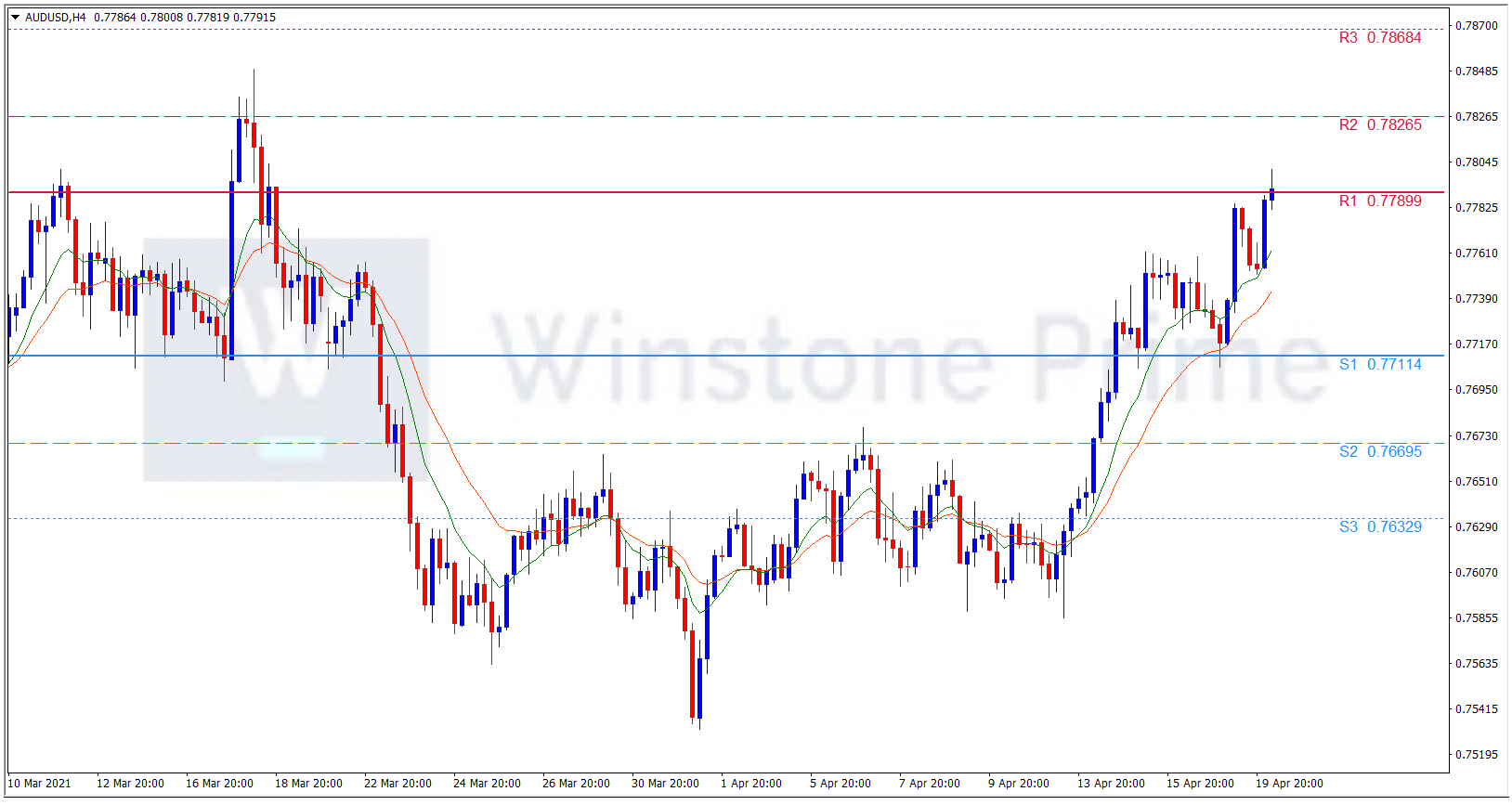
Support: 0.7711 (S1), 0.7670 (S2), 0.7633 (S3).

Resistance: 0.7790 (R1), 0.7827 (R2), 0.7868 (R3).

RBA monetary policy along with the weaker U.S. Dollar favors the Aussie against the greenback. We expect a bullish trend for AUD/USD.
What is NFT (Non-fungible Token)?

NFTs are tokens that can be used to represent ownership of unique items. They help to tokenize things like art, collectibles, even real estate. They can only have one official owner at a time and they’re secured by the Ethereum blockchain – no one can modify the record of ownership or copy/paste a new NFT into existence.

Comparing Fungible and Non-Fungible assets

Non-fungible is a term used in economics to describe an item that is defined by its unique properties. The definition of the item means that is not interchangeable. For example we can take a Bike; the unique properties of one specific bike make it inherently different than any other physical bike. Most of the things in your house would also be examples of non-fungible assets. Think of things like your computer, watch, pants, or mattress. These are all things that are defined by their unique characteristics.

We can compare non-fungible asset with a fungible asset to understand the NFT better. Fungible assets, by contrast, are defined by their value. The $20 bill in your wallet is fungible. Whether you have this exact $20 bill or another physical bill makes no practical difference since the bill is defined by its value rather than its unique properties (which in the case of a $20 bill could be how crinkled it is). Other examples of fungible goods include commodities like grain or common shares of a company.

Brief History of NFTs

NFTs were first marketed as Coloured Coins in 2012. Five years later NFTs came to prominence in 2017 with a game called CryptoKitties, which enables players to buy and “breed” limited-edition virtual cats. Within a short time, CryptoKitties generated more than US$12 million in sales, with the rarest kitties selling for upwards of US$100,000 a piece. From there, game developers adopted NFTs in a big way to allow gamers to win in-game items such as digital shields, swords or similar prizes, and other game collectibles. Tokenization of game assets is a real game-changer, since it enables transferring tokens between different games or to another player via NFT specialized blockchain marketplaces.

Besides gaming, NFTs are frequently used to sell a wide range of virtual collectibles, including NBA virtual trading cards, music, digital images, video clips and even virtual real estate in Decentraland, a virtual world.

NonFungible.com is a website that tracks NFT projects and marketplaces, puts the value of the total NFT market at $250 million, a negligible fraction of the total crypto coin market but still highly attractive to content creators. The contract behind the token, based on the ERC-721 standard for creating NFTs, can be set to let content creators continue to earn a percentage from all subsequent sales.

In future, The NFT market is likely to grow further because any piece of digital information can easily be “minted” into an NFT, a highly efficient way of managing and securing digital assets.

NFT tokens are often based on the Ethereum blockchain – but levels of congestion seen on this network have meant digital assets have started to be created on rival platforms.

To create scarcity that gives NFT tokens their value, developers can ensure that the supply of tokens is strictly limited. It’s also common for tokens to be split into varying degrees of rarity, meaning that only a small number of the most desirable tokens will ever exist. NFTs for some crypto games are sold in packs, meaning that every player has a chance of getting their hands on one of the most coveted NFTs.

And another thing that sets NFTs apart from major cryptocurrencies such as Bitcoin and Ether is the fact that they cannot be divided into smaller chunks. Whereas it’s easy to send 0.05 BTC to a friend, it’s impossible to send 5 per cent of an NFT in a similar fashion.

One of the most common advantages of non-fungible tokens lies in how blockchain platforms can help verify the authenticity of an asset – and provide a comprehensive history of ownership.

Some believe that the growth of NFTs could breathe fresh life into the embattled music sector, which has been hit hard by the coronavirus pandemic. Kings of Leon were recently pioneers when they launched their eighth studio album in tokenised form – enabling fans to place a bid. The rarest token available offered some insane perks, including front-row seats to the band’s concerts for life, piles of merchandise, and a chauffeur.

The major factors by which the NFTs are valued are:

  • Scarcity: NFTs aren’t mass produced and cannot be replicated. In fact, many NFTs are one-of-a-kind.
  • Indivisible: While not technically impossible, NFTs typically cannot be broken into smaller parts. This functionality makes fractional ownership of the asset impossible.
  • Unique: An NFT is authenticated by a “permanent information tab,” which confirms that it is a unique asset.


At its core, an NFT’s value is driven by supply and demand. Due to vastly limited supplies and their one-of-kind nature, a sudden increase in public interest can spike prices. Subsequently, the cryptocurrency boom of late-2020 and early-2021 took many NFT products to staggering heights.

One of the essential things about NFTs is that anyone can make, buy, and sell an NFT without asking for anyone’s prior consent. Also, these digital assets are kept in an encrypted peer-to-peer system, which makes it hard for cybercrooks to hack or tamper.

Currently for buying or selling NFT, you have to install Metamask–Ethereum’s digital wallet, the second most popular cryptocurrency after Bitcoin. After installing Metamask, you can buy Ethereum. You can visit any website like market site such as OpenSea, SuperRare, Foundation, or VIV3 which sells NFTs, you can use the bought etherium to buy an NFT. Also, you can trade NFTs from crypto exchange Uniswap by connecting your Metamask account.

The Covid pandemic has further devastated the poorly-paid lives of innumerable artists, musicians and creators. The digital world offers a creative outlet, but in it, any creation can be easily duplicated. This is where NFTs come in. With NFTs, any creation can be tokenised to create a digital certificate of ownership, helping creators get a life-changing price for their art.

Theoretically, artists with NFTs for their creations can access a global market, retain ownership rights over their work and claim benefits like resale royalties directly. But in the real world, new-fangled innovations seldom work the way it is claimed. Some even think that NFTs will fix the shattered economics of streaming music and restore the power-balance between art creators and art mediators. But all this is mere conjecture at this point. The NFT eco-system after all, is connected to the largely unregulated world of cryptocurrencies.

Over the past 10 years or so, the crypto sector has regularly been gripped by crazes. A notable example comes in the form of initial coin offerings, which exploded in popularity in 2017. Here’s the problem: many investors lost substantial amounts of money owing to scams and projects that never came to fruition.

Few critics, such as Litecoin founder Charlie Lee, believe that the sudden spike in NFT trading activity is extremely problematic. He predicted that the supply of NFTs will eventually overtake demand, causing prices to crash. This will create big problems for those who spent six-figure sums to get their hands on rare tokens, all with a hope of selling it for a profit in the future.

For all the excitement, there are also concerns that NFTs are not eco-friendly because they are built on the same blockchain technology used by some energy-hungry cryptocurrencies. For example, each NFT transaction on the Ethereum network consumes the equivalent of daily energy used by two American households.

Security for most of today’s blockchain networks is based on special computers called “miners” competing to solve complex math puzzles. This is the proof-of-work principle, which keeps people from gaming the system and provides the incentive for building and maintaining it. The miner who solves the math problem first gets awarded with a prize paid in virtual coins. The mining requires a lot of computational power, which drives electricity consumption.

Ethereum blockchain technology is evolving and moving toward a less computationally intensive design. There are also emerging blockchain technologies like Cardano, which was designed from the outset to have a small carbon footprint and has recently launched its own fast-growing NFT platform called Cardano Kidz.

The speed of transformation of blockchain technology into a newer, more eco-friendly variant might well decide the future of the NFT market in the short term. Some artists who feel strongly about global warming trends are opposed to NFTs because of perceived ecological impact.

Conclusion

Non-fungible tokens are created by the process of cryptography and recorded on the blockchain. They cannot be mass reproduced, counterfeited or divided into smaller parts. NFTs may be used for a wide variety of purposes, including validating ownership and as the basis for smart contracts. Valuations of NFTs vary wildly, but are related to each token’s inherent scarcity and uniqueness.

The rise of NFTs during 2020 and early 2021 created an abundance of media hype and controversy. However, given the high valuations of certain non-fungible tokens, traditional auction houses such as Christie’s and Sotheby’s chose to enter the market. Although NFTs are not yet part of the financial mainstream, they are a budding asset class with an uncertain future.

Soft dollar is favoring the yellow metal

Gold is trading upside against greenback This is mainly due to the persistent weakness US Treasury yields. But the demand for the US dollar, amid concerns over the US President Biden’s $2.25 trillion infrastructure stimulus and covid infections is acting as a barrier in the upside trading of gold.

U.S. 10-year Treasury yields has edged lower towards multi-weeks low touched last week. U.S. Federal Reserve has repeated its stance to keep monetary policy accommodative until the crisis is over, and the Fed officials have said that any spike in inflation is likely to be temporary.

ANZ analyst commented that “Inflation expectations are holding above 2.5% amid soaring commodities prices. This along with Fed’s dovish stance on the monetary policy, is keeping the backdrop supportive for bullion.”

Few investors view gold as a hedge against higher inflation that could follow stimulus measures.

Elsewhere, Fed Governor Christopher Waller said that the U.S. economy “is ready to rip” as vaccinations continue and activity picks up, but a rise in inflation is likely to be transitory, echoing comments from other Fed officials including Chair Jerome Powell over the past week.

As per a news, China recently eased restrictions for banks importing the bullion. The news hints at around 150 tons of gold imports versus the recent average of 10 tons and the year 2019 buying of 75 tons per month. Also joins the news is the chatters of India’s record gold buying of near 160 tons in March. It’s worth mentioning that India and China are the world’s biggest gold consumers and hints of increased buying from the key customers should help the bullish trend of the yellow metal.

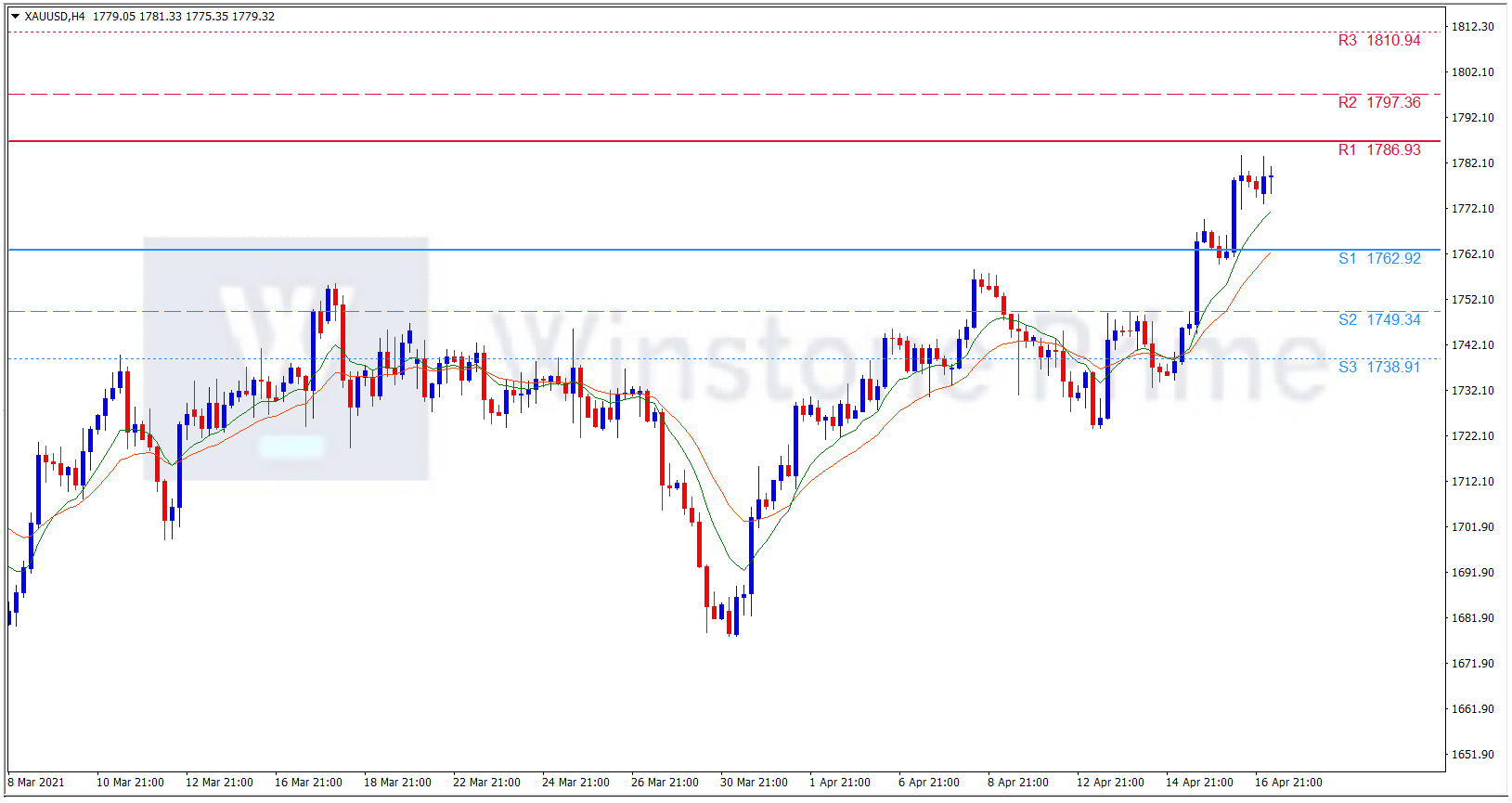
XAU/USD 4 Hours Chart:

Support: 1762.9 (S1), 1749.3 (S2), 1738.9 (S3).

Resistance: 1786.9 (R1), 1797.4 (R2), 1810.9 (R3).

All the catalysts seems to favor the yellow metal against the greenback, we expect a bullish trend for XAU/USD.

How to trade the Channel Pattern

We all love to ride the roller coaster, isn’t it?  It has its ups and downs and we cheer every time it changes its vertical direction. Sometimes it goes in an upward direction and sometimes we get butterflies in the stomach when it goes in the downward direction. We can feel that thrill, right? Just like the roller coaster ride, the same thing happens in Channel pattern trading.  The Market has its own ups and downs. But, not every trader is able to take the ultimate enjoyment of this ride. Because Predicting the market is really a difficult job.

Trading channel chart patterns would have to be one of the easiest technical analysis techniques to implement. The channel is a powerful yet often overlooked chart pattern and combines several forms of technical analysis to provide traders with potential points for entering and exiting trades, as well as controlling risk.

In this topic, we are going to discuss how channel helps us to recognize the opportune trend (high & low) and how we can take benefit of this ride.

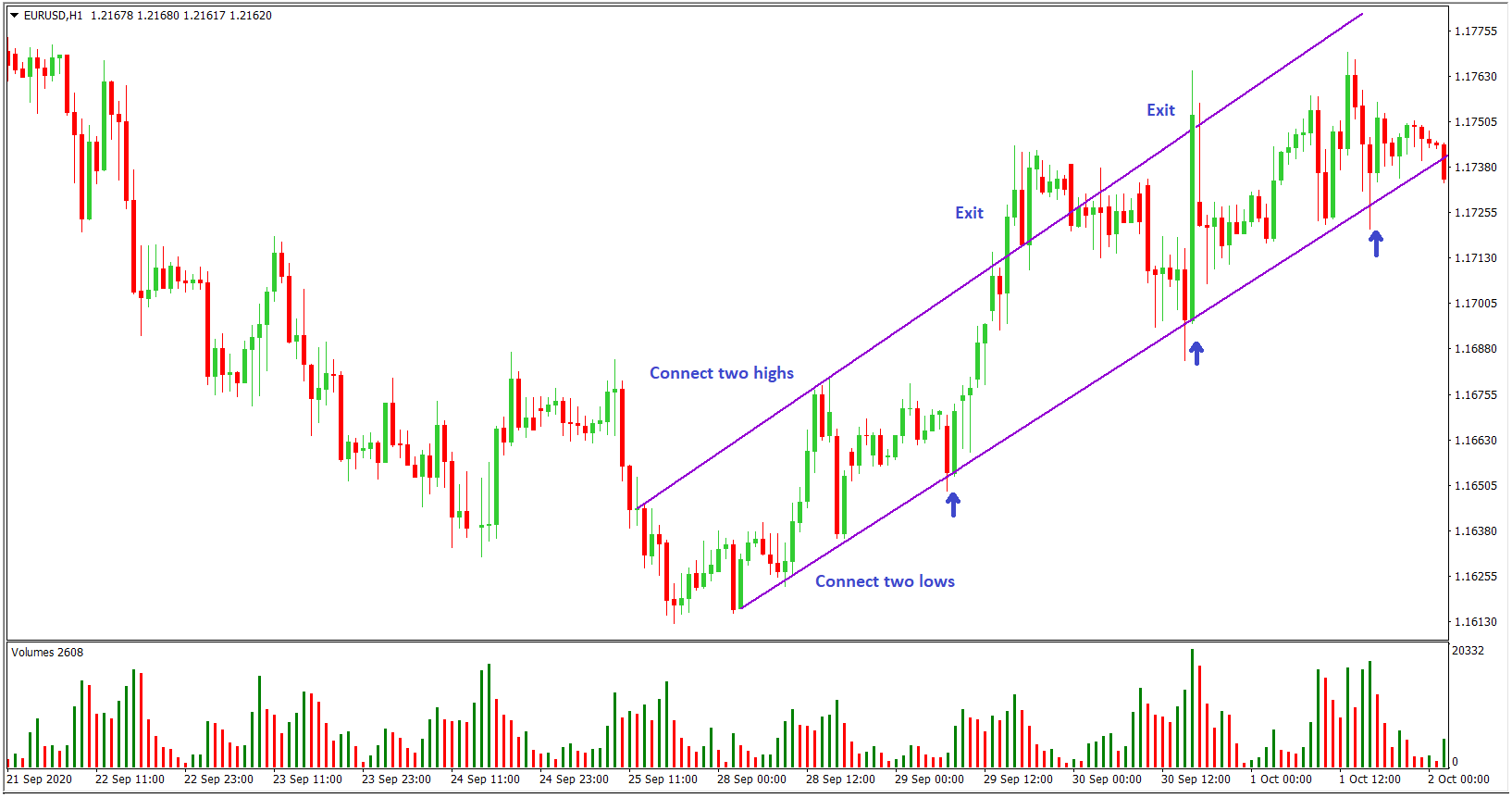
Figure out a high and a low in the past. This will be the starting point of the channel. Find another subsequent high, as well as, a subsequent low. Connect the two highs to draw a line which is called as ‘Upper Trend Line’ and connect the two lows to draw another line called ‘Lower Trend Line’.

If the above two connected trend lines so obtained are near parallel, a channel is formed. Thus, there are at least two contact points at the Upper trend line and at least two contact points at the lower trend line. More contact points increase the effectiveness and reliability of the channel. Channels can form on all time frames and can last as short as an hour, or last for months on end.

The trading channel technique often works best on Forex and Stocks with a medium amount of volatility, which can be important in determining the amount of profit possible from a trade. For instance, if volatility is low, then the channel won’t be very big, which means smaller potential profits. Bigger channels are typically associated with more volatility, meaning larger potential profits.

Channels can sometimes provide buy and sell points and there are several rules for entering long or short positions:

  • When the price hits the top of the channel, sell your existing long position and/or take a short position.
  • When the price is in the middle of the channel, do nothing if you have no trades, or hold your current trades.
  • When the price hits the bottom of the channel, cover your existing short position and/or take a long position.


There are two exceptions to these rules:

  • If the price breaks through the top or bottom of the channel, then the channel is no longer intact. Do not initiate any more trades until a new channel develops.
  • If the price drifts between the channels for a prolonged period of time, a new narrower channel may be established. At this point, enter or exit near the extremes of the narrower channel.


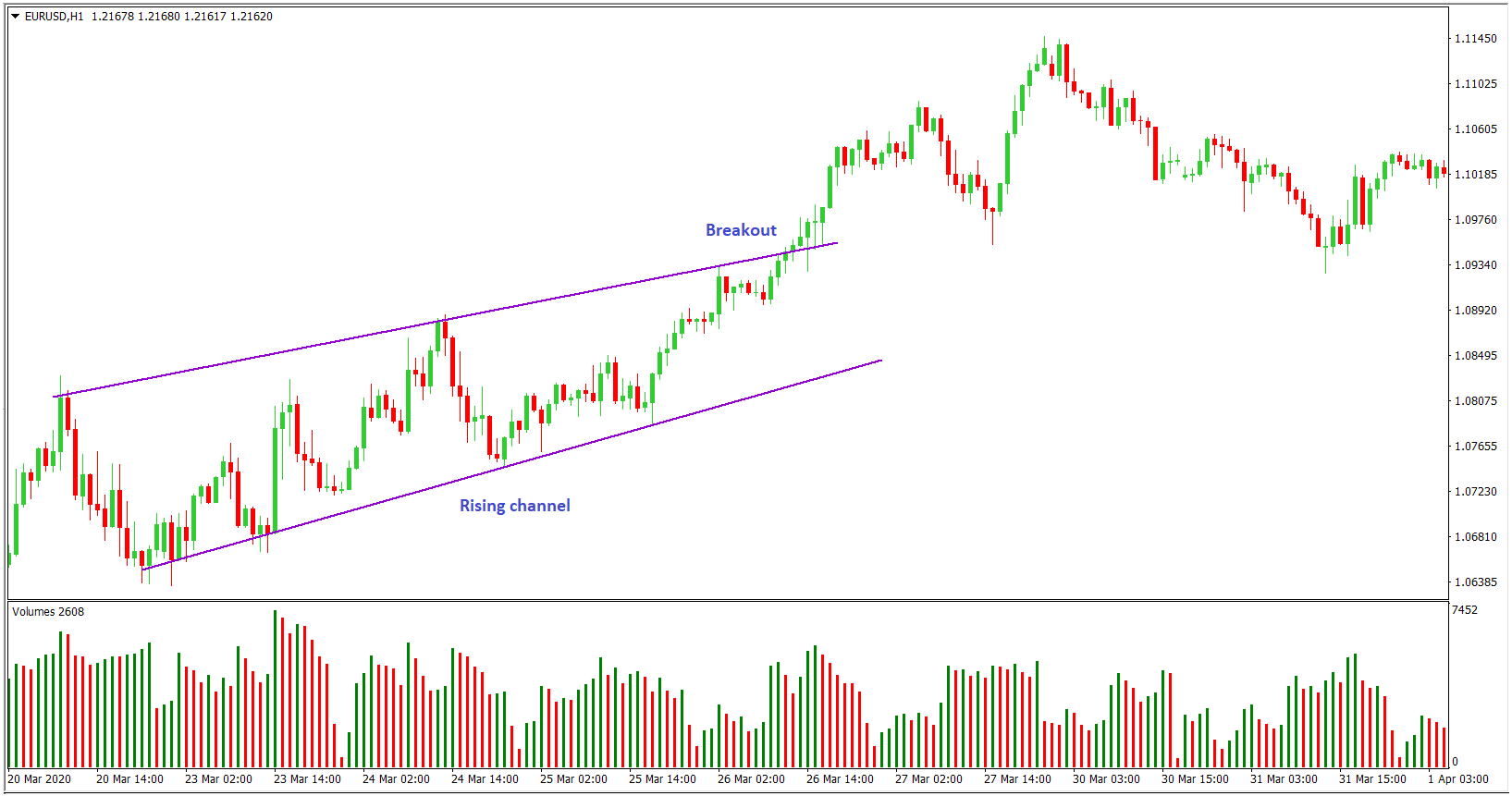
During a rising channel, focus on buying near the bottom of the channel and exiting near the top. Be wary of shorting since the trend is up. For example, an ascending channel is depicted below in EURUSD chart.

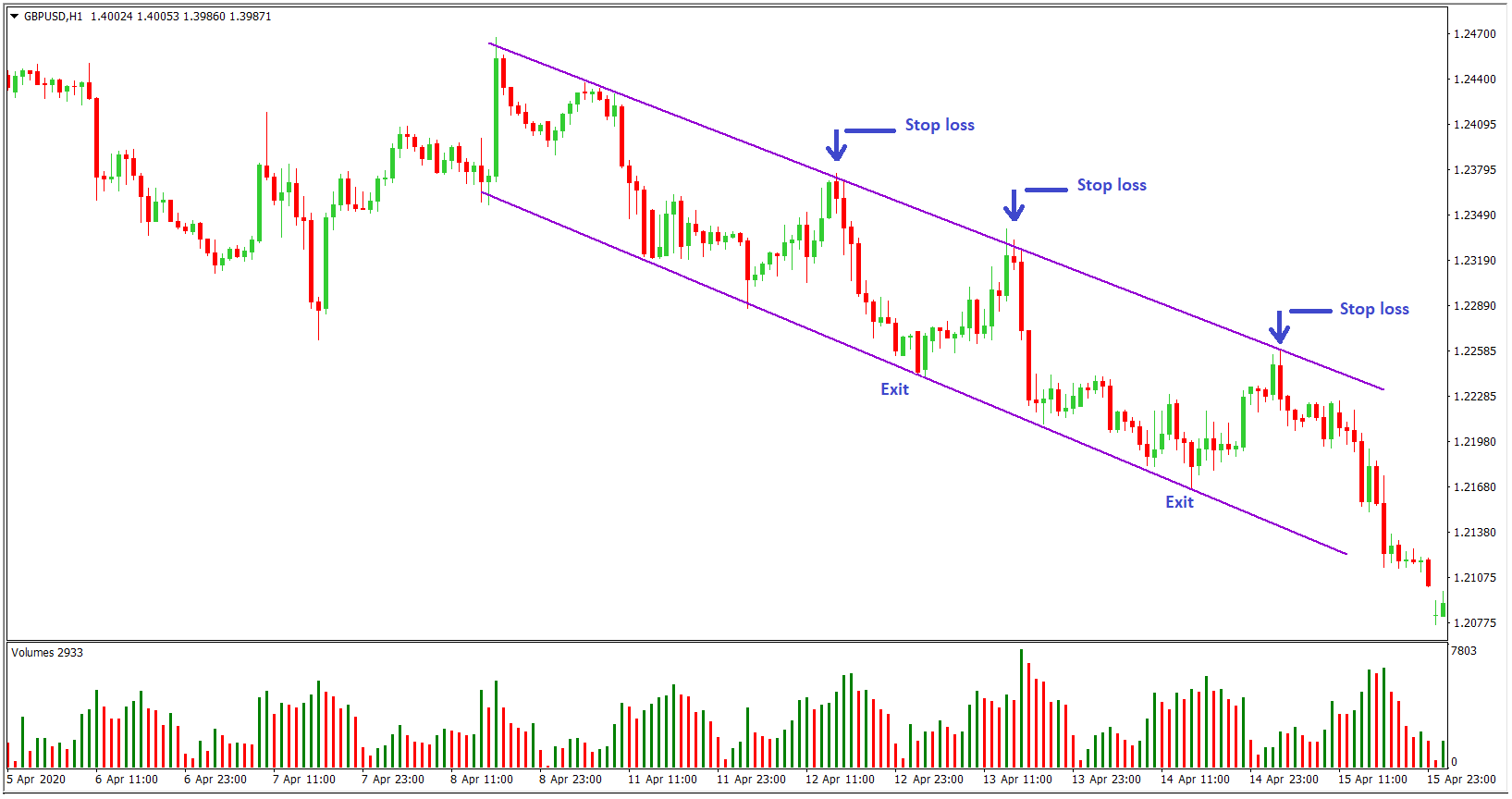
During a descending channel, focus on shorting near the top of the channel and exiting near the bottom. Be wary of initiating longs in a falling channel since the trend is down.

Other forms of technical analysis are sometimes used to enhance the accuracy of the signals from the channel and verify the overall strength of the up or down move. Some other tools to use while channel trading include:

  • The moving average convergence divergence (MACD) will often be near zero during horizontal channels. The MACD line crossing the signal line can also point out potential long trades near the bottom of a channel or short trades near the top of the channel.
  • A stochastic crossover may also signal a buying opportunity near the bottom of the channel or a selling opportunity near the top.
  • Volume can also aid in trading channels. Volume is often lower in channels, especially near the middle of the channel. Breakouts are often associated with high volume. If the volume isn’t rising on a breakout, there is a greater likelihood the channel will continue.

Channels can provide built-in money-management capabilities in the form of stop-loss and take-profit levels. Here are the basic rules for determining these points:

  • If you have bought at the bottom of the channel, exit and take your profits at the top of the channel, but also set a stop-loss order slightly below the bottom of the channel.
  • If you have taken a short position at the top of the channel, exit and take profit at the bottom of the channel. Also, set a stop-loss order slightly above the top of the channel.


Here is a descending channel in GBPUSD with potential stop-loss and exit points.

Determining Trade Reliability

Channels provide the ability to determine the likelihood of success with a trade. This is done through something known as confirmations. Confirmations represent the number of times the price has rebounded from the top or bottom of the channel. These are the important confirmation levels to remember:

  • 1-2: Weak channel (not tradeable)
  • 3-4: Adequate channel (tradeable)
  • 5-6: Strong channel (reliable)
  • 6+: Very strong channel (more reliable)


Estimating Trade Length

The amount of time a trade takes to reach a selling point from a buy point can also be calculated using channels. This is done by recording the amount of time it has taken for trades to execute in the past, then averaging the amount of time for the future. This estimate is based on the assumption that price movements are roughly equal in terms of time and price. However, it is only an estimate and may not always be accurate.

Conclusion

Channel patterns are a commonly used technical analysis tool and majorly a choice of breakout traders. The best part of the trading channel pattern is that it can be used in any kind of market condition; however, a specific trend has to be there. Trading the Channel Pattern by only observing the chart may not be helpful.  Using oscillators and indicators also helps us to read the chart better and to get better entry and exit decisions.

Happy Trading!