
2020 year has gone, but it will last as the world and all major foreign exchange markets are far from dealing with the COVID-19 pandemic in 2021, while the global economy has recently begun to recover from the shock. In these dark times, many of you may be wondering what forex pairs will trade in 2021, the annual markets characterized by high uncertainty. The FX markets were also affected before the pandemic by the US protectionist policies, but the dollar is expected to decline about five to ten per cent from current levels against most currencies, though the legacy of Covid-19 globally may not make this is simple as it sounds. To help you navigate this complex waters, we have selected the below forex pairs with the promise of active price action and significant yields in 2021.
Forex Oulook will be Bullish

Many forex brokers are moving towards supporting the self-employed remote workforce which has grown massively in 2020. This trend for individual investments will lead to a growing number of trading professionals and new signup started in FX market. Such individuals will be self-taught, less inclined to trust large banks with their investments.
There is a bullish outlook for the forex industry thanks to the US Federal policy decisions which support expected inflation rises whilst keeping interests remain low, and the dollar typically selling off in the early stages of a recovery cycle. However, the challenges of Covid-19 and an upcoming winter in the northern hemisphere could impact this outlook.
The US Dollar

As you may or may not know, the US dollar is involved in 88% of all forex trades, whether it’s being bought or sold. All major currency pairs include the US dollar on one side and one of the minor currencies on the other. The US dollar is the jewel that makes the centrepiece in the forex market’s crown. Its influence over the rest of the world makes the forex market one of the key markets to trade in 2021.
In fact, the US dollar is so important to the rest of the world, many countries keep the US dollar as a reserve currency locked away in case of an emergency. Because of this, it is crucial to watch the US economy, which can have a knock-on effect on the whole world economy.
Even forex trading pairs that don’t involve the US dollar can feel the pinch when something bad happens in the US. It’s like a wave that will eventually get you, no matter how far away you are from where it started. On top of that, the trade war between the US and China is likely to continue to affect the price of the US dollar.
We begin our 2021 price prediction with the analysis of EUR/USD, the major currency pair in Forex that reflects the occurrences in the world’s two largest economic powers, apart from China, of course. The coronavirus crisis has had a devastating effect on the economies of both the Eurozone and the United States in 2020, causing a severe drop in GDP and a sharp spike in the unemployment rate in Western and Southern Europe, as well as the Scandinavian countries, as per data provided by Eurostat.
The GDP has seen a huge decline as it had plunged from 1.5% to -7.4%, which marked the most severe recession in decades, worse even than that during the 2008 global economic crisis. The pandemic had hit the service sector the hardest, especially the accommodation and food services, as the total turnover in this sector had declined by 55.4% in the EU and as many as 57% across the Eurozone.
The emergence of the mutated type of COVID-19 in the UK that started to spread rapidly across Europe and led to the second iteration of lockdown didn’t do any good for the EU economy either, whereas the controversy-filled presidential elections in the United States, and the uncertainty around the next stimulus package and Biden’s domestic and foreign policies have kept EUR/USD in the bearish zone.
However, the rollout of vaccines from Pfizer and Moderna and the beginning of the all-encompassing vaccination across the European countries and the US should provide at least a partial solution to the COVID-19 crisis, the results of which should become evident in Q2 and Q3 of 2021 through the partial revival of GDP growth in both countries, though experts predict the economy to recover to the pre-pandemic levels no sooner than 2022. The GDP recovery will surely offer a bullish incentive for the EUR/USD pair, but it could be diminished substantially by the growing inflation, the reckless fiscal policies that take the form of blunt money printing, and the soaring national debt that plagues the United States.
The British economy and its national currency suffered greatly in 2020 due to the coronavirus pandemic, the tedious Brexit negotiations that were filled with prevarication and uncertainties, and the inefficient fiscal efforts that have mostly narrowed down to money printing, hence the growth of inflation.
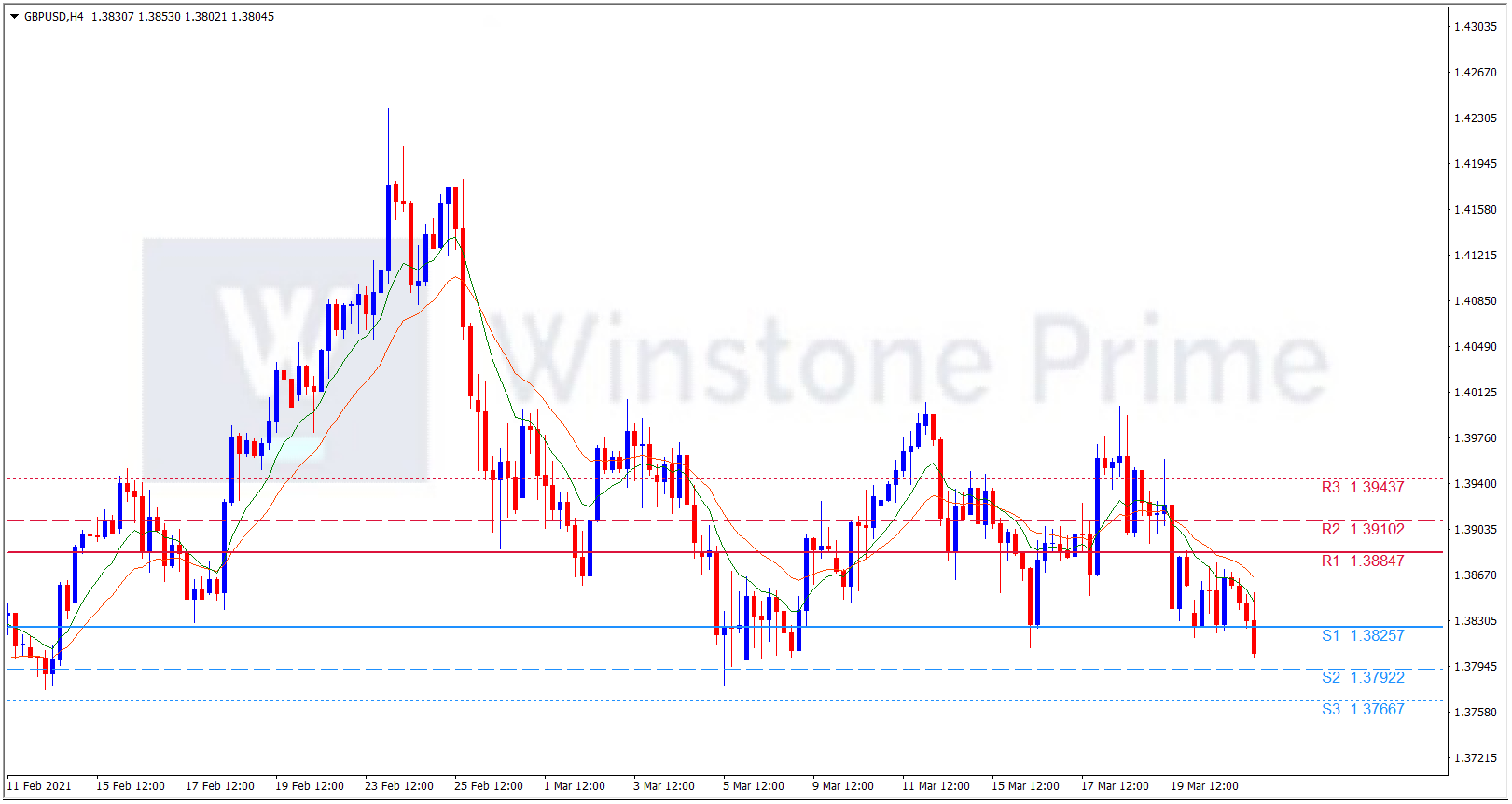
All these factors played a substantial role in pushing the GBP/USD market, which is widely regarded as one of the most volatile Forex pairs as it had been traded last year within the range of 2,000 pips, to the multi-year low at 1.14, upon which the price has made a relatively weak recovery to the current 1.35.
The vaccination program that was launched in the UK before the end of last year has shown promise, although the country remains in the state of lockdown with the economy operating at only about a half of its capacity. The UK vaccination program continues to forge ahead with more than 30 million people having had a first dose of covid-19 vaccine, while in excess of 3.5 million people have had two doses. The UK government says that the program is still on target despite the recent supply problems and the ongoing vaccination nationalism spat with the European Union. In further good news, the Moderna vaccine is due to be rolled out in the UK in mid-April. The UK government has already ordered 17 million doses of the vaccine which has a 94% efficacy. The appearance of the mutated coronavirus strain that caused a lot of concern didn’t affect the market much, which is a positive signal for GBP/USD in 2021.
Should the vaccination help contain the pandemic and all of the Brexit-related issues finally get settled, the experts predict a swift recovery of GDP in 2021 and a 5.92% growth after a 9.76% drop last year, which would serve as an incentive for the market under review.
However, the UK economy will recover to the pre-pandemic level only in 2022 and also some lockdowns get started in Britain, while the rate of GDP growth in the following years is going to diminish, as per the prediction chart above. The historically low interest rates at 0.1%, set by the recently appointed head of the Bank of England Andrew Bailey, and doubling down on buying bonds, might have been viable solutions amid the crisis, but their long-term effect on the economy is likely to be deteriorating.
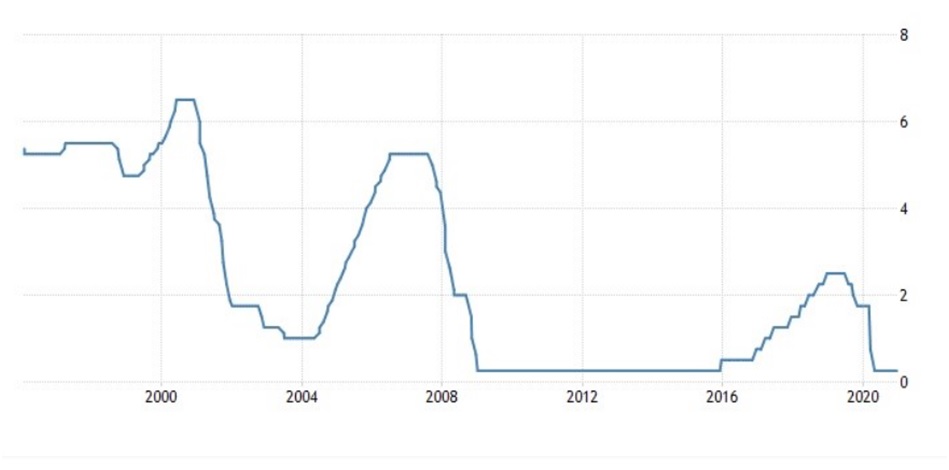
Add to that the Fed’s determination to keep the interest rate close to zero – it presently stands at 0.25% – and we are likely to see further degradation of USD on the back of the solidifying GBP.
As both Australia and Canada are both exporters of natural resources, traders need to watch these kinds of exports from these two countries. However, Canada is a lot more dependent on the US than Australia, as 75% of Canadian exports go to the US and 50% of imports are from the US, so the US dollar can have a big effect on the Canadian dollar.
Because of this, if there is indeed an economic crisis in the US, the Canadian dollar is also likely to suffer as well. Australia is in a similar situation with China, as up to 30% of Australia’s exports go to China. If China’s economy suffers, the Australian dollar will too.
Switzerland has a very close relationship with the EU. Though to be fair, it doesn’t have much of a choice, it’s almost completely surrounded by the EU and Eurozone at every border (Germany, France, Italy, Austria), except with Liechtenstein, a tiny country which also uses the Swiss franc. And because of this, it’s not too surprising that the majority of Switzerland’s exports go to the EU, and so if there’s trouble with the euro, there will be trouble with the Swiss franc as well. So, if there is indeed economic fallout in the EU over the coronavirus and souring relations with the UK, there will likely be an impact on the franc too.
And on another interesting thing to note, in September 2020, the Swiss had a referendum on whether or not to end free movement with the EU, which was rejected, signalling that the Swiss may move for closer relations with their neighbours in the years to come.
Outside the major and minor pairs, some important developments have been taking place in China. Though not classed as a minor currency, the Hong Kong dollar is a trader’s favourite. But it looks like for the last six months it has almost flatlined, which potentially could be related to the disruption caused by the crackdown on pro-democracy protests.
In mainland China, the Chinese renminbi, also known as the yuan, may continue to emerge as a leader (it’s potentially a big development that may also be affecting cryptocurrency, more on that below!). The Japanese yen, a minor currency, is perhaps feeling the most of the impact of an ever-growing China, the two being primary competitors in manufacturing.
Despite this, China typically wants to keep the renminbi cheap to help exports and undercut their competition.
People have been talking about the emergence of Africa economically for a long time now and it may be finally starting to arrive. As a result of this, we may see more activity around African currencies and brokers starting to offer more favourable terms for trading African currencies (all of which are regarded as exotics).
Conclusion
Forex Trading is profitable at any point of time. You just need to develop your strategy in a way that it results in benefits and then execute it wisely. Forex trading is simple and you can legit earn profits from it provided, where you are investing. Find a broker for yourself who can literally help you in trading and is up to date with the forex market. Like Winstone Prime, We offering lower spreads and Best MT4 and MT5 platforms and watch the market regularly once you get free time. Trade in your own way and make profit wisely.
Are you ready to start trading Forex?