Dollar gains some strength with the fiscal stimulus

AUD/USD is currently trading at 0.7277 having travelled between a range of 0.7318 and a low of 0.7260, somewhat under pressure from both a technical and fundamental perspective

The dollar held broad gains on Thursday as investors tempered bullish expectations about a COVID-19 vaccine. It looks like U.S. dollar gets some support from the recent comments of Senate Majority Leader Mitch McConnell, who stated that a huge corona virus aid package was not needed and that he would prefer to see a highly targeted bill.U.S. Government bond yields continue to increase, and the yield on 10-year notes is already close to 1.00%. The rising yield on dollar-denominated debt provides some support to the American currency.

At some point, the U.S. Fed may want to intervene and stop the rising yields, implementing a policy that is similar to the one which has been recently announced by the Reserve Bank of Australia.

National Australia Bank’s head of foreign exchange strategy, Ray Attril said that “I think we had a speculative market that was increasingly comfortable being short U.S. dollars.” “Then we had the vaccine news and a big spike in U.S. bond yields, which I think just acted as a little bit of a check on unbridled U.S. dollar bearishness,” he said.

If the market maintains the opinion that the Federal Reserve will remain uber easy and that under a Democratic ruling at the White House, fiscal stimulus will be pumped to higher than potentially anticipated levels, a move out of USDs and into high yield currencies is likely to lend support to the commodity complex, including the Aussie

On the other hand, the Aussie has recently felt some pressure from the RBA’s extended policy measures which could continue to be felt over the coming weeks.

AUD/USD 4 Hour Chart:
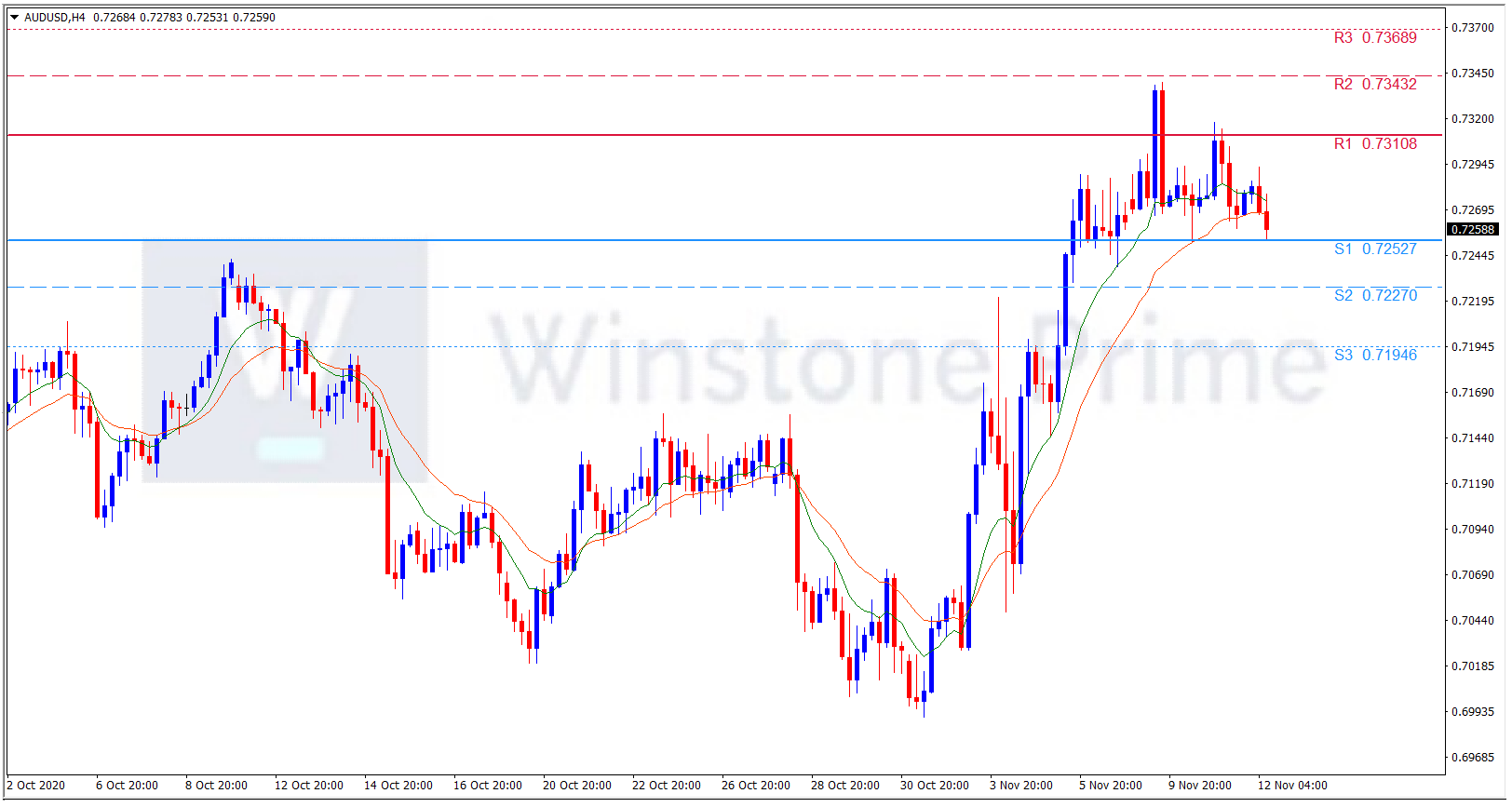
Support: 0.7253 (S1), 0.7227 (S2), 0.7195 (S3).

Resistance: 0.7311 (R1), 0.7343 (R2), 0.7369 (R3).

Amidst all the prevailing catalysts supporting dollar against Aussie, We expect a bearish trend for AUD/USD.

Nonfarm Payroll (NFP) News Trading Strategy

The Nonfarm Payroll News Trading Strategy is a currency news trading strategy you can use to trade the Nonfarm payroll data.

Many new traders don’t know what a non-farm payroll is. Here, we will give a brief rundown of what a nonfarm payroll is and give you a system to trade the nonfarm payroll.

What is the Non-Farm Payroll (NFP):

The Nonfarm Payroll or NFP is one of the biggest currency news that is released every month.

When is the non-farm payroll news released? The first Friday of Each Month.

All you need to know now is that the nonfarm payroll report shows the current state (how good or bad) of the US economy.

Timeframes: 5 Minutes chart.

Instrument: The NFP data is an indicator of American employment, so your currency pairs that include the US Dollar (EUR/USD, USD/JPY, GBP/USD, AUD/USD, and others) are most affected by the data release.

Why trade the non-farm payroll? 

There are those traders that don’t like trading news and there are those that like to trade currency news. For those that like to trade currency news, here are their main reasons:

  • Trading the non-farm payroll news can be really profitable, the thing is, and you’ve got to get the direction right.
  • You make profits in matters of seconds and minutes and they are huge profits. In a matter of a few minutes, the price can move from anything 40-200 pips. On ordinary days, you’d average 40-70 pips move in a day compared to the price movement due to the release of the non-farm payroll news.


The important thing here is to note here is this: if you get the direction right.

Some traders will not trade the Non-farm Payroll:

As always, what is exciting to some traders will not be so for others. So there are traders that will not trade the non-farm payroll and here are some of their reasons for not doing so:

  • They think it’s gambling trying to guess which way the market is going to move when the news comes out.
  • The tendency of price to whipsaw means that sometimes your trade direction may be right but you’d get stopped out prematurely when price whipsaws and hits your stop loss.
  • Spread increase, which means your trading costs go up as time comes new to the non-farm payroll news release.
  • Liquidity can dry up and sometimes, if you are in the wrong direction, stop loss jumping can happen. What this means is that even though you have a stop loss to protect your account, due to the fast-moving nature of the market when the news is released, your stop-loss won’t be hit and you can lose a significant amount of your account if this happens.


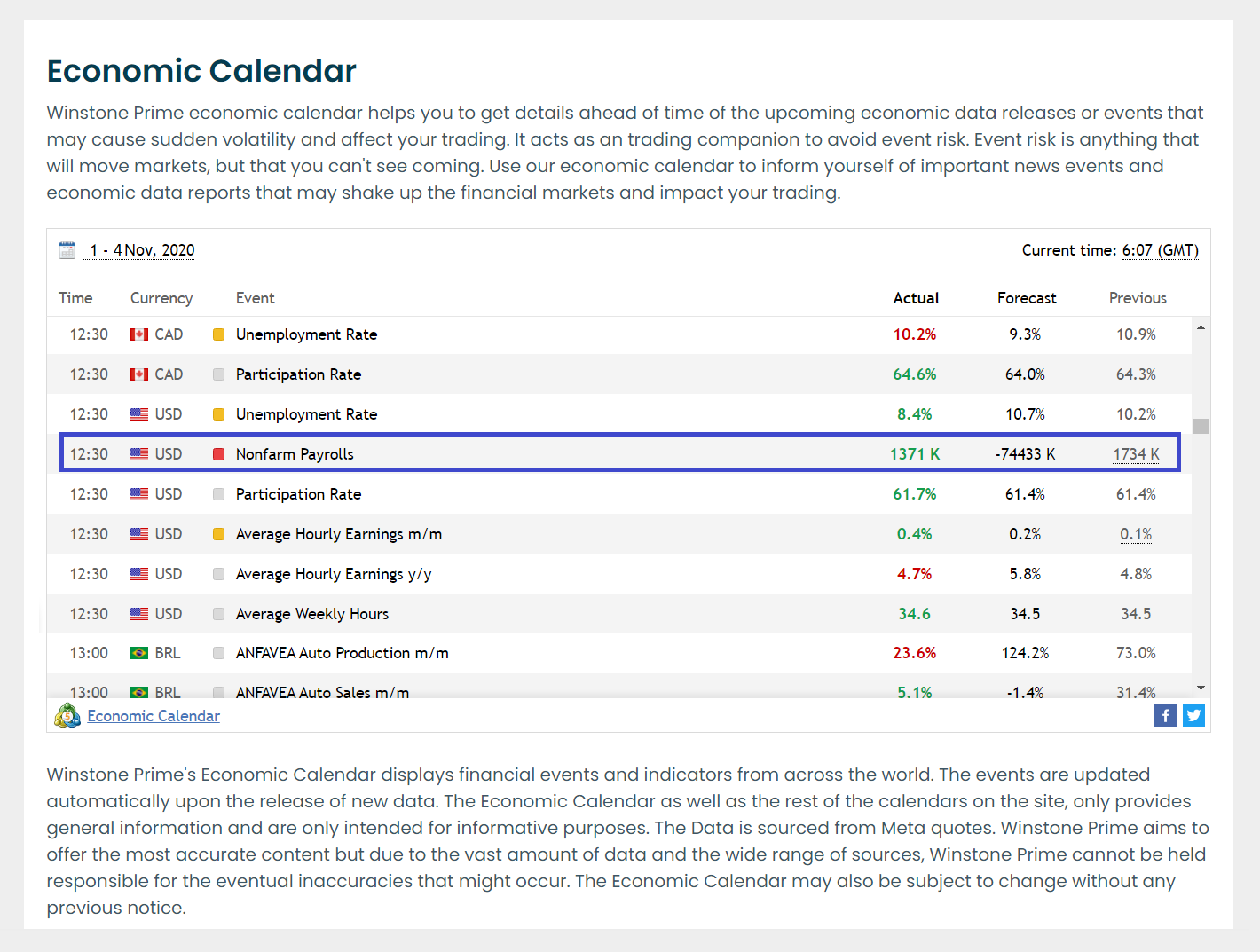
Calendar view:

Nonfarm payroll is an employment report released monthly, usually on the first Friday of every month.

How to trade the Nonfarm Payroll news:

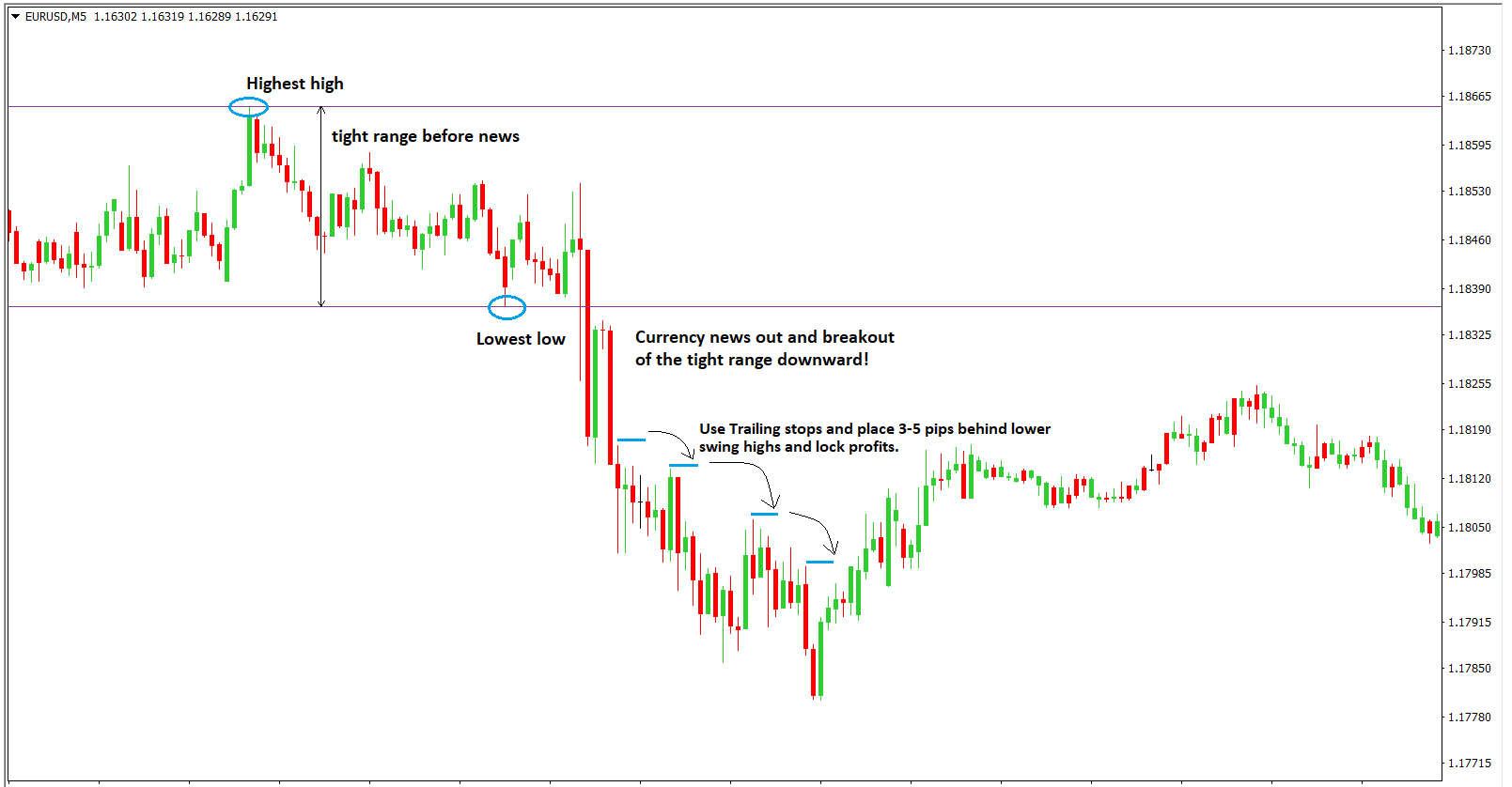
With this Nonfarm Payroll news trading strategy, you really do not care which direction the currency market will go when the new is released.  Because what you are going to do are place two opposite pending orders on both sides to catch the price move in any direction it goes as soon as news is released.

The nonfarm payroll trading strategy is suitable in the situation where the market travels in a tight range before the news is released.

Trading Rules:

  • 30 minutes before the nonfarm payroll news is due, open your chart in the 5-minute timeframe.
  • Find the highest high and lowest low in this 5 min chart.
  • Place 2 pending orders on both sides, a buy stop pending order at least 5-10 pips above the highest high and a sell stop pending order 5-10 pips below the lowest low in that range.
  • Then place your stop loss on either side for each of the pending orders: your stop loss for a pending buy stop order will be the level at where you place your sell stop pending order and vice versa.
  • Then wait for news to get released and it will activate one of the pending orders. Whatever pending order that is not activated has to close immediately.


Chart View:

Take Profit: 

  • 2 time the range (example, if the distance between the high and low is 40 pips, then set your take profit level at 80pips).
  • Or you can set your TP at 3 times the range.
  • or another way is not to have a take profit target but to use a trailing stop and place it 10-20 pips behind the lower swing highs (for short entry trade) and ride out the price move until you get stopped out eventually. Do the exact opposite for a long (buy) trade.


Pros :

  • As one of the most-anticipated economic news events of the month, currency pairs (especially those involving the US dollar) typically see big price movements in the minutes and hours after the data is released.
  • This makes it a great opportunity for day traders with a sound strategy to take advantage of the volatility.


Cons :

  • Price spikes or whipsaws, which can tend to activate both pending orders and then hit your stop loss (if they are placed too close) and you have two losses, almost at the same time.
  • Lack of liquidity can also mean that sometimes your pending order may get filled at a very bad price.
  • Increase of spread before and just a few minutes after the NFP news release.


Other important data releases to watch:

While the NFP generally moves the market, data like CPI, Fed funds rates, and GDP growth are important data releases too.

Use the Winstone Prime economic calendar to keep an eye on all the important economic data releases.

RBNZ governor’s optimistic comments favors kiwi

NZD/USD is gaining strength following the Reserve Bank of New Zealand (RBNZ) governor Orr’s positive comments on the state of the economy.

“The economic activity domestically and internationally has been more resilient than earlier assumed,” Orr said during the post-rate decision press conference while taking note of the below-target inflation and employment.

Adding to the positivity, the Central bank kept the Official Cash Rate unchanged at 0.25%. The RBNZ boosted its large scale asset purchase program by NZD 100 billion and marked readiness to cut the rates to negative while announcing the launch of the Funding for Lending Program (FLP), which offers funds directly to the banks at a rate near the OCR in December. The additional easing, however, failed to entice sellers.

Following RBNZ moves, Governor Orr sounds optimistic for domestic and international economic recovery. The policymaker also hints at the size of the FLP, near $28 billion, which will begin from December.

Economic activity since the August Monetary Policy Statement, both international and domestic, has proved more resilient than earlier assumed. In New Zealand, this trend was evident across a range of indicators, including employment, household spending, GDP, and asset prices. These outcomes reflect the effectiveness of the health and economic policy responses to the initial shock.

On the other hand, As the second wave of coronavirus tightens its grip in the US, hospitalizations of infected patients have reached the highest ever during this pandemic, up by 61,471, as of late Tuesday. According to a tally, the world’s biggest economy reported a record number of infections for the seventh day in a row on Tuesday while the death count rose by 1,450. Amid the coronavirus escalation, Nevada Governor endorsed a ‘stay at home’ mentality for the next 14 days.

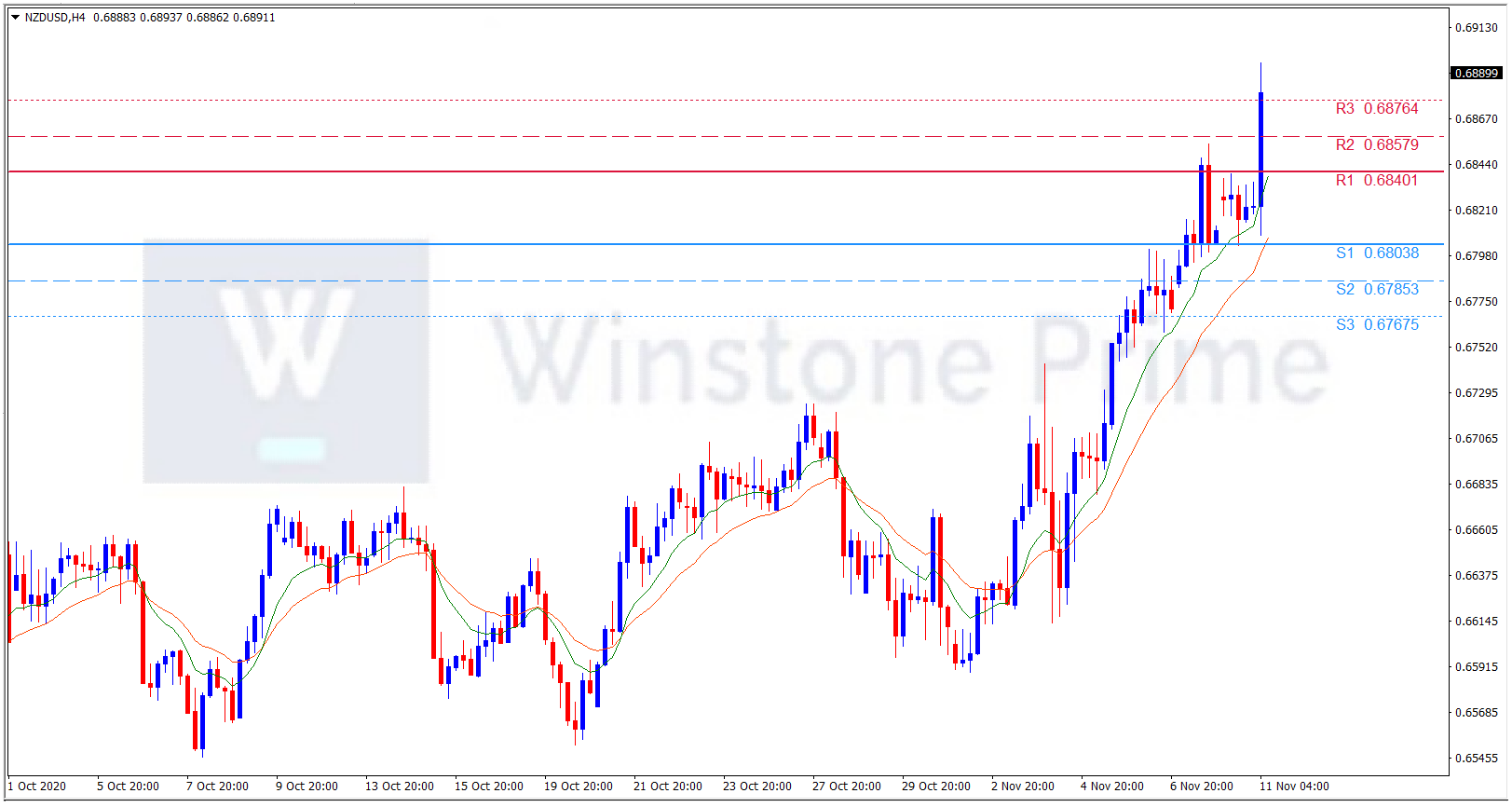
NZD/USD 4 Hour Chart:

Support: 0.6804 (S1), 0.6785 (S2), 0.6768 (S3).

Resistance: 0.6840 (R1), 0.6858 (R2), 0.6876 (R3).

In the prevailing market conditions, NZD seems to be stronger than USD. We expect a bullish trend for NZD/USD.

Uk jobs impacts pound

Early Tuesday, the UK’s Office for National Statistics (ONS) will release the October month Claimant Count figures together with the Unemployment Rate in the three months to September at 07:00 AM GMT. The UK labor market report is expected to show that the average weekly earnings, including bonuses, in the three months to September, to rise from the previous 0.0% to 1.1%, while ex-bonuses, the wages are seen improving from 0.8% to 1.1% during the stated period.

The number of people seeking jobless benefits, namely the Claimant Count Change, is expected to increase from 28K previous to 36K in October. Further, the ILO Unemployment Rate may pick up from 4.5% to 4.8% during the three months ending in September.

And according to a report, Retail sales jumped last month ahead of the second national lockdown in England, which retail leaders have warned will “throwaway” recent progress for troubled high street stores. The BRC-KPMG retail sales monitor for October revealed that total sales increased by 4.9% for the month, as some shoppers completed their Christmas shopping earlier than usual.

“October saw another month of strong sales growth, with food, gifts, and loungewear high on people’s shopping lists,” said Helen Dickinson, chief executive of the British Retail Consortium (BRC)

US dollar’s fresh weakness, mainly based on the challenges to the risk-on mood, the increasing hopes of soft Brexit, as the UK’s House of Lords rejected a proposal to have the right to edit the Brexit treaty, also favor the bulls. That said, recently positive comments from BOE Governor Andrew Bailey, rejecting the odds of a double-dip recession, offer additional strength to the Cable buyers.

Even so, neither the European Union (EU) nor the UK agrees over the much-awaited post-Brexit trade deal and the second national lockdown weighs on the economy that marked contraction in the last quarter. Hence, any further weakness into the headline employment data will provide extra challenges to the GBP/USD bulls.

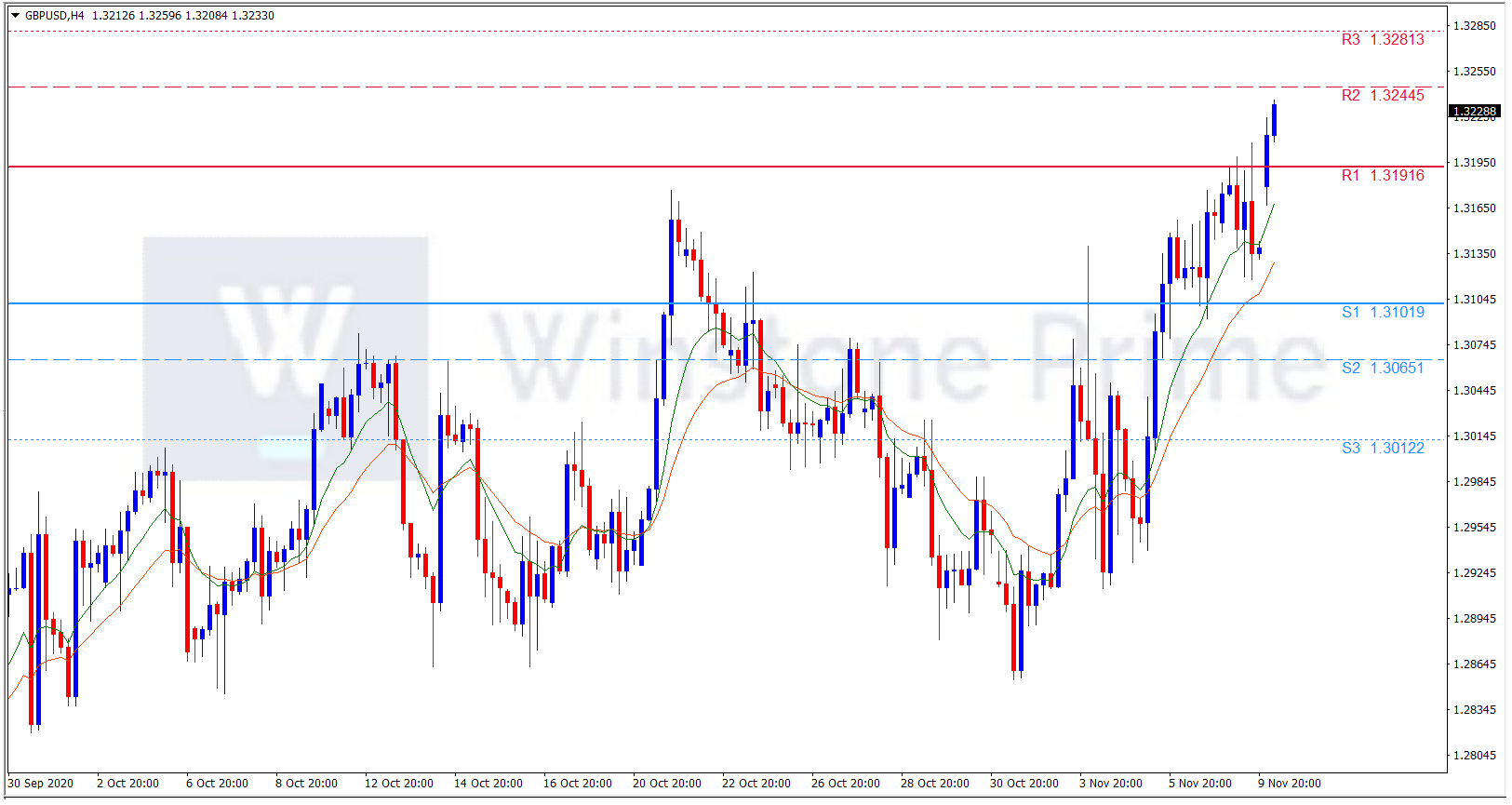
GBP/USD 4 Hour Chart:

Support: 1.3102 (S1), 1.3065 (S2), 1.3012 (S3).

Resistance: 1.3192 (R1), 1.32445 (R2), 1.3281 (R3).

Amidst all the catalysts supporting pound against dollar, we expect a bullish trend for GBP/USD.