BOJ Monetary policy meeting impacts yen

Some Bank of Japan board members warned a resurgence in the coronavirus pandemic could delay economic recovery and destabilize its banking system by pushing more companies under, minutes from the bank’s July rate review showed on Thursday. While they agreed on the need to ramp up stimulus if needed, the BOJ policymakers said the hit to financial institutions’ profits from the pandemic could erode their ability to boost lend, the minutes showed.

A few members were quoted as saying that “Infection numbers are increasing at a faster pace globally, so we need to be on alert of the possibility of a re-insurgence including in Japan.” “If infection numbers rise again, the timing of an economic recovery will be delayed,” one of them said. The damage from the pandemic, if prolonged, could lead to job losses, hurt household income, and cool consumption, another said.

While the BOJ kept policy steady at the July rate review, the remarks underscore a lack of confidence the board members had over their projections of a modest economic recovery.” Members agreed if financial institutions’ profits remain under pressure for a prolonged period, that could undermine financial intermediation,” the minutes showed.

Japan’s factory activity extended declines in September largely due to a sharper fall in output, this adds to the weakness of yen.

On the other hand, The U.S. Dollar is supported by hawkish remarks from a Federal Reserve speaker after Chicago Federal Reserve President Charles Evans mentioned the prospect of raising interest rates. This came as a surprise to investors because the narrative from central bank policymakers since March has been we’re not going to raise rates at any point in the foreseeable future.

“I would like to raise rates as soon as anybody,” Evans said. For me, that’s going to be when the economy is very very strong and real rates are rising,” he said. “Monetary policy in some sense would follow the economy up,” he said.“We could start raising rates before we start averaging 2%, we need to discuss that,” he added.

USD/JPY 4 Hour Chart:
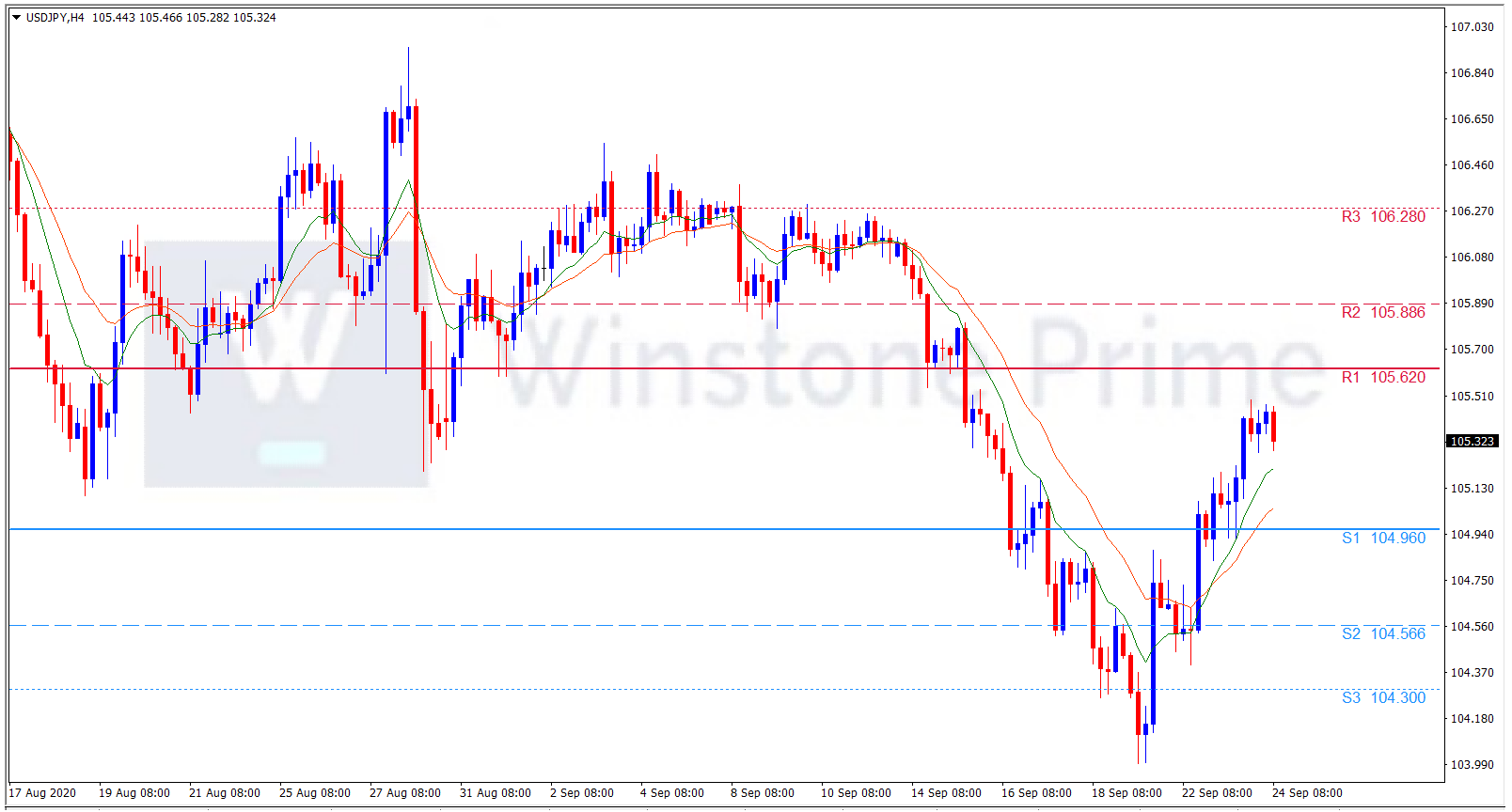
Support: 104.96 (S1), 104.57 (S2), 104.30 (S3).

Resistance: 105.62 (R1), 105.89 (R2), 106.28 (R3).

Investors have turned their attention to dollar as Yen is losing its power due to the worries on recovery from the pandemic. We expect a bullish trend for USD/JPY.
New Zealand’s board meeting impacts Kiwi

At its September monetary policy meeting, the Reserve Bank of New Zealand (RBNZ) board members decided to keep the Official Cash Rate (OCR) unadjusted at a record low of 0.25% for the fourth month in a row, as widely expected.  

Members agreed a lower OCR would be complementary to its other monetary policy tools, and that it was prepared to lower the OCR to provide additional stimulus if required. Committee endorsed staff advice to continue front-loading purchases under asset purchase programme.

Committee agreed that providing term funding at rates near the OCR via an FLP would lower funding costs, borrowing costs. The committee maintained its view that a package of an FLP and a lower or negative OCR could provide an effective way to deliver additional monetary stimulus.

Outlook for inflation and employment remained subdued. There is substantial uncertainty about the future spread of COVID-19 both domestically and globally, and how economic, health, and social activity will adapt.

Some members noted it is harder to estimate what the maximum sustainable level of employment is under these conditions. Committee reached a consensus to hold the rate, maintain the LSAP programme of max nz$100 bln by June 2022. These were the keynotes of the meeting.

On the other hand, US President is focused on developing a COVID-19 vaccine by the end of 2020 and a “return to normal” in 2021. We’re by no means experts on the science of vaccine development, but the news has been generally positive on that front, raising the odds of a vaccine in the coming months. It is worth noting that, at least based on this press release, additional support for state and local governments and extending unemployment benefits further are not high priorities at this time.

Outside of the pandemic, Trump has vowed to create 10M new jobs in ten months and 1M new small businesses if he is re-elected, though there is no detail on the specific programs his administration would use to support these goals. These updates support the greenback.

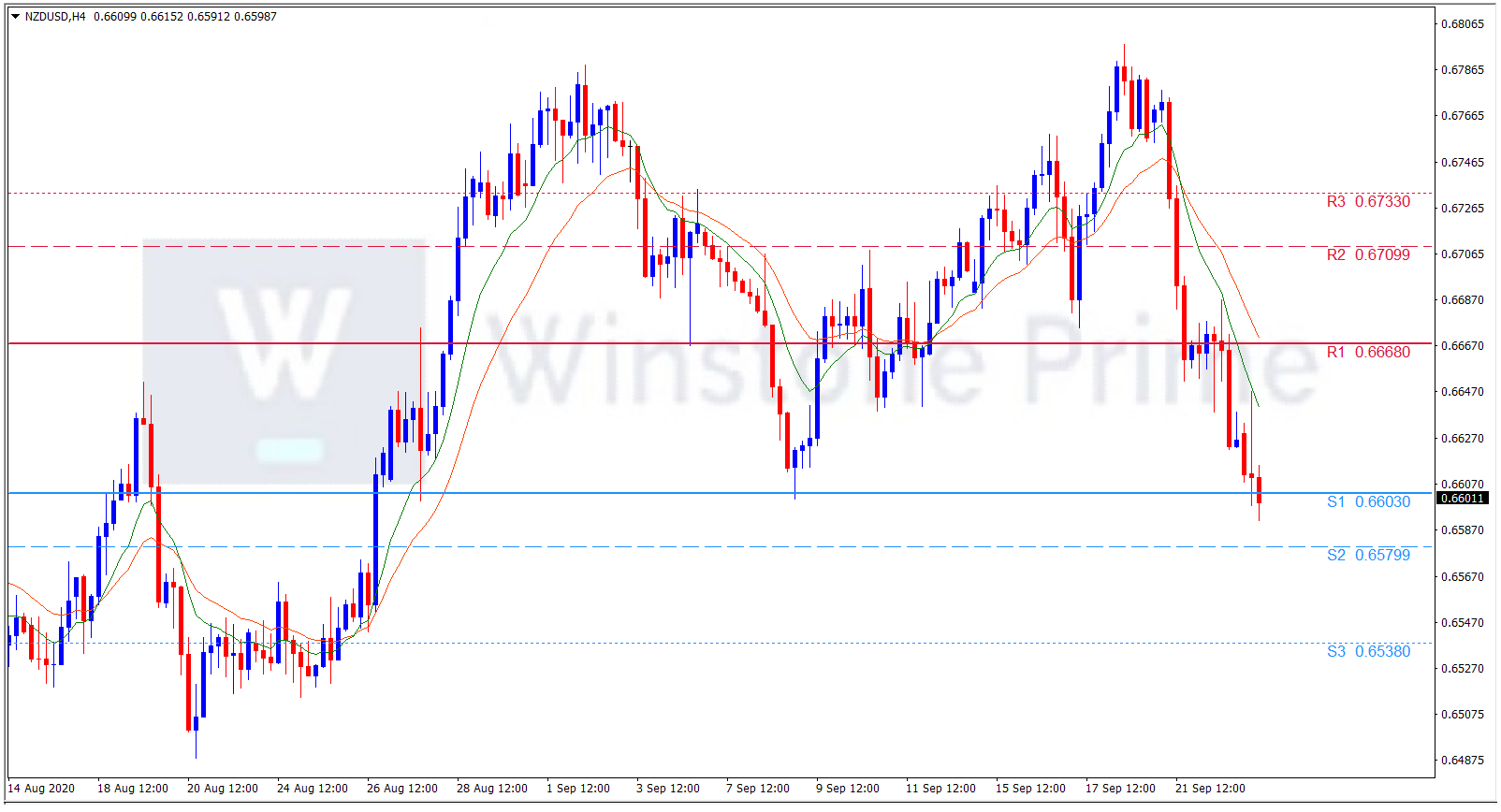
NZD/USD 4 Hour Chart:

Support: 0.6603 (S1), 0.6580 (S2), 0.6538 (S3).

Resistance: 0.6668 (R1), 0.6710 (R2), 0.6733 (R3).

Amidst all the catalysts pressuring Kiwi against the dollar, we expect a bearish trend for NZD/USD.

Fed takes a dovish stance

USD gained a little strength early today by the latest comments from the US Secretary of State Mike Pompeo from the United Nations (UN) meet. The Trump administration member thanked, France, Germany, and the UK, via twitter, as they backed rejection to China’s claim over the South China Sea.

Elsewhere, the Fed Chair Jerome Powell said, in the first of testimony, that the path ahead of the economy remains “highly uncertainty”. Further, the Federal Reserve Bank of St. Louis President, James Bullard, also spoke dovish on an interview while saying, that the Fed will be much less pre-emptive about hiking rates.

Not only the Federal Open Market Committee (FOMC) members but the decision-makers from the European Central Bank (ECB) and the Reserve Bank of Australia (RBA) also marked their worries in the latest appearances.

China’s highly influential media outlet, Global Times, carried an editorial-opinion piece on Tuesday, citing that the government is unlikely to approve the agreement between Tik Tok’s parent company ByteDance and Oracle, already approved by US President Donald Trump on Sunday.  “Oracle will have the authority to check the source code of TikTok USA and updates. As the TikTok and Douyin should have the same source code, this means the US can get to know the operations of Douyin, the Chinese version of TikTok.“

“TikTok Global will control the business of TikTok around the world except for China. It will block IP from the Chinese mainland to access it. This means the Americans can take control of the global business of TikTok and reject Chinese to access it.”

Worries about the disappointing pace of fiscal stimulus in the US there are plenty of economic factors to concern investors. Added to this are fears about possible disruption from the US election in addition to various geopolitical factors.

In the meantime, developments surrounding the corona virus saga will continue to play a key role in influence the broader market risk sentiment. This coupled with second-tier US economic releases – Existing Home Sales and Richmond Manufacturing Index – will be looked upon for some trading impetus.

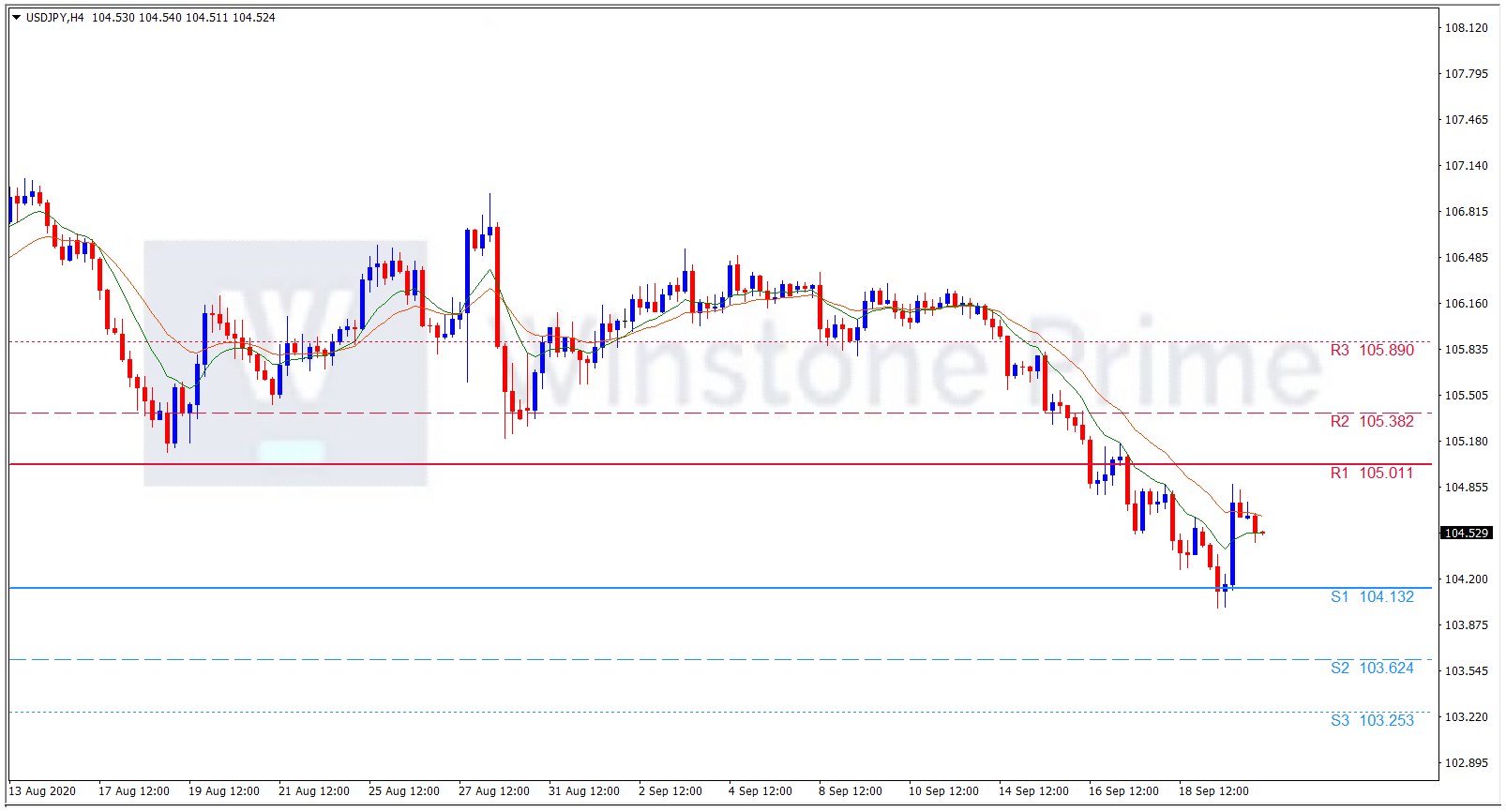
USD/JPY 4 Hour Chart:

Support: 104.13 (S1), 103.62 (S2), 103.25 (S3).

Resistance: 105.01 (R1), 105.38 (R2), 105.89 (R3).

Amid the risk sentiment creating worries among the investors, we expect a mixed trend for USD/JPY.

Less evidence of V-shaped recovery – Make UK/BDO survey

British manufacturers see little evidence of a ‘V’-shaped recovery from the corona virus pandemic underway and many are planning to slash investment, a business survey showed on Monday. The Make UK industry association and accountants BDO said output and orders had improved from historic lows struck last quarter during the depths of the pandemic.

But the survey’s quarterly gauge of investment intentions fell to -32% from -26%, almost touching depths last seen in the financial crisis. “Manufacturing has begun to climb away from the abyss that it stared into earlier in the year,” said Stephen Phipson, chief executive at Make UK.

Phipson said, “But, make no mistake it is going to be a long haul back towards normal trading conditions, with talk of a ‘V’-shaped recovery nothing more than fanciful.”  The possibility that Britain and the European Union fail to agree on a trade deal before the end of the Brexit transition period would be pressure for many manufacturers.

Output in Britain’s manufacturing sector was still 8.7% below its pre-pandemic level in July, according to official data published earlier this month. Like other indicators of the labour market, manufacturers’ employment expectations deteriorated in the latest Make UK/BDO survey its gauge of future output improved somewhat. The survey of 364 companies was conducted between Aug. 5 and Aug. 26.

UK Finance Minister Rishi Sunak is again stepping forward to help businesses. The news, cited by the Financial Times (FT), indicates an extension of four loan schemes for applications until the end of November.

On the other hand, the US dollar index (DXY) drops as markets await fresh clues to extend the latest greenback recovery amid mixed signals from virus, stimulus, and a tussle with China. Adding to the greenback’s problem is its latest tussle with Iran and an on-going tension with Beijing.

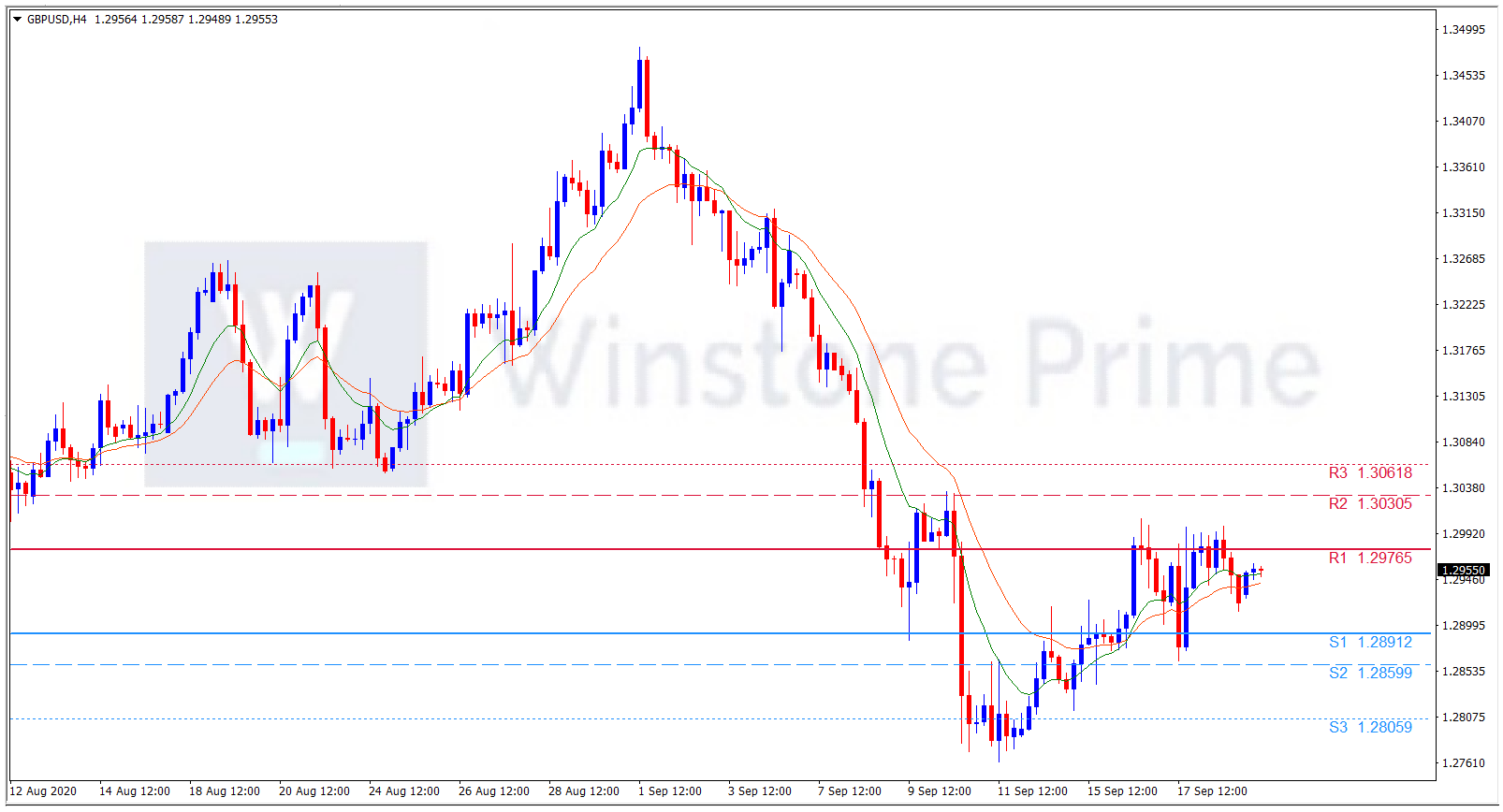
GBP/USD 4 Hour Chart:

Support: 1.2891 (S1), 1.2860 (S2), 1.2806 (S3).

Resistance: 1.2977 (R1), 1.3031 (R2), 1.3062 (R3).

Even though there is little sign of V-shaped recovery in UK as per Make UK/BDO survey, pound is strong against broad US dollar weakness.  Looking forward, a light calendar may keep traders directed to the risk catalysts, and hence speech from the UK’s health authorities, at 10:00 AM GMT will be the key to watch. We expect a bullish trend for GBP/USD.