Yfdex’s Defi scam pressurizes Bitcoin

Bitcoin’s price is still whipsawing between $10,420 and $9950, as of today. It appears a vast majority of this new investment is pouring into Ethereum, which is enjoying a 7% daily price gain right now and is the best performing crypto-asset in the top 10 cryptos by market cap.

As per the market data, there’s even been a notable uptick in ETH futures trading volume compared to BTC, with ETH accounting for 46% of Huobi’s derivatives volumes compared to just 36% of BTC. This flippening is almost certainly being driven by the DeFi market, which continues to attract a huge amount of attention and investment from the crypto community.

Yfdex.Finance (Yfdex), a new liquidity mining pool, has reportedly exit scammed, making off with up to $20 million of investors’ funds. The decentralized finance (Defi) project convinced people to hand over their life savings following just two days of aggressive marketing on social media, and then disappeared without a trace.

Crypto investor and analyst Cryptowhale on Thursday tweeted about Yfdex’s alleged dramatic plunder, a classic hit, and run. “Another day, another Defi scam!” the analyst ridiculed. “After promoting themselves on Twitter for 2 whole days, Yfdex has taken a total of $20M of Investors funds in their recent exit scam,” he added.

On the other hand, According to the data provided by Intotheblock, 91% of all Bitcoin holders are making money at the current BTC price. It means that over 28 million BTC addresses contain coins purchased below the current price. Meanwhile, the 30-day volatility jumped above 31% from the record low of 15%.

The Panama-based trading platform for cryptocurrency derivatives reported that over 47 contracts for bitcoin options traded in a single day on Monday.

Bitcoin futures are also in demand. Bakkt reported that over 11,700 Bitcoin futures contracts had been traded on Tuesday, which is also the highest number on record.

BTC/USD 4 Hour Chart:
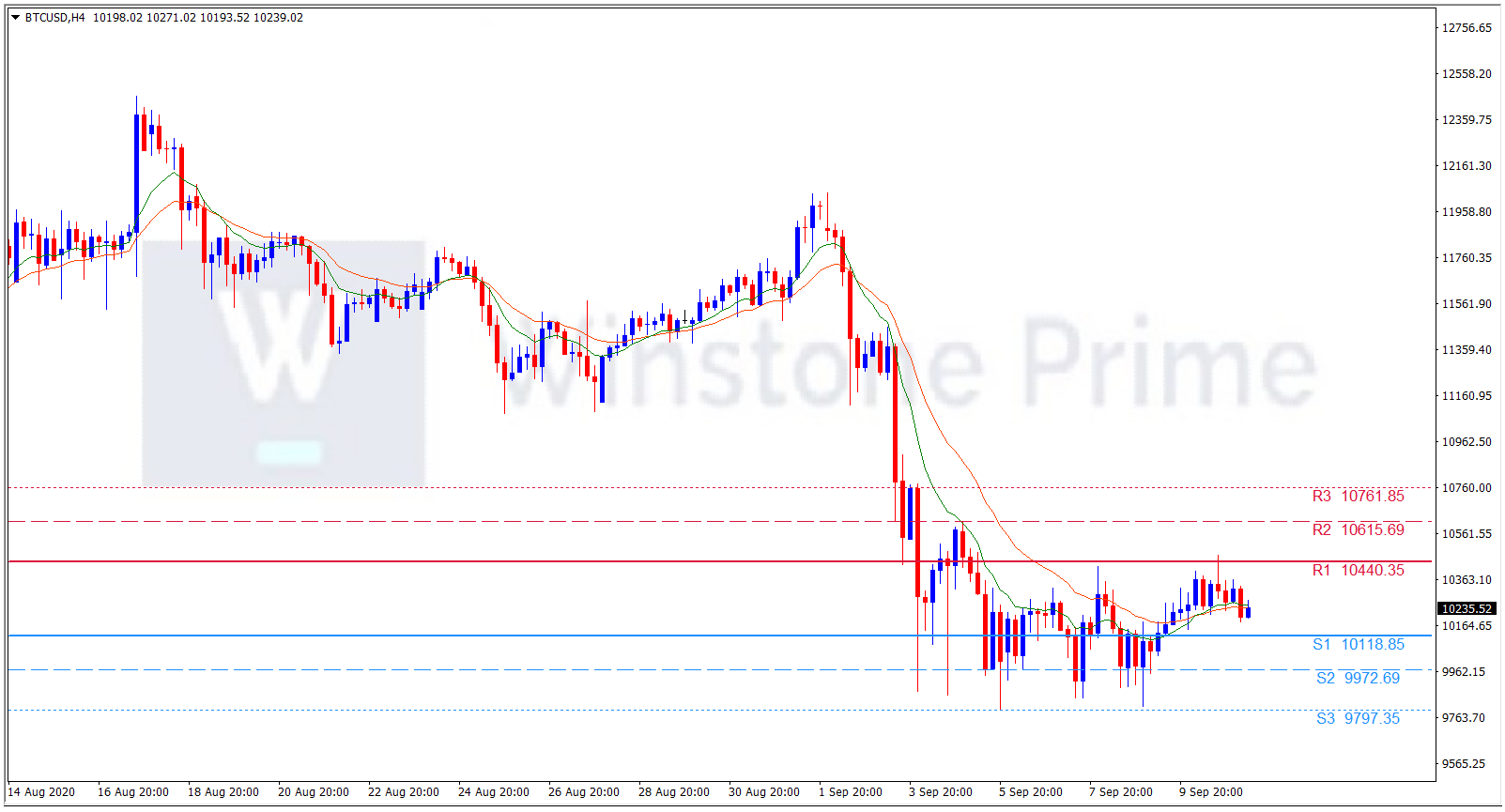
Support: 10118.9 (S1), 9972.7 (S2), 9797.4 (S3).

Resistance: 10440.4 (R1), 10615.7 (R2), 10761.9 (R3).

Amid all the catalysts, the investors prefer short entries on the bitcoin and we expect a bearish trend for BTC/USD.

Housing market confidence supports pound

Confidence in Uk housing has increased. Stamp duty cuts, coupled with increased demand for homes with gardens since the pandemic, has driven confidence in the housing market to a four-year high, according to surveyors and estate agents.

A net balance of 44% of members of the Royal Institute of Chartered Surveyors (Rics) reported an increase in prices, the strongest reading since 2016, according to its latest monthly snapshot. This compares with 13% in July and marks a dramatic turnaround from the -33% registered in May. Virtually all parts of the UK are now seeing prices increase. The only exception is London, it was reported that prices have remained more or less flat over the past two months.

The figures suggest a surge in interest in homes with gardens in the wake of the Covid-19 pandemic, with 83% of those surveyed expecting demand for such homes to go up over the next two years, and 79% predicting rising demand for properties near green space.

Ahead of a crucial round of talks between London and Brussels over the future trading relationship between the UK and the European Union, the British government made a startling admission: That it would be prepared to break the terms of an international treaty. The threat was relatively technical — over an aspect of the withdrawal agreement that allowed the UK to leave the EU at the end of January

Johnson now has roughly five weeks to agree a deal with the EU or face the economic and political repercussions of maximum trade disruption. Many senior Conservatives still believe that his plan is to create as much noise as possible in the coming weeks in the hope of a last-minute compromise.

On the other hand, the US policymakers continue to jostle over the much-awaited stimulus package even as the voting on the same is likely to take place on Thursday. Ahead of that the White House Chief of Staff Mark Meadows said that he is hopeful over more COVID-19 aid from GOP, Democrats.

GBP/USD 4 Hour Chart:

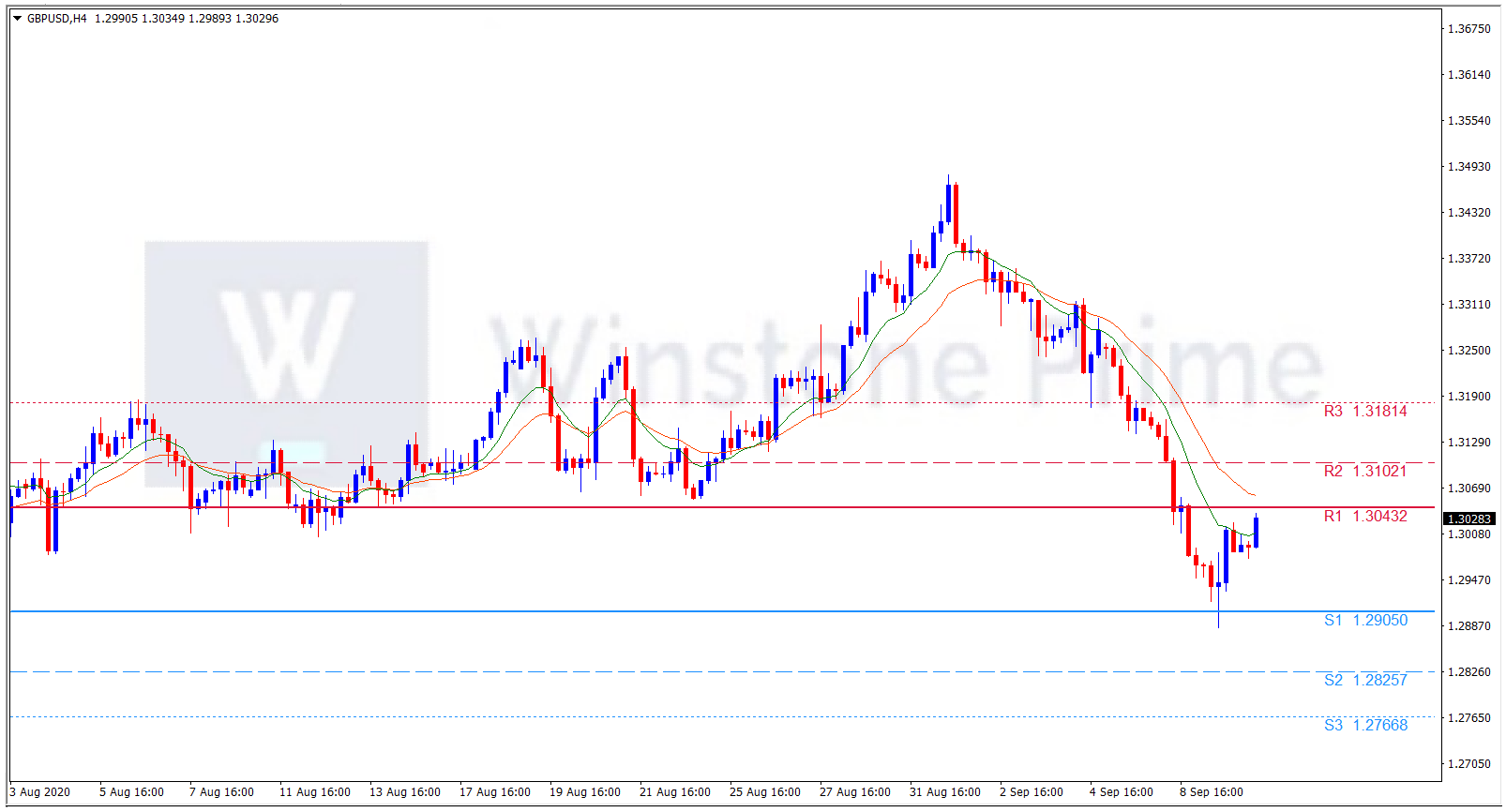
Support: 1.2905 (S1), 1.2826 (S2), 1.2767 (S3).

Resistance: 1.3043 (R1), 1.3102 (R2), 1.3181 (R3).

Amid all these updates, a pressure is laid on greenback and we expect a bullish trend for GBP/USD.

BOC stands pat on policy impacts loonie

The dollar was up on Wednesday morning in Asia after U.S. markets saw a second rout in tech stocks in less than a week, giving the dollar a boost.  “U.S. equity futures will likely be a guide to currencies today. The more equity futures fall, the larger the strength in the dollar and the yen,” Commonwealth Bank of Australia’s head of international economics Joe Capurso told.

On the other hand, currently, another injection of fiscal stimulus as soon as the end of this month is looking more likely in Canada than in the US as Trudeau’s political future looks more certain than President Trump. Hence, the BoC may not rush to release liquidity before it views the government’s plans.

The BoC chief, Tiff Macklem acknowledged last month that although there are signs of recovery, the path ahead could be bumpy, and interest rates may remain at the current record low of 0.25% at least until the end of 2022. The asset purchase program has also been driven to its limits, expanding more than the Fed’s in terms of GDP. So, markets will pay a close attention to Macklem’s speech on Friday to figure out what else could be done on the monetary front to further support the economy.

Most economists aren’t expecting any major changes to the policy until later this year at the earliest when policymakers will have more clarity on how the pandemic is spreading.

“There’s no need to do that at this point, because interest rates are still very low across the curve,” Avery Shenfeld, chief economist at Canadian Imperial Bank of Commerce, said by email.

Infection cases do not look like the second wave in Canada yet but the close borders with the US could trigger one if an effective vaccine is not approved for release soon. Moreover, exporters send 75% of their international sales to the US, therefore any economic deterioration in the States could easily spread into Canada and policymakers should be prepared for that.

According to the inflation survey released by the BoC and Macklem’s remarks about factoring public views in policy decisions at the Jackson Hole symposium last month signalled that Canada could follow suit. Thus, markets would be eagerly waiting to hear any hints on the issue this week, and more importantly, how this could be set within the current symmetrical 1-3% range target. Note that the core Consumer Price Index (CPI), which the central bank closely monitors to decide on a policy, retreated back to 0.7% y/y in August, while the headline CPI eased to 0.1% y/y.

USD/CAD 4 Hour Chart:

Support: 1.3134 (S1), 1.3034 (S2), 1.2982 (S3).

Resistance: 1.3286 (R1), 1.3338 (R2), 1.3438 (R3).

Investor’s next move largely depends on the BoC’s economic outlook. In the meantime, we expect a bullish trend for USD/CAD.

Japan Economy’s shrank more than estimate impacted yen

Japan’s economy shrank slightly more than initially thought in the April-June quarter, official data released Tuesday showed, deepening a contraction that was already the worst in the nation’s modern history. The world’s third-largest economy shrank 7.9% in the second quarter of this year from the previous quarter, more than the initial 7.8% in the preliminary data, the Cabinet Office said.

The downward revision comes with corporate investment weaker than in the preliminary data released last month, as the corona virus deepens the country’s economic woes. The latest headline figure was modestly better than the market consensus of an 8.0% contraction, but it is the worst figure for Japan since comparable data became available in 1980, beyond the brutal impact of the 2008 global financial crisis.

Labour ministry data showed inflation-adjusted real wages, a key gauge of households’ purchasing power, declined 1.6% in July from a year earlier, following a downwardly revised 2.1% drop the previous month.

Overtime pay dropped 16.6% in July from a year earlier, down for the 11th straight month, while nominal total cash earnings dropped 1.3% in the year to July. Regular pay – or base salary, which makes up most of the total cash earnings – saw a modest increase, growing 0.3%, which was smaller than June’s downwardly revised 0.4% gain.

The market mood remains mostly sluggish amid the escalating tension between the US and China, as well as the recent border tussle among New Delhi and Beijing. Though, hopes of further stimulus from the US keep, followed by Friday’s upbeat data favor the greenback bulls.

It’s worth mentioning that the calls of a snap election in Japan, other than the PM leadership vote scheduled next week, also weigh on the market’s risk-tone sentiment.

USD/JPY 4 Hour Chart:

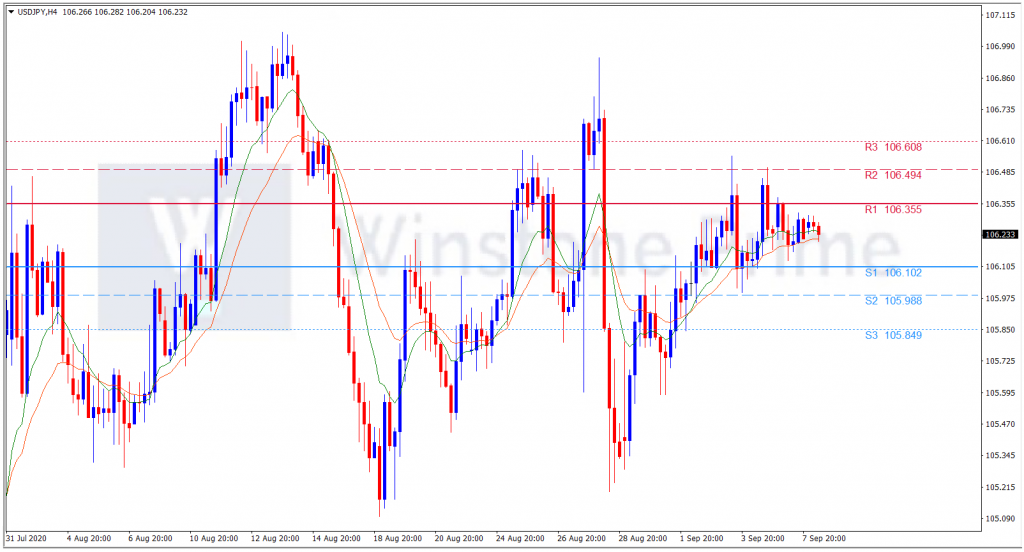
Support: 106.10 (S1), 105.99 (S2), 105.85 (S3).

Resistance: 106.36 (R1), 106.49 (R2), 106.61 (R3).

In the prevailing market sentiment creating an unfavorable impact on yen, we expect a bullish trend for USD/JPY.