Gold trades high ahead of US inflation

  • Gold edged higher and touched two weeks high amid broad US dollar weakness.
  • US CPI is expect to rise to the largest since 1982.
  • Comments from White house and Federal Reserve officials propels US CPI chatters.


The yellow metal traded high and reached two-week high of $1835 against the greenback during Thursday Asian session. The broad US dollar and being the Safe haven asset, gold attracted the traders during this cautious market sentiment amid inflation fears.

U.S. consumer price index for January which is due later in the day is expected to rise 0.4%, culminating in an annual rise of 7.2%, which would be the largest such increase since 1982.

Stephen Innes, managing partner at SPI Asset Management said “I think the dollar is going to weaken off despite yields going higher because every other central bank is raising interest rates… to defend against inflation.” “If the Fed starts ramping up rates too quickly, it’s not good for the economy, especially with every other central bank doing the same thing in unison. In that sense, gold could actually be a pretty decent hedge over the long term.”

Latest comments from the White House and the US Federal Reserve (Fed) challenges the gold buyers ahead of CPI data.

The White House (WH) conveyed expectations of a higher YoY inflation figure and said that “Its irrelevant month on month number will continue trending lower the rest of the year.” After that, WH Economic Adviser Brian Deese said that “he sees reason to think that factors boosting inflation will moderate over time.”

Elsewhere, Atlanta Fed president Raphael Bostic said in an interview on Wednesday that “There is some evidence we are on the cusp” of inflation that begins to ease perhaps by midyear” In separate comments Cleveland Fed president Loretta Mester said she also expected inflation to ease this year as the Fed steadily tightens credit.

XAU/USD 4 Hour Chart:
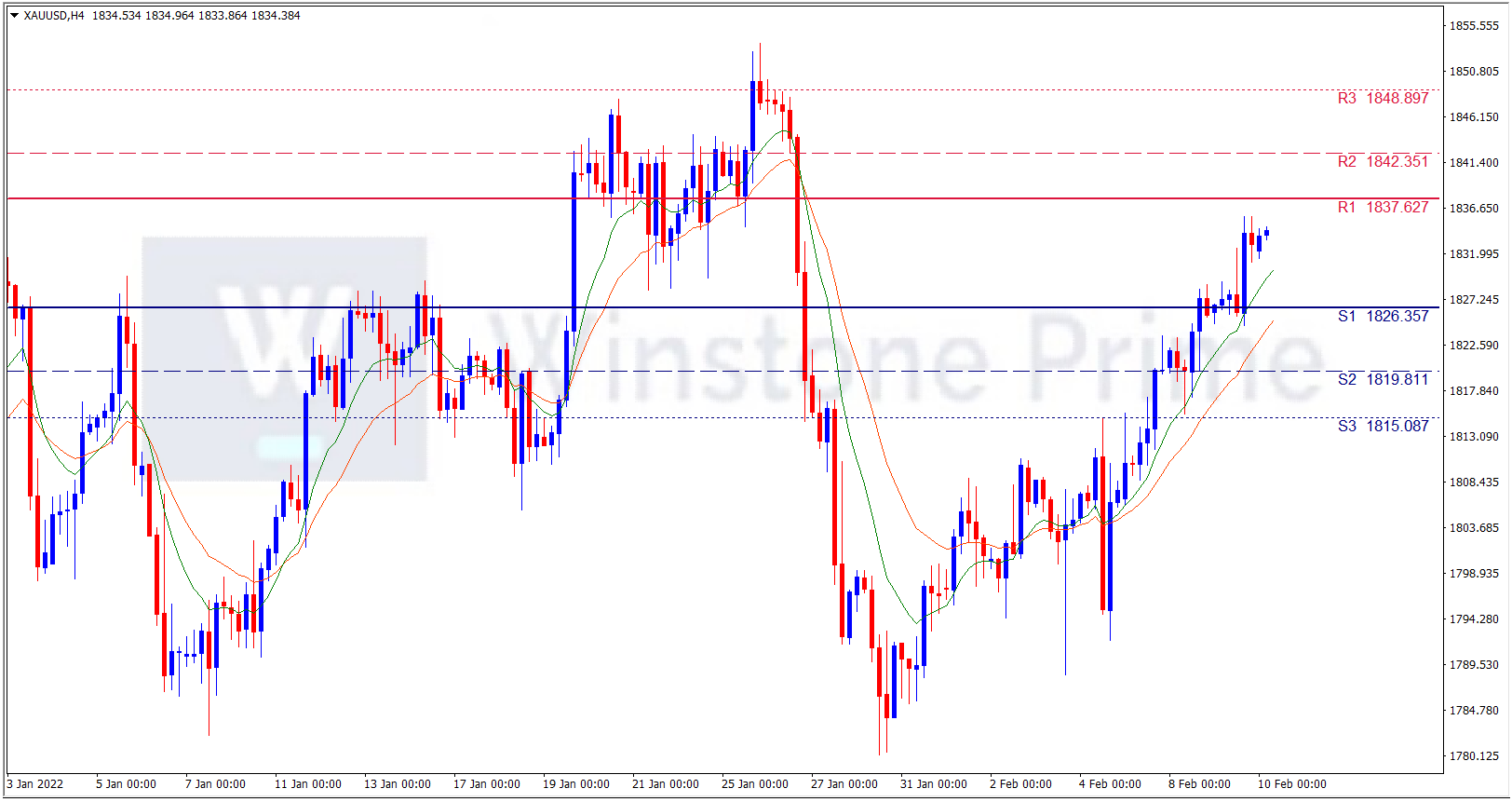
Support: 1826.4 (S1), 1819.8 (S2), 1815.1 (S3).

Resistance: 1837.6 (R1), 1842.4 (R2), 1848.9 (R3).

Amidst the cautious market sentiment ahead of US CPI data, we expect a bullish trend for XAU/USD.
Aussie edges high with the hawkish prospects from RBA

  • Yields on Aussie 10 Year jumped high as Market price more aggressive action from RBA.
  • Fall of Australian consumer sentiment in February could restrict the bullish move of the quote – AUD/USD.
  • US CPI data is largely eyed by the traders to get clues on interest rate hikes.


Australian dollar trades high against the American dollar during Wednesday Asian session. Aussie is better bid today as Markets have priced in more moves by the Reserve Bank of Australia (RBA), after the central bank conceded a rate rise could come late next year if the economy continued to surprise on the upside.

As per Reuters, “A first move to 0.25% is implied by June, while in the past week futures 0#YIB: have added in a fifth hike for this year to reach 1.25%. Further increases to 2.5% are priced in by July 2023.”

As a response, the Australian bond market has taken a beating this week. Yields on 10-years AU10YT=RR have surged 25 basis points in four sessions to hit 2.10%, and briefly reached their highest since March 2019

Analysts at TD Securities argued. ”We think RBA is closer to their inflation objectives and could well afford to signal a more hawkish stance given the recent better data outturns.”

On the other hand, A measure of Australian consumer sentiment fell for a third month in February since higher living costs from petrol to rent undermined finances and overshadowed an easing in coronavirus cases.

Westpac chief economist Bill Evans. said “The most likely explanations for these elevated pressures on finances relate to: Omicron-related disruptions to activity and earnings at the start of the year; the rising cost of living; and the prospect of rising interest rates.”

Investors now await U.S. inflation data due on Thursday to take clues of the U.S. Federal Reserve’s timeline on interest rate hikes.

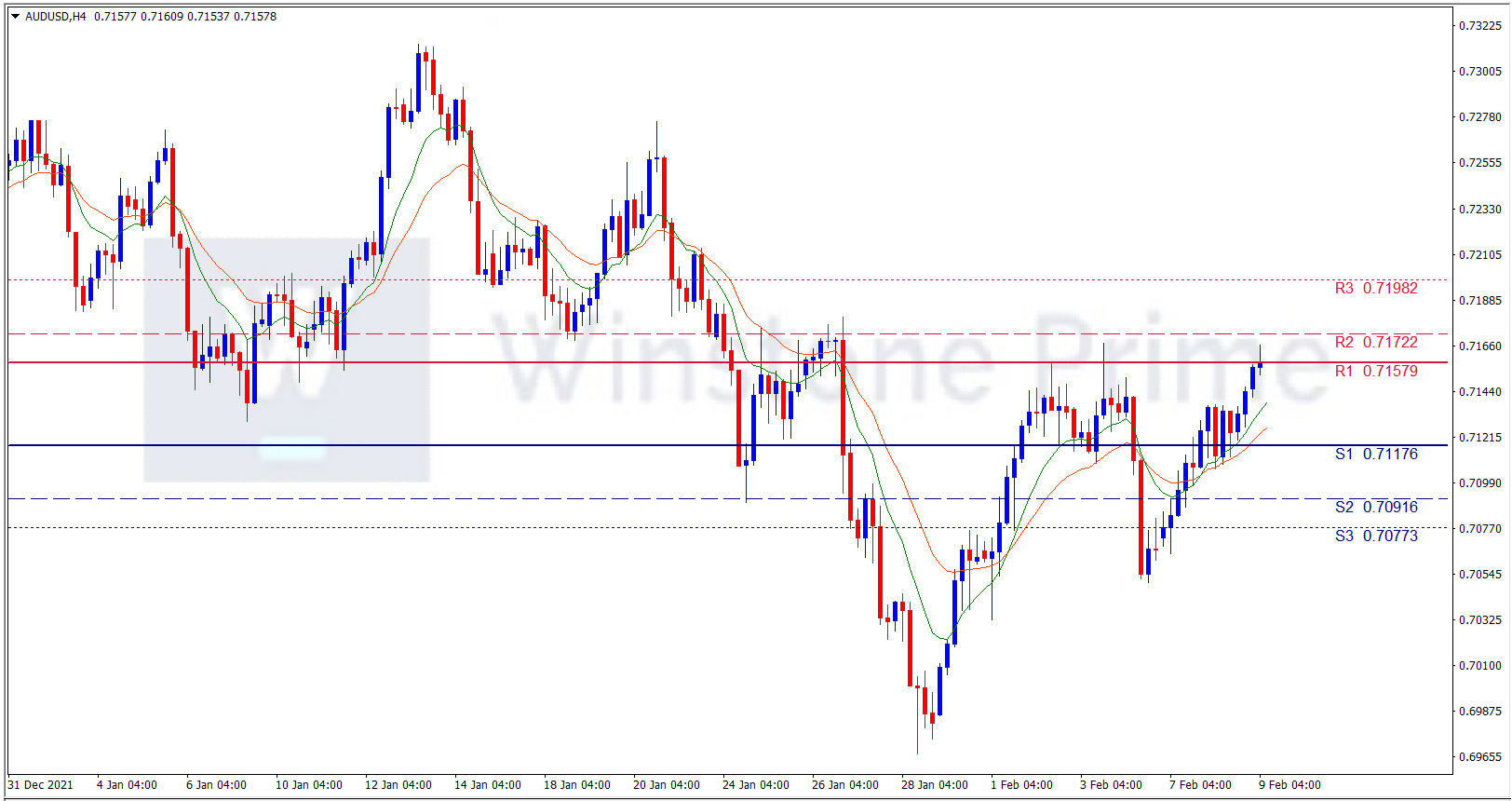
AUD/USD 4 Hour Chart:

Support: 0.7118 (S1), 0.7092 (S2), 0.7077 (S3).

Resistance: 0.7158 (R1), 0.7172 (R2), 0.7198 (R3).

The Hawkish expectation from RBA favors the Australian dollar against the US dollar; we expect a bullish trend for AUD/USD.

ECB Lagarde’s comment weighs on Euro

  • ECB’s Lagarde down-talked the hawkish tone which was perceived by Market on last Thursday ECB monetary policy pivot.
  • Downbeat German Industrial production also weighed on the Euro.
  • Challenges on the 0.50% Fed rate hike in March and the US- Japan trade deal weighs on the US dollar bulls.


Euro seems under pressure against the US dollar for second consecutive trading day of the week. The rationale behind the move can be related to the dovish comment from ECB President.

Yesterday, ECB’s President Christine Lagarde appeared at the EU parliament and said that “inflation is likely to remain high, in the near term.” Moreover, she emphasized that “there is no sign that would measurably exceed the 2% target in the medium term.” she also noted that “it will remain above the 2% target, but it would be lower than current levels.” In the Q&A session, ECB President down talked the hawkish tone perceived by the traders on last Thursday ‘s ECB’s monetary policy release.

Additionally, ECB policymaker Martins Kazaks said “The European Central Bank (ECB) could end its stimulus programme earlier than planned but it is unlikely to raise its main interest rate in July as investors are expecting.”

Upbeat Euro area Sentix investor confidence for February was overlooked due to the downbeat German Industrial Production for December which shrank to 0.3% when estimates looked for a 0.8% increase.

Markets are now riced in a one-in-three chance the Fed might hike by a full 50 basis points in March, and a reasonable chance rates will reach 1.5% by year end, this weighs on the US dollar bull. On the same note is the US – Japan trade deal.

As per the recent news, “The US and Japan are set to announce a deal that would cut Trump-era tariffs on steel. Under the agreement, a limited amount of Japanese steel will be allowed for import without the 25% levy imposed by President Donald Trump in 2018. If Japan goes over that amount, the tariff would return. Japan is one of the top 10 sources of steel to the United States — yet only accounts for about 4% of all steel imports, according to the Commerce Department.”

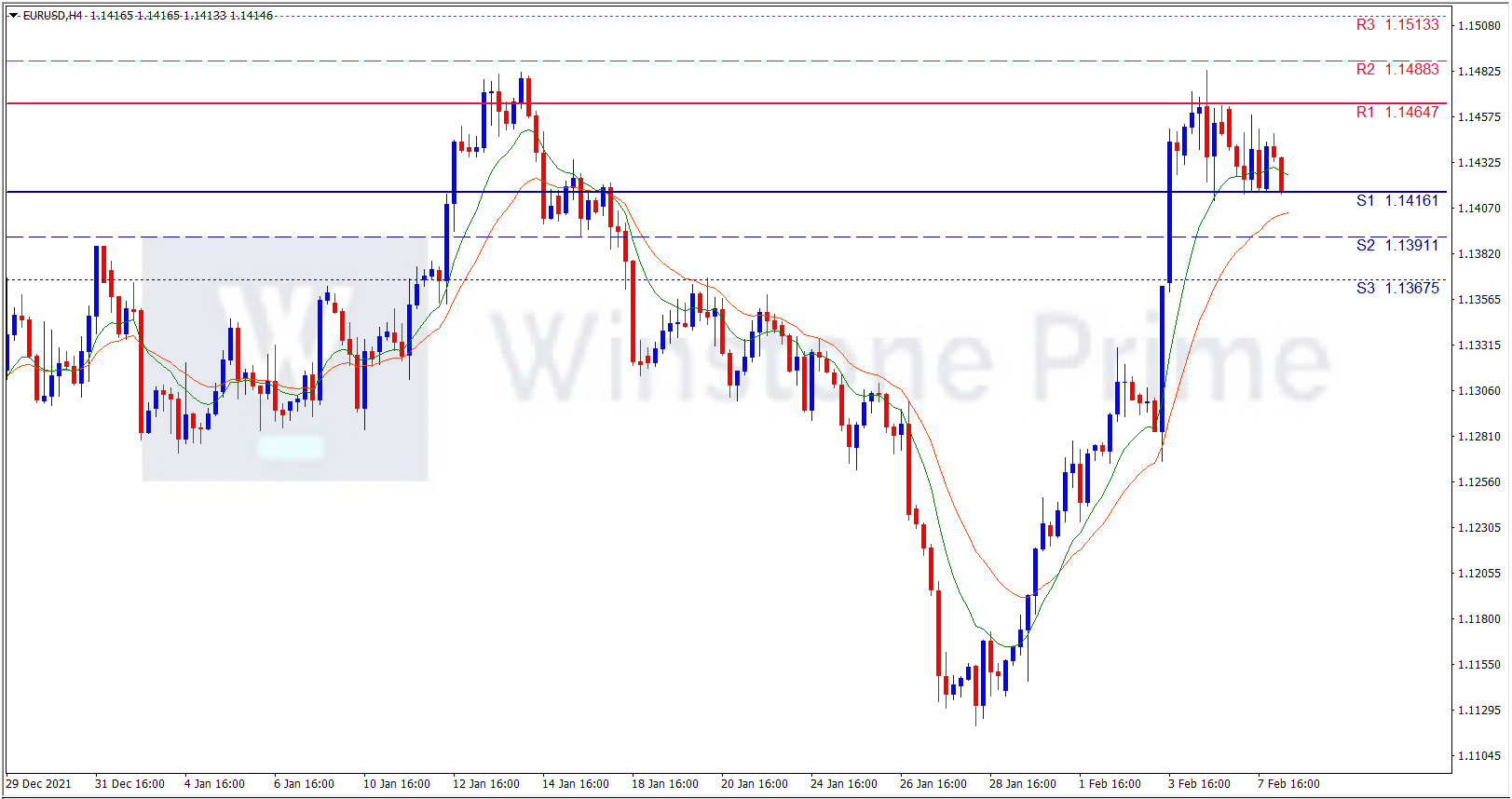
EUR/USD 4 Hour Chart:

Support: 1.1416 (S1), 1.1391 (S2), 1.1368 (S3).

Resistance: 1.1465 (R1), 1.1488 (R2), 1.1513 (R3).

Dovish comment from the ECB’s Lagarde puts Euro under pressure and we expect a bearish trend for EUR/USD.

Strong NFP data pressurizes the cable

  • Employment data released on Friday which beat the expectation with huge difference favored the US dollar.
  • Brexit issue and the UK politics also weigh on the Cable.
  • Investors now await US inflation data on Thursday.


The British pound dropped against the greenback during Monday trading session. The US employment job data released on Friday, Brexit issues and the UK politics are the catalysts in driving the move of the cable.

The U.S. dollar bounced back from two-week lows on Friday after data showed the world’s largest economy created far more jobs than expected. The jobs data showed US nonfarm payroll grew to 467000 jobs in the month of January which is much larger than the expectation of -192000. Data for December was revised higher to show 510,000 jobs created instead of the previously reported 199,000.

Average hourly earnings, a measure of wage inflation and a closely-watched metric, also rose 0.7% last month vs expectation of 0.4% , and 5.7% vs expectation of 4.8% on a year-on-year basis.

Traders were prepared for a weaker-than-forecast reading given the decline in the ADP U.S. private payrolls report released earlier last week which showed a decline due to the impact of the Omicron coronavirus variant. However, the upbeat NFP data boosted the market sentiment and extended support to the US dollar.

At home, fishermen eked out pessimism over Brexit deadlock. And Senior members of Boris Johnson’s Conservative Party urged challengers to the prime minister to rein in their ambitions and focus instead on steering Britain through the biggest plunge in living standards in a generation.

Johnson had apologized after he and staff held parties during strict coronavirus lockdowns, at a time when many people could not say farewell in person to dying relatives, events that are being investigated by the police.

He further angered colleagues last week when he falsely accused the leader of the opposition Labour party of failing to prosecute a child sex abuser when he was in charge of public prosecutions. That, critics said, shows Johnson is incapable of changing, or showing true remorse.

As per a recent news, “Boris Johnson has been warned by Jet2 that the UK is falling behind in the race to decarbonise the aviation industry and is failing to recognise its true potential.”

Investors are now waiting for the U.S. inflation data, including the consumer price index, due on Thursday. A strong reading could escalate bets of a Fed interest rate hike in March 2022.

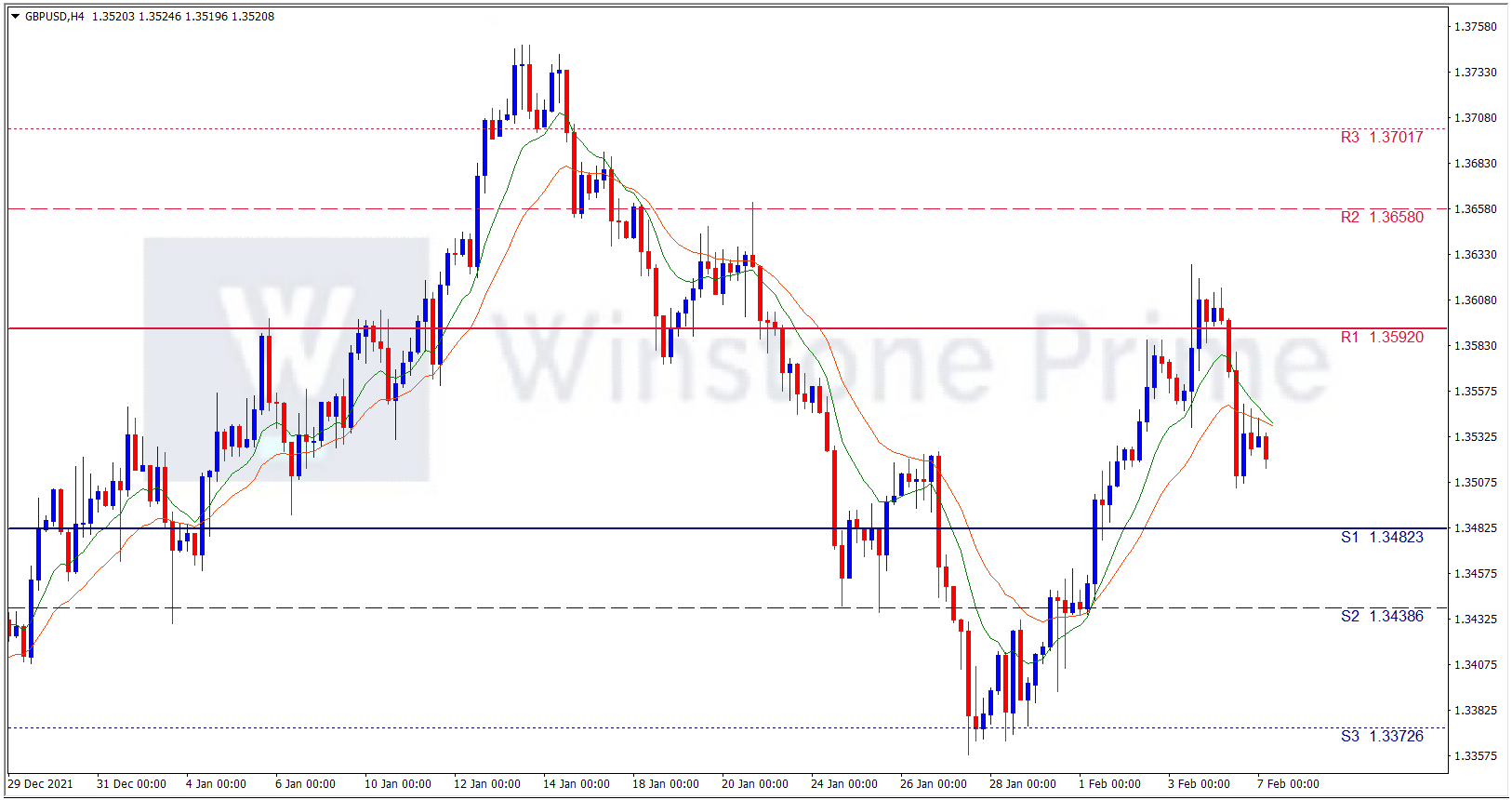
GBP/USD 4 Hour Chart:

Support: 1.3482 (S1), 1.3439 (S2), 1.3373 (S3).

Resistance: 1.3592 (R1), 1.3658 (R2), 1.3702 (R3).

The strong NFP data along with other catalysts favoring the greenback against the sterling, we expect a bearish trend for GBP/USD.