Is CFD Trading Safe?

What are the advantages and disadvantages of Forex trading and How CFD’s safe to trade?

Trading with CFDs can be safe. However, for a lot of people, the appeal is precisely the risks associated with it. Maybe skiing would be a good analogy. Is skiing safe? Well, are you in a well-maintained easy route, or are you an adrenaline junky careening down the side of a hill? So it goes with CFDs.

There are a couple of aspects of safety that are important to keep in mind.

In fact, keeping safety consideration as an important part of trading is often seen as the basis of success in trading CFDs like Forex. It has to do with some principles of basic investment strategy.

CFD Vs Stock
Using the above example: Let’s say the price of the underlying stock continues to increase and reaches a bid price of $26.00. If you owned the stock, your holding is now worth $2600. A nice profit – ignoring commission or trading costs the trader realised $100.

However, with the underlying stock at $26.00, the CFD would show the same $100 profit – but it required way less to open, just $125. So in terms of percentage, the CFD returned much greater profits. Had the market moved the other way, losses relative to our investment would have been larger too – both risk and reward are increased.

There are of course other benefits to owning an asset rather than speculating on the price. We also ignored commissions and spreads for clarity.

An Example of a CFD Trade
Let’s say that Apple is trading at $200. You feel that Apple is going to rise in value. You respond by purchasing 1,000 CFDs. In this example, Apple has a margin rate of 10 percent. This means that you only need to deposit 10 percent of the value of the trade as position margin.

One thousand CFDs at $200 equals $200,000, and 10 percent of $200,000 is $20,000. This means that in this scenario your position margin is $20,000. Let’s say that we made the right choice and now Apple finishes at $225. Now, your 1,000 CFDs multiplied by $225 equals $225,000. This means that you have made a profit of $25,000 by only investing $20,000.

It is important to remember in these scenarios that in the same way you can experience higher percentage gains as a stock goes up, you can also experience higher percentage losses if the stock goes contrary to your bet.

With this in mind, here are some of the reasons why trading CFDs may be right for your business:

  • You can make a profit whether the market rises or whether the market falls.
  • The leverage effect allows you to use your capital in an efficient way.
  • Transaction costs are typically lower than other investment vehicles.
  • You can trade 24 hours a day and benefit from fast execution.

There are so many advantages to talk about for CFDs, so let’s try and make a list before we begin:

  • Payouts from decreasing markets
  • Margin trading on stocks and commodities
  • Variety of assets

 
Now let’s try and break all of these down one by one.
 
Decreasing markets – as already mentioned before, one of the biggest advantages of CFDs is that traders have a unique opportunity to make payouts even when the market is going down. All they have to do is simply “register” their prediction in the system, and if it turns out to be true, they make a payout. Such trades are impossible in regular Forex or stock markets.
 
Margin trading – margin trading is not necessarily considered an advantage for beginner traders, but it is very important for expert traders. It basically allows a person to buy or sell much more than they have available on their account.

Variety – when it comes to variety, it’s safe to say that CFD traders have hit the jackpot. No matter what instrument they want to trade, it’s available right in front of them, if the broker supports it. Almost every single financial asset can be traded through CFDs, which makes diversifying your portfolio quite easy.

In a sense, it is considered to be the best way to diversify a portfolio by some traders. You are not only trading different assets, but you are trading in completely different markets. So the effects are different as well. If FX is doing terribly, people simply switch to stocks or commodities.

Although there are more than enough advantages, there is an equal number of disadvantages with CFDs as well.

  • Deadlines
  • Can’t have long-term positions
  • Leverage risk


Let’s try and explain all of them one by one as well.
 
Deadlines – these are sometimes referred to as the biggest problem that CFDs have. You see, every position a trader opens needs to have some kind of deadline given to it. These are usually a week, but there have been cases when people were given only 24 hours to close their trades.

If the trader fails to close their trade before the deadline, it will be automatically closed no matter if it is in a good or bad position. The only way to postpone the deadline is to pay a fee, which can sometimes be quite a lot. Considering that there are a lot more fees associated with CFDs, it can sometimes get very expensive.
 
Long-term positions – another big disadvantage of CFDs is that traders cannot open long-term positions. Well, you still can, but it would require postponing the deadline over and over again. That can get so expensive that by the time you’re ready to close the trade, you’ve already spent the exact amount you were supposed to get as a payout. So your total payout would be zero. Considering how some assets take a long time to grow a lot, this could become a problem for traders down the line.

Leverage risk – Sure we first mentioned leverage or margin trading as an advantage, but it also has its dark side as well. You see, a leveraged CFD trade may bring quite a lot in payouts if it is successful, but if it is not, then it will make the trader lose much more than they would have without the leverage. This is one of the biggest CFD trading risks that hold traders back. Most traders simply don’t use the leverage at all; but at that point CFDs pretty much lose all of their value too.

Conclusion

Advantages to CFD trading include lower margin requirements, easy access to global markets, no shorting or day trading rules, and little or no fees. However, high leverage magnifies losses when they occur, and having to pay a spread to enter and exit positions can be costly when large price movements do not occur.

Trading CFDs can be risky, and the potential advantages of them can sometimes overshadow the associated counterparty risk, market risk, client money risk, and liquidity risk. CFD trading can also be considered risky as a result of other factors, including poor industry regulation, potential lack of liquidity, and the need to maintain an adequate margin due to leveraged losses.


Hedging & Hedging Correlation Strategies

hedging-1

Whether you’re new to the world of trading or an experienced trader, hedging provides an efficient and cost-effective way to minimize market risks and offset or reduce losses. The practice of hedging became more popular with the rise of hedge funds in the last century, and an increasing number of traders and investors are using hedge strategies on a daily basis to protect their investments. Even though hedging can be fairly simple, many market participants still don’t understand how to properly hedge their positions against known market risks.

The hedging strategies are designed to minimize the risk of adverse price movement against an open trade. Through this article, we’re going to talk about a Forex hedging correlation and how to use simple trading methodolgy in a hedging strategy.

Why hedge forex?

Hedging a Forex  or foreign exchange, trade does more than just protect your open position. It sets you up to profit no matter which direction your currency pair moves. Hedging means having a buy and sell trade all together on the same securities or multiple securities that are correlated with each other and aggregating the total position value for profits or reducing the loss. Hedging can be done by opening trade on the same currency pairs at the same price or different prices also in combination with other correlated currency pairs. Sometimes, hedging is used to fix the amount of loss. It can be act like insurance policies to protect your trade against an unexpected market move. You can select a hedging strategy that protects your position in a cost-effective manner.

For example: Suppose a trader opened a buy and sell order at 1.2510. That means no matter what direction market moves, both buy and sell orders are hedged. The trader will see the commission or spread cost and swap fees. (One swap fee will be positive and one will be negative)

Hedging won’t necessarily cover the entire cost of a lost trade, however it will cover some of the loss made on a trader’s original position.

Three forex hedging strategies

There are a vast range of risk management strategies that forex traders can implement to take control of their potential loss, and hedging is among the most popular. Common strategies include simple forex hedging, or more complex systems involving multiple currencies and financial derivatives, such as options.

1. Simple forex hedging strategy

A simple forex hedging strategy involves opening the opposing position to a current trade. For example, if you already had a long position on a currency pair, you might choose to open a short position on the same currency pair – this is known as a direct hedge.

Though the net profit of a direct hedge is zero, you would keep your original position on the market ready for when the trend reverses. If you didn’t hedge the position, closing your trade would mean accepting any loss, but if you decided to hedge, it would enable you to make money with a second trade as the market moves against your first.

2. Multiple currencies hedging strategy

Another common FX hedging strategy involves selecting two currency pairs that are positively correlated, such as GBP/USD and EUR/USD, and then taking positions on both pairs but in the opposite direction.

For example, say you’ve taken a short position on EUR/USD, but decide to hedge your USD exposure by opening a long position on GBP/USD. If the euro did fall against the dollar, your long position on GBP/USD would have taken a loss, but it would be mitigated by profit to your EUR/USD position. If the US dollar fell, your hedge would offset any loss to your short position.

It is important to remember that hedging more than one currency pair does come with its own risks. In the above example, although you would have hedged your exposure to the dollar, you would have also opened yourself up to a short exposure on the pound, and a long exposure to the euro.

If your hedging strategy works then your risk is reduced and you might even make a profit. With a direct hedge, you would have a net balance of zero, but with a multiple currency strategy there is the possibility that one position might generate more profit than the other position makes in loss. But if it doesn’t work, you might face the possibility of losses from multiple positions.

3. Forex options hedging strategy

A currency option gives the holder the right, but not the obligation, to exchange a currency pair at a given price before a set time of expiry. Options are extremely popular hedging tools, as they give you the chance to reduce your exposure while only paying for the cost of the option.

Let’s say you’re long on AUD/USD, having opened your position at $0.76. However, you are expecting a sharp decline and decide to hedge your risk with a put option at $0.75 with a one-month expiry.

If – at the time of expiry – the price has fallen below $0.75, you would have made a loss on your long position but your option would be in the money and balance your exposure. If AUD/USD had risen instead, you could let your option expire and would only pay the premium.

When to Consider Hedging

Hedges are useful whenever you’re looking to maintain an open position on a pairing while offsetting some of your risk in that situation.

A short-term hedge can be a great way to protect profits when you’re unsure of certain factors that could cause volatile price movements. This uncertainty can range from a suspicion that an asset has been overbought to concerns that political or economic instability could cause certain forex pairs to plummet in value—particularly when you’ve opened a long position on those pairs.

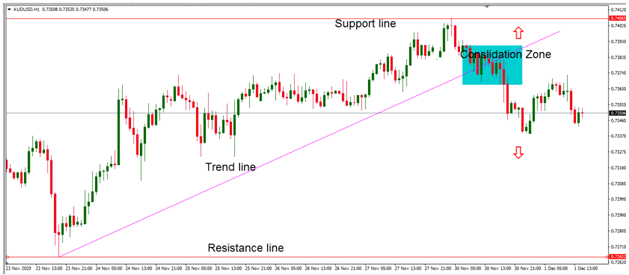
In the USD/JPY chart shown below, a period of consolidation is creating breakout potential that could go in either direction. If you already have an open position in this currency pair and are hoping that the price decline breaks through the resistance line, you might consider hedging with another position, targeting a rebound from the trend line back up toward previous highs:

Hedging-2

If you do open this hedge and the price breaks through the trend line, you can always close your second position and continue reaping the profits of your successful short. But if you’re wrong and the trend reverses course, you can close both positions and still cash out your earnings from the previous price change.

Traders often use hedges to protect against the short-term volatility of economic news releases or market gaps over weekends. Traders should keep in mind that as hedging reduces trading risk, it also lowers potential profits. Because of the low returns created by hedging, this strategy works best for traders who are working the forex market full-time or have an account that is large enough to generate big monetary gains through limited-percentage profits.

How to exit a Hedge trade

When you’re exiting a direct or complex hedge and keeping your initial position open, you need to close out only the second position. When you’re closing out both sides of a hedge, though, you’ll want to close these positions simultaneously, to avoid the potential losses that can come if there is a gap.

It’s important to keep track of your hedged positions so that you’re able to close out the right positions, at the right time, to complete the execution of this strategy. Overlooking one open position in the process can derail your entire hedging strategy—and potentially hit your trading account with steep losses.

Conclusion

Retail traders hedge their trades mainly for psychological reasons and not because it’s a good trading strategy. By being able to use financial hedging strategies we get the feeling that we’re not wrong about our trades, we’re just holding for a while and then we’ll take the hedge off when things are going in the direction that we know they’re going to go.

No matter which types of hedging strategies you use, you need to understand that there are no free lunches in trading. Hedging is like buying insurance against losses!

The Forex hedging strategy is a great way to minimize your exposure to risk. It not only helps you to protect against possible losses but also it can help you to make a profit.

Benefits of Metatrader 5 Trading Platform

MetaTrader 5 (MT5) is a multi-asset platform that allows trading Forex, stocks and futures. It offers superior tools for comprehensive price analysis, use of algorithmic trading applications like trading robots, Expert Advisor and copy trading. 

Apart from offering more advanced trading functions, this platform makes a number of superior tools using which traders can easily carry out both fundamental as well as technical analysis and trade in a better manner. It provides the mobile or Smartphone version of the MT5 software is available. As such, it is a good idea to choose Winstone Prime MT5 broker if your goal is to trade currencies and other assets from a single platform. Here we have described the benefits of MT5 trading platform in detailed view. So let’s see the benefits.

About MT5 Platform

MetaQuotes Software released the MetaTrader 5 (MT5) online trading platform in June 2010, following the wide acceptance of the company’s MetaTrader 4 forex trading platform by both the trader and broker community. The key aspect about MT5 is that it has been developed using a programming language known as MQL5. MetaTrader 5 (MT5) is the next generation trading platform, While MT4 was optimized for forex trading, MT5 is functionally intended to accommodate more asset classes which include cryptocurrencies. 

Benefits of MT5 Platform

1. MT5 presents a powerful trading system, consisting of features such as Market Depth and support for different types of orders and modes of execution. The mode of order accounting for forex trading is the hedging method and it allows you to open multiple positions in one financial instrument either in the same or opposite direction. Forex traders can make good use of this feature. The four types of order execution supported by the MetaTrader 5 terminal are Market order, incomplete order, Stop order and Trailing Stop.

  • Market order: Trade orders can be completed immediately with the consent of traders or brokers for immediate execution. There are two types of market orders on MT5.
  • Incomplete order: Orders can be executed in the future as soon as the market condition adapts to the guided circumstances. Six types of incomplete orders are available.
  • Stop order: It can be used with market and imperfect orders to reduce losses and lock profits. The MT5 has two stop orders.
  • Trailing Stop: Stop-loss can be marked based on current prices. If the prices move in the opposite direction, the stop-loss levels change.

2. The ability to correctly predict the direction of movement of the market in the future is the dream of all traders. MT5 provides traders with a lot of analytical tools for price analysis as well as forecasting. The key aspects in this regard are:

  • Traders can open up to 100 charts
  • Charting system includes 21 time-frames (1 minute to 1 month)
  • 80 analytical objects and built-in technical indicators
  • 39 graphical objects
  • 38 technical indicators
  • 4 scaling modes;
  • 17 client indicators display styles. The exceptional tools available for technical analysis help you to prepare for any changes in the markets.


3. The tools for fundamental analysis such as the economic calendar and the financial news service from international news agencies are made available on the MT5 platform to help you forecast the price movements of financial

4. Algorithmic trading or using robots to execute forex trades is by far one of the fascinating features offered by the MT5 platform. In short, robots analyze and trade the forex market on your behalf. You just have to feed in the strategy that the robot should follow when trading for you. The algorithmic tradingis made possible by the MQL5 development environment. In fact, it enables traders to develop, test, debug, and optimize trading robots for their needs. The MQL5 environment will also enable faster execution of orders as compared to the MetaTrader 4 platform. In addition to allowing you to use complex expert advisors, the MT5 platform enables processing of large amounts of information.

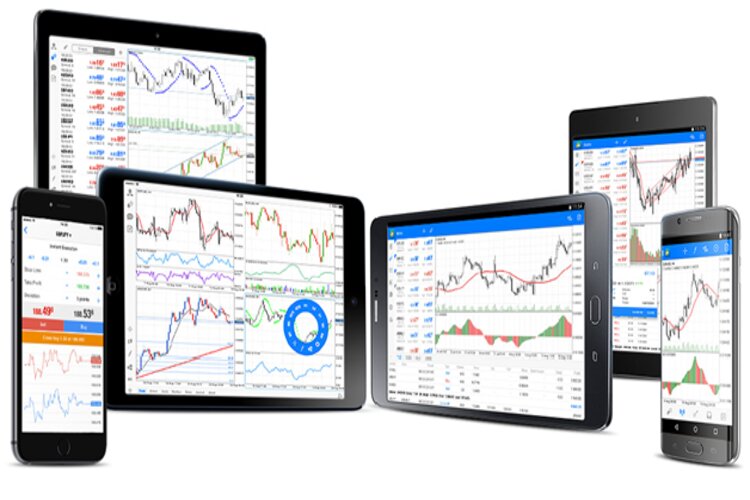
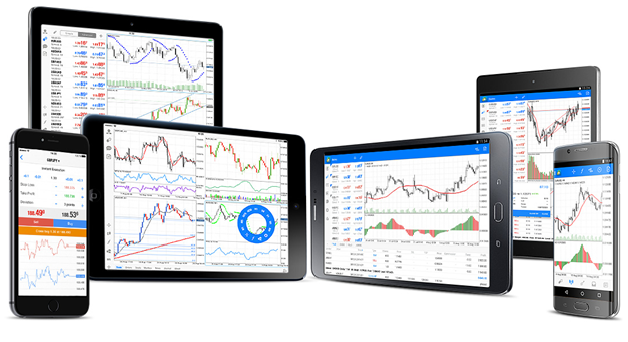
5. The MetaTrader 5 platform enables you to enjoy a great deal of flexibility. You can trade currencies from your smartphones or tablets. The MT5 Web platform provides more possibilities and enables you to use any web browser as well as all devices. You can choose the platform that best suits your needs and trade currencies 24 hours every day.

6. Another important aspect is that you can purchase additional services and enhance the MT5 platform’s functionality. This offers limitless capabilities for the platform. In fact, MT5 offers an inbuilt trading robots market, freelance strategy developers database, copy trading and virtual hosting services.

7. In order to conveniently and quickly analyze trading activity MT5 makes available inbuilt advanced reports. They are helpful not only in tracking initial as well as final deposit values but also in understanding indicators such as Z-score, Profit Factor, and GHPR, among others.

8. MT5 offers a high-level of security. All data transfers are compressed and encrypted based on 128-bit keys.

9. MT5 offers an unlimited choice of shares, commodity, index and ETF CFDs, as well as Forex and Cryptocurrencies. So it’s More assets, more opportunities.

Summarizing, it is important that you have a simple, multifunctional trading platform if you want to enjoy success as a forex trader. Winstone Prime platform is your best bet in this regard.

Everything you need to know about Blockchain

If you have been following banking, investing, or cryptocurrency over the last ten years, you may be familiar with “blockchain,” the record-keeping technology behind the Bitcoin network. And there’s a good chance that it only makes so much sense.

In trying to learn more about blockchain, you’ve probably encountered a definition like this: “blockchain is a distributed, decentralized, public ledger. The good news is that blockchain is actually easier to understand than that definition sounds.

History Of  Blockchain

Blockchain is one of the biggest buzzwords in technology right now. But what is it? And why all are we talking about this? Let’s start from the beginning.

The first major application of blockchain technology was bitcoin which was released in 2009. Bitcoin is a cryptocurrency and the blockchain is the technology that underpins it. A cryptocurrency refers to a digital coin that runs on a blockchain. Understanding how the blockchain works with bitcoin will allow us to see how the technology can be transferred to many other real-world use cases. Bitcoin is the brainchild of a mysterious person or group of people known as Satoshi Nakamoto.

Nobody knows the identity of Nakamoto, but their vision was laid out in a 2009 whitepaper called “Bitcoin: A Peer-to-Peer Electronic Cash System.”

What is Blockchain Technology?

Blockchain is a system of recording information in a way that makes it difficult or impossible to change, hack, or cheat the system. Blockchain, sometimes referred to as Distributed Ledger Technology (DLT), makes the history of any digital asset unalterable and transparent through the use of decentralization and cryptographic hashing.

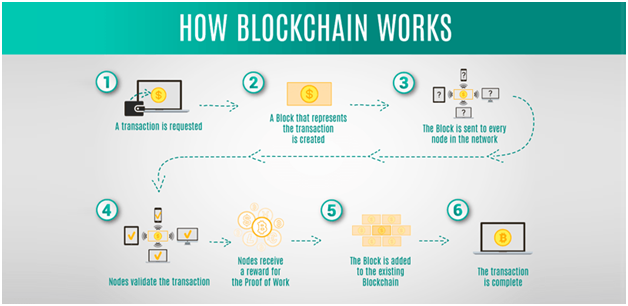
A blockchain is essentially a digital ledger of transactions that is duplicated and distributed across the entire network of computer systems on the blockchain. Each block in the chain contains a number of transactions, and every time a new transaction occurs on the blockchain, a record of that transaction is added to every participant’s ledger.

A simple analogy for understanding blockchain technology is a Google Doc. When we create a document and share it with a group of people, the document is distributed instead of copied or transferred. This creates a decentralized distribution chain that gives everyone access to the document at the same time. No one is locked out awaiting changes from another party, while all modifications to the doc are being recorded in real-time, making changes completely transparent.

Of course, blockchain is more complicated than a Google Doc, but the analogy is apt because it illustrates three critical ideas of the technology: Blockchain is an especially promising and revolutionary technology because it helps reduce risk, stamps out fraud and brings transparency in a scalable way for myriad uses.

How Does Blockchain Work?

Blockchain consists of three important concepts: blocks, nodes and miners.

Blocks

Every chain consists of multiple blocks and each block has three basic elements:

  • The datain the block.
  • A 32-bit whole number called a The nonce is randomly generated when a block is created, which then generates a block header hash.
  • The hashis a 256-bit number wedded to the nonce. It must start with a huge number of zeroes (i.e., be extremely small).


When the first block of a chain is created, a nonce generates the cryptographic hash. The data in the block is considered signed and forever tied to the nonce and hash unless it is mined.

Nodes

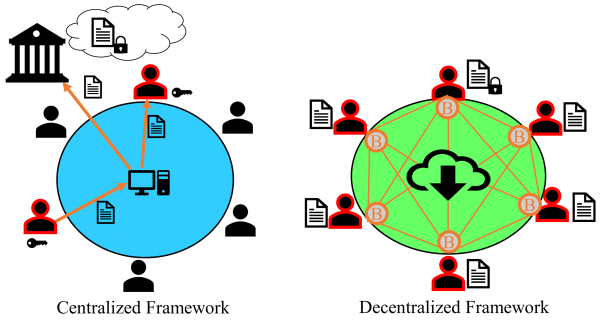
One of the most important concepts in blockchain technology is decentralization. No one computer or organization can own the chain. Instead, it is a distributed ledger via the nodes connected to the chain. Nodes can be any kind of electronic device that maintains copies of the blockchain and keeps the network functioning.

Every node has its own copy of the blockchain and the network must algorithmically approve any newly mined block for the chain to be updated, trusted and verified. Since blockchains are transparent, every action in the ledger can be easily checked and viewed. Each participant is given a unique alphanumeric identification number that shows their transactions.

Combining public information with a system of checks-and-balances helps the blockchain maintain integrity and creates trust among users. Essentially, blockchains can be thought of as the scalability of trust via technology.

Miners

Miners create new blocks on the chain through a process called mining. In a blockchain every block has its own unique nonce and hash, but also references the hash of the previous block in the chain, so mining a block isn’t easy, especially on large chains.

Miners use special software to solve the incredibly complex math problem of finding a nonce that generates an accepted hash. Because the nonce is only 32 bits and the hash is 256, there are roughly four billion possible nonce-hash combinations that must be mined before the right one is found. When that happens miners are said to have found the “golden nonce” and their block is added to the chain.

Making a change to any block earlier in the chain requires re-mining not just the block with the change, but all of the blocks that come after. This is why it’s extremely difficult to manipulate blockchain technology. Think of it is as “safety in math” since finding golden nonces requires an enormous amount of time and computing power.

When a block is successfully mined, the change is accepted by all of the nodes on the network and the miner is rewarded financially.

Blockchain –  Focusing a new World

Today we all use a decentralized platform for information transfer – the Internet. But when it comes to the transmission of values (money), we have to resort to old-fashioned, centralized financial institutions such as banks. Even modern online payment methods usually require the user to integrate with a bank account or credit card. So, blockchain technology offers an intriguing opportunity to eliminate these intermediaries. It records transactions, identifies the parties, and enters into contracts. Traditionally, financial institutions and banks have been responsible for these transactions. It is of great importance as the financial services sector is the largest sector of the economy in terms of market capitalization worldwide. Replacing even a small part of it with a system of blockades will not only bring about major changes in financial services but will also significantly increase their effectiveness.

The third function – conclusion of contracts – brings the usefulness of the blockchain beyond the financial industry. The database can contain not only units of cost (like bitcoin), but also any type of digital information, including software code. The code is executed when the parties enter their keys, thus signing the contract. The program may use external data – stock quotes, weather forecasts, news headlines, and any other information that the computer can process – and create contracts that are automatically executed when certain conditions are met. This technology is known as “smart contracts”, and the possibilities of its application are almost limitless. For example, a smart thermostat can periodically contact the smart power grid and send out energy usage data. When a certain limit on the kilowatt consumed is reached, the blockchain will automatically transfer the cost from the consumer’s account to the electric company’s account, automating the accounting and billing process.

Blockchain is great for protecting intellectual property. The technology can track how many times a user has viewed, shared, or copied data. It can be used to develop fraud-resistant voting systems, ensure the distribution of information, and much more.

Conclusion

Blockchains can be set up to operate in a variety of ways, using different mechanisms to secure a consensus on transactions, seen only by authorized users, and denied to everyone else. Bitcoin is the most well-known example that shows how huge Blockchain Technology has become. Blockchain founders are also trying out numerous other applications to expand Blockchain’s level of technology and influence. Judging by its success and increased use, it seems that Blockchain is poised to rule the digital world of the near future.

If you wish to learn more about Blockchain, Cryptocurrencies and build a career in this field, then check out our ebook Mastery in Cryptocurrency trading which comes with History Of Crypto currencies  and real-life project experience. This article will help you understand the technology in an extensive manner and our ebook will help you to achieve mastery over the subject.