Psychology of Forex Trader

Trading  psychology is a key to success in the forex market.  As human beings, we are inherently sensitive creatures, which dictate our judgments. Although these emotions are not necessarily wrong, how we react to them is what matters, especially when trading currencies.

If emotions get the best of you and you fail to control them, illogical decision-making crops up. Eventually, even if you are an experienced trader, losses start accruing even in trades that could have been profitable. Some traders think that divorcing themselves from emotions could solve their problems. However, that’s impossible—if you are still a human being. If you use the feelings well, they may assist in accelerating your trading success. It deals with the emotional state of a trader when entering and exiting trades, looking for potential business opportunities or doing other business related tasks.

Nonetheless, even their analytical skills were not enough to save that firm from a spectacular collapse, as greed and euphoria overrode the dictates of reason, and leverage amplified the impact of false calculations.  Instead, too much confidence, enthusiasm, a lax attitude to risk controls were the main culprits behind the firm’s demise, and it is possible to tie these factors to emotional faults with ease. Usually, most traders experience losses because of negative emotions that poison their rational decision-making processes and cause them to make improperly planned trade decisions. While the results of one simple mistake can be readily corrected in time, the damage done by these beings is chronicle.

But let us remind you that the rewards of a successful battle with these troublesome beings can be unlimited. The trader who masters the psychological aspect of trading has walked two thirds of the way to riches, and all the rest is just a matter of patience and study, before the inevitable outcome of wealth and prosperity is attained. Trading more, taking bigger risks because of your happiness, usually ends in more losses than wins.

Let’s start by talking about the four main psychological obstacles to successful trading.

  • Fear
  • Greed
  • Revenge
  • Euphoria


1. Fear

pscyological2

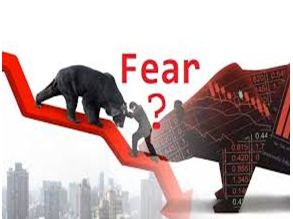
Fear is the natural reaction we display to threats that could cause us harm. Being fearful is normal. In fact, the emotion is regarded to be crucial to our survival. Without feeling afraid, it will be difficult to notice danger and escape from it.However, in forex trading, fear is harmful when we allow the perceived loss-making threats to cause us to make irrational and unsound decisions.

Instead of motivating us to execute trades without worries, fear draws us back from making trades, convincing us that we are wrong. This fear of being wrong overrides the power of our analysis and the amount of time we’ve taken looking for good setups and points us to the darker side of the market.

Another type of fear is that of missing good trades. This fear often makes us enter trades at any price, without waiting for the appearance of profitable trade setups. A fearful trader who does not want to miss good opportunities frequently disregards a rational approach to trading and allows excitement to overrule their decisions.

The last type of fear, which is even more dangerous, is that of loss. The fear of failure causes a psychological scare in our minds and send us dreadful warnings before making trade decisions.

For example, let’s say you have a long running position on the EUR/USD currency pair, and bad news comes regarding the state of the Eurozone economy, what would you do?

In such situations, most traders will feel scared, overreact, and quickly close the trade without a second thought. Even though they may be taking action to avoid losses, fear usually drives such decisions and could lead to missing out on the possible gains.

Fear in forex trading usually leads to ruins: as fear pushes traders to make unfounded decisions, their trading accounts get depleted slowly by slowly—until they receive margin calls.

So, when is fear good and when it is bad?

If the fear of failure or rejection holds you back from doing something that could ultimately benefit you (a common fear nowadays), then we’d have to argue that this is considered a ‘bad fear’. In this case, you would be letting fear create exactly what you’re afraid of. If the fear of failure pushes you to work harder to avoid failing, nevertheless, then we’d argue that this is a ‘good fear’. Fear, quite simply, is ubiquitous. And there is very little one can do to avoid it.

2. Greed
pscological3

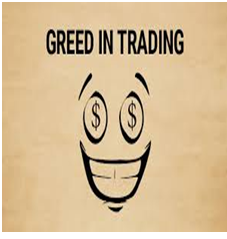
Greed is even more dangerous than fear. Greed is a typical human trait, one on which the whole human society is based, of course to some extent. Each person has an instinctive desire to do something better, even the most lazy people, and to try to get a bit little more out of a certain situation. Let’s put it straight: every forex trader yearns to get substantial returns from their efforts.

However, this yearning becomes unproductive, even harmful, when it’s too powerful. Nothing is wrong with the desire of realizing financial success in forex trading. But, if these greedy desires suffocate your common sense and drive your trading decisions, then there’s everything wrong with them.

There is a very popular old saying among investors that “pigs get slaughtered” while bulls and bears make money. It means that the “greedy pigs” are bound to lose their money eventually, because they tend to hold to winning positions for an extended period of time in an attempt to milk each possible pip out of the market. And this doesn’t come cheap, because it goes along with a huge risk of getting whipsawed by the market.

As such, the psychological emotion of greed is even more harmful than fear. Fear can prevent you from making trade decisions or make you exit too early. Conversely, greed compels you to push the buy or the sell button in a manner that’s far too risky. That’s why greed can be much more destructive than simple fear.

Since greed pushes us to act irrationally, it’s a very dangerous emotion. Just like drinking alcohol, greed can prompt you to behave foolishly when it has intoxicated your system. If greed cripples your trading choices, then you’re drunk with it, and you’ll soon wipe out the trading account.

For example, traders intoxicated with greed usually fail to exit their winning positions because they think the market will forever obey them. Greedy traders also add to open positions whenever the market has moved according to their expectations. Other dangerous behaviors of greedy traders include overleveraging, quickly jumping into trades, and overtrading.

So, when is Greed good and when it is bad?

Greed, for many, is often actually one of the motivations to initially get involved in trading. Quite frankly, we don’t feel there’s anything wrong with this, since, as we explained above, without greed little would be accomplished in life. Well a certain amount of greed is good because it’s needed to make speculators want to trade in the first place. A downside to greed is when it causes traders to ‘chase the market,’ for example by buying after a large sudden move higher when the market is overbought

You also need to avoid being too greedy when exiting your trades i.e. you should take profits where your proven trading method says you should.

3. Revenge
pscological4

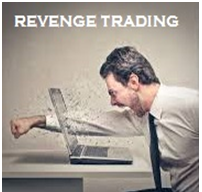
Revenge is another perilous emotion that obstructs trading success. Revenge trading usually takes place when traders try to make more aggressive trades, especially after experiencing losses. Whereas the primary intention of revenge trades is to try to win back the losses, it often results in more losses than initially intended.

Revenge traders often blame the market for their losses and end up placing retaliatory and miscalculated trades. Revenge trading is harmful because of three main reasons. First, since it’s usually not planned well, it leads you into making hurried trades that are less likely to be profitable. If you engage in revenge trading, you will be gambling and not trading. You will speedily place trades without any planning or comprehensive analysis.

Secondly, because you become desperate to recoup the losses, revenge trading forces you to open trades with larger position sizes. You will ignore the risk management part of your trade plan just because you want to win back the losses quickly.

Lastly, it is an emotional trading habit that’s driven by the wrong motives. It changes your focus from rational trading decisions to emotions-driven trading choices. Your emotions cloud your thoughts and make you throw discipline and sound mind out of the window, which bleeds your account—pip by pip.

For example, you can enter a long order on EUR/USD, but you end up losing 50 pips. Frustrated, you decide to double your position size on the next trade so that you can recoup your initial loss. However, the trade goes contrary to your expectations again, causing further damage to the trading account. It will be easy to open an even bigger position now, because the market “owes” you money and you want to take “your” money back.

So, when is Revenge good and when it is bad?

Emotion of revenge trading sometimes you get crazy at the market. Angry, an determined to come out on top, the traders will findthemselves in one of two scenarios. They will either end up ploughing a lot of money into a trade that loses, making their losses even bigger, or they will manage to come out on top a little, and simply reduce their loss. Financial Market Traders have a feeling of having revenge on the market when they are experiencing a losing trades that they are confident they will sort out. For fewer thought out trades, it moves the attention from your trading process and good risk management to trying to make enough money to recover your losses.

4. Euphoria

pscologcal5

Lastly, euphoria can also cripple your trading success. It is the feeling of excitement often realized after experiencing several big wins in the forex market. Your euphoric state convinces you that your understanding of the movement of currency pairs is perfect and your analyses are faultless. While it is normal to feel excited after winning a trade, overconfidence can result in problems.

For example, because you placed a long order on EUR/USD and made a win, this doesn’t mean that another trade will automatically result in a win. The market does not work like that.

Euphoria often leads to a slippery slope of trading errors and losses. After a series of successful trades, a trader can become overconfident and start placing trades without careful analysis of the ever-changing market conditions.

Overconfidence can also cause you to risk too much capital, falsely believe in your analysis, or forget about your trading plan. Having a party after each successful trade is an emotional motive that can increase your trading flaws.

So, when is Euphoria good and when it is bad?

Euphoria is a feeling gives you a confidence boost in the belief you’re doing a good job of reading market movements and making the right decisions. Euphoria works hard to ensure that wherever we look, we see nothing but wonderful prospects for limitless profits. It is as if the trader has somehow been blessed with the Midas Touch, with success being the natural consequence of his routine behavior. Euphoria has little relevance for most traders, because most are aware that success in forex trading is not child’s play.  The best way of avoiding euphoria is by understanding that a string of wins or losses does not impact the outcome of the next trade that we will make.

How does one look at controlling all these emotions?

While we feel it is impossible to completely remove these emotions from trading, here are some methods one can utilize to help minimize the impact.

  • Risk what you feel comfortable with. If that is 0.5% of your account, then so be it. This helps one remain objective.
  • We know it’s difficult, but try to limit your expectations. What we mean by this is avoid thinking that this trade or that trade should win. An individual trade, if sized correctly, has very little effect on the overall results if one thinks in probabilities.
  • Trade with money you can afford to lose.Trading beyond your means is a sure-fire way to make one emotional. Trading with money needed for food or housing is reckless.
  • Treat trading as a business. Have a business plan in place with specific goals.
  • Consider taking a break after three consecutive wins or losses.A losing streak can make you feel, well, like a loser, which can promote revenge trading. And a consecutive number of wins can make you feel like you’re untouchable. Learn to recognise these signs. Take a day or two to gather your thoughts after such an event, as trading to revenge your losses will not likely do your account any favours, and trading when you think you’re George Soros could have you over leveraging.
  • Try to avoid looking at your profit/loss during the trade. By removing this from view, you’re partially eliminating the financial element from the trade. Try to focus on pips/points.
  • Change your mindset An unrealistic mindset is a major cause of emotional trading. If you are not focused and composed in your trading decisions, you will easily adopt the dangerous habit of being fearful, greedy, revengeful, or euphoric. You need to have a realistic mindset and become an emotionally mature trader.


Conclusion

The psychology of forex trading is an essential aspect of becoming a successful trader. For most traders, this is what triggers the biggest percentage of trading mistakes.

Therefore, you need to strive to keep your emotions in check. If you fail to control them, they will surely control you—and you’ll regret the trading decisions the emotions lead you into.

The success or failure of your forex trading career depends on your expertise at eliminating emotions from trading decisions, and in that expertise resides the alpha and omega of profitable currency trading.

Major fundamental Indicators

Fundamental analysis is a way of looking at the forex market by analyzing economic, social, and political forces that may affect the supply and demand of an asset. The idea behind this type of analysis is that if a country’s current or future economic outlook is good, their currency should strengthen.

Using supply and demand as an indicator of where price could be headed is easy. The hard part is analyzing all of the factors that affect supply and demand.

Inflation is a sustained increase in the amount of currency in circulation – which in turn increases the price of goods and services. With this in mind, inflation is one of the most important of all Forex fundamental indicators, as it demonstrates how healthy an economy is. It is important to understand that even through the power of central banks, governments can’t really control inflation.

The level of ‘healthy’ inflation’ is defined by each state according to the needs of their economy. Developed economies set their aim at around 2%, while developing economies can go up to 7% without causing any panic among investors. Depending on whether the actual inflation rate is above or below the set target, the country can be in a state of hyperinflation – whereby too much money has been introduced into circulation, or negative inflation – which means that there is too little in circulation.

The state has its own equally damaging ramifications. Any deviation from a set inflation rate can be considered a fundamental indicator. Inflation is difficult to control because there are many sources for money to appear from, and many places that it can disappear. Today, currencies are not backed up by commodity standards, which means that they can be added into circulation by private banks via a fractional reserve system.

Also, because financial assets don’t obey national borders, foreign entities can accumulate and keep large sums of currencies until they see fit, to then discharge them back into the market at a later time. All of this complicates things exponentially for fiscal policy makers. In terms of Forex trading, the higher the rate of inflation, the quicker the currency depreciates, and the less reliable of an asset it is for foreign investors, with both resulting in weakness.

The Interest Rate is the market rate that the buyer (or borrower) has to pay the seller (or lender). Interest rates impact the local currency’s strength against other currencies. Interest rates in each country are determined by its central bank, as part of its monetary policy. The compatibility of interest rates to market conditions helps maintain stability. Central banks raise interest rates in order to decrease inflation if they believe it is too high. In other words, increasing the interest rate will cause inflation to slow down and even stop, which in turn leads to a drop in prices while strengthening the currency! Meaning, it moderates the pace at which the economy grows.

Remember: In a healthy economy the interest rates usually vary between 3% and 5%.

For those who are not quite sure what inflation is – it is growth rate in prices. Inflation is the reason a chocolate bar that cost 5 cents twenty years ago costs 30 times more today. All in all, central banks are interested in market growth, but to control inflation (so it will not go too high), they raise interest from time to time and thereby restrain and control growth.

Inflation higher than 2% is usually not healthy. The same goes for a market with no inflation at all.

Remember: Announcements about interest rates deeply affect currency trading movements. 

Example: In the early 2000s, the interest rate in the U.S. decreased. This move had a huge influence on the US dollar for many years to come, in a process lasting almost a decade (till approximately 2007-2008). Reducing interest rates weakened the dollar against other currencies, thereby changing the face of U.S. real estate throughout the first half of that decade. 

Interest Rate Rises = Lower economic growth + Inflation slows

Interest Rate Cut = Higher economic growth + inflation speeds up

The order of events is supposed to follow the order of the above examples, but it doesn’t always work that way. The purpose of the image above is to simply show how things are supposed to go in a perfect world but we don’t live in a perfect world, and that’s why you must understand the fundamentals.  

The most significant times in a given market are when interest rates are expected to change. If the interest rate has already moved in a certain direction a few times, it must be balanced back. That is what speculators build their trades on. 

Interest Differentials – a trading method based on two currencies’ rates: Many traders choose pairs by comparing the interest rates of two currencies. If the “interest rate differential” (the gap between the two interest rates) gets bigger, it will strengthen the stronger currency of the two (and vice versa). This strategy is called the “Carry Trade Strategy”.

  • While one interest rate is supposed to go up and at the same time, the other one will go down, this could cause serious changes in price.

A Central Bank is a state bank whose job it is to manage and run the country’s monetary policy while maintaining the currency’s strength and stability.

The central bank’s monetary policy aims to ensure prices stability and market growth. It also controls inflation, interest, money supply and banks’ reserves.

In solid markets with continuously growing economies, central banks will respond to high inflation by increasing the interest rate. As we have already mentioned, this constant zapping navigates between the need to retain stability and the desire to attract foreign investors. We as traders can respond by trading according to the monetary policy, its targets, and purposes.

Central banks can also print more banknotes in order to expand the supply of the currency. This might change its strength compared to other currencies. It would make the currency weaker because the more currency in the market the cheaper it gets.

Example: During the past few years, Brazil has been a developing market with a fast-growing economy. Commercial banks and corporations from all over the world, and also speculators, commercial firms, and venture capitalists have decided to invest heavily in this track, transferring a high volume of capital into Brazil.

There are several other significant economic events that have a big impact on the Forex market. Imagine that all major economic journals and news sites including CNN, CNBC, and Bloomberg report that a certain well-known, major corporation is in a real danger of bankruptcy. You can imagine what is going to happen to its share price over the following days.

Now, take the corporation out of this story and replace it with a country’s economy instead. You can imagine what is going to happen to its currency. Actually, you do not have to imagine!

It is happening all over the world with the economies of U.S.A, Spain, Italy, Greece, Portugal, and others that are in danger. The effect is similar to stocks and shares. One crucial difference between stocks and Forex is that prior information on stocks is absolutely illegal, while prior information on currencies isn’t, especially if it can help to predict trends.

Now we are going to see some major fundamental events, those influence on currency movements.

The NFP is released on a monthly base, on the first Friday of each month. Presents the change in the number of unemployed over the last month (remember that the number of workers on payrolls changes between different periods, according to holidays, year’s end and vacations). NFP plays a powerful role, indicating the market’s general condition. The more positive the NFP, the better the condition of the market. It needs to be compared with both the previous month and the market’s expectations.

Gross domestic product (GDP) measures the total value of all goods and services produced in a country within a given period. GDP is considered to be one of the best overall fundamental indicators of the economy for Forex. From an economic theory standpoint, it’s all very simple – growth in GDP indicates economic growth. However, the relation of GDP to inflation – and thus to currency – is a matter of debate.

As far as economic logic goes, an increase in GDP (basically an increase in the supply of goods and services) must be followed by an increase in the demand for these goods and services, otherwise it’s just a negative value. To facilitate that demand, an adequate amount of funds should be made available to consumers. Thus, a higher GDP means more money, which means more inflation within a central bank set limit.

Rather than an increase or decrease in GDP, for a Forex trader, it is more important to know if the GDP increase is in line with other economic indicators – such as the consumer price index – and within an anticipated range. If it is, it hints at economic strength and an appreciation of currency. A disparity in the pace of increase would hint at least a minor yet growing economic bubble.

The Consumer Price Index (CPI) measures the weighted average price of a household basket of goods and services (transportation, food, medical care), with 100 being the base value. For example, today it costs X USD to purchase a set of goods and services the CPI will read 100. When in a decade it would cost 25% more, the index will have moved from 100 to 125.

This is an important fundamental Forex indicator, as it helps to measure changes in consumer buying power through the effects of inflation. Large rises in CPI during short periods of time hint towards high inflation, while short-term severe drops in CPI hint at deflation.

The Producer Price Index (PPI) works much like the CPI, only instead of measuring the cost of ready goods, it measures production costs. PPI does not consider volatile items such as energy and food to receive ‘cleaner’ readings. Tracking production costs can assist in evaluating how production level prices may be affected, which in turn can help traders to understand the possible impact on an economy.

A slightly different type of report. It does not measure economic conditions, but rather it publishes banks’, companies’ and venture capital holdings in the market. It is released every Friday at 2:30 pm EST (i.e., New York). It helps us understand how different major forces in the market are going to invest their capital. It also helps us understand the general atmosphere and to predict in which direction the wind is going to blow in the future. This report is a great tool for long-term traders. It is also relevant for ‘swingers’.

Tip: If the COT report includes data on “extreme net long/ short”, you can know that it indicates a change in trend in the next session!

COT can be presented either as a report or a graph (below a currency chart). Unlike most of the technical indicators, COT measures volumes traded.

A report on the percentage of the unemployed seeking jobs, out of total the potential labor force. This is published once a month and helps to get a general market view. A strong, healthy economy is characterized by decreasing numbers of job seekers, and by relatively low unemployment rates. A decline in those numbers leads to a stronger currency, and eventually to a rise in interest rates.

Issued once a month. It expresses consumers’ attitude towards the economy.

If using this report, compare its elements to those in a Consumer Sentiment Report from another economy. It will help you to make a decision on a good trading partner for the U.S. dollar (or any other major currency).

The ratio of capital entering and exiting a market. The data can be either positive or negative. If positive, more investors will enter the market, and bolster its currency, in the same way as the supply/demand ratio. Increasing demand causes a stronger currency.

This report shows the ratio of imports to exports. If exports are higher, the ratio is positive! A positive ratio, especially if it is higher than the previous reports, strengthens a currency, making this currency more “desirable”.

An excellent index of an economy’s strength. Released once a month, around 12th of every month, it shows changes in market trends regarding consumer purchases.

Federal Open Market Committee (FOMC) is a board that determines the future direction of the United States’ monetary policy. The FOMC includes twelve members (reserve bank presidents, the chairman of the Fed, and governors), who meet eight times per year and make decisions regarding money supply, government securities, interest rates and the banking system. FOMC meetings are secret; therefore, they are the subject of market speculations and large movements of currencies, mostly USD.

Established in 1999, the Group of Twenty, more commonly referred to as G20, is a collection of Central Bank Heads and Finance ministers to discuss important global economic issues. Its member countries include: Argentina, Australia, Brazil, Canada, China, France, Germany, India, Indonesia, Italy, Japan, Mexico, Russia, Saudi Arabia, South Africa, Republic of Korea, Turkey, United Kingdom, United States of America and The European Monetary Union, represented by the ECB, is also a member of the G20.

Comprising two-thirds of the world’s population, the G20 countries make up as much as 90% of the world’s gross national product. It also represents more than 80% of global trade.

This says a great deal about recoveries in markets’ growth. Since the 2007-2008 global crisis, this report has played an important role. A rise in times of crises has considerable influence on a currency’s strength. During the last few years, Housing Starts have been under a magnifying glass, affecting the U.S. dollar as well as the American market in general. (Since the 2007 collapse, the American and also global real estate market have typically received pessimistic reports).

This indicator shows the shape of the sectors of the economy which are crucial for any country. Some economies rely more on the service sector while others rely more on the manufacturing and industrial sectors. The US and UK economies are more dependent on the service sector so this economic indicator is more important in these two countries while the manufacturing sector is more important in Germany, China, Japan, France, Italy etc.

The Beige Book is published 8 times a year. This detailed report summarizes a market’s economy and offers an inclusive general point of view on the market. It examines:

  • Amount of new manufacturing orders for consumer goods
  • Speed of delivery of new merchandise from suppliers to vendors
  • Average number of initial applications for unemployment insurance
  • Average weekly hours of work in the manufacturing sector
  • Amount of new orders for capital goods (excluding defense)
  • New building permits for residential buildings
  • Consumer sentiment
  • Inflation-adjusted monetary supply
  • S&P 500 stock index
  • Spread between short and long interest rates

The ISM report measures the flow of new orders, thus predicting the production activity in the economy. It’s expressed as an index of 50. A reading below 50 means that there has been a decrease in production orders compared with the previous period. As supply follows the demand, an increased ISM indicates that the demand for goods and services has increased, which is a good sign for an economy. 

IPI indicates the monthly change in production for major industrial sectors – such as mining, manufacturing, and public utilities. This index is considered to be a good indicator of employment, average earnings, and overall income levels in those industries. An increase in the index points towards a healthier economy.

The Commodity Price Index tracks the average change in price for commodities like oil, minerals, and metals. This one is particularly important for ‘commodity dollars’ – which includes currencies of the commodity exporter countries like Canada and Australia. An increase in the index would constitute an increase in prices, and therefore, higher returns from exports. Note that a decrease in CPI would be good news for the currencies of those countries that import those commodities.

Trade balance reports the difference between total imports and total exports. If more goods are exported, then that represents a positive trade balance. It is an important Forex trading fundamental indicator if we are to measure the dynamic of change. Even if the trade balance is negative, an increase in exports would mean a higher demand for the currency.

Trade flow is much like trade balance, only that it weighs up the total inflow of foreign investment against the outflow of total investment. The more investors there are that are interested in a country’s business, the more international trade occurs at a condition of a positive trade balance, and the more positive the trade flow reading will be. But there’s a caution to this tale.

If there is too much slow positive trade for a prolonged period of time, this can create a bubble. Goods and services can’t disappear, but money can, and the bubble can burst – (search for the China stock market crash from July 2015 for an example of this). Typically, a positive trade flow means that there is more money coming in, compared with money coming out, and it is a sign of a healthy economy, and an increased demand for currency.

Bond price, bond yields, and bond yield spread can also be added to the list of fundamental Forex indicators. Here is how it works: A bond is a debt obligation. A government bond is a government debt obligation. When people, businesses, or banks purchase government bonds, they aren’t really buying anything. Rather, they are lending their money to the government, and in exchange they receive a note that states that the government owes them.

Governments are not the only bond issuers. Companies can do that as well – only they call their kind of bonds ‘stock’ and trade with them on the stock market. When things start getting shaky in the economy, investors tend to protect their capital by moving it from the less credible debtors to the more credible ones. Who could possibly be more credible than the government?

Thus, investors start buying government bonds. The more government bonds there are being bought, the more they cost, and by the virtue of their inverse relationship, the less they yield. The other type of government debt investors tends to seek safe haven in is national currency. So, for example, when looking at the 10-year treasury notes auction, an increase in price may indicate the strength for the currency.

What is a bond spread?

Bond spread is the difference between the bond yields of two different countries, and is a Forex trading fundamental indicator that explains that a currency with a higher bond yield will appreciate higher compared to its counter currency. Remember, always try pairing up the stronger currency with the weaker one.

Before moving onto the second part of our article on the best Forex fundamental indicators explained, here is some food for thought. With GDP, as well as with inflation rates, and other fundamental indicators, it is not how much they differ from the previous releases that is important, but rather, how much they vary from what was expected. A deviation from the forecast could indicate a lack of insight in analytical circles, and this creates a trading opportunity for a smart fundamental Forex analyst.

Purchasing Power Parity (PPP) is one of the best fundamental indicators for Forex. It’s used as an economic theory component and a technique that helps to determine the ‘true’ value of currencies. The idea is based on the law of one price, where if we assume that there are no transaction costs or official trade barriers, similar goods will have the same price around the world.

PPP allows traders to evaluate the exchange rates that would be appropriate to be able to buy the same set of goods in those countries. In addition to this, since PPP can be used to track the change in the price of goods, it provides us with a reading on ‘actual’ inflation rates, and will be equal to the percentage of the currencies’ appreciation or depreciation.

PPP can be used to compare countries economically. When looking at year-long time periods, exchange rates do tend to move in line with the PPP expected rate. This indicator may be further used as an adjuster for economic data like GDP and income, helping to smooth out currency rate differences, and to get a clearer picture of the economic situation.

Interest Rate Parity is conceptually similar to PPP, only instead we are researching the purchase of financial assets. Theoretically, they should yield the same return in all countries after currency rate adjustment. If they are not the same, a currency rate has to be adjusted. This differential is one of the most useful Forex trading fundamental indicators available to a long-term trader.

IRP assumes that:

  • Capital is mobile, and that investors can easily exchange domestic or foreign assets.
  • Assets can be substituted through risks and liquidity.


Given these points, investors would quite logically, hold assets that generate higher yields. As we know, investors hold assets from various countries, so if their yields do not match, there will be a disparity in the currency rates. Ideally, a Dollar return on a Dollar investment should equal a Dollar return on a Euro investment.

The International Fisher Effect is an economic theory which states that a change in the currency exchange rate between countries is approximately equal to the difference in their nominal interest rates at the time.

When explained as a fundamental Forex indicator, the IFE works like this: if higher interest rates mean higher inflation rates, then a currency in a country with a lower interest rate will appreciate against a currency with a higher interest rate. Please note that while the IFE uses reasonable logic, it fails to evaluate the impact of other factors on currency exchange rates.

Balance of Payments (also known as the balance of international payments) is a record of all payments and monetary transactions between countries for a given period of time. It involves the exchange of goods, services, income, gifts, financial claims, and liabilities to the rest of the world.

BOP consists of three accounts. First, the current account is a sum of the balance of trade (exports minus imports), factor income (earnings on foreign investment minus payment to foreign investors) and cash transfers. Second, the capital account records the net change in the ownership of foreign assets. Third, the balancing items account is for any statistical errors – and to ensure that the current plus capital accounts equal zero – it is essentially the balance sheet.

The BOP deserves a lot credit as a fundamental indicator in Forex, as it enables economists to quantify certain economic policies targeted at very specific economic objectives. For instance, a country may artificially keep its currency exchange rate low in order to stimulate exports, or conversely, to adopt policies that will attract more foreign investment.

Ultimately, both trade account deficit and account surplus may help us to get an idea of exchange-rate directions. If a country operates at a deficit, its currency will tend to depreciate to compensate the imbalance. Likewise, if a county operates at a surplus, this will lead its home currency to appreciating, longing for the same balance.

The Importance of Economic Calendars:

An economic calendar is an important and integral part of your trading platform. It presents all significant economic announcements and releases as well as other fundamental events around the world on a daily basis, which have the potential to impact the market.

The best online trading platforms, such as MT4 and MT5, offer calendar services, economic journals that present all significant events from throughout the world. They provide dates, data on each event and forecasts. Calendars contain all kinds of events, such as government announcements, summit conferences, central banks’ releases, reports and more.

By using the calendar, you gear up for the main events of the coming week/day.

It is possible to trade at the same time as the events or to respond according to market forces as it is happening. However, as we are about to see, there are some events for which good preparations and entry into the market before the coming event can produce higher profits (since you are going to be there before the market responds to the release). This method suits highly experienced traders who do not hesitate to predict.

Go through our Economic calendar page to check for coming data’s.

What is sentimental analysis and how to use it in Trading?


In this article we will explore sentiment trading in the Forex market. We will take a look at what sentiment is, why it is important, How to implement sentiment into Forex trading.

When talking about analyzing financial markets, technical analysis is usually most favoured, followed by fundamental analysis. To quickly recap, we say that Fundamental analysis focuses on news, economic indicators and governmental policies. Technical analysis is broader but mainly focuses on the charts and a trader’s behavior. Since behavioral trends tend to repeat themselves technical traders hope to benefit from the patterns on the chart moving in a similar fashion to what they did before at similar pricing levels.

Now recapped, below we will focus on sentiment analysis.

What is Sentiment Analysis?

Sentiment, in its most basic form, is the “Mood” of the market right now. This is the mood of the market in the current trading session, in real time, as price action is unfolding in front of you. In a nutshell, this concerns the market sentiment. How traders feel about the current market state. Optimistic (bullish, expecting the market to go higher) or pessimistic (bearish, expecting the market to slump).

As markets are normally moved by the flow of volume within a particular direction, you will find traders that rely solely on this type of analysis. Usually, those are long term traders (or investors with larger account balances) and more experienced ones. It’s certainly not recommended for day trading (even though many retail traders try to do it).

Sentiment can last anywhere from a few seconds all the way to many weeks depending on how strong that particular sentiment is. Sentiment is what creates supply or demand for a currency. This is otherwise known as selling (supply) or buying (demand). The importance of this cannot be underestimated.

No matter what or how you are trading one of your first goals should be to identify the prevailing sentiment in the market you are active in.

How to use it in Trading?

When the percentage of trades or traders in one position reaches an extreme level sentiment indicators become very useful. Assume our aforementioned currency pair continues to rise and eventually 90 of the 100 traders are long (10 are short); there are very few traders left to keep pushing the trend up. Sentiment indicates it is time to begin watching for a price reversal.

The Commitment of Traders (COT) is released every Friday by the Commodity Futures Trading Commission. The data is based on positions held as of the preceding Tuesday which means the data is not real-time, but it’s still useful. Interpreting the actual publications released by the Commodity Futures Trading Commission can be confusing and somewhat of an art. Therefore charting the data and interpreting the levels shown is an easier way to gauge sentiment via the COT reports.

Forex sentiment indicators come in several forms and from many sources. Using multiple sentiment indicators in conjunction with fundamental and technical analysis provides a broad view of how traders are maneuvering in the market. Sentiment indicators can alert you when a reversal is likely near – due to an extreme sentiment reading – and can also confirm a current trend. Sentiment indicators are not buying and selling signals on their own; look for the price to confirm what sentiment is indicating before acting on sentiment indicator reading.

What is Slippage and How can we reduce the slippage?

Slippage

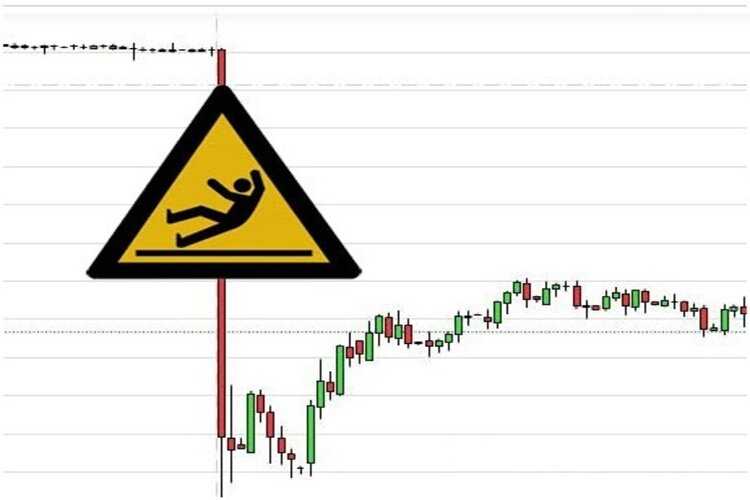
In financial trading, slippage is a term that refers to the difference between a trade’s expected price and the actual price at which the trade is executed.  This normally transpires during high periods of volatility as well as periods whereby orders cannot be matched at desired prices.

Slippage in forex tends to be seen in a negative light, however this normal market occurrence can be a good thing for traders. When forex trading orders are sent out to be filled by a liquidity provider or bank, they are filled at the best available price whether the fill price is above or below the price requested.

To put this concept into a numerical example, let’s say we attempt to buy the EUR/USD at the current market rate of 1.1427. When the order is filled, there are three potential outcomes: no slippage, positive slippage or negative slippage. These are explored in more depth below.

Examples of Forex Slippage

No Slippage

The order is submitted, and the best available buy price being offered is 1.1427 (exactly what we requested), the order is then filled at 1.1427.

Positive Slippage

The order is submitted, and the best available buy price being offered suddenly changes to 1.1417 (10 pips below our requested price), the order is then filled at this better price of 1.1417.

Negative Slippage

The order is submitted, and the best available buy price being offered suddenly changes to 1.1437 (10 pips above our requested price), the order is then filled at this price of 1.1437.

In this the trader loses value, as the executed price is worse than the expected price.

Measures to prevent slippage.

Although it’s impossible to predict the amount of slippage, it’s possible to take some measures to prevent it.

1. Don’t Trade in Times of High Volatility

High volatility occurs in times of important economic events, news, and rumors. The first thing you should do is to avoid the market in times of notable economic releases. The list of important economic events is available via the economic calendar.  You must have observed, during news release the price tends to move very impulsively and many times we see that the spreads are too widen and sometimes it even forms gaps.

When there is high volatility in the market the price tends to change very quickly and so sometimes it is hard for the broker to execute your trade at your desired position. And so your trade is executed at the next available position. If a trader has already taken a position by the time the news is published, they are likely to encounter slippage on their stop loss, accompanied by a much higher risk level than they expected.

In day trading, it is best to avoid placing market orders during important scheduled financial news events, like FOMC announcements, or when a company is announcing its earnings.

2. Don’t Enter Low-Liquidity Markets

Liquidity depends on the asset you trade and trading hours. The major pairs, such as EUR/USD, GBP/USD, USD/JPY, USD/CAD, AUD/USD, NZD/USD, and USD/CHF, have the highest liquidity. While rare pairs, such as USD/TRY, USD/MXN, are traded less often, thus, the liquidity is lower.

When there is low liquidity in the market, there are not enough buyers and sellers present in the market to fill your order. And as in forex, the price tends to move continuously, the broker executes your trade at the next possible price. Due to this very reason, your trade gets executed at a different price rather than opening at your expected price.

As for the best trading hours, they depend on the asset you trade. Every market has trading sessions. In Forex, we are looking at Australian, Asian, European, and American sessions. For example, the Australian dollar will have high liquidity during Australian and Asian sessions because traders in those regions are more interested in AUD that is used for financial operations than in GBP.

3.  Use Limit Order instead of Market Order

Slippage is a result of a trader using market orders to enter or exit trading positions. For this reason, one of the main ways to avoid the pitfalls that come with slippage is to make use of limit orders instead. As in limit orders, the slippage will be less in high volatile times when compared to market orders.

Can We Stop Trading Slippage?

It’s impossible to remove the slippage entirely. Every trader has experienced slippage at least once in their trading career. Although it’s possible to check significant economic events and avoid trading during them, there is no chance to predict unexpected news and rumors. Markets are driven not only by fundamental factors but by the market participants who form the market sentiment. It’s impossible to fully remove the slippage.
Recently, world central banks have been holding unscheduled meetings and cutting interest rates due to the corona virus pandemic. Such events are unpredictable and not placed on the economic calendar. Thus, traders can’t predict them and place either a limit order or avoid trading at all.

Conclusion:

Slippage is an integral part of trading along with spread, swap, and commission. Slippage is a normal fact of life for currency traders that should be expected. Although it’s impossible to get rid of negative slippage, it’s possible to reduce its impact.  It’s particularly an issue in volatile trading environments where prices move quickly over a broad range. However, there are tools and strategies available that can help mitigate the problem presented by slippage. Traders should take these into consideration in order to minimize unnecessary losses in trading.