GBP/USD Weekly Forecast (10th January 2022 – 14th January 2022)

Fundamental view:

The British pound seesawed against the US dollar during the trading course of the week. The Fed Hawkishness and the Omicron woes were the major catalysts behind the movement. Central bank had released the Minutes of its December meeting, that showed policymakers began discussing the reduction of their bonds holding in the upcoming months. And the Fed also judged that conditions for a rate hike could be met soon suppose if the recent pace of labor market improvements continued.

Covid cases are surging in UK. And the increasing pressure on the hospitals might force the Prime Minister Boris Johnson to take some action. The Covid woes in UK and the Hawkish Fed could pressure the sterling in the upcoming week.

In this week, BoE Housing Equity Withdrawal quarterly report, UK Markit/CIPS Construction PMI and JOLTS Job Openings on 4th January favored downtrend whereas UK Markit/CIPS Services PMI on 6th January and US Nonfarm Payrolls on 7th January favored uptrend.

The major economic events deciding the movement of the pair in the next week are Fed Chair Powell Testimony at Jan 11, EIA Crude Oil Stocks Change, US Federal Budget Balance at Jan 12, US Initial Jobless Claims at Jan 13, UK Manufacturing Production monthly report, UK GDP monthly report, US Retail Sales monthly report and Fed Industrial Production yearly report at Jan 14.

GBP/USD Weekly outlook:
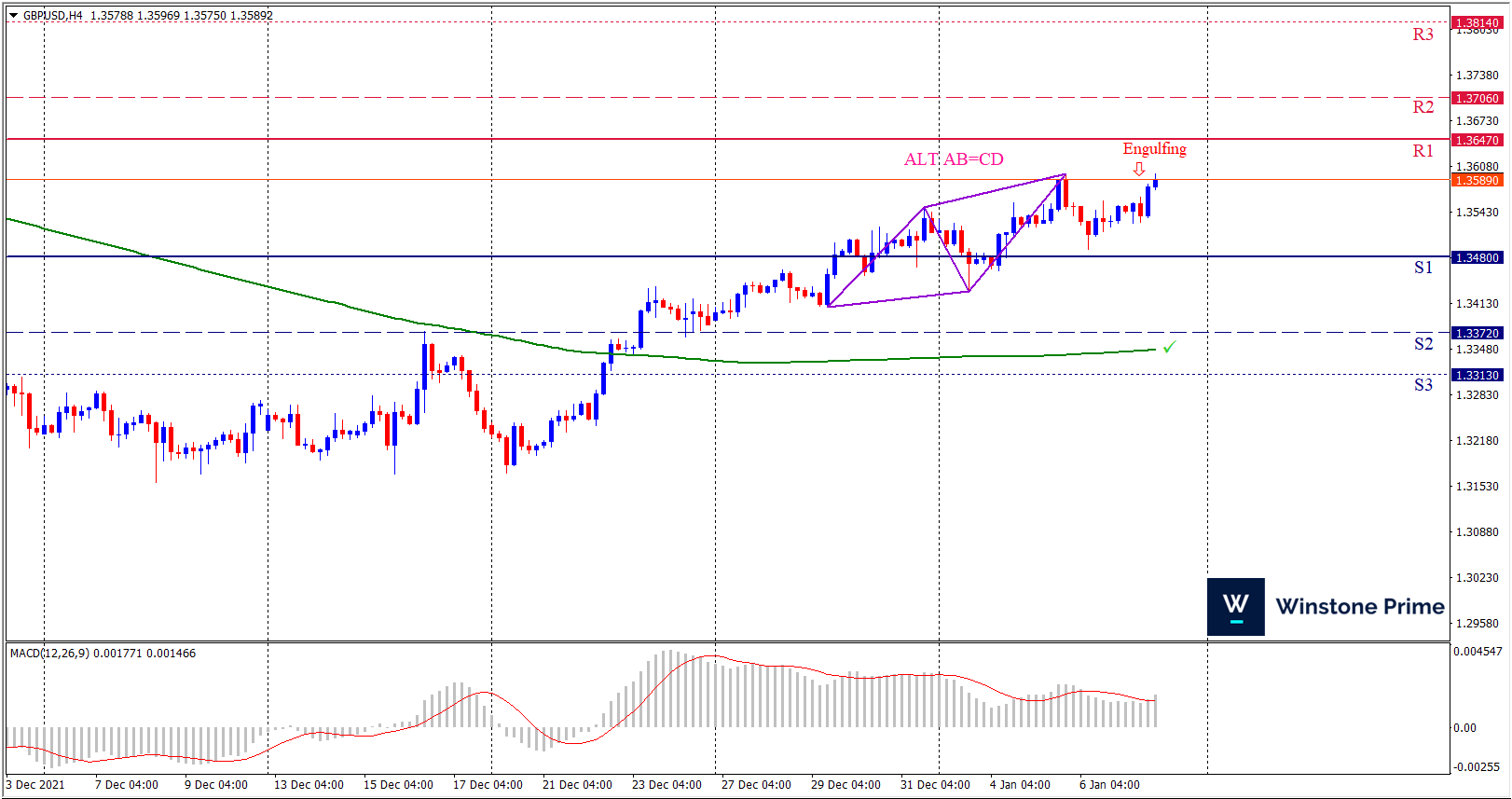
Technical View:

Last week’s high was 0.35% higher than the previous week. Maintaining high at 1.3597 and low at 1.3430 showed a movement of 167 pips.

In the upcoming week we expect GBP/USD to show a bearish trend. The currency pair is trading above the 200 Simple Moving Average and the MACD trades to the upside. Should 1.3480 proves to be unreliable support then the pair may fall further to 1.3372 and 1.3313 respectively whereas a solid breakout above 1.3647 will open a clear path upward to 1.3706 and then will further raise up to 1.3814. Chart formation of Alt AB=CD pattern in H4 chart favors prospects of a bearish trend. Bearish engulfing pattern formation escalates the expectation for a bearish trend.

Preference
Sell: 1.3585 target at 1.3421 and stop loss at 1.3652


Alternate Scenario
Buy: 1.3652 target at 1.3813 and stop loss at 1.3585

EUR/USD Weekly Forecast (10th January 2022 – 14th January 2022)

Fundamental view:

The Euro lost traction against the greenback during the trading course of the week but erased some of it losses in the last day and ended with a slight bearish candle. The year 2022 started with a biggest shock from the Fed. Central bank had released the Minutes of its December meeting, that showed policymakers began discussing the reduction of their bonds holding in the upcoming months. And the Fed also judged that conditions for a rate hike could be met soon suppose if the recent pace of labor market improvements continued.

Talking about the virus woes, The dominant covid strain – Omicron spreads like wildfire, but the number of deaths and hospitalization remains low, it’s still putting pressure on the economy, due to a substantial disruption in services.

In this week, Eurozone Markit Manufacturing PMI on 3rd January and ISM Manufacturing PMI on 4th January favored bullish trend whereas Eurozone retail sales monthly report on 4th January and FOMC minutes on 5th January favored bearish trend for the pair.

The major economic events deciding the movement of the pair in the next week are Fed Chair Powell Testimony at Jan 11, Eurozone Industrial Production monthly report, EIA Crude Oil Stocks Change, US Federal Budget Balance at Jan 12, ECB Economic Bulletin, US Initial Jobless Claims at Jan 13, US Retail Sales monthly report and Fed Industrial Production yearly report at Jan 14.  

EUR/USD Weekly outlook:

Technical View:

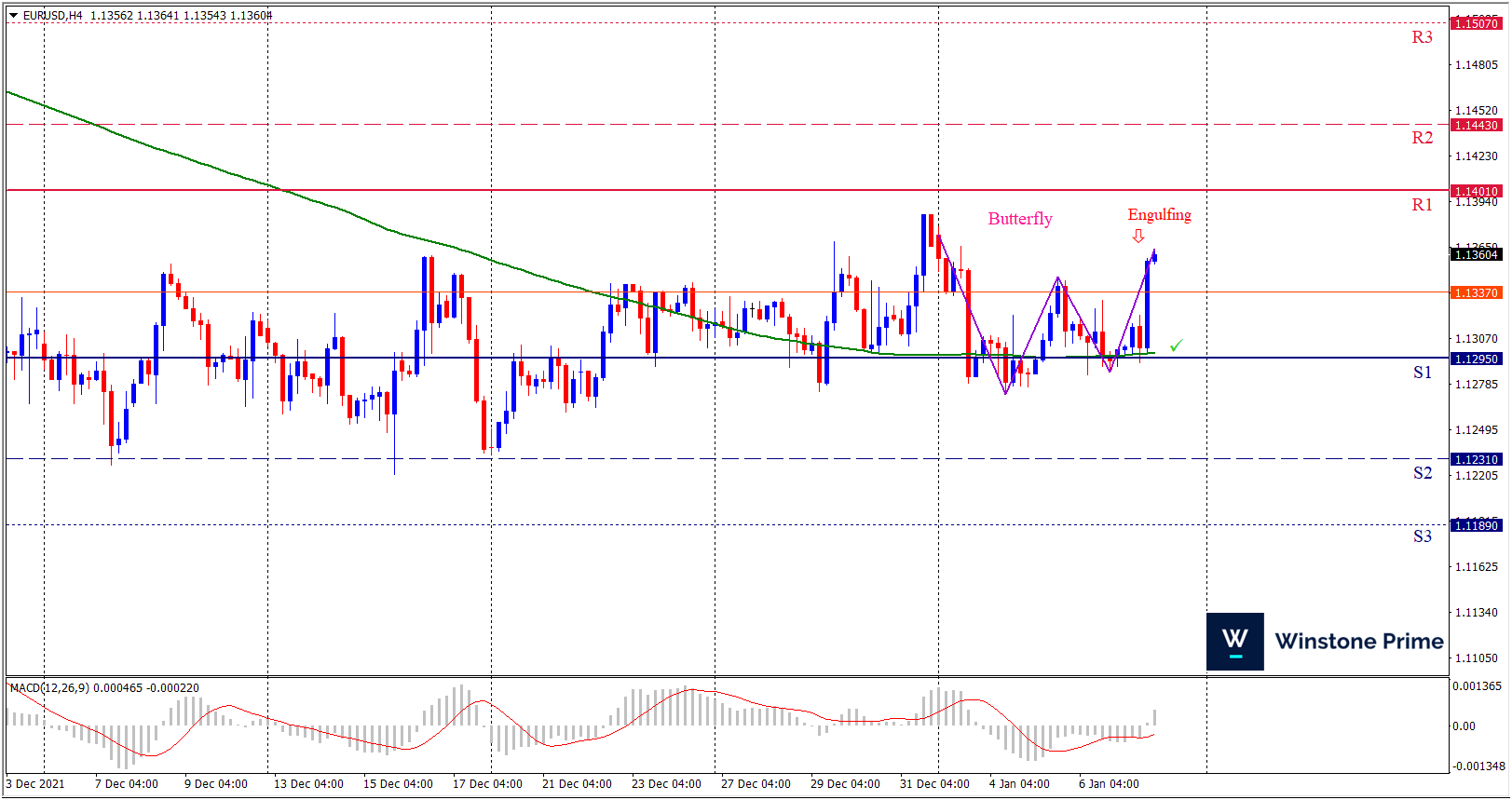
Last week’s high was 0.07% lower than the previous week. Maintaining high at 1.1378 and low at 1.1272 showed a movement of 106 pips.

In the upcoming week we expect EUR/USD to show a bearish trend. The currency pair is trading above the 200 Simple Moving Average and the MACD trades to the upside. Should 1.1295 proves to be unreliable support then the pair may fall further to 1.1231 and 1.1189 respectively whereas a solid breakout above 1.1401 will open a clear path upward to 1.1443 and then will further raise up to 1.1507. Chart formation of a Bearish butterfly pattern in H4 chart sets prospects for a bearish trend. Bearish engulfing formation in H4 chart escalates the expectation for a bearish trend.

Preference
Sell: 1.1355 target at 1.1251 and stop loss at 1.1406


Alternate Scenario
Buy: 1.1406 target at 1.1506 and stop loss at 1.1355

Cardano Vs Ethereum: which is better?

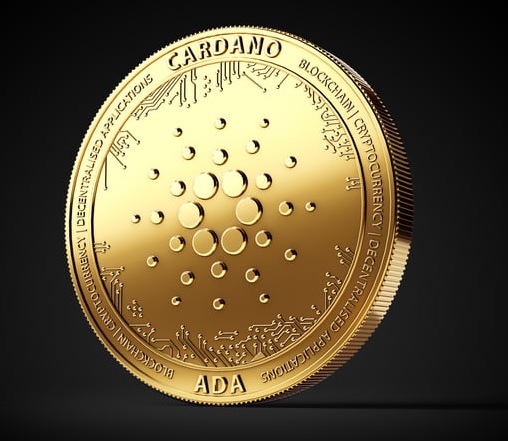
Cardano (ADA) is a public open-source and decentralised blockchain with a proof of stake consensus (PoS) system. It was developed by Charles Hoskinson who is the co-founder of Ethereum, as a blockchain with an edge over Ethereum’s proof of work (PoW) system.

What is Cardano?

Hoskinson launched Cardano as a public, open-source, decentralised blockchain with a proof of stake consensus (PoS) system. 

Apart from providing an edge over Ethereum’s proof of work (PoW) in terms of energy use and hardware requirement, It also allows for Ethereum-like smart contracts and peer-to-peer transactions.

A brief history of Cardano

Cardano was launched in September 2017 by Ethereum co-founder Charles Hoskinson, and Cardano aims to be a third-generation blockchain (or blockchain 3.0) project — building on top of the technology pioneered by Bitcoin (first gen) and Ethereum (second gen). Cardano’s goal is to be a highly scalable and energy-efficient smart contract platform. 

Cardano uses a unique proof-of-stake consensus mechanism called Ouroboros, which is based on peer-reviewed research by a team of computer scientists and cryptographers from the University of Edinburgh, Tokyo University, and other institutions. Their goal was to build a decentralized network that can help to validate transactions in a scalable, secure way also to ensure that the Cardano platform would be as energy-efficient as possible.

What is ADA?

ADA is the native cryptocurrency of the Cardano platform which is named after Ada Lovelace, the 19th-century mathematician who is often referred to as the “world’s first computer programmer”.

ADA tokens fuel the Cardano platform same like ETH tokens fuel the Ethereum platform. They’re used to pay transaction fees and are staked by validators (and delegators) who want to help maintain security and stability of the network in exchange for earning rewards.

In the future, ADA will also be used as a governance token, which will allow holders to vote on changes and upgrades to the Cardano platform.

ADA is the 4th largest cryptocurrency in terms of market capitalization of $413.22 billion. Meanwhile, ETH continues to hold its position as Bitcoin’s second with a market cap of $477.42 billion as of December 21. 

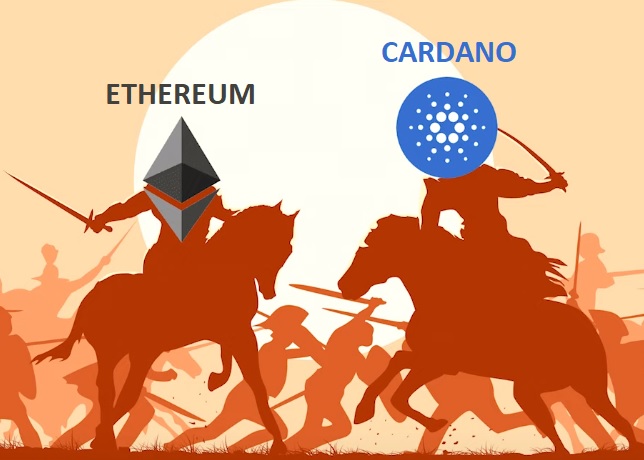
With Ethereum standing first in the market capitalization, can Cardano be the Ethereum killer, We will discuss it further in the article.

Now, let’s see the advantages and disadvantages of both these cryptos.

Ethereum: Advantages and disadvantages

Ethereum is currently one of the famous names in the crypto world right now, and its native token- Ether, is the second most popular cryptocurrency behind Bitcoin.

The Ethereum blockchain is one of the most widely used for decentralized applications (dApps) such as non-fungible tokens (NFTs) and decentralized finance (DeFi).Hosting of smart contracts, which allow individuals to execute safe and secure agreements without help from a third party such as a lawyer is also possible with Ethereum network.

Since the Ethereum blockchain is open source, anyone can create new dApps. All applications on the Ethereum blockchain require the use of Ether,thus Ethereum will benefited if any of these dApps succeed.

One major drawback of Ethereum is that it is currently using a proof of work (PoW) mining protocol, which is incredibly energy-intensive. Cryptocurrency miners need to use high-powered computers to solve puzzles and verify transactions for this protocol. As time goes on, these puzzles become increasingly difficult, requiring more and more energy.

Ethereum 2.0 is currently under development in which developers are working on transitioning to a proof of stake (PoS) protocol, which is much more environmentally friendly. By using PoS protocol, miners need to put some of their own crypto holdings at stake to get their transactions verified for a chance at earning rewards.

Finally, the PoS protocol also has its downsides. Miners with the most cryptocurrency tokens have the most power when it comes to verifying transactions, so it’s possible that a small number of wealthy individuals could have majority control over the blockchain.

Cardano: advantages and disavantages

As already said, Cardano was created by one of the co-founders of Ethereum, so it shares many similarities with its older competitor. However, it does have some unique advantages and disadvantages.

Just like Ethereum, Users can create dApps on the Cardano network. Some of the projects currently in development include THEOS, an NFT marketplace, and Indigo Protocol, which will allow users to trade real-world assets (such as stocks) on the Cardano blockchain.

Whereas unlike Ethereum, Cardano already makes use of a PoS mining protocol, thus leads the competitor in this way. While it may take months for Ethereum to fully transition to a PoS model, Cardano is already successfully using this type of system.

However, Cardano is still in its infancy, and it might take ample time for it to catch up to Ethereum in other ways.

Ethereum is the first crypto compared to Cardano, so while the two may share many features, Ethereum has a longer track record and is more popular among users right now.

But this doesn’t necessarily mean Cardano will not catch up to Ethereum in the future, though. Cardano has shown tremendous growth over the past year in terms of transaction volume and market capitalization and it is yet to be seen on whether cardano takes an edge over Ethereum.

Is Cardano Truly an Ethereum Killer?

To be honest, the answer would be no. Cardano cannot be considered an Ethereum killer just yet since ETH is very much alive and still the dominant L1 in crypto. Apart from that, Cardano also falls behind surging competitors like Solana, which is recording rapid adoption in recent months. However, a significant portion of ETH’s market share is captured by ADA. Regardless, both platforms have scope of growth in the coming days.

It is hard to say on whether if ADA can ever surpass ETH’s market cap, let alone “kill” it. ADA’s architecture and development approach appears to be fundamentally strong and sound but it still has a lot to prove in terms of smart contract functionality.

Another factor to be considered is that Cardano upgrades will take ages since each of them is thoroughly processed and reviewed before being rolled out. Ethereum is also the same, which means it is the time that will answer our query.

However it cannot be undermined that Ethereum is also in a bind as many users have grown wary of its slow and expensive network, as they have good alternatives like Cardano and many others that are growing fast and eating up its market share. Although ETH remains the king of the dApps, this title is no longer disturbed. 

Which one to choose?

Both the cryptocurrencies are risky. However Cardano may be a higher-risk at the moment because it’s newer and doesn’t have the track record of Ethereum. However, Cardano does have its strengths, so if you’re willing to take on higher amounts of risk and planning to hold for the long term, it could be the right choice for you.

Kiwi trades low, NFP in focus

  • The Kiwi pair struggles on Friday ahead of US NFP data.
  • US dollar is strongly favored by the Fed policymakers comments and the FOMC minutes.
  • Virus woes in New Zealand and Australia weighs on the consumer sentiment and exerts downward pressure on the NZD/USD pair.


The Kiwi pair is under pressure on Friday. The rationale behind this can be related to pre-NFP cautious and a light calendar in Asia-Pacific and the latest Fed policymakers comments and FOMC minutes favored the US dollar.

Due to the persistence of uncomfortably high inflation, even the most dovish of U.S. central bankers have now agreed that they will need to tighten policy this year; the debate is has changed from whether to how quickly.

St. Louis Fed President James Bullard on Thursday said “Federal Reserve could raise interest rates as soon as March and is now in a “good position” to take even more aggressive steps against inflation, as needed.”

San Francisco Fed President Mary Daly, long a dovish counterpoint to Bullard’s hawkishness, reiterated at a separate event that she too expects interest rate increases this year, even as she warned that overly aggressive tightening could hurt the job market.

And speaking earlier this week, Minneapolis Fed President Neel Kashkari said “he now expects two rate hikes this year, a reversal from his long-held view that the Fed should hold off on rate hikes until 2024.”

US Initial Jobless claims released on Thursday came downbeat with 201K reading more than forecast of 201K and Trade balance also came downbeat with reading of $-80.172 B Vs eepctation of $-74.117 B which was followed by downbeat ISM Non manufacturing PMI – 62.0 against expectation of 65.8. However, the downbeat data did not impact the US dollar bulls since market was showing strong reaction to the Fed rate hike.

Talking about the Virus woes, Virus continue to worsen the situation in Australia and New Zealand. New Zealand  Herald cited 19 and 43 new community cases and infections at the borders compared to 17 and 23 respective figures marked the previous day.

After months of very low numbers, Australia has now seen an explosion in new coronavirus cases in the past few weeks which has hit consumer sentiment and spending, particularly in the services sector. The resulting illness and the need for cases to isolate has hit supply distribution and emptied some shelves in supermarkets.

Analysts are starting to trim forecasts for household consumption this quarter, while the Reserve Bank of Australia’s (RBA) optimism about a rapid recovery is being largely tested.

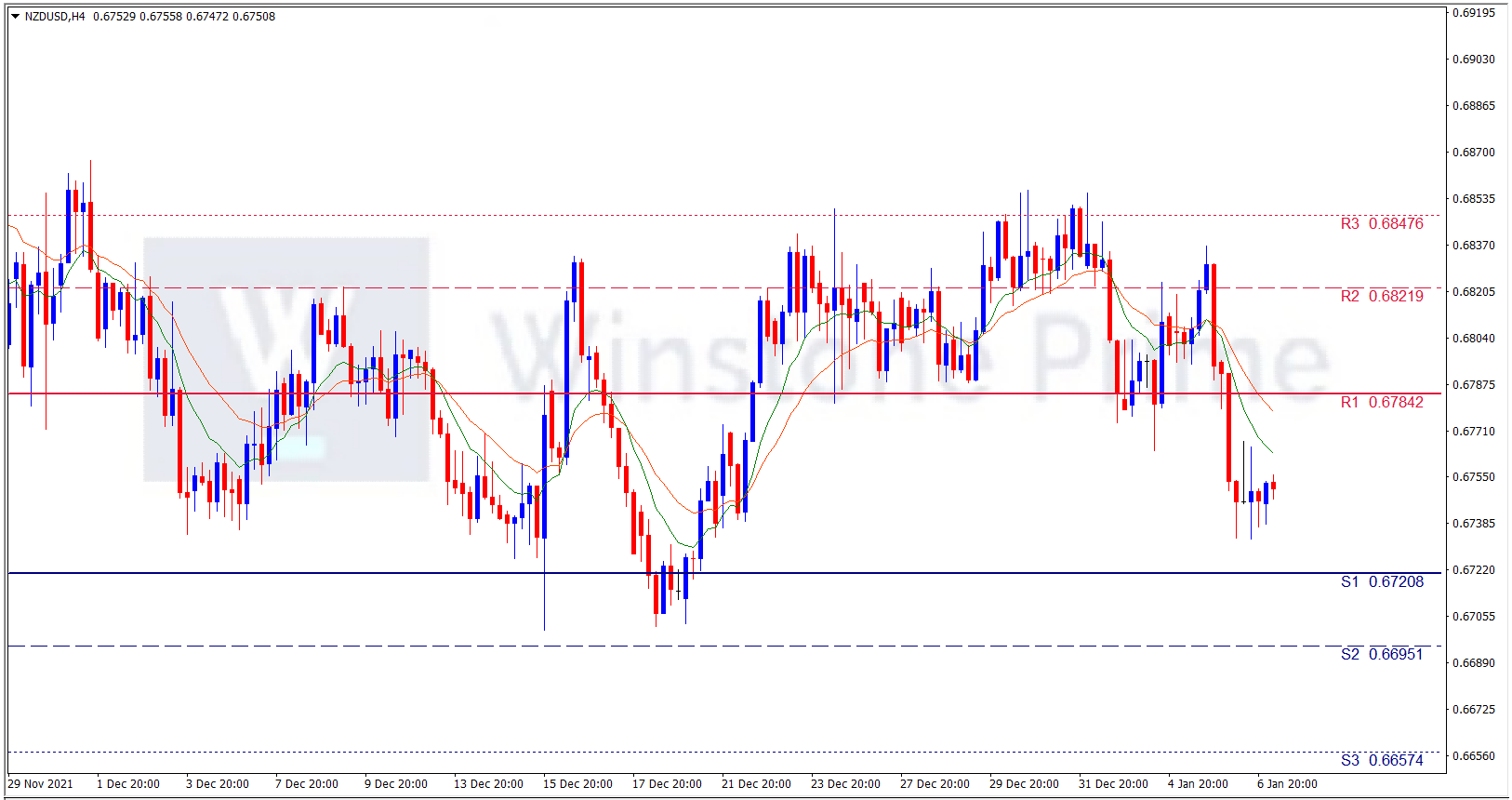
NZD/USD 4 Hour Chart:

Support: 0.6721 (S1), 0.6695 (S2), 0.6657 (S3).

Resistance: 0.6784 (R1), 0.6822 (R2), 0.6848 (R3).

Fed hawkish rhetoric and the virus woes entertain the NZD/USD sellers, moving on US NFP data is largely eyed today. In the meantime, We expect a bearish trend for NZD/USD.