CAD is favored by mildly bid oil price

US dollar trades low against the Canadian dollar during the Friday Asian session. The weakness of the quote USD/CAD can be related to the mildly bid oil prices. However, Favorable US job data, thin liquidity conditions and an absence of major data/might restrict the pair’s move.

Canada’s main export item, WTI crude oil prices add  0.05% intraday while taking rounds to the five-week top flashed the previous day. This turns to be favorable the CAD.

The hopes of fewer health emergencies due to the Omicron might be the rationale behind the Oil’s move. Elsewhere, Canada seem to take Omicron a bit lightly since many people refused from major lockdown majors around the year-end celebrations. However, Quebec is the odd one out to put a 10:00 pm to 5:00 am curfew in place.

On the other hand, US Initial claims, unemployment benefits dropped to a  198,000 for the week ended Dec. 25 from a revised 206,000 a week earlier. Early this month, claims dropped to a level last seen in 1969.

Economists polled by Reuters had forecast 208,000 applications for the latest week. Claims have declined from a record high of 6.149 million in early April of 2020. The data were the latest to show that Omicron – the newest and most contagious COVID-19 variant so far – has yet to trip up a tight job market or slow a U.S. economy that appears solidly on track to end the year at a gangbusters growth rate.

Holger Schmieding, chief economist at Berenberg said “Despite concerns, the view seems to be that the highly transmissible Omicron COVID-19 variant will be less lethal than feared”

“Markets are back trading the rebound story, the recovery story for 2022,” Schmieding said, noting higher bond yields reflected expectations of economic recovery and subsequently, a reduced pace of central bank support.

USD/CAD 4 Hour Chart:
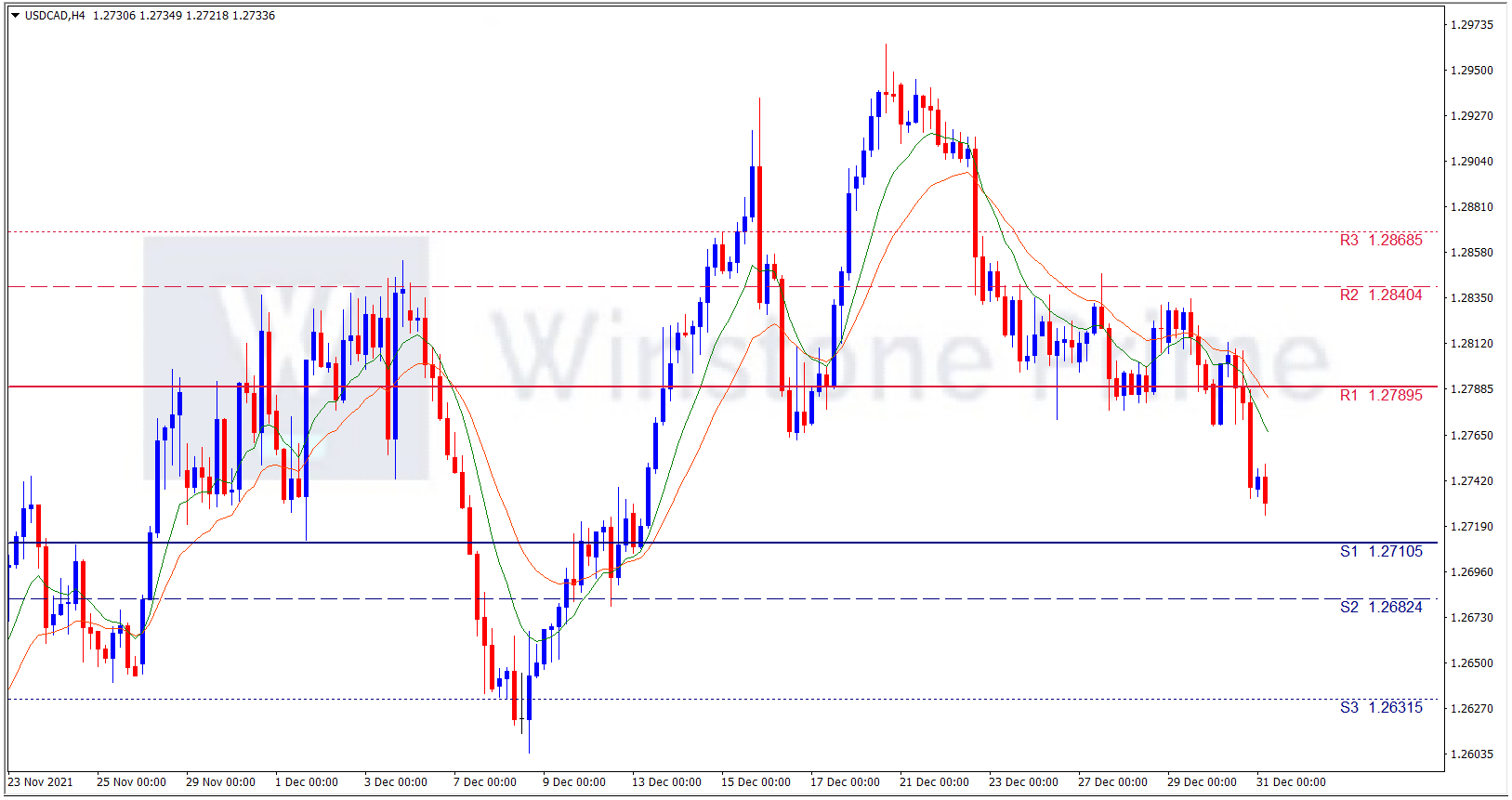
Support: 1.2711 (S1), 1.2682 (S2), 1.2632 (S3).

Resistance: 1.2790 (R1), 1.2840 (R2), 1.2869 (R3).

The favorable US job data favors the US dollar, However the bid oil’s price favors the Canadian dollar more. We epect a bearish trend for USD/CAD.

Dollar dips in thin trading session

The dollar edged lower against the Euro in thin trading Thursday Asian session as investors looked beyond a surge in Omicron cases and favored riskier currencies.

Economic data released on Wednesday in the US showed Pending Home Sales dropped -2.2% in November, less than the previous readout of 7.5%. A different report showed the advance Goods Trade deficit widened to 97.8 billion dollars in November, from the 83.2 billion of the previous month and forecast of 89.18 billion.

In the ECB v/s Fed Battle, Amid the recent jump in the US inflation expectations, it is expected that the Fed will announce the much-awaited rate hike earlier in 2022 versus the ECB’s likely delay in the monetary policy tightening.

The European Central Bank (ECB) will not end tapering before 2023, Governing Council member Ignazio Visco said in an interview on Thursday. “Will maintain very favorable financing conditions for economy.”

Moving on to the Covid woes, France reported the world’s biggest-ever daily jump in COVID-19 infections with 179,807 new confirmed cases while the figures from New Zealand and China have been easing of late. The UK also marked a fresh all-time high of the daily virus cases with above 122,000 figures.

Reuters said, “The average number of new COVID-19 cases in the United States has risen 55% to over 205,000 per day over the last seven days.” Additionally, Australia’s most populous state New South Wales (NSW) reports doubling of the covid infections for Tuesday, with 11,201 new infections and three virus-led deaths.

However, Investor sentiment is boosted by signs the Omicron variant, while causing a jump in cases to record highs in many countries, is not leading to new, widespread lockdowns.

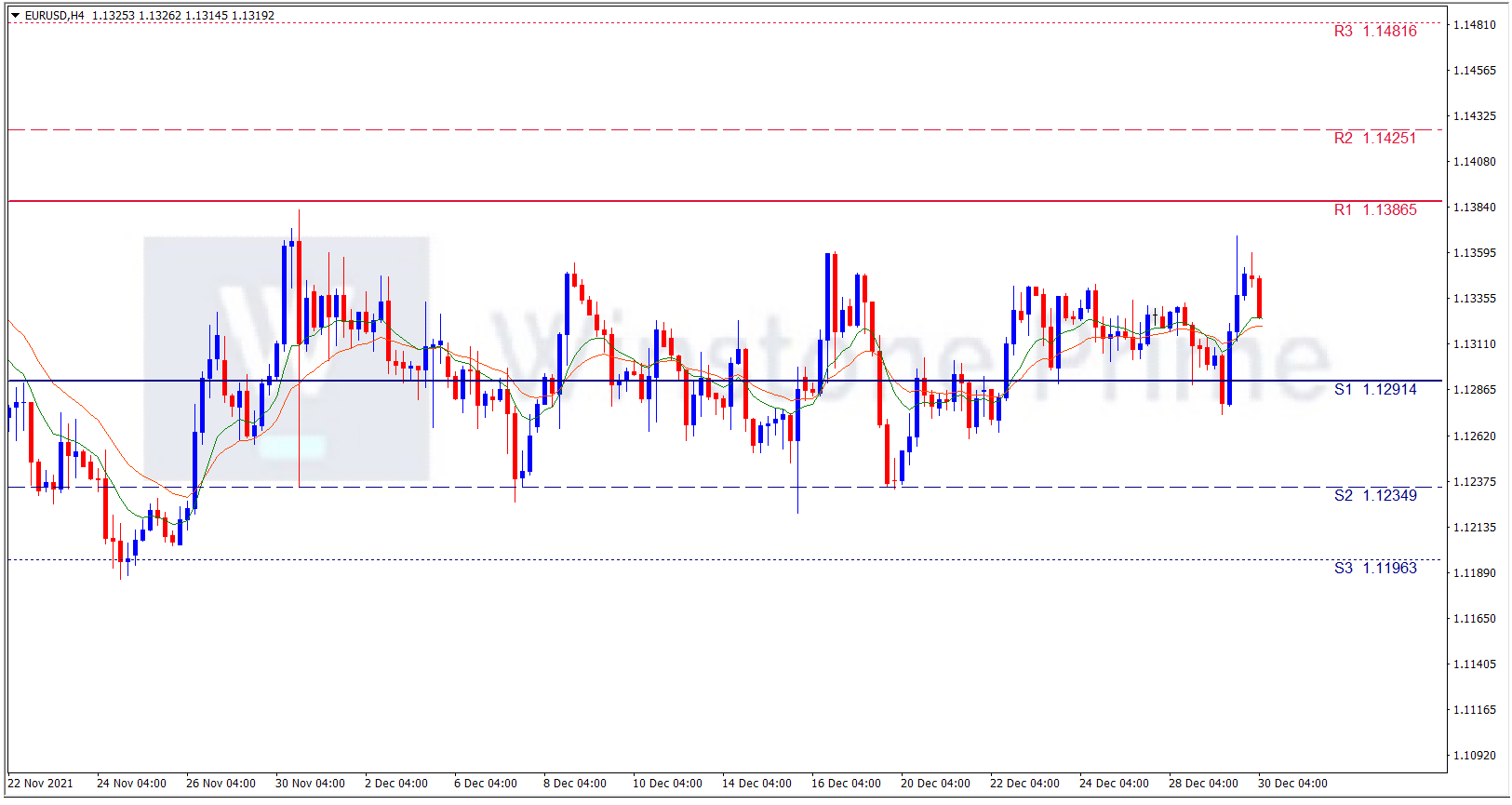
EUR/USD 4 Hour Chart:

Support: 1.1291 (S1), 1.1235 (S2), 1.1196 (S3).

Resistance: 1.1387 (R1), 1.1425 (R2), 1.1482 (R3).

A lack of liquidity and hopes of fewer hospitalizations due to Omicron favors the Euro and the traders will be keen to watch the US initial jobless claims later today. In the meantime we expect a bullish trend for EUR/USD.

USD/JPY struggles amid upbeat Japanese data

The US dollar traded high against the Japanese Yen on Tuesday and is struggling at the key 115.00 psychological level during the Asian Session Wednesday.

The dollar had inched up on Wednesday due to a recent rally in shares showing signs of petering out, However holiday-thinned trading meant markets were showing little real direction.

Many traders having taken time off for Christmas or the end of the year, analysts said it was hard to read too much into the moves. The Market is taking clues from the optimism surrounding the South African covid variant, namely Omicron. The diminishing fears over the virus gives confidence among traders about the global recovery.

The dollar was also favored by a rise in two-year Treasury yields which hit 0.758% on Tuesday, a near two-year high, before slipping marginally to 0.7461%.

Elsewhere, The Fed is widely expected to begin hiking rates before several other major central banks such as the European Central Bank, and this has helped the dollar index to have its best year in 2021 since 2015.

On the other hand, Unemployment Rate of Japan grew to expectation of 2.8% from last month figure of 2.7%  whereas Jobs/Applicants Ration also meet the expectation of 1.15.

Japan Industrial Production preliminary reading for November showed a jump of 7.2% which is highest since August 2020 and up  MoM versus -0.5% market consensus and 1.8% anticipated numbers. The YOY readings for Industrial Production also was favorable which showed a reading of +5.4% figures compared to -5.0% expected and -4.1% previous readouts.

As per Reuters, Japan’s Government Official said, “Industrial output shows signs of picking up.” The diplomat also added, “While the chip shortage’s impact on the supply chain is shrinking, it’s still there.”

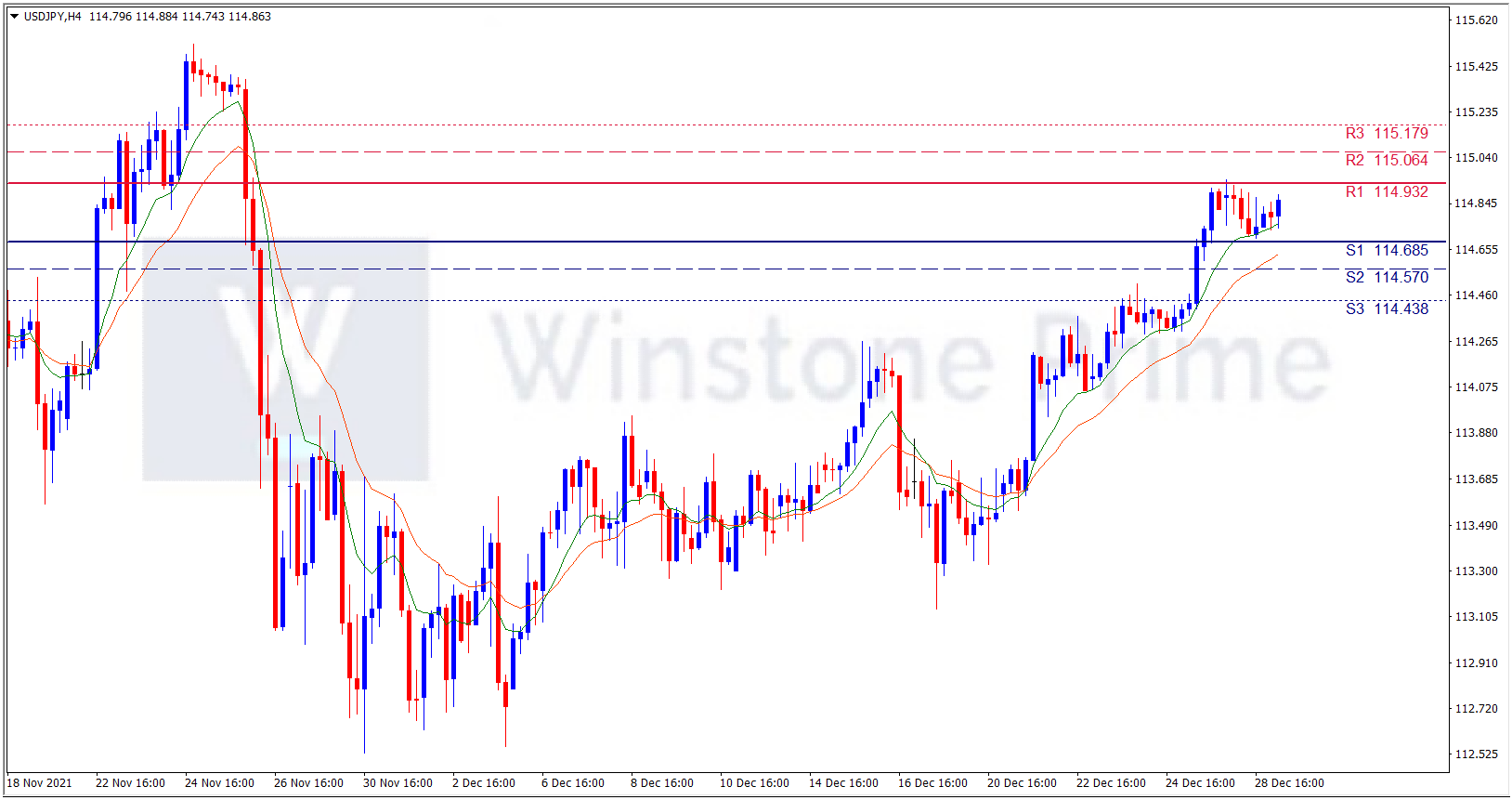
USD/JPY 4 Hour Chart:

Support: 114.69 (S1), 114.57 (S2), 114.44 (S3).

Resistance: 114.93 (R1), 115.06 (R2), 115.18 (R3).

The recent optimism surrounding the Omicron and the Fed hack favors the bulls whereas Upbeat Japanese data puts a cap on the bull. We expect a mid trend for USD/JPY.

Tips to combine trading and full time job

For most of the people, full time job is a non-negotiable part of life. To sustain an existence whether meager or lavish, often needs the dedication of most of our waking hours. There are Expenses such as rent, a mortgage, utilities, food and transportation which are obligations that must be satisfied. While there are exceptions, meeting these challenges typically requires securing full-time employment, Monday through Friday.

That said, Trading has never been simple, and only experts make money consistently. To become an expert in trading, one must learn trading first and then practice hard, beat their emotions and stick to some discipline. Time and finance is required for this. However, not all beginners have a substantial capital that will let them stay unemployed, as they need to pay for their expenses, and they cannot withstand initial losses for several years.

Hence combining job and trading is so vital for many. Some stable income allows paying one’s bills and accumulating skills gradually. Combining job and trading is a not easy task as one’s time which they can devote to trading is rather limited.

Below are some tips that can be followed that will help tolerating time shortage.

Prepare and Stick to the trading plan

Trading can be real challenge without a clear plan and system for trading. To trade every day , you need to find a trading plan that give good results. Preparing a trading plan (depending on your trading strategy) is the must. Since with a consistent plan, monitoring the market constantly is not required; traders only need to wait for trading signals to appear in the area as per the the plan.

Sticking to the trading plan is important to become a part-time forex trader.

Your main aim with trading while having a full-time job is to supplement your income. With a need to create a second income on the volatile trading arena, sticking to the stuff that works will bring you confidence, and the money.

Alerts while trading

A great help for traders are Alerts. Setting an alert while traders will help the traders to know about different market events. They may be  either sound alerts or text. Thus this will help the traders remain in course of market events even if they are busy doing some other job.

Setting an alert is possible in various popular trading terminals and mobile apps.

Other than standard alerts, traders can also make use of different expert advisors and indicators that have their own embedded alerts, which means they also notify the trader of a trading signal appearing by the specified algorithm hence they can decide on whether to open a position or not.

Make use of free time and the weekends wisely

Using time wisely even while working full time is the key in combining both the job with trading.

People who work from home soon understand that any time wasted is money wasted. Which means you can lose money if you aren’t organised with good time management.  Spending each hour wisely is an essential skill in day trading.

Most of the part-time traders find that the weekends are the perfect times to build out a trading plan. And after that they can follow the trading plan in the week so that they have the minimum amount of daily work to do.

Trading at the available session

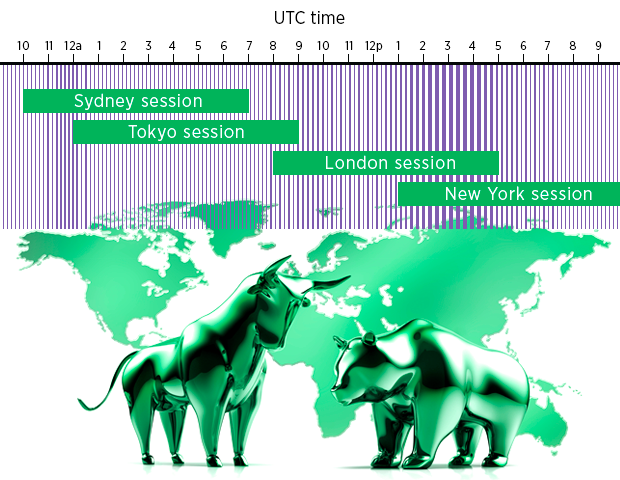
Depending on their local time, the traders can use any of the sessions to trade: Asian, European, or American. It is better to avoid Pacific one as it is a hard trading option due to small movements. Traders can choose almost any instrument in the European and American sessions, both positional trading and scalping.

Active currencies like the yen, the Australian dollar, the New Zealand dollar are better in the Asian session to trade. Traders should always study the peculiarities of the currencies and influencing factors.

Aim at middle-term and long-term trading

Middle term and long term trading will work for everyone but trader’s patience is the must for it. However most of the newbie’s prefer only short-term trading, when they open and close positions within one or a few more days.

But following middle term and long term strategies (to hold the positions opened for a few weeks or even months) can be better for traders who work full time. Since Traders in this case don’t have to monitor the market all the time and watch the situation every few minutes. There, trading can also be partially automated with setting stop-loss and take-profit.

Just monitoring the market once a day will be enough to stay informed about the market. Elsewhere, Stop-losses and take-profits are big-sized there, the timeframes to trade start form D1.

A trading journal

By working from morning to dawn, it will be hard to keep track of important information on markets. Maintaining a journal by noting all aspects of the trades will help the traders as they can record the mistakes and learn from them, They can get an extra level of protection. Working a full-time job means a trader cannot afford to make mistakes unless the trader want to remain in the ranks of the less successful, casual traders.

However, mistakes will happen to some degree. To combat the problem, it is important to write as many notes possible about the trading experience. Thus the trader can keep their information handy. Trading journal makes sure that the trader is always learning.

Expert Advisors

Expert Advisors are the tool that will be helpful for the full time job holding traders. An expert advisors is an automated algorithm based on the trader’s strategy. If the trader succeeds in automatizing their strategy, this will be a great help that will work for them, giving them free time.

Example : MetaTrader 4/MetaTrader5  platforms are widely used in trading forex. To write a bot for this platform, the trader will need the MQL4/MQL5 programming language. Just writing a bot is not enough. The trader should assess the statistics of its trading, optimize parameters, and customize it according to constantly changing market conditions whenever time is available.

Final words :

To combine employment and trading is important for most of the traders. Due to the stable income from the job, the trader will not be in rush to earn from trading and he can develop trading skills gradually: one might need much more than a year to become a pro. Depending on the employment conditions, the trader should follow a trading way that will facilitate trading  in a lack of free time.

Give a second thought on this article, If you are working full time and finding way to trade. Open account and start trading.