Nikkei trades low ahead of Fed

Japan’s Nikkei inches low ahead of today’s US Federal Reserve (Fed) monetary policy meeting in Wednesday Asian session. The US dollar is showing gains as investors looked towards a key Federal Reserve policy meeting to see if it would reinforce growing market expectations for earlier rate rises next year.

Bank of Japan Governor Haruhiko Kuroda said on Wednesday consumer inflation may approach its 2% inflation on rising raw material costs, offering his clearest signal to date that upward price pressures will continue to broaden.

But he also added that the central bank would maintain its ultra-loose monetary policy to ensure any rise in prices would be accompanied by higher wages and a recovery in the economy.

“It’s true there’s a chance consumer inflation will approach 2% through various channels,” Kuroda told parliament. “But what’s desirable is for the economy to recover steadily and push up corporate profits, thereby leading to higher wages and inflation. We’ll patiently maintain ultra-easy policy to achieve this at the earliest date possible,” he said.

Elsewhere, The Bank of Japan on Wednesday showed readiness to pump 2 trillion yen ($17.6 billion) into markets through temporary government bond purchases to counter a recent rise in short-term interest rates.

Moreover, Japan PM Fumio Kishida accepts mistakes in the Construction Orders data but turns down any impact of the mistakes on GDP for FY 2020 and 2021.

On the other hand, Markets have been pricing for the Fed to wrap up bond-buying around March and then proceed with one or maybe two rate hikes in 2022. Elsewhere The US Senate approved a bill to raise the debt ceiling by $2.5 trillion whereas President Joe Biden also sounds hopeful of getting his Build Back Better (BBB) plan through the House in 2021.

However, the rapid spread of the Omicron adds pressure that could incline the Fed to be less hawkish, but recently officials have sounded more concerned about the persistence of inflation than the pandemic. Whatever the Fed decides will set the bar for the central banks of the EU, UK and Japan when they meet this week, and add to pressure for further tightening in emerging markets.

USD/JPY 4 Hour Chart:
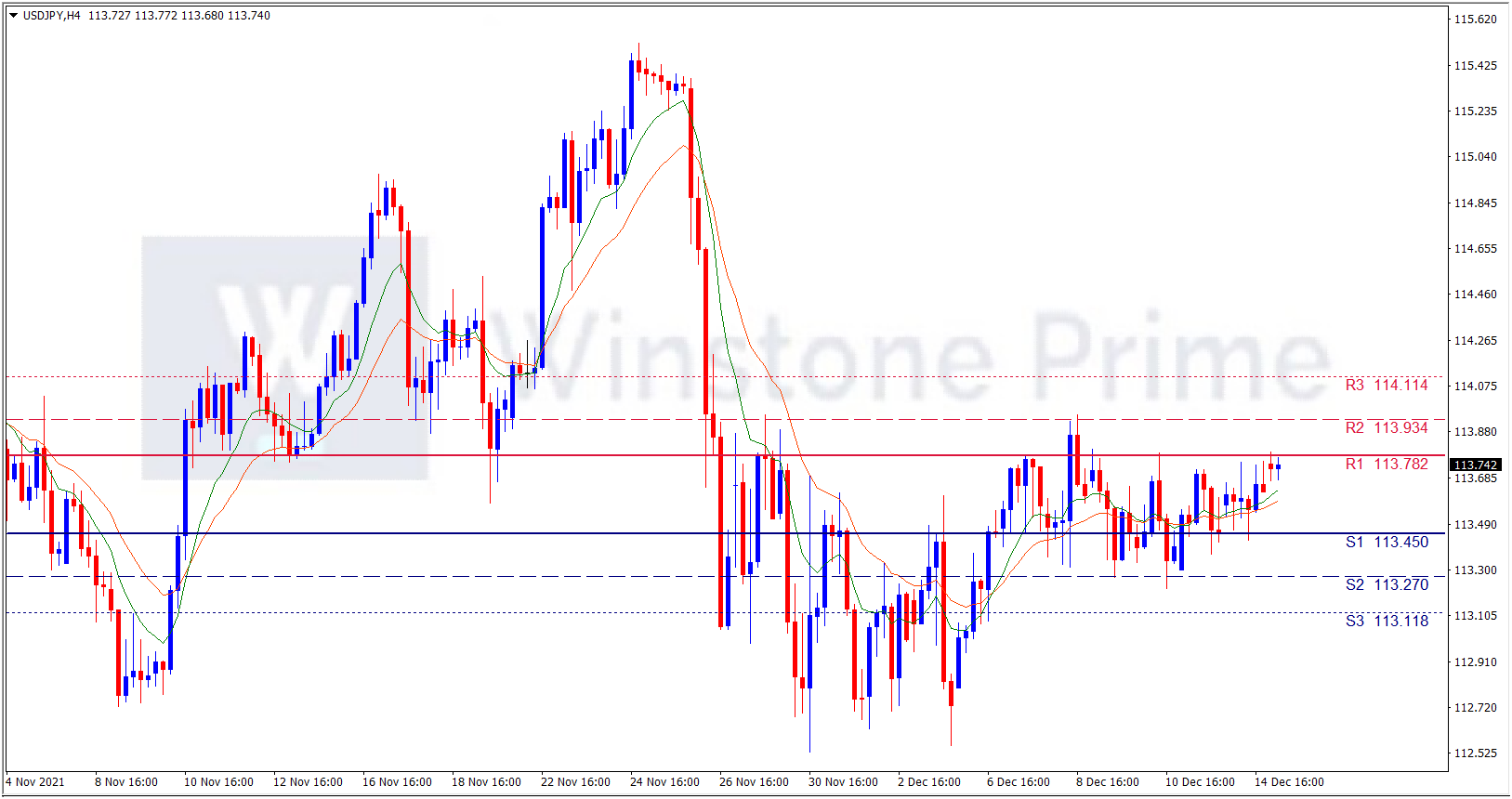
Support: 113.45 (S1), 113.27 (S2), 113.12 (S3).

Resistance: 113.78 (R1), 113.93 (R2), 114.11 (R3).

The hawkish expectation from Fed amidst the omicron woes creates cautious optimism among the USD/JPY traders. We expect a bullish trend for USD/JPY.

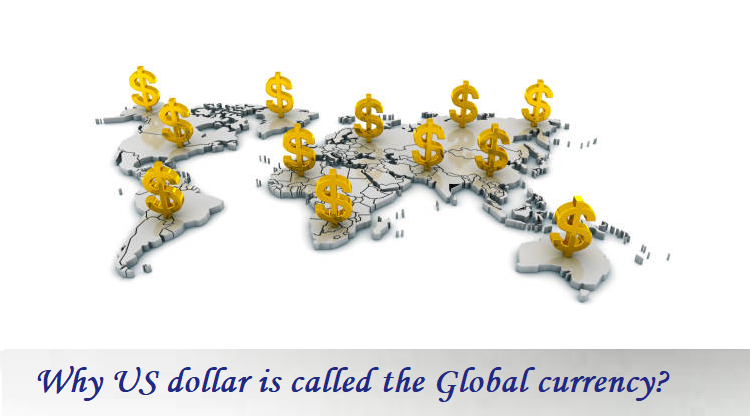
Why US dollar is called the Global currency?

Introduction

The currency which is acceptable all over the world for trading is called global currency. Few currencies of the world are acceptable as the most international transactions. The most popular of the few is the US dollar, Euro and yen stands next in the queue.

As per the International Monetary Fund, the U.S. dollar is the most popular. As per the 2020 records, It makes up over 59% of all known central bank foreign exchange reserves. This makes it a global currency. The next closest currency is the euro which makes 20% of known central bank foreign currency reserves.

 The chance of the euro becoming a world currency was damaged by the eurozone crisis. It revealed the difficulties of a monetary union that’s guided by separate political entities.

The U.S. Dollar Is the Strongest World Currency

The relative strength of the U.S. economy helps to support the value of the dollar. It is the main reason why the dollar is the most powerful currency. As of the year 2018, the U.S. had $1,671 billion in circulation. And As much as half that value is estimated to be in circulation abroad.

The dollar is the hero in the foreign exchange market. 90% of forex trading involves the U.S. dollar. According to the International Standards Organization List, the dollar is just one of the world’s 185 currencies however; most of these currencies are only used inside their own countries.

Around 40% of the world’s debt is issued in dollars. Thus, foreign banks need a lot of dollars to conduct business. This was proved in the 2008 financial crisis. The Non-American banks had $27 trillion in international liabilities denominated in foreign currencies. From that, around $18 trillion was in U.S. dollars. Thus, the U.S. Federal Reserve had to increase its dollar swap line. That was the only way to keep the world’s banks from running out of dollars.

The financial crisis made the dollar even wider in use. In the year 2018, the banks of Germany, France, and Great Britain held more liabilities denominated in dollars than in their own currencies.

Moreover, the bank regulations which were enacted to prevent another crisis have made dollars scarce, and made the Federal Reserve to increase the fed funds rate. This in turn decreased the money supply which made the dollars more expensive to borrow.

The main reason for the government to hold the dollar in their foreign exchange reserves is the dollar’s strength. Governments acquire currencies from their international transactions. They also receive them from domestic businesses and travelers who redeem them for local currencies.

U.S. dollar become the world’s leading reserve currency?

The status of the dollar as the global reserve currency came in to existence after the World War II by the 1944 Bretton Woods Conference,  whereby forty-four countries agreed to the creation of the IMF and the World Bank. (Some economists have argued that the dollar had overtaken the British pound as the leading reserve currency as early as the mid-1920s.) 

As per the Bretton woods, a system of exchange rates were created wherein each country pegged the value of its currency to the dollar, which itself was convertible to gold at the rate of $35 per ounce. This was designed with a view to provide stability, and prevent the beggar-thy-neighbor currency wars of the 1930s—a response to the Great Depression—by which countries abandoned the gold standard and devalued their currencies to try to gain a competitive advantage.

By the year 1960s, the United States did not have enough gold to cover the dollars in circulation outside the United States which lead to fears of a run that could wipe out U.S. gold reserves. After the efforts that failed to save the system, President Richard Nixon suspended the dollar’s convertibility to gold in August 1971 which marked the beginning of the end of the Bretton Woods exchange rate system.

The Smithsonian Agreement which was struck a few months later by ten leading developed countries, attempted to salvage the system by devaluing the dollar and allowing exchange rates to fluctuate more, but it was short-lived.

By 1973, the current system of mostly floating exchange rates came in place. Many countries still manage their exchange rates either by allowing them to fluctuate only within a certain range or by pegging the value of their currency to another, such as the dollar.

The U.S. dollar still remains king. Along with accounting for the bulk of global reserves, the dollar is the currency of choice for international trade. Major commodities such as oil are primarily bought and sold using U.S. dollars. Some countries, including Saudi Arabia, still peg their currencies to the dollar.

Factors that contribute to the dollar’s dominance also include its stable value, the size of the U.S. economy, and the United States’ geopolitical heft. In addition, no other country has a market for its debt akin to the United States’, which totals roughly $18 trillion. “It’s more helpful to think of U.S. Treasuries as the world’s leading reserve asset,” says CFR’s Brad W. Setser. “It’s hard to compete with the dollar if you don’t have a market analogous to the Treasury market.”

Which Country’s Currency Could Be the Next World Reserve Currency?

There are so many alternatives that could replace the dollar as the next global reserve currency. The euro is the most used reserve after the dollar and could replace the dollar if economic conditions move favorable to it. But European Union lack a central Treasury unit, which can make this difficult.

China’s renminbi could surpass the dollar, a goal that the country’s leaders are keen on realizing. Global reserves account for about 2% and the use of the renminbi around the world is rising.

The U.S. Dollar Today

The dollar remains the world’s reserve currency today. Central banks held 59% of their reserves in U.S. dollars during the fourth quarter of 2020, according to the International Monetary Fund (IMF). Many of the reserves are in cash or U.S bonds, such as U.S. Treasuries. Dollar-denominated debt outside the U.S. continues to rise, with levels reaching $12.6 trillion as of mid-2020.

Most people would believe that this makes the dollar the strongest currency in the world. Despite its position in the global markets and how dependent they are on it, the dollar ranked as the 10th strongest currency, according to CMC Markets. The site ranked the Kuwaiti dinar as the strongest currency while the British pound and the euro earned the fifth and eighth spots respectively.

Final words

Even though trillions of dollars is in foreign debt and continuous large deficit spending, the United States stands first in holding global trust and confidence in its ability to pay its obligations. Hence, the U.S. dollar remains the strongest world currency. It may continue to be the top global currency in the upcoming years also.

Omicron woes weighs on the British pound

British pound fell against the greenback during the Tuesday Asian session. The dampened market sentiment may be the reason behind the fall.

First death linked to the omicron variant in the UK is the catalysts which dampened the market mood amid its fast global spread. As a response to increasing COVID-19 cases in the country, Borish Johnson, PM, raised the COVID alert to four.

Meanwhile, Health Secretary Sajid Javid told MPs Omicron now represented 20% of cases in England. Mr Javid said the UK Health Security Agency (UKHSA) estimated the current number of daily infections was around 200,000.

He also added that “Omicron has risen to more than 44% of cases in London and is expected to become the dominant variant in the city in the next 48 hours.”

Elsewhere, BBC medical editor Fergus Walsh argues that with Omicron doubling every two to three days, it could go from a small to a huge number very quickly. Data also suggests Omicron is more transmissible than previous variants, with cases doubling in the UK every two to three days.

While omicron keeps GBP/USD at bay, Traders are now keen to watch the Central banks meeting to find any clues. The Fed’s two-day meeting that begins later Tuesday headlines a string of central banks announcing policy decisions this week, including the European Central Bank and Bank of England on Thursday.

The Fed is expected to announce it will wrap up its bond buying stimulus sooner than previously communicated, potentially setting up earlier interest rate increases next year.

On the other hand, The Bank of England does not intend to change its stance on banks paying dividends to shareholders because of the risks posed by Omicron variant of the coronavirus, a top official at the central bank said on Monday.

Deputy Governor Sam Woods told reporters that banks would probably have to hold back on dividend payments in some of the worst-case scenarios spelled out in its annual health check of the banking sector.”But for the moment, it’s BAU (business as usual) on dividends,” he said.

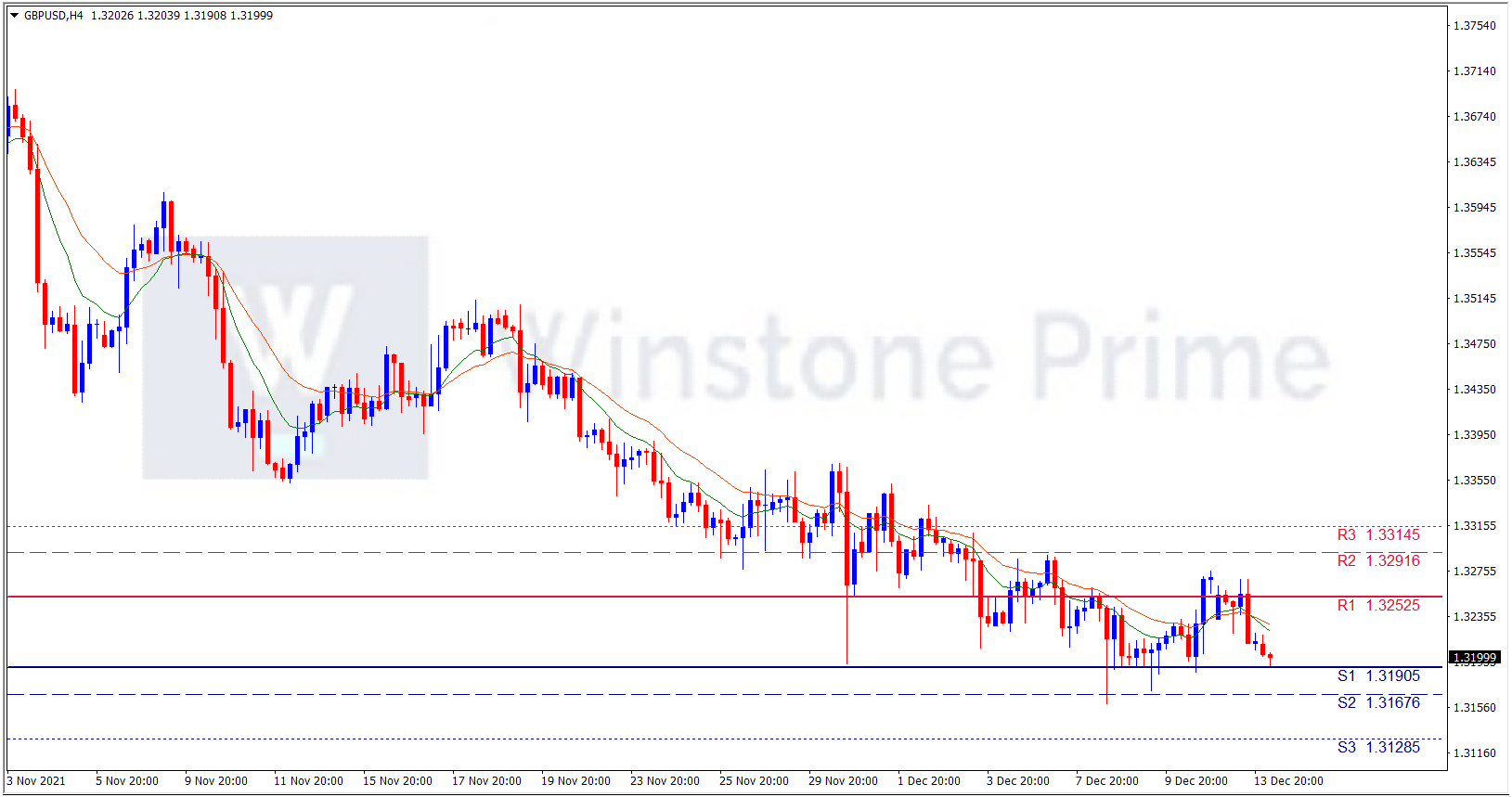
GBP/USD 4 Hours Chart:

Support: 1.3191 (S1), 1.3168 (S2), 1.3129 (S3).

Resistance: 1.3253 (R1), 1.3292 (R2), 1.3315 (R3).

Omicron variant keeps British pound under pressure and the market participants now head towards the Fed and BoE meeting to further direct their move.  In the meantime, we expect a bearish trend for GBP/USD.

Fed Vs ECB Battle impacts the Euro

Euro is trading downside against the US dollar at the start of the week. The main driver of the EUR/USD pair may be the indecision over the next moves of the European Central Bank (ECB) and the US Federal Reserve (Fed).

While the Market News Internation (MNI) cited sources to confirm further easy money policies at the ECB, Reuters’ poll has noted a reduction in the bond purchase from April.

Further confusing was the ANZ report which said that, “The ECB is expected to boost its monthly APP purchases as part of the transition from PEPP from next April onwards. It is expected that the ECB’s inflation forecast will show inflation below target in 2023, justifying guidance that rates won’t rise next year.”

On the other hand, RR figure of -0.037 remains in favor of the US dollar amid a firmer expectations of the Fed’s faster tapering and the hope of rate hike despite of the Omicron’s worries.

US Consumer Price Index (CPI) data exceeded the forecast of 6.2% to 6.8%  to refresh the 39-year high. However, the stable inflation expectations revealed via the University of Michigan Consumer Sentiment Index, to 70.4 for December poses a challenge to the Fed hawks.

Central banks will need to strike a difficult balance between Omicron-induced uncertainty and elevated inflation levels,” the Barclays analysts said.

Traders now see a more than 50% chance of a rate hike by May 2022, according to the CME Group’s FedWatch programme.

An acceleration of tapering would likely support the dollar particularly versus currencies whose central banks will likely be slower to tighten.

“The Fed meeting certainly could prove the catalyst for EUR/USD to break down to 1.10. Though investors may prefer to wait from the ECB the next day before chasing the move,” said ING analysts in a note.

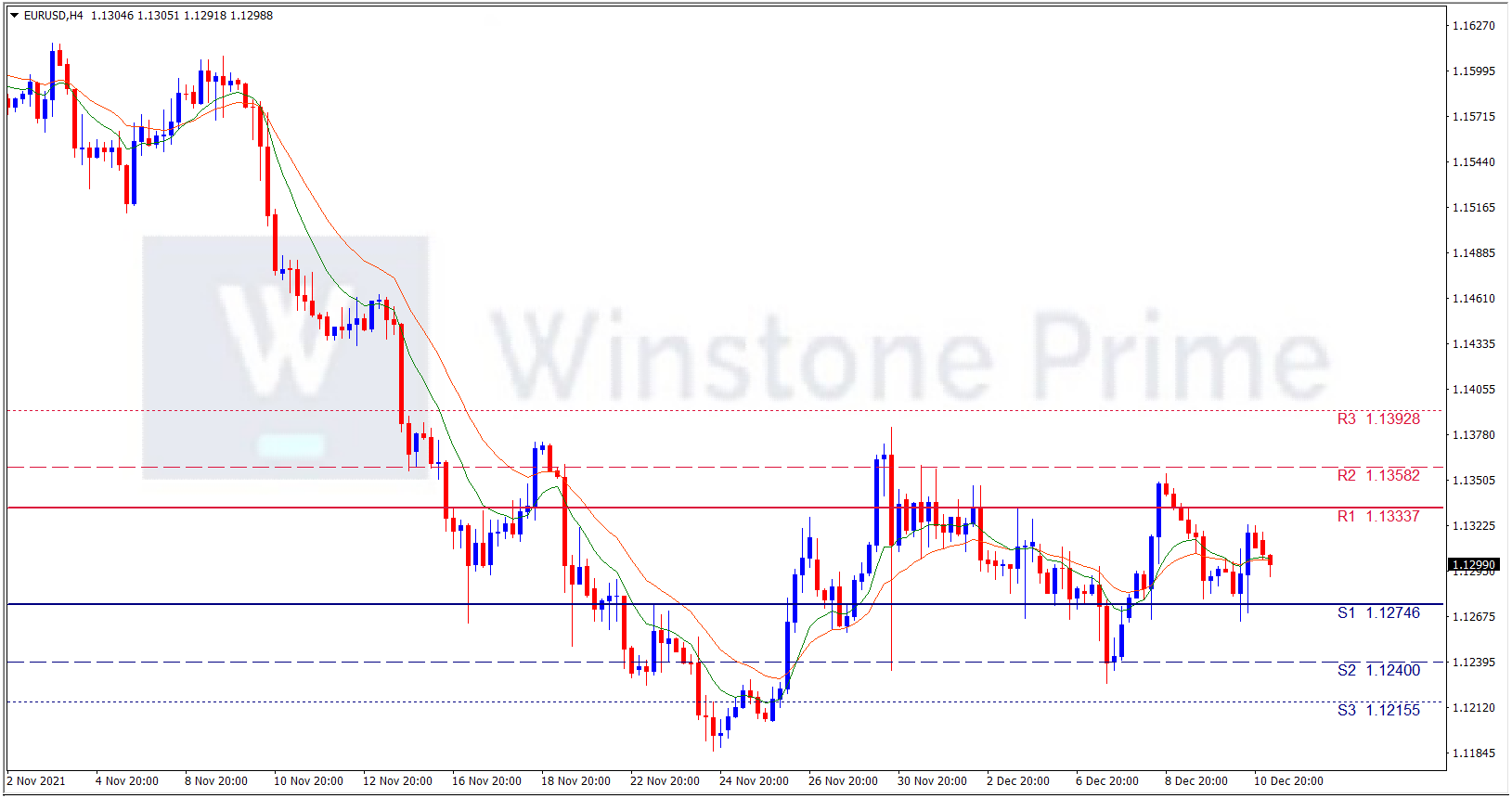
EUR/USD 4 Hour Chart:

Support: 1.1275 (S1), 1.1240 (S2), 1.1216 (S3).

Resistance: 1.1334 (R1), 1.1358 (R2), 1.1393 (R3).

Fed hawkish expectation against the ECB’s confusing move underpins the EUR/USD down trend. We expect a bearish trend for EUR/USD.