Upbeat Chinese data favors Aussie

Aussie trades upside against the greenback in the Thursday Asian session. This move can be related to the strong prints of the Consumer Price Index (CPI) and Producer Price Index (PPI) from Australia’s largest customer, China.

China’s headline CPI jumped the most since August 2020, by 2.3% YoY and 0.4% MoM in November. The factory-gate inflation data arrived at 12.9% YoY in November.

Elsewhere, Latest comments from the RBA Lowe was paid little attention from the AUD/USD traders. RBA’s Lowe justified the title of his speech, “Payments: The Future?,” as he spoke nothing of the economy nor the Aussie central bank’s next move at the latest. He said, “Both the regulators and the government understand this and are seeking to put in arrangements that encourage innovation and competition and make sure we have a secure and efficient system.” He further added , “There is no strong public policy case for an RBA-backed retail digital currency but a policy case could emerge quickly as technology, consumer preferences change.”

Further Aussie was also favored by the US dollar weakness due to the optimism as early studies showed that the South African covid variant, dubbed as Omicron, is comparatively less harmful than the previous variants of the virus.

Adding to the optimism, BioNTech BNTX.O and Pfizer PFE.N said on Wednesday a three-shot course of their COVID-19 vaccine neutralised the new Omicron variant in a laboratory test, an early signal that booster shots could be key to protection against infection from the newly identified variant.

However, virus-led activity restrictions in Germany, France and the UK creates risk tone in the market sentiment which could weigh on the AUD buyers.

AUD/USD 4 Hour Chart:
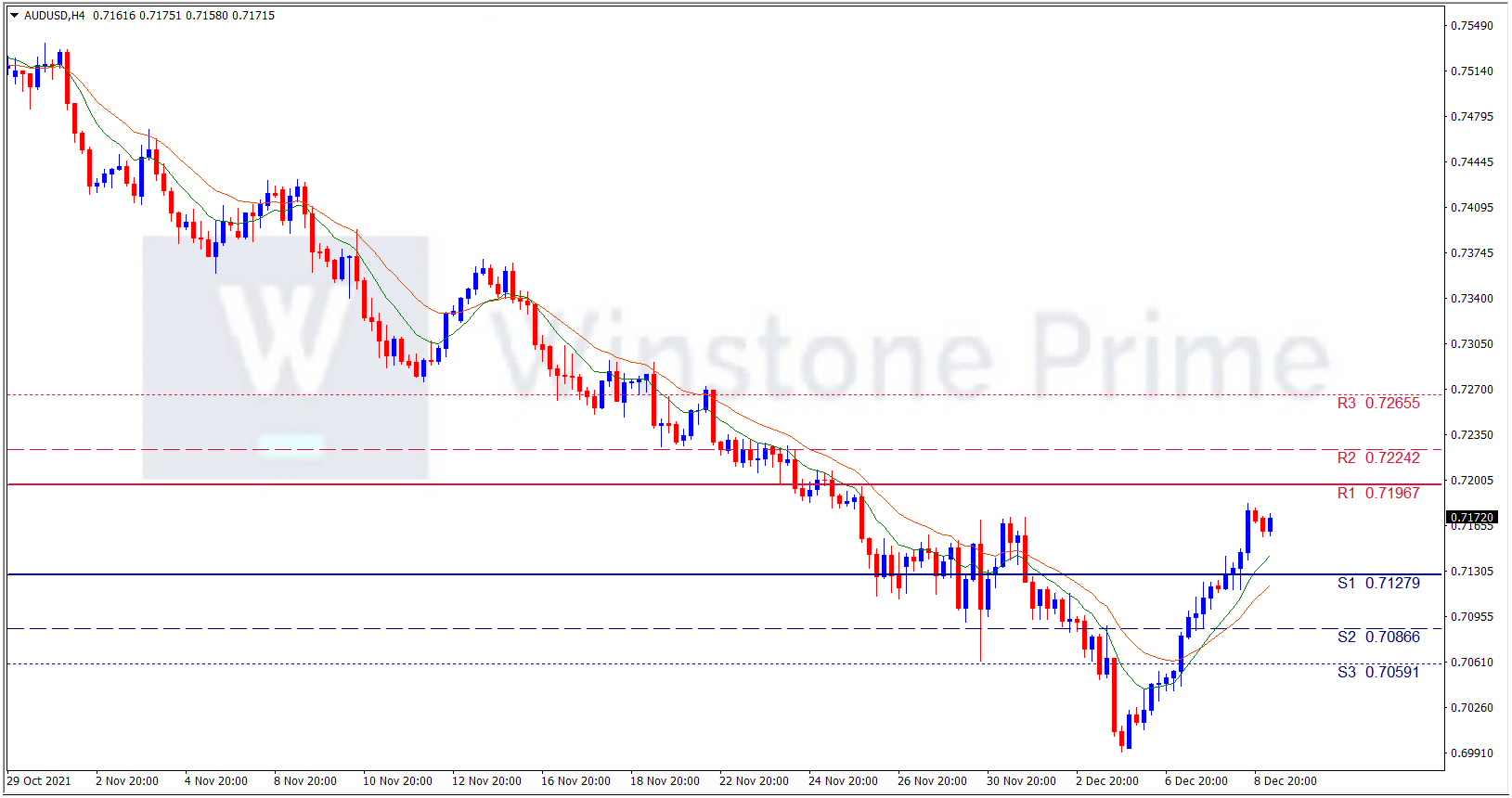
Support: 0.7128 (S1), 0.7087 (S2), 0.7059 (S3).

Resistance: 0.7197 (R1), 0.7224 (R2), 0.7266 (R3).

As of now, upbeat Chinese data favors AUD/USD bulls, moving on, Risk catalysts and second-tier US jobs figures may direct the AUD/USD further. We expect a bullish trend for AUD/USD.

Retreat in US T Yields favors gold

The yellow metal rose against the greenback for the second consecutive day on Wednesday and is trading around $1790 at the time of writing. The reason can be linked to the retreat in the U.S. Treasury yields and the dollar eased, with investor now changing their focus  to key inflation data due this week that could influence the Federal Reserve’s decision to taper its stimulus at a faster pace.

The rising geopolitical tensions also acts as a catalyst favoring safe-haven precious metal. The U.S. on Monday announced a diplomatic boycott of the 2022 Winter Olympics in Beijing, a move that had garnered bipartisan support from critics of China’s human rights record.

While U.S. athletes will still participate, President Joe Biden’s administration will not send any official representation to the games, given China’s “ongoing genocide and crimes against humanity in Xinjiang and other human rights abuses,” White House press secretary Jen Psaki told reporters.

On a similar note, relations between the US and Russia took a turn for the worse after US President Joe Biden threatened to impose strong economic and other measures on Russia if it invades Ukraine.

Meanwhile Omicron covid optimisms also favors the yellow metal, Increasing scientific evidence that the new Omicron covid variant is less aggressive and, therefore, could pose limited risk to the global economic recovery continues to underpin the market mood. 

South African hospitals continue to hint that Omicron has milder symptoms. Additionally, a South African Study showed that the Pfizer vaccine provides partial protection against the new strain. The scientist noted, “study shows a 40-fold reduction in neutralization capacity of Pfizer vaccines vs. Omicron.

Investors will focus on Friday’s U.S. Consumer Price Index (CPI) report, which could have a bearing on decision the Fed takes in its policy meeting on Dec. 14-15.

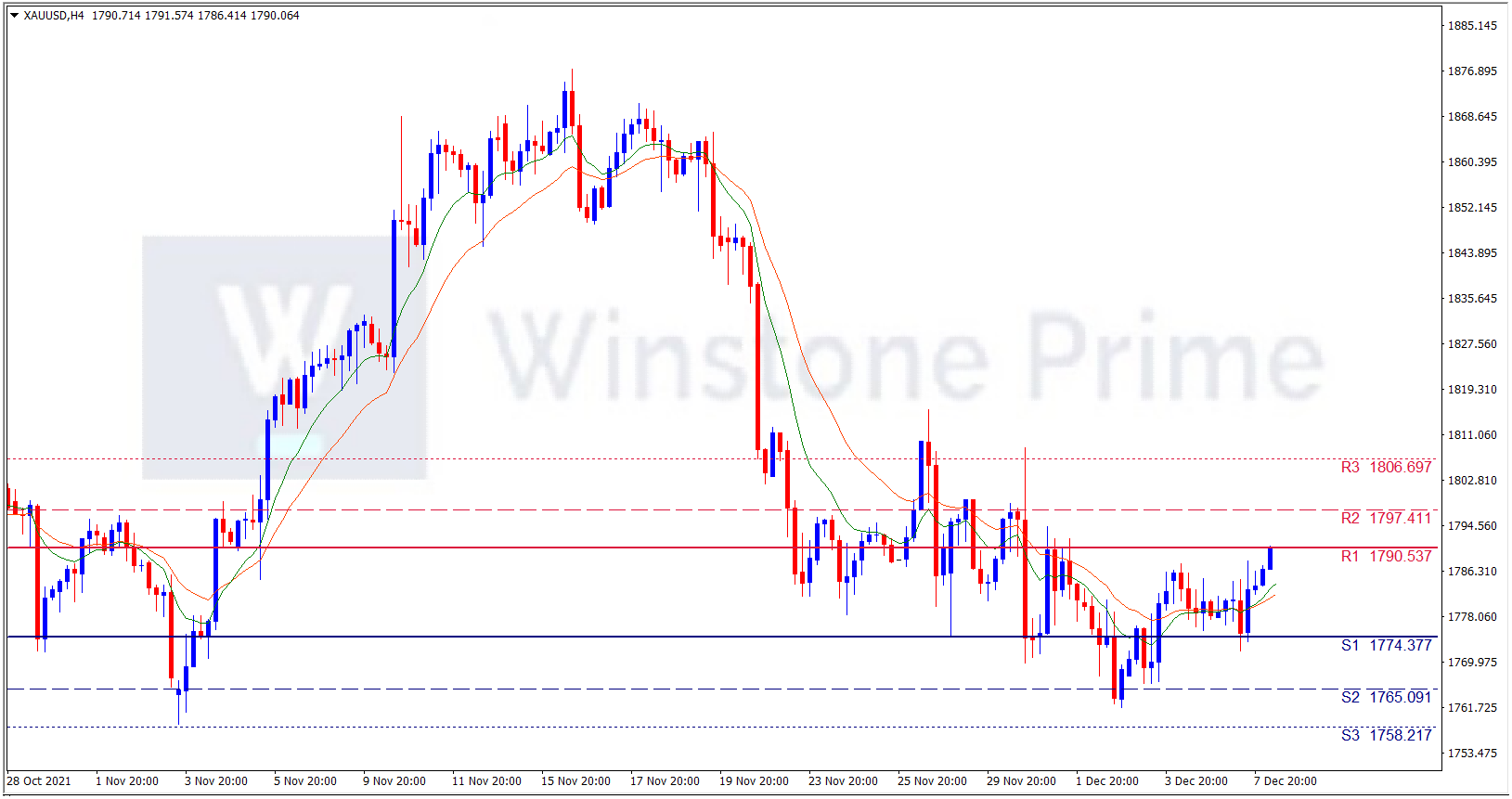
XAU/USD 4 Hour Chart:

Support: 1774.4 (S1), 1765.1 (S2), 1758.2 (S3).

Resistance: 1790.5 (R1), 1797.4 (R2), 1806.7 (R3).

Amidst all the catalysts favoring the safe haven precious asset – Gold, we expect a bullish trend for XAU/USD.

Reducing fear of Omicron variant favors pound

Pound is trading high against the greenback on Tuesday. The Slide in the dollar can be the reason behind this move. The Benchmark 10-year and 30-year US Treasury yields have pulled back from their one-week highs hit on Tuesday and are sliding further in Asia which is pressuring the greenback.

The Market mood also improved with the hope that the Omicron coronavirus variant may be less disruptive for the global economy than initially feared. South Africa was the first country which detected the Omicron variant, after that it faced a massive surge in coronavirus cases. But in the last few days, the trend gave the impression that the situation was improving. This update turned to be highly encouraging.

The latest positive developments on the Brexit front and the encouraging comments from the UK drugmaker GlaxoSmithKline favored the sterling against the greenback.

On the latest Brexit update, the UK is expected to offer France an olive branch to resolve the fishing row, per The Telegraph. British sources said an agreement could be reached on ‘replacement boats’, which would allow issuing of more permits to EU vessels.

The pharma giant said that the data was built on a promising signal published last week, underscoring the importance of Sotrovimab for the early treatment of COVID-19.

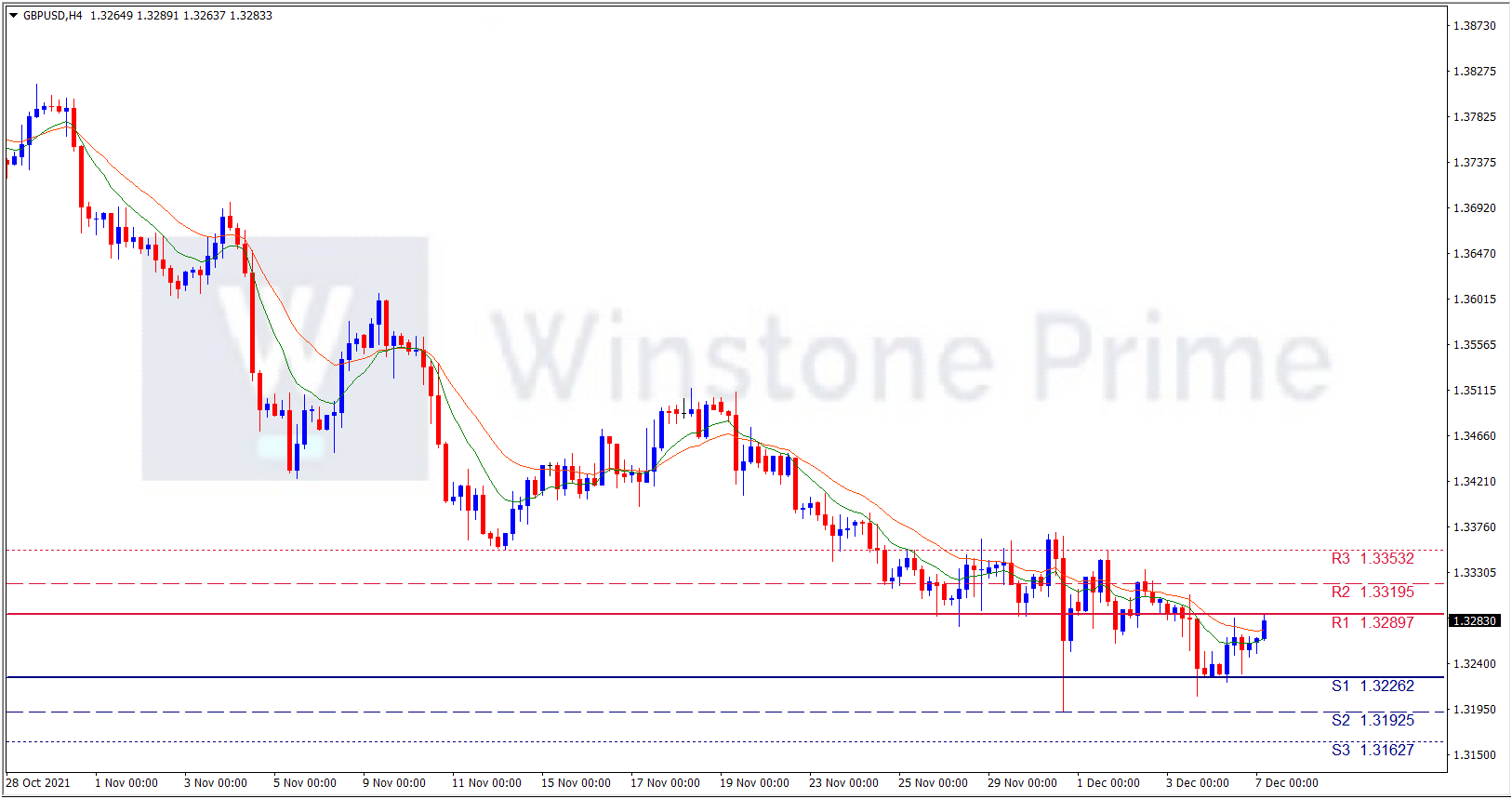
GBP/USD 4 Hour Chart:

Support: 1.3226 (S1), 1.3193 (S2), 1.3163 (S3).

Resistance: 1.3290 (R1), 1.3320 (R2), 1.3353 (R3).

The Slide of US dollar along with other catalysts favoring the pound, we expect a bullish trend for GBP/USD.

About Undervalued and Overvalued Currency

Undervalued Currency :

A undervalued currency is a currency with an exchange rate lower than it must to be. A currency may be undervalued, for instance, when its purchasing power, supply and demand are all strong, but its price is still comparatively low.

Currencies can be undervalued for some natural reasons like political crises which causes the rest of the world to become wary of holding that country’s assets or currency e.g., Brazil and Turkey in the 2013–2019 period.

On the other hand, Some governments keep their currencies undervalued deliberately as it makes their exports less expensive, but this is usually an unsustainable policy. e.g  China, whose currency, the RMB (Renminbi yuan), is alleged to have been consistently undervalued by the People’s Bank of China (PBoC) since the early 1990s.

Pros :

  • Suppose the currency is undervalued, the exports will be cheaper. In turn, Cheaper exports leads to greater employment in export industries.
  • Undervaluation also makes foreign direct investment (FDI) more attractive to outside investors, since their currencies can be converted in to more undervalued currency, with which they can buy land, factories, or any local asset.
  • Undervalued currency will make the imports expensive to the consumers, in turn they will divert to domestic goods and hence employment in domestic industries will increase.


Cons :

  • As the import becomes expensive due to undervalued currency, this can lead to Imported inflation i.e. all the products using imported components/raw material will become expensive thus effecting the general price level.
  • Undervaluation restricts the imports which mean reduced competition, which can make local firms less competitive.


Overvalued Currency

Overvalued currency is the currency with the exchange rate higher exceeding what the market is willing to pay. For example, currency overvaluation may occur when central banks buy more of a currency that they ordinarily do.

Currencies can also be overvalued when foreigners want that currency in the exchange markets and wishing to hold assets in that nation.

Temporarily currencies may also be overloaded if the country’s central bank raises internal interest rates, and the foreigners in the rest part of the world wish to earn high interest then demand that currency in the spot market.

Overvalued currencies are more likely to be found in emerging countries. Although, there are many examples of overvaluation in the rich world, such as Norway and Switzerland.

Pros :

  • Downward pressure on inflation i.e. imported goods will be cheaper.
  • Will result in to more imports can be bought.
  • Overvalued currency forces the domestic producers to improve their efficiency and competitive in the international market.


Cons:

  • Overvalued currency will adverse effect on the export industries as it will make exports uncompetitive in the international market.
  • Overvalued currency will make domestic industries to struggle as the consumer will buy more Imported products which are relatively cheaper due to overvalued currency.