USD/JPY Weekly Forecast (06th December 2021 – 10th December 2021)

Fundamental view:

US dollar traded low against the Japanese yen during the trading course of the week. Discovery of coronavirus new variant Omicron created sour market sentiment. This might have created risk aversion market sentiment, in turn favoring the safe haven – Japanese yen. Omicron case reports began to arise  from various countries and US states, even though there were no indications of heightened danger or vaccine avoidance from the new strain. Preliminary observations from the doctor in South Africa who identified the first mutated virus noted the cases she had seen were all mild without complications. On the other hand, Japanese economic information was mixed. Retail Trade (sales) was slightly weaker than forecast for the year in September, though purchases at large stores were just 0.9%, less than a fifth of the 5.2% estimate. Industrial Production in October was weaker than predicted and the annual change was -4.7%, its worst reading since January. 

Fed Chair Powell Testimony on 30th November and US ISM Manufacturing PMI on 1st December favored uptrend for the pair whereas Japan Retail sales monthly report on 29th November and Japan Industrial Production monthly report on 30th November favored downtrend for the pair this week.

The major economic events deciding the movement of the pair in the next week are Japan GDP quarterly report, US Nonfarm Productivity quarterly report at Dec 7, BoJ Corporate Goods Price Index monthly report, EIA Crude Oil Stocks Change at Dec 08, Initial Jobless Claims at Dec 09, Michigan Consumer Sentiment and US Federal Budget Balance at Dec 10.

USD/JPY Weekly outlook:
Technical View:

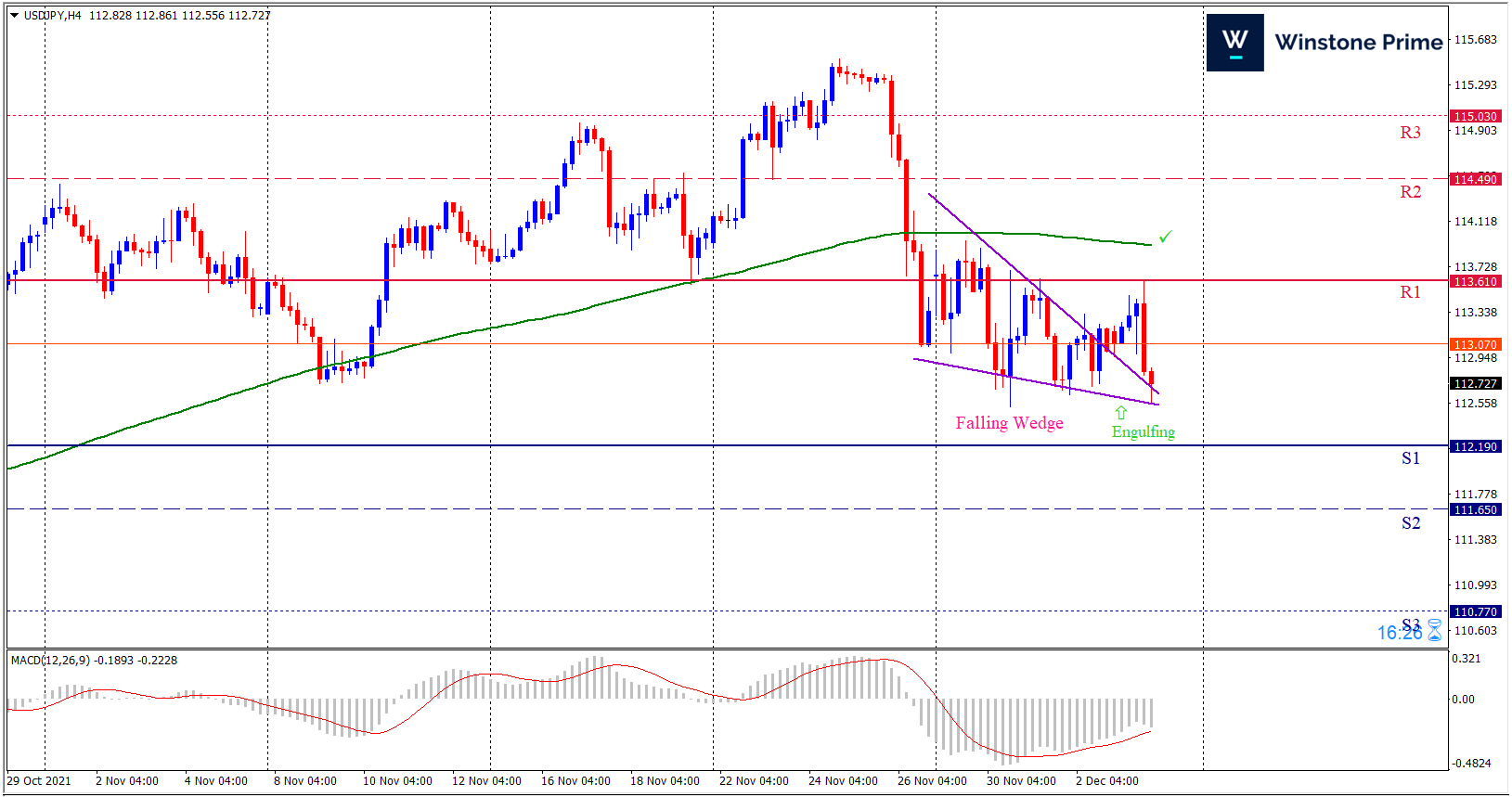
Last week’s high was 1.38% lower than the previous week. Maintaining high at 113.95 and low at 112.53 showed a movement of 142 pips.

In the upcoming week we expect USD/JPY to show a bullish trend. The currency pair is trading below the 200 Simple Moving Average and the MACD trades to the downside. A solid breakout above 113.61 may open a clean path towards 114.49 and may take a way up to 115.03. Should 112.19 prove to be unreliable support, the USDJPY may sink downwards 111.65 and 110.77 respectively. In H4 chart, Formation of falling wedge pattern indicates reversal of the trend creating prospects of a bullish trend Along with a bullish engulfing formation braces our expectation.

Preference
Buy: 112.75 target at 114.14 and stop loss at 112.14


Alternate Scenario
Sell: 112.14 target at 111.29 and stop loss at 112.75

GBP/USD Weekly Forecast (06th December 2021 – 10th December 2021)

Fundamental view:

The British pound traded downside against the greenback. Fed’s Hawkish stance and Omicron variant worries seem to favor the US dollar. The Fed had signaled that it is ready to accelerate its tapering process. A faster reduction of bond-buys implies borrowing costs would move higher earlier than expected, perhaps in May. This hawkish comments from Powell , also further hawkish comments from his colleagues favored the dollar. The Discovery of new variant Omicron led to the sour market sentiment which in turn underpins the safe haven dollar bullish trend. Omicron is more contagious than previous variants, but uncertainty about lethality and vaccine resistance remains vague. Markets seemed to react to every piece of news: whether positive or negative. Talking about Brexit, no news is good news – but the lack of a resolution to the row over the Northern Irish protocol means it could always come back to impact  the pound.

Britain Markit/CIPS Manufacturing PMI on 1st December and BoE MPC Member Saunders Speech on 3rd December favored bullish trend whereas Fed Chair Powell Testimony on 1st December and US Unemployment Rate on 3rd December favored bearish trend for the pair in this week.

The major economic events deciding the movement of the pair in the next week are BoE Deputy Governor Monetary Policy Broadbent Speech at Dec 6, US Nonfarm Productivity quarterly report at Dec 7, EIA Crude Oil Stocks Change at Dec 08, Initial Jobless Claims at Dec 09, UK Manufacturing Production monthly report, UK GDP monthly report, Michigan Consumer Sentiment and US Federal Budget Balance at Dec 10.

GBP/USD Weekly outlook:

Technical View:

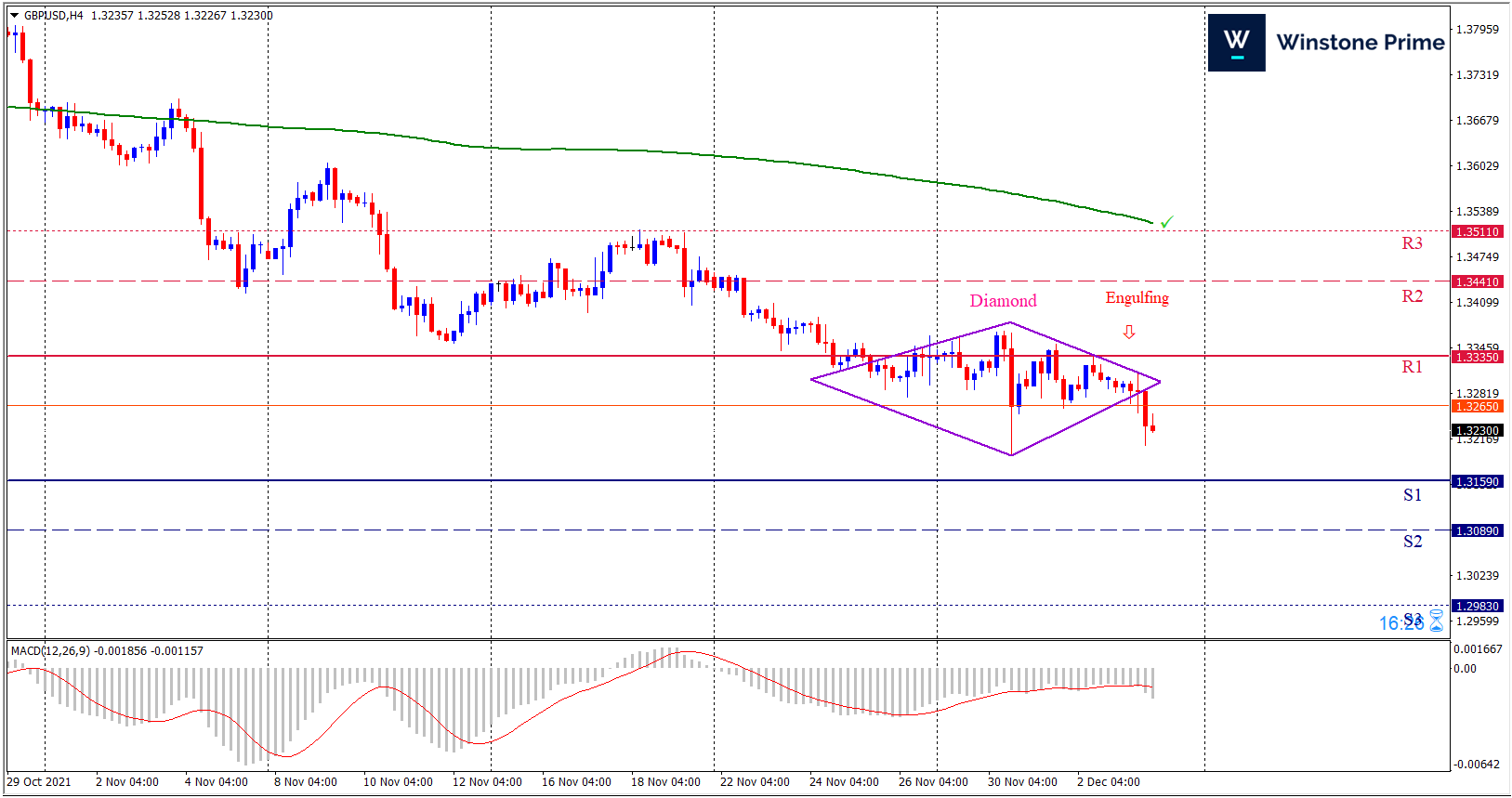
Last week’s high was 0.62% lower than the previous week. Maintaining high at 1.3370 and low at 1.3194 showed a movement of 176 pips.

In the upcoming week we expect GBP/USD to show a bearish trend.  The currency pair is trading below the 200 Simple Moving Average and the MACD trades to the downside. Should 1.3159 proves to be unreliable support then the pair may fall further to 1.3089 and 1.2983 respectively whereas a solid breakout above 1.3335 will open a clear path upward to 1.3441 and then will further raise up to 1.3511. Chart formation of diamond pattern breakout downside in H4 chart favors prospects of a bearish trend. Bearish engulfing pattern formation escalates the expectation for a bearish trend.

Preference
Sell: 1.3229 target at 1.3090 and stop loss at 1.3340


Alternate Scenario
Buy: 1.3340 target at 1.3510 and stop loss at 1.3229

EUR/USD Weekly Forecast (06th December 2021 – 10th December 2021)

Fundamental view:

The Euro traded high at 1.1382 but failed to retain its gains and fell to 1.1266 at the week end. A number of factors lead to the sour market sentiment this week. The newly discovered coronavirus variant named Omicron was the first factor in this regard, South Africa reported it on November 25, and the global panic had resulted in border closures and restrictive measures. With progress in time, authorities acknowledged that Omicron had been circulating in Western Europe before the strain was identified. And the experts believe that vaccines will still offer protection against severe cases and death. Meanwhile, US Federal Reserve Chair Jerome Powell and Treasury Secretary Janet Yellen, testified on the CARES act before the Senate. Powell noted that inflation had spread more broadly and that the risk of persistent inflation has risen. He added that it’s time to remove the term transitory to describe price pressures, and the Fed would discuss speeding up tapering in their December meeting, to counter inflation. These catalysts favored the safe haven US dollar.

Eurozone Markit Manufacturing PMI on 1st December and US initial Jobless claims on 2nd December created downtrend for the pair whereas Eurozone PPI monthly report on 29th November and Eurozone GDP quarterly report on 30th November created uptrend of the pair in this week.

The major economic events deciding the movement of the pair in the next week are Eurozone Employment Change quarterly report, Eurozone GDP quarterly report, US Nonfarm Productivity quarterly report at Dec 7, EIA Crude Oil Stocks Change at Dec 08, Initial Jobless Claims at Dec 09, Eurozone Industrial Production monthly report, Michigan Consumer Sentiment and US Federal Budget Balance at Dec 10.

EUR/USD Weekly outlook:

Technical View:

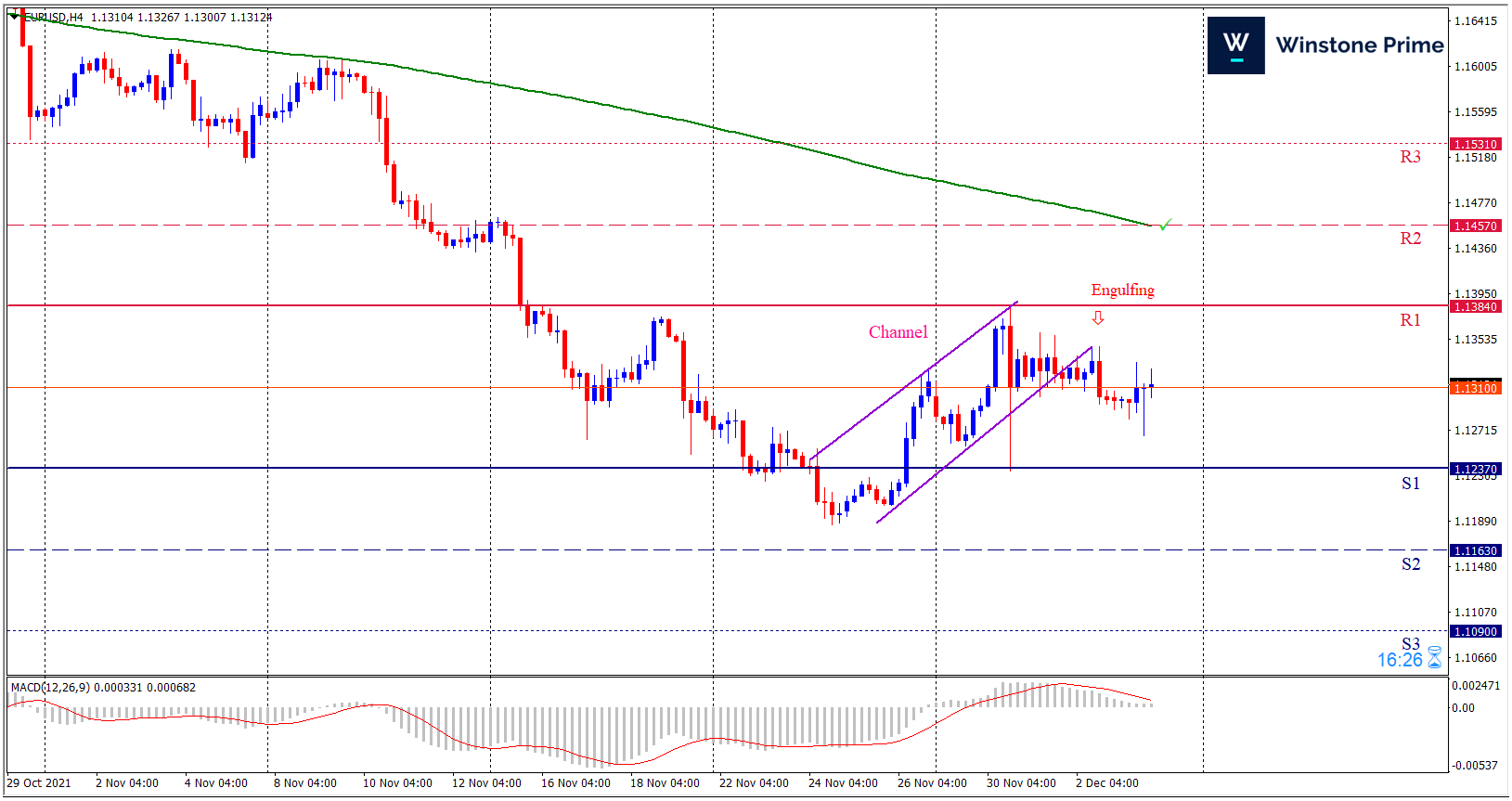
Last week’s high was 0.48% lower than the previous week. Maintaining high at 1.1382 and low at 1.1235 showed a movement of 147 pips.

In the upcoming week we expect EUR/USD to show a bearish trend. The currency pair is trading below the 200 Simple Moving Average and the MACD trades to the downside. Should 1.1237 prove to be unreliable support then the pair may fall further to 1.1163 and 1.1090 respectively whereas a solid breakout above 1.1384 will open a clear path upward to 1.1457 and then will further raise up to 1.1531. Chart formation of a channel pattern breakout in H4 chart sets prospects for a bearish trend. Bearish engulfing formation in H4 chart further escalates the expectation for a bearish trend.

reference
Sell: 1.1307 target at 1.1164 and stop loss at 1.1389


Alternate Scenario
Buy: 1.1389 target at 1.1530 and stop loss at 1.1307

Downbeat Chinese data pressurizes kiwi

Kiwi trades low against the greenback during Friday early session. This move can be related to the release of China’s Caixin PMI data. The kiwi also shows the sour market sentiment, as well as reacts to the softer data and the Nonfarm payroll data.

China’s Caixin Services PMI for the month of November came below 53.8 to 52.1 Along with that the Composite PMI also had a drop from 51.5 to 51.2 during November.

On the other hand, The Labor Department’s report showed that nonfarm job growth rose less than expected in November, the unemployment rate dropped to 4.2%, its lowest since February 2020, and wages increased.

Separately, a measure of U.S. services industry activity hit a record high in November. Both sets of data appeared to influence investor expectations for the Fed’s next move towards tightening its policy. Fed Chair Jerome Powell said this week that the central bank will consider a faster wind-down of its bond-buying program, prompting speculation that interest rate hikes would also be brought forward.

Omicron concerns also creates sour market sentiment.  Omicron variant appeared to be spreading faster than Delta, the last most prevalent version of COVID-19. The number of countries reporting Omicron cases kept rising on Friday but there was still little clarity on the severity of the disease or the level of protection provided by existing COVID-19 vaccines.

NZD/USD 4 Hour Chart:

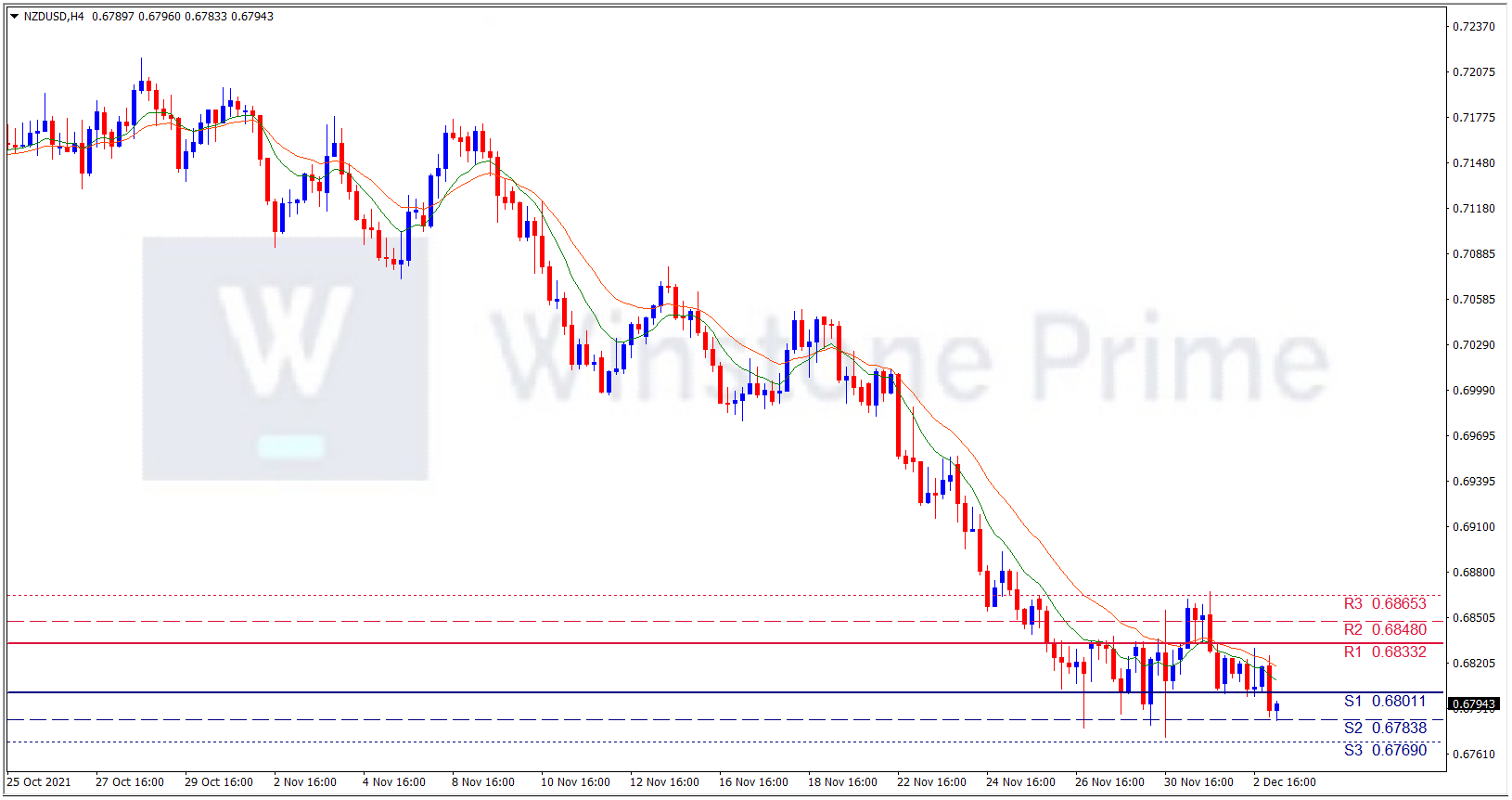
Support: 0.6801 (S1), 0.6784 (S2), 0.6769 (S3).

Resistance: 0.6833 (R1), 0.6848 (R2), 0.6865 (R3).

Amidst the prevailing catalysts favoring the safe haven US dollar against the Kiwi, we expect a bearish trend for NZD/USD.