
Exchange traded fund (ETF)

What is an ETF?

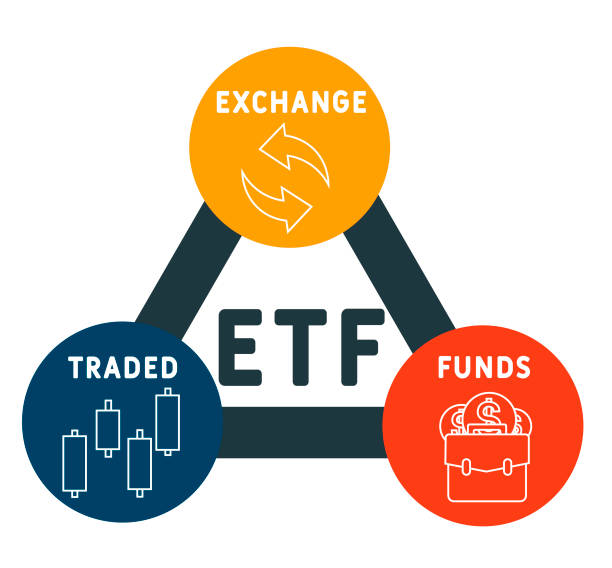
Exchange-traded funds, commonly known as ETFs, is a type of security that tracks an index, sector, commodity, or other asset, but which can be purchased or sold on a stock exchange the same way a regular stock can. Simply put, ETFs are a mashup of different investment avenues. They offer the best attributes of two popular financial assets – mutual funds and stocks.

ETF funds are a kind similar to mutual funds if compared with their structure, regulation, and management. Moreover same as Mutual fund, they are a pooled investment vehicle which offers diversified investment into various asset classes like stocks, bonds, commodities, currencies, options, or a blend of these. They can even be traded like stocks on the stock exchanges.

Types of ETFs:
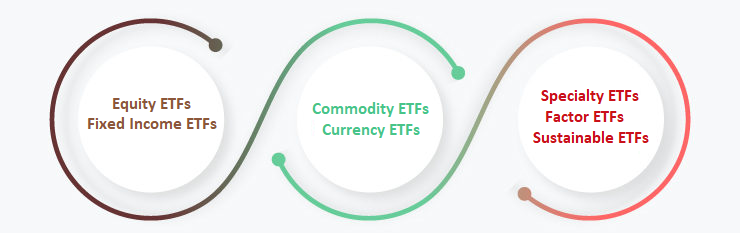
Equity ETFs:

Equity ETFs track an index of equities. You can choose ETFs which covers large businesses, small businesses, or stocks from a specific country. Equity ETFs allows you to target sectors that might be doing well at that time like tech stocks or banking stocks, which makes them a popular choice.

Bond/Fixed Income ETFs:

These are typical ETFs which are designed to provide exposure to different types of bonds. Making Investment in bonds is a nice way to mitigate the ups and downs of investing and diversifying a portfolio.

Commodity ETFs:

Usually it is harder to access commodities than stocks, ETFs are a great way to get into commodities like gold, silver or oil. Commodities are an attractive alternative to stocks to diversify your portfolio and risk further. Moreover commodity ETFs can be less transparent than index or stock ETFs. Commodity ETFs offers investors the path to hold claims in the bullion market without making it necessary to purchase the commodity.

Currency ETFs:

Currency ETFs makes an investment in either a single currency, like the US dollar, or a basket of currencies. The ETF will either invest in the currency directly, use derivatives or a mix of the two. Adding derivatives can lead to more risk to the ETF, hence you need to make sure on what you’re buying. You can buy a currency ETF if you thought the underlying currency is likely to strengthen or if you wanted to protect or hedge your investment portfolio. Some ETFs that invest in overseas markets may already ‘hedge’ against currency risk.

Specialty ETFs:

There are two types of ETFs that have emerged in recent times to meet specific needs. They are leveraged funds and inverse funds. These specialty ETFs offers much greater growth potential but also has a much higher risk.

  • Inverse ETFs – In Inverse ETFs, funds go up when the target index goes down just similar to investors short-selling a stock as its price falls.
  • Leveraged ETFs – In Leveraged ETFs, funds aim to maximize returns by borrowing more money (leverage) to invest. You will recognize these ETFs as they typically say by how much they are leveraged, for example, 2X will borrow an extra $1 for every $1 investors put into the fund.


Both of these ETFs give high returns also bear high risk, so make a good study of them and know what you’re buying.

Factor ETFs:

It is an investment approach which involves targeting specific drivers of return across asset classes. Active managers and Institutional investors have been using factor ETFs to manage portfolios for decades. A common way to access factors is through rules-based ETFs which is often referred to as “Smart Beta”.

Sustainable ETFs:

Sustainable ETFs means investment which combines traditional investment approaches with environmental, social and governance insights. The range of sustainable ETFs available is growing rapidly. Sustainable investing is growing across a wide range of investors. The demand for sustainable ETFs is being driven by trends in demographic shifts, government policies and evolving views on risk.

1. Diversification

ETFs allow the investors to diversify their portfolio across horizontals such as industries, sectors, styles, or countries. ETFs are also traded on virtually every major asset class, currency, and commodity in the world

2. Liquidity like stock

ETFs have trading liquidity of equity that can be sold throughout the day over stock exchanges, though some funds are more frequently traded than others. The more regularly a fund is traded, the easier it is to find a willing seller or buyer. ETFs also allow you to manage risk by trading futures and options just like a stock.

3. Lower Fees

ETFs have much lower expense ratios compared to actively managed funds, which mutual funds tend to be. Costs such as a management fee, shareholder accounting expenses at the fund level,service fees like marketing, paying a board of directors, and load fees for sale and distribution drives up a mutual fund expense ratio.

4. Transparency

Unlike mutual funds that are only instructed to disclose their holdings quarterly, ETFs disclose the fund’s holdings and its NAV daily for open-ended schemes and close-ended schemes.

5. Lower Discount or Premium in Price

There is a lower chance of ETF share prices being higher or lower than their actual value. ETFs trade throughout the day at a price close to the price of the underlying securities, so if the price is significantly higher or lower than the net asset value, arbitrage will bring the price back in line.

1. Higher cost

Comparing trading ETFs with trading other managed funds is less costly but if you compare ETFs to investing in a specific stock, then the costs will be higher. The actual commission paid to the broker might be the same, but there is no management fee for a stock.

2. Less Diversification

For few sectors or foreign stocks, investors might be limited to large-cap stocks due to a narrow group of equities in the market index. Potential growth opportunities might be out of reach due to lack of exposure to mid- and small-cap companies.

3. Less Dividend Yields

Some ETFs gets dividend paid, but the yields may not be as high as owning a high-yielding stock or group of stocks. Since the risks associated with owning ETFs are usually less so as the return, but if an investor can take on the risk, then the dividend yields of stocks can be much higher. While you can pick the stock with the highest dividend yield, ETFs track a broader market, so the overall yield will average out to be less.

4. Leveraged ETF Returns Skewed

Certain double or triple leveraged ETFs can lose more than double or triple the tracked index. These types of speculative investments have to be carefully evaluated. If the ETF is held for a longer time, then the actual loss could multiply fast.

Benefits of ETFs:

ETFs prove to be quite useful to some investors who demand focused exposure to a specific industry, asset class, region, or currency at a reasonable cost. Such investors do not have to worry on researching specific industries. Due to their low operational expenses, they are also suitable as long-term holdings for ‘buy & hold’ investors. Further they prove useful to those who are looking asset allocation approach to investing.
Final words:

As already discussed, ETFs are used by investors who wish to build a portfolio or gain exposure to specific sectors. They are just like stocks in the way they trade but can also be compared to more broad investments, or even entire indexes, in their price movements. If compared to other managed funds such as mutual funds, they show many advantages.

Every coin has two sides, In the same way ETFs has few disadvantages too. When it comes to diversification and dividends, the options may be very much limited. 

ETFs are one of the fastest-growing financial products in history. Now since you are armed with the basics of exchange-traded funds, you can take decision on whether they make an entry in to your portfolio.
Gold trades high ahead of NFP

The yellow metal which has negative correlation (move in opposite directions) to the US Dollar was edging higher due to slightly less hawkish commentary from Fed Chair Jerome Powell. Gold price rallied hard, even though the resurgent US dollar demand on Thursday, as the dovish BOE rate decision added to the Fed’s push back of the lift-off bets.

There was a rebound in the US dollar yesterday after the US Federal Reserve repeated that it saw high inflation as transitory and announced on Wednesday a $15 billion monthly cut to its $120 billion in monthly purchases of Treasuries and mortgage-backed securities.

But later Chairman Jerome Powell said he was in no rush to hike borrowing costs which negatively impacted the US dollar.

Saxo Bank analyst Ole Hansen said that “Gold is trying to recover some of yesterday’s losses and the market is taking some comfort from the fact that there was no strong signal with regards to future rate hikes from the Fed.”

Independent analyst Ross Norman said strong physical demand for gold was supporting market, as India’s Diwali festival generally boosts sales of the precious metal.

Whereas The Bank of England unveiled its monetary policy decision on Thursday, keeping rates on hold despite the market’s speculation of a rate hike. Just 2 out of 9 MPCs voted for a hike which has disappointed investors.

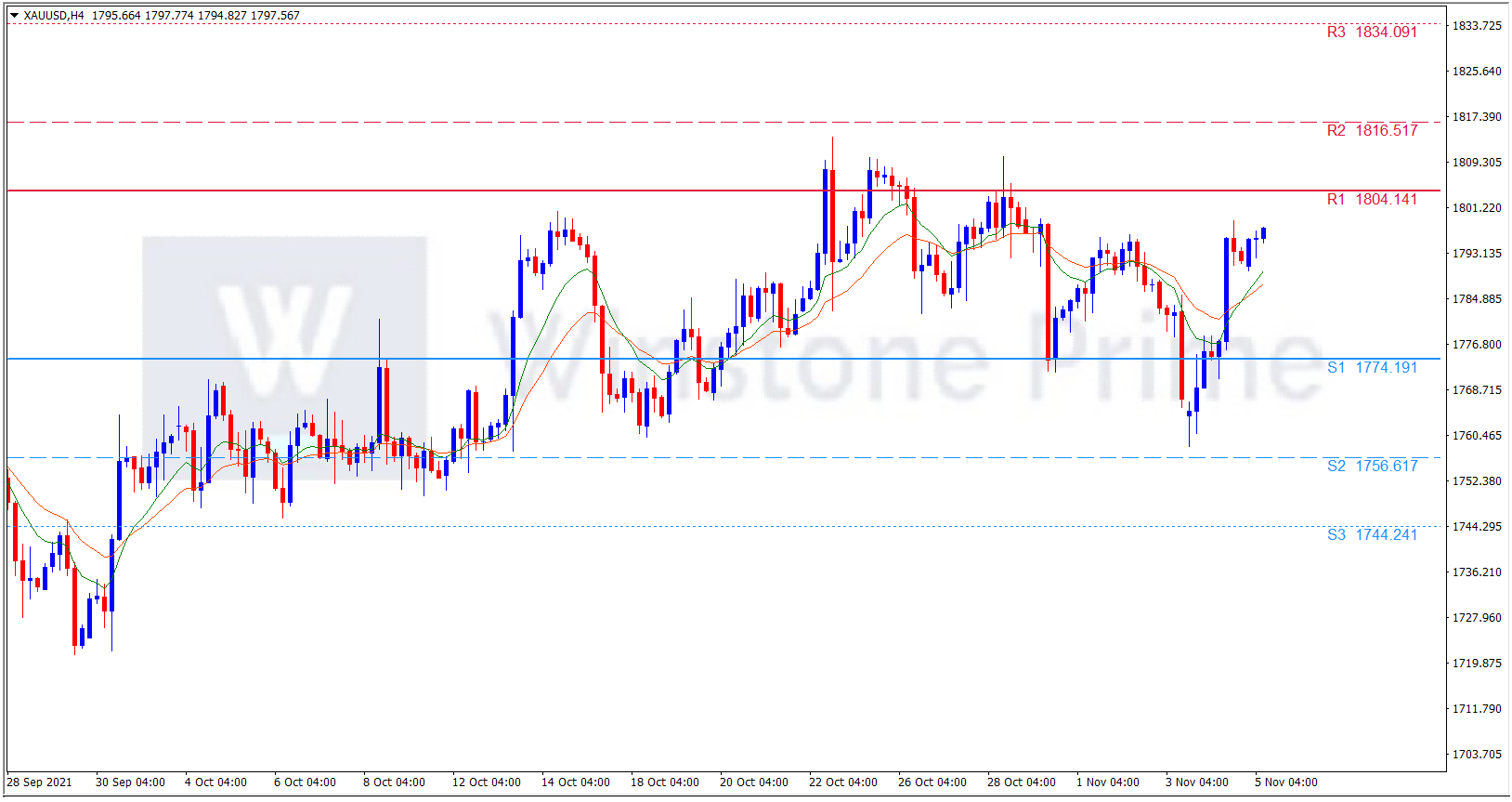
XAU/USD 4 Hour Chart:

Support: 1774.2 (S1), 1756.6 (S2), 1744.2 (S3).

Resistance: 1804.1 (R1), 1816.5 (R2), 1834.1 (R3).

Gold is trading high now and the traders are eagerly waiting for the US Nonfarm payrolls data for a fresh direction, in the meantime we expect a bullish trend for XAU/USD.

Sterling trades low ahead of BoE

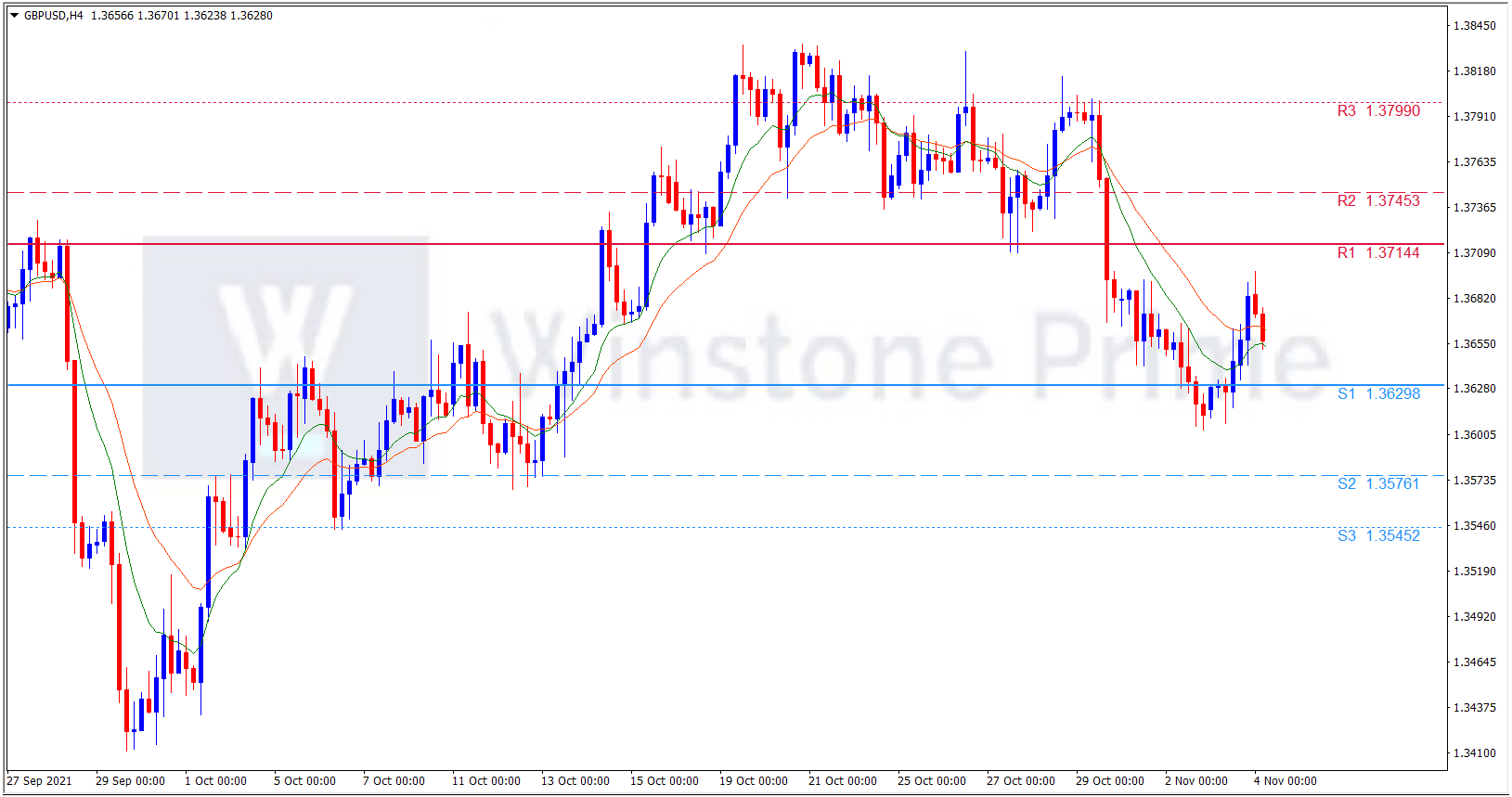
GBP/USD trades low on Thursday ahead of the BoE rate decision. Speculations surrounding an imminent rate hike by the Bank of England (BOE) have became doubtful after the Fed disappointment on Wednesday But According to the economists at Bank of America (BofA), the Bank of England (BOE) is seen hiking the benchmark interest rate by 15 basis points (bps).

The key quotes of the Bank are “We expect a 6-3 BoE vote to hike Bank Rate 15bp on Thursday. However, we do not think that decision is a foregone conclusion.” “We expect BoE forecasts and communication to be consistent with fewer/slower rate hikes than the market prices.” “Should the MPC decide to delay the hike, the temptation would be for markets to roll this into December, so any disappointment in GBP would likely be short-lived.”

On the other hand, The Fed announced on Wednesday a $15 billion monthly cut to its $120 billion in monthly purchases of Treasuries and mortgage-backed securities, However at the same time, Chair Jerome Powell said that they will remain patient on the interest rate hikes until their maximum employment goal is accomplished. His tweak also covered the words on inflation, noting that rising price pressures are ‘expected to be transitory.’

Moving on to Brexit, tensions are still persisting between the European Union (EU) and the UK over the Northern Ireland (NI) protocol. The European Commission Vice President Frans Timmermans said it was “extremely well-known in London” that the demand to ditch the European Court of Justice (ECJ) could not be met. This was said after the UK Brexit minister Lord Frost said that the ECJ should be replaced with an independent arbitration panel and that it can have no role in settling disputes in Northern Ireland.

The Brexit issue also weighs on the pound. In the meantime traders wait for the important BOE decision for the next direction in the currency pair.

GBP/USD 4 Hour Chart:

Support: 1.3630 (S1), 1.3576 (S2), 1.3545 (S3).

Resistance: 1.3714 (R1), 1.3745 (R2), 1.3799 (R3).

Amidst the current catalyst ahead of BOE decision makes the pound weaker, we expect a bearish trend for GBP/USD.

How Gold Affects Currencies Globally

One of the most widely discussed metals is Gold and many people look at the news due to its outstanding role in both the investment and consumer world.  Its value as a commodity has been increasing since the past decade.  Even during the times of kings and kingdoms, the prosperity of that kingdom was directly proportional to how much gold the king owned. However, through the years, even after currencies were created that are in use today, gold serves many purposes in the economy which includes how it affects the value of these different currencies. Even though gold is no longer used as a primary form of currency in today’s world, it continues to have a strong impact on the value of those currencies. Moreover, there is a strong correlation between its value and the strength of currencies trading on foreign exchanges.

To know in depth the relationship between gold and foreign exchange trading, lets look on the following points.

How Gold can be a Currency

Gold is considered as a currency under free market system and it has a price that compares to other exchanges such as the US dollar, euro and Japanese yen. Gold works in many ways just like other currencies. Gold can be bought and stored, but it is not usually used as a direct payment method. However, it is very liquid and can be converted into cash in any currency relatively easily. There are times when gold moves higher and even there are times when other currencies or property classes generally perform better. Gold can be expected to perform better when confidence in paper currencies declines, during wars and when stocks face significant losses.

Long time ago, Gold was used as Backup currencies

Long time ago in Byzantine Empire, gold was used to support national currencies – that is, to be considered legal in their own country. Gold was used as a world reserve currency until much of the 20th century; The United States used the gold standard until 1971, when President Nixon stopped it.

Until the gold standard was dropped, countries were not be able to print their Fiat currencies. Despite after that, Paper money had to be backed up with an equal amount of gold in their reserves (then, as now, nations had gold and gold in hand). Although the quality of gold in developed countries has been declining for a long time, some economists believe that we should return to it due to the volatility of the US dollar and other currencies; they want countries to control the amount of money they are allowed to print.

The state of the US and global economy also has a unique relationship with the yellow metal as it tends to be in a weakened state when gold is thriving. Dollar as a catalyst that pushes and pulls gold, due to the fact that there is a long-standing relationship between the two, it can be said that the yellow metal also has an affect on the US dollar. Most recently, the greenback has been lower than in previous years and has lost some of its spotlight to gold. Since the precious metal has a negative correlation to a thriving US dollar, the greenback’s recent decline has been supporting the yellow metal and its upward price movements. When the dollar is down, investors turn towards gold as a safe haven, which has the tendency to keep the greenback in a stagnant position. Additionally, gold has interesting currency-like tendencies. Bullion notes that gold retains its purchasing power yearly. The yellow metal can be bought and stored and it has the ability to be converted into money in a variety of currencies, which is currently appealing to gold investors since the dollar is relatively stagnant and precious metals prices are on the rise. 

On the flip side, when the US dollar is thriving, gold tends to decline due to the fact that it becomes too expensive to hold for investors who are not US-based. 

Interestingly, the price of gold coincided with the introduction of the euro in January 1999. The Euro has generally risen in value versus the U.S. Dollar due in part to a relatively modest currency printing program overseen by the European Central Bank and  the euro is one of the most important alternatives to the U.S. dollar among fiat currencies. This is why there is often a positive link between the euro and gold: both assets have negative correlation to the greenback. However, the relationship is far from being a perfect correlation. This is because gold is not merely an alternative against the U.S. dollar, but also against the current monetary system based on fiat currencies. Therefore, in some cases the euro and the dollar both lose a ground against gold.

Another interesting link between gold and currencies involves the value of the Australian dollar. When the value of gold rises, the Australian dollar generally rises. Basically, this connection is related to the fact that Australia has a significant gold reserve. Moreover, Australia is the net exporter of gold, and the precious metal accounts for a significant percentage of its national exports. These factors make the value of the Australian dollar particularly volatile in the price of gold, although its value is affected by the price of oil and other major commodities. As a result, the Aussie is often referred to as a commodity by forex traders.

In 2000, the Swiss Franc became the last of the national paper currencies to be taken off the time-honored gold standard. Before that time, the Swiss Franc had the status of being a safe haven currency that maintained intrinsic value when times became difficult since it was freely convertible into gold. The Swiss currency still benefits from safe haven buying to a lesser extend due to its long history of political stability, neutrality and abstention from conflict. Nevertheless, the currency’s former close relationship to the value of gold has declined considerably.

Countries that Import and Export gold

Due to the fact that the value of a country’s currency is strongly tied to the value of its gold imports and exports, that nation cannot avoid being affected by the yellow metal’s price movements. Because of this, a country that exports gold or has access to gold reserves will experience an uptick in the strength of its currency when metal’s price rises, since this increases the value of the country’s total exports. 

This means that when the price of gold climbs, it creates a trade surplus or inevitably helps those nations offset a trade deficit. However, countries that import large amounts of the yellow metal will generally have a weaker currency when the price of gold goes up. 

Countries that specialize in producing gold products, but lack their own reserves, will be large importers of gold. In return, these regions end up being particularly susceptible to growing gold prices.  Additionally, when central banks buy gold, it affects the supply and demand of the domestic currency, which could escalate to the creation of inflation. This is mostly because of the fact that banks rely on printing more money to purchase gold, and thereby create an excess supply of the fiat currency.

Conclusion

There once was a time that gold was the principal currency between foreign nations. Even though it is no longer used as currency, it can still have a strong effect on a country’s currency and in turn the country’s economy. One thing that we can say for certain with regards to gold’s future, with the world’s population ever increasing, is that the demand for gold is going up also, whilst supply is going down. As such, it is a pretty safe bet that for the long term, the price of gold will remain stable and most likely increase.