
Solana – can be a Defi’s darling

Solana claims to be the fastest blockchain in the world and the fastest growing ecosystem in crypto with over 400 projects spanning DeFi, NFTs, Web3 and more. The cryptocurrency linked to the Solana network has recently jumped to the seventh spot among the world’s top 10 largest virtual coins, ousting dogecoin. Solana’s SOL token has tripled in about three weeks and now has a market value of more than $45 billion, according to CoinGecko. Solana is believed to be a potential long-term rival for Ethereum which is currently the most-used network for applications like decentralized finance and digital collectibles. In fact, many experts have started calling it the ‘Ethereum killer’, citing its advanced technology and high scalability.  

In this article we will explore on What is Solana and how its occupies the crypto market now a days.

What is Solana?

Solana is a decentralized block chain-based computing platform that uses SOL to pay for transactions. It focuses on fast transactions and high throughput by using a unique method of ordering transactions. It supports builders around the world to build crypto and blockchain-based applications. Solana is one of the biggest movers on the cryptocurrency market in recent days. Solana’s DeFi based projects crossed the $4 billion mark last month, reaching another milestone.
The primary aim behind the development of Solana was to develop a trustless and permissionless protocol that enables high scalability. In accordance with this, Solana claims to be the most performant blockchain in the world.  Solana guarantees a throughput of 50,000 TPS (transactions per second) across a network of 200 nodes.

What makes Solana Unique

Since digital producers do not have SME about the functioning of the smart contract, this marketplace is simple to utilize. The main purpose of the Solana-based NFT marketplace is to increase system throughput while keeping gas costs low.

The increasing complains about Ethereum blockchain also worked in Solana’s favour. So be it the slow transactions or the inability to handle large volumes, Solana based NFT marketplaces don’t face these issues to the extent in Ethereum. Furthermore, platform owners consider the Solana-based NFT to be a great venture in the market because it overcomes the challenges that arise when working at Ethereum.

Some of Solana NFT Marketplace features that makes it unbeatable:

  • Low gas prices
  • Liquidity
  • Minting of NFTs and the creation of on-chain collections
  • Scarcity
  • Interoperability
  • Composability
  • Scalability

Many cryptocurrencies have been labelled Ethereum killers in the past. But what makes Solana a worthy competitor to Ethereum? As always, the most important factors coming into play when determining the “best” option are transaction speed and cost.

Solana’s secret sauce seems to be programmed into its consensus mechanism, and it is called Proof-of-History (PoH).  Solana also uses a protocol called Turbine, which breaks up information into smaller bits, making it easier to process. This is similar to what Ethereum will be looking at implementing through what it has called “sharding”. Meanwhile, Ethereum still relies on a Proof-of-Work system. This means computational power has to be used constantly to create new blocks, which puts a strain on the network and requires much higher energy consumption. However, as we know, Ethereum is looking to change this and switch to a PoS system through its roadmap to Ethereum 2.0. This update consists of a three-step process that might not be completed for another 2 years. Currently, ETH has implemented the Beacon chain, which introduces staking on a “separate” network. The next step would be to merge these two chains, which is expected to happen sometime in the next few months of 2021. Lastly, Ethereum will introduce the above mentioned “shard chains”, which will enable Ethereum to process more transactions.

One of the reasons Solana competitors struggle to achieve higher transaction volumes is often due to the fact that miners or validators need to communicate with each other to figure out how to order blocks. Solana has solved this with a system of cryptographic time-stamping that currently can accommodate 65000 transactions a second, which is astonishing. That’s not a typo, and it is orders of magnitude more than Ethereum’s 30 transactions per second.  Nobody has come close to this, including Visa. Solana can, in theory, even carry out more transactions per second than Visa Inc., which by their own claims can carry out 24,000 transactions per second.

Therefore, the greatest appeal Solana has is its scalability, and the other is transaction fees. According to Solana’s website, the average transaction cost is around $0.00025 which is much cheaper than Ethereum. So there’s some brilliant technology behind this exceptional surge to be called as an “Ethereum Killer”.

Solana is gaining popularity now days primarily due to the massive increase in its price. The reason behind the popularity in recent months is due to its extensive scalability and mining efficiency, leading many to believe it to be the future leader of the DeFi landscape.  At the time of writing, by October 2021, the total market capitalization of Non-fungible Tokens (NFTs) sold on the Solana blockchain has risen quickly to hit $753 million, closing in on the billion-dollar mark. Thanks to the explosive development of non-fungible tokens in Solana’s blockchain. The reason people like it more than Ethereum is simple – it’s cheap and very quick – users can mine NFTs at low cost, and there are hundreds of programs. Given that multiple DeFi ecosystems can sustainably co-exist in the future, we expect Solana blockchain to have its own set of fans. SOL, its native token, will benefit further as this fan base grows.

Solana has inevitable setbacks it needs to tackle. While the protocol could compete against high-profile blockchain projects, it’s still vulnerable to centralization as there are not that many validators of the blockchain. This is something that Solana has been criticized for: anyone on the network can become a validator, but doing so is challenging as it requires high computational resources.
This contributes on why it is labeled as a beta mainnet; specific bugs, codes, and delays could be present. Yet developers and projects are still coming to the network to build or be part of it, like Solstarter, Serum Swaw, or Raydium. Along with that, the network had seen two major outages during the month of September. The second outage took hours to sort until enough network validators upgraded their version.

Conclusion

Solana’s potential to grow more cannot go unnoticed. It has benefitted greatly from the increasing adoption of DeFi and NFT. These current developments show that there is an increase in the use of blockchain technology and, also there is growing scrutiny around what is happening in the crypto space. Given the current situation of the market, these developments are subject to changes in the future.

Japan CPI report impacts yen

The yen pair is trading on sideline today ahead of Federal speech about inflation and due to rise in Japan CPI This has put the yen pair into seesaw moment. Japan’s core consumer prices rose for the first time in September after the initial stages of the corona virus outbreak in March 2020, a sign that rising energy and raw material costs are gradually raising inflation. Analysts expect a rise in fuel prices in the coming months to accelerate consumer inflation, although any improvement will be moderate compared to other advanced economies because sluggish wage growth weighs on consumption and prevents companies from inflating prices.

The core consumer price index (CPI), excluding volatile fresh food prices, which included fuel costs, rose 0.1% in September from a year earlier, in line with an average market forecast. In August it remained unchanged. This gain was largely driven by a 7.4% increase in energy costs, the largest annual increase in nearly three years. Analysts expect key consumer inflation to move towards 1% in the coming months as the recent rise in crude oil prices raises bills fo

three to five months. But many of them suspect that such price hikes will lead to broader, more sustainable price growth.

These data will be among the factors that the Bank of Japan will consider at next week’s policy meeting when releasing new quarterly growth and inflation forecasts. Japan has not recovered from global commodity inflation, with wholesale prices hitting a 13-year high of 6.3% in September, putting pressure on corporate profit margins and raising the risk of unwanted consumer price rises. But consumer inflation is hovering around zero as companies are reluctant to cover spending on housing, reinforcing expectations that the BOJ’s 2% target will be elusive.

The dollar, on the other hand, remained firm in the early hours of Friday, rising by encouraging economic data as commodity currencies plummeted and headed for its second week of decline as traders ruled their positions after this week’s brisk rally. Better jobs and household data and rising U.S. Treasury yields helped the dollar rise at the end of the U.S. session on Thursday, which took place in Asian Hours.

John Williams, chairman of the New York Federal Reserve said long-term inflation expectations are in line with the central bank’s 2% target. “If inflation expectations are anchored at a very low level, it will reduce real inflation over time. Today there is great uncertainty about the economy,” he said in a statement. Home prices have risen sharply due to the low cost environment and pandemic factors. However, the dollar index is down 0.18% for the week and is about to release its second weekly decline.

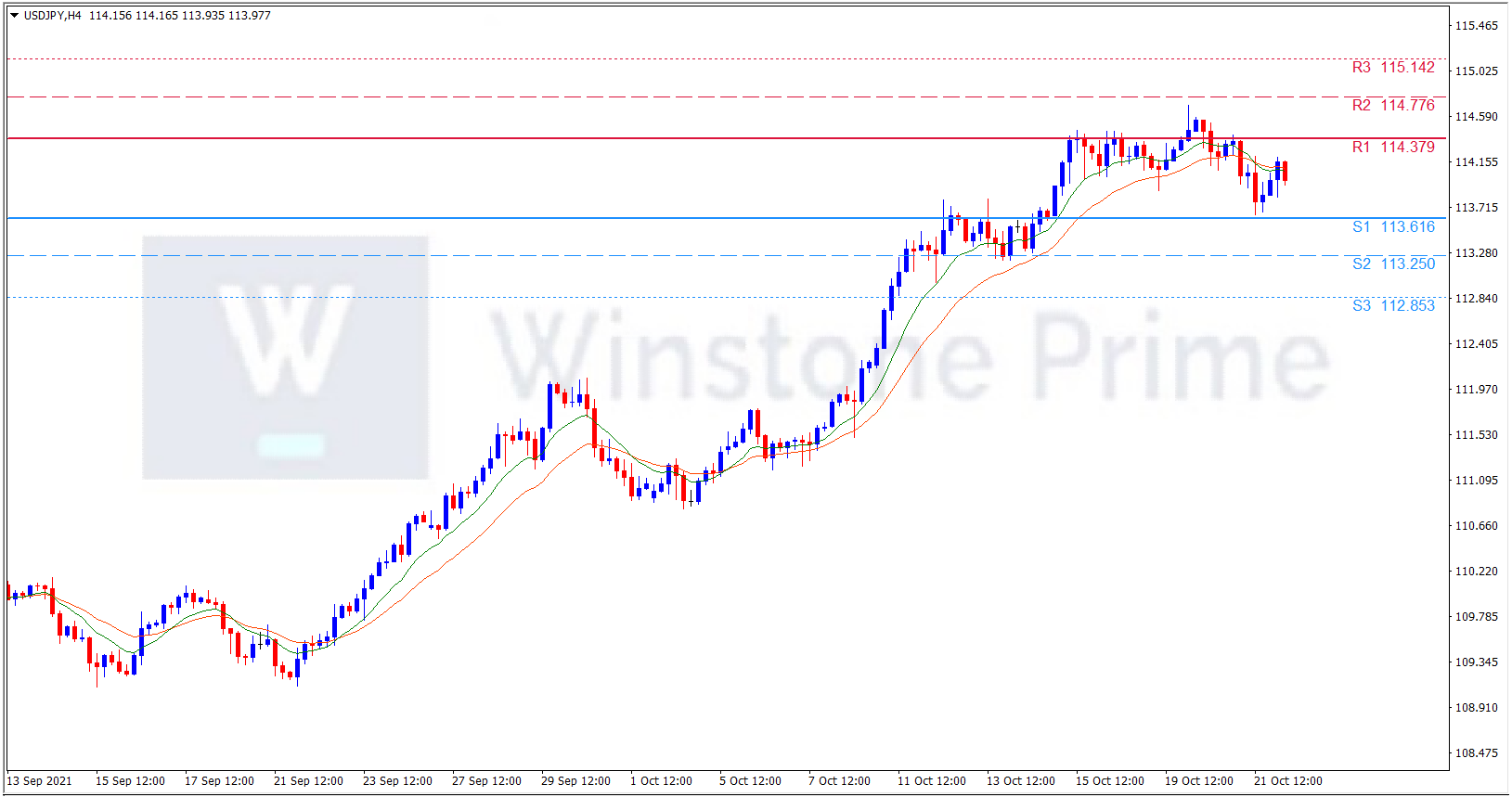
USD/JPY 4 Hour Chart:

Support: 113.62 (S1), 113.25 (S2), 112.85 (S3).

Resistance: 114.38 (R1), 114.78 (R2), 115.14 (R3).

Amidst this above catalysts, the yen pair trading sideways. We expect a mid-trend for USD/JPY.

Trade deal with UK favors NZD

The kiwi pair shows strong positive moment against greenback today, while doing so the kiwi pair enjoys the upward moment amidst the weaker dollar. Today New Zealand’s Prime Minister Jacinda Ardern announced the South Island Pacific nation has clinched a historic Free Trade Agreement (FTA) with the United Kingdom. It eliminates tariffs on a wide range of goods as the UK seeks to expand economic links around the world following its exit from the European Union. It has agreed a free trade deal with New Zealand which it says will benefit consumers and businesses. Prime Minister Boris Johnson said the deal will cut costs for exporters and open up New Zealand’s job market to UK professionals.

The government believes this is a step towards joining a trade group like Canada and Japan. According to the government’s own estimates, the New Zealand deal alone is unlikely to boost UK growth. Overall, a small proportion of UK trade is made up of less than 0.2% in New Zealand. The Labor and National Farmers Association (NFU) said the deal could affect UK farmers and reduce food quality. Mr.Johnson and New Zealand’s Prime Minister Jacinta Ardern agreed to the deal in a video call on Wednesday after 16 months of talks. Taxes on UK goods, including clothing, ships and bulldozers, and on New Zealand goods, including wine, honey and kiwi fruit, will be eliminated.

The UK already has deals with many of the members, rolled over from when it was in the EU. But CPTPP membership would give it more access in terms of services and digital trade. The UK signed its first big post-Brexit deal with Japan last year and in June it also signed a draft agreement for a trade deal with Australia. Both countries, as well as New Zealand, are members of the Comprehensive and Progressive Agreement for Trans-Pacific Partnership or CPTPP.

On the other hand Federal Reserve said on Wednesday that the U.S. economy continued to grow at a moderate pace from August to early October, but slowed in many areas due to supply chain disruptions, labor shortages and uncertainty surrounding the delta variation of the corona virus. Production grew moderately strong in most parts of the country, similar to truck and freight, the central bank said. Inflation continues to be a concern as prices rise significantly as demand for goods and raw materials increases in most districts. “There have been widespread reports of increased input costs in the industrial sector due to production shortages caused by supply chain disruptions,” the central bank said.

Separately, New Zealand Trade Minister Damien O’Connor said, “pre-COVID estimates also projected that New Zealand goods to Britain will increase up to 40 percent and that New Zealand GDP will benefit up to 970 million NZ dollars (699 million US dollars) due to the FTA.”

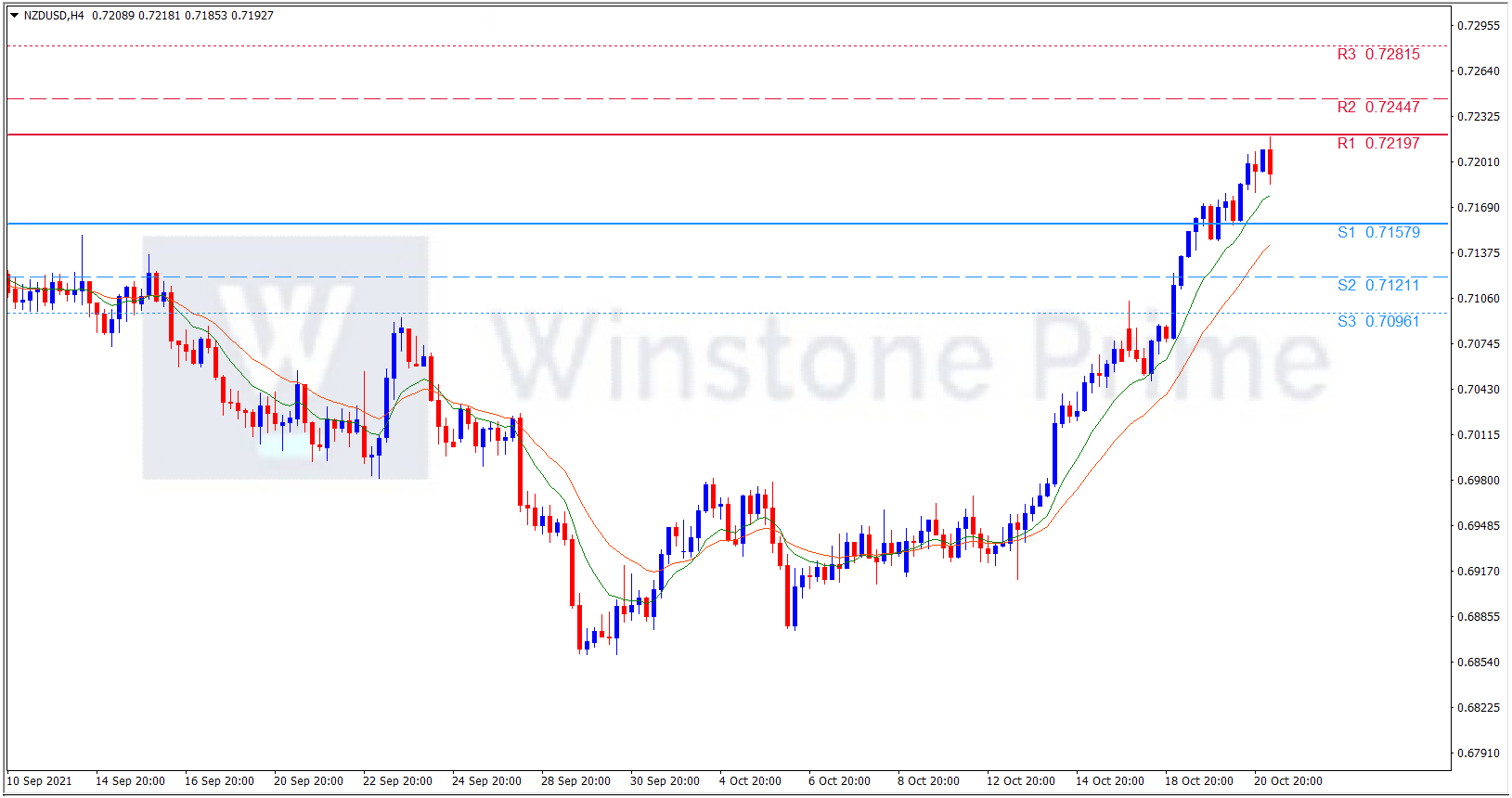
NZD/USD 4 Hour Chart:

Support: 0.7158 (S1), 0.7121 (S2), 0.7096 (S3).

Resistance: 0.7220 (R1), 0.7245 (R2), 0.7282 (R3).

Trade deal between UK and Newzealand favors the Kiwi. We expect a bullish trend for NZD/USD.

Journey of Starting Forex

Forex trading has become increasingly popular from the past decade. One of the most fascinating things about this market – there is no brick and mortar marketplace for Forex trading. Every transaction is done electronically over-the-counter. Unlike the stock exchange, the Forex market remains open round the clock with currencies traded across every time zone, five days every week. Advances in technology and the proliferation of mobile accessible sites have made it easier than ever to trade currencies. While trading forex has become easier now than ever before because you can trade online via the internet, most novice traders still lose money.

When learning about the market you need to get acquainted with all the important concepts and mechanisms behind Forex trading. In this article we explored how novice traders can learn Forex trading easily? And how long can one start trading easily.

Learn About Trading

Learning is the first step. Beginners should gain enough experience to start real trade. Before trading, We would recommend beginners to read and research a lot, get sufficient knowledge about everything, in particular every detail regarding the trading career and trading platform you are going to use. We have updated several basic lessons on New to Forex for novice traders who are willing to start a carrier in forex. 

Then it’s a time to start testing on a demo account and finding your trading style: Is scalping, Intraday, Swing, or Position trading more suitable for you.

Know the Market

We cannot overstate the importance of educating yourself on the forex market. Take the time to study currency pairs and what affects them before risking your own capital; it’s an investment in time that could save you a good amount of money. Fundamental traders prefer to trade based on news and other financial and political data; 

technical traders prefer technical analysis tools such as Fibonacci retracements and other indictors to forecast market movements. Most traders use a combination of the two. No matter what your style, it is important you use the tools at your disposal to find potential trading opportunities in moving markets.

Connect with a Fast internet

To trade forex, you’ll need access to a reliable Internet connection with minimal service interruptions to trade through an online broker. You’ll also need to obtain a smartphone, tablet or computer to run a trading platform on. If your internet drops while you’re trading, that can result in undesirable losses if the market moves against you.

Choose a Reliable Forex Broker

Your first priority is to choose a reliable broker. You can probably open an account with an online forex broker no matter where you live. There are several things you need to research before you find a broker that’s right for you. Here is a list of the main points to look at when making your choice:

  • Trading conditions: find out what are the spreads, commissions if any, and swap rates for the currency pairs you want to trade.
  • Minimum deposit requirement: find out what is the minimum deposit requirement and what is the margin/leverage that can be used.
  • Currency pairs available for trading: most Forex brokers offer a wide range of currency pairs and CFDs on stocks, precious metals, indices, oil, etc. Make sure the broker offers the currency pairs and CFDs you want to trade.
  • Dedicated customer support: find out how you can contact your broker when you have questions (ex: via email, phone or live chat) and in what languages they offer support.
  • Bonuses and contests: many brokers offer welcome bonuses to new clients. Check out what bonuses are given by the broker and if there are any contests that will keep you motivated throughout your trading.


It’s important to have a good partner by your side, so choose carefully. Winstone Prime qualifies all the points noted.

Forex demo accounts are free, and all brokers offer them. All you have to do is register at the broker’s website and download the trading platform. You can open a demo account funded with virtual money to test out the broker’s forex platforms and services before going live. Demo accounts are also beneficial for testing trading strategies and to practice trading without risking any funds. The most popular platforms are MetaTrader 4 and MetaTrader 5. We, Winstone Prime offers our clients the MT4 and MT5 paltforms demo account With a variety of graphical tools and integrated indicators, this tool serves as the best destination for all types of traders (both novice and expert).

Once you have a demo account you can start placing orders in real time without risking your own money. Here are some reasons why a Demo Account is beneficial to traders:

  • Get familiar with the platform: the MT4 and MT5 platforms have many useful features, and you have to know them well in order to take full advantage of the software. You should test out things like: the charts, economic indicators, and expert advisors.
  • Different order types: there are several order types available in the MT4 and MT5 platform and it’s important to understand them. The most common orders are: market order, stop loss, take profit, and limit and stop orders. Using these orders correctly will help you maximize your profit and minimize your losses.
  • Develop a strategy: since Demo accounts use virtual money, you can analyze how the market moves and test out different trading strategies. You can place as many orders as you want and evaluate your trading performance over time. The important thing is to keep improving your strategy and to adapt it to changing market movements.
  • Choose the currency pairs and CFDs you want to trade: The most traded currency pair is EUR/USD and many beginners choose it for their first trades. Other major currency pairs include USD/JPY, GBP/USD, USD/CAD, USD/CHF and AUD/USD.

Once your practices are done on demo account , you can deposit funds into a trading account. Most online forex brokers accept a number of ways to fund an account, including bank wire transfers, debit card payments or transfers from electronic payment providers like Skrill or PayPal.

We offers fast, easy and secure 256-bit encryption for all your transactions and various funding options. We do not charge any fees or commission for the transactions. Even you can get back 100% of the transaction charges made through any payment system via our Zero Transaction Fee.  Choose your preferred mode to make a deposit and start trading!

After completing all of the previous steps, you now have a funded forex account and are ready to trade.

Conclusion

A combination of factors that include unfamiliarity with the market, insufficient trading capital, not trading according to a plan and failing to practice sound money management techniques to preserve trading capital contribute to the loss. But, once these inhibitory factors are overcome, just about anyone has a chance at becoming a successful forex trader.

Best wishes for your Forex Journey.