Uptick in US CPI favors greenback

The US dollar has made a gain from the yesterday fall off during early Asian session and changed the potential previous day’s profitable slide from the tops of many years. The reason behind the extend is the kneejerk reaction to the unexpected uptick in the US Consumer Price Index (CPI). Yesterday U.S. dollar saw truculent selling and wiped out its weekly gains for more than 13 months amid a post-US CBI slump in the long-dated U.S. Treasury bond. The U.S. CPI headline in September rose 0.4% to 0.3% and raised the annual rate to 5.4%, again beating expectations for a 5.3% reading. However, investors seem to be linked to the central bank’s interim inflation story, which has dragged down US bond yields.

US CPI report also reconfirmed market expectations for a possible interest rate hike in 2022. Also, the minutes of the latest FOMC monetary policy meeting in September showed that the US Federal Reserve is on track to begin its bond purchases later this year.  Apart from this, a moderate rebound in US bond yields acted as a valve for the greenback, helping the USD / JPY pair regain some positive traction on today.

Minutes from last month’s Federal Reserve meeting showed policymakers’ growing concern about inflation and a general agreement to start tapering asset purchases soon. Traders responded by bringing forward rate-hike expectations but lowering the projected peak. Fed Funds futures pulled forward the first hike from late in 2022 to almost fully price a 25 basis point hike by September, but pricing also suggests rates hovering around just 1.5% in five years’ time. Generally positive tone around equity markets undermined the Japanese Yen safe haven and was seen as another factor supporting the USD / JPY pair.

Today markets are awaiting U.S. producer prices as today is Thursday and jobless claims figures as well as appearances from Bank of England and Federal Reserve policymakers and the regular weekly initial jobless claim data release. This, along with US bond yields, will affect USD price dynamics. Traders may take notes from the broader market risk sense for some short-term opportunities around the USD / JPY pair.

USD/JPY 4 Hours Chart:
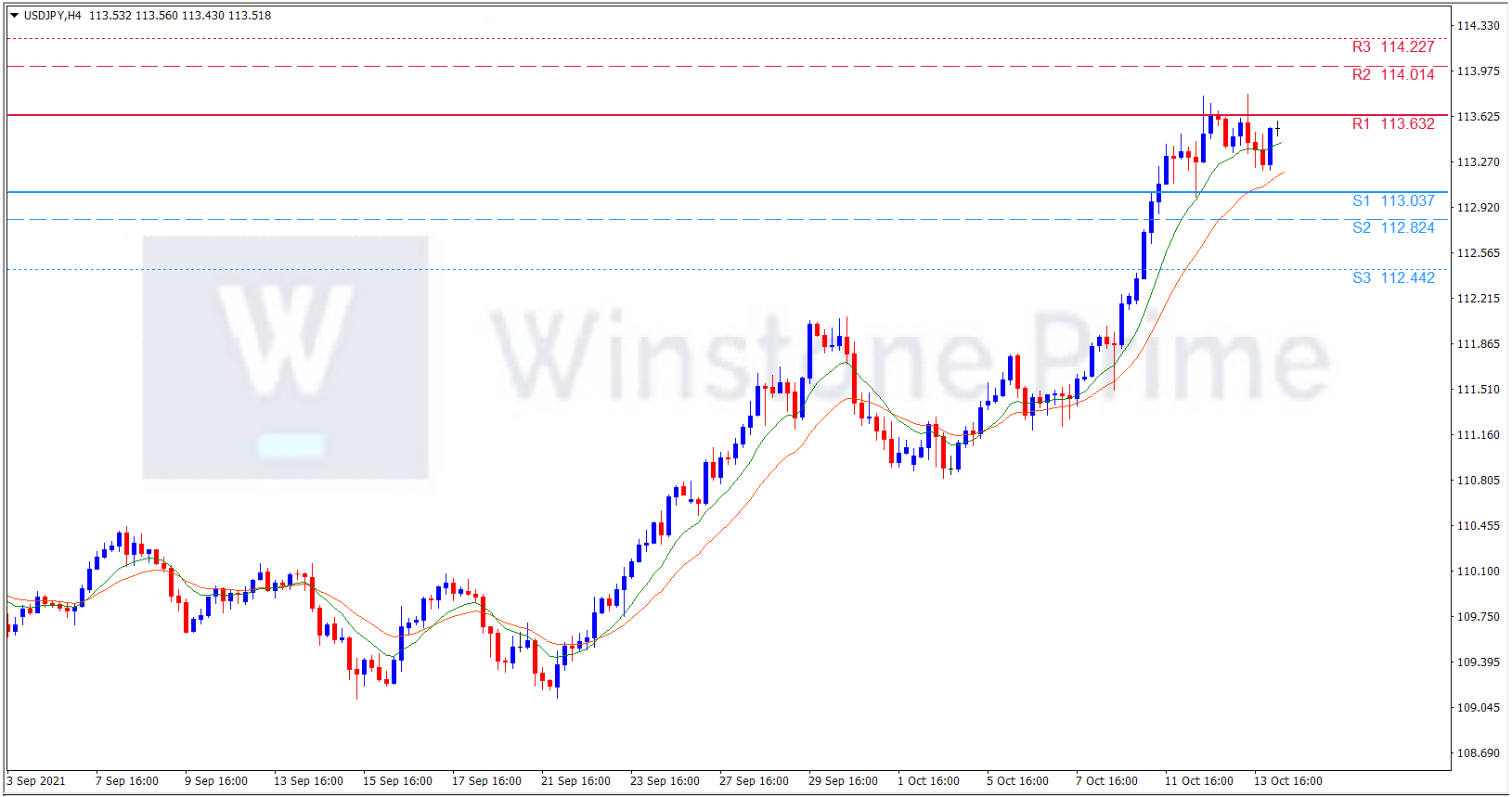
Support: 113.04 (S1), 112.82 (S2), 112.44 (S3).

Resistance: 113.63 (R1), 114.01 (R2), 114.23 (R3).

Amidst these above catalysts the US dollar is strong which keeps the USD/JPY into safe zone today. We expect a bullish trend for USD/JPY.


Cope your first failure in market

As everyone knows Forex market is the largest financial market in the world and the potential to make a profit in the arena attracts forex traders at all levels: from green horns to well-experienced professionals with many years of trading experience and financial experience. However, the best traders are not defined by these failures, but rather by how they deal with them. It is very important to lead difficult situations both externally and internally in order to be a successful trader.

In this article, we have listed the best habits to follow while facing this failure, learn how to handle it better and how can overcome it.

1. Be Prepared

Beating yourself up for your mistakes won’t help you down the road. It’s important to spend the bulk of your time thinking about how to do better in the future. Be preparing for market war one day before emotionally and psychologically. If you are not ready for the war take a vacation. 

If you are not prepared or angry and precocious or distracted from anything it’s a chance to lose your trades. How do you feel? Did you get enough sleep? Do you feel the challenge ahead? Many traders have the magic of the market and they are ready before the day starts. Create something that puts you in the trading zone. In addition, your business area should be free of distractions. Remember, this is a trading and distractions are expensive.

2. Manage your expectations

Do not expect to become the next most successful trader right away. So instead, lower your expectations a bit, especially if you are a beginner and still figuring out the market. Your first failure is the perfect time to evaluate your expectations for this new activity and adjust them. Try researching risk-management strategies as a start.

3. Take your time to learn from mistakes

Have you ever found yourself saying, “I’ll never do that again,” only to find yourself doing the exact same thing just a short time later? If so, you’re not alone. It’s likely all of us have repeated some of our mistakes at one time or another. But making the same mistakes over and over can be costly in more ways than one. 

Research is what you need at the moment. To avoid repeating mistakes, you need to know what went wrong. Maybe you entered the market without managing your risk or learning about your instruments. Did you receive the news about the specific instrument way too late? Well, here’s your chance to learn and not make it again. Do your homework to avoid repeating mistakes!

4. Back test your strategies

Every emotional market resembles the root causes of Fear and uncertainty. You take a step back and ask yourselves why you get so emotional in the markets, it becomes evident that fear and uncertainty are the root causes. 

While we can never predict what the market will do, we can make efforts to ensure that our reactions to an unpredictable environment do not overwhelm us. And one of the most effective methods to do so is to establish trust in our trading strategy or system. So, if you’re just starting off, how would you obtain this vital confidence? If you’re a new trader, you probably don’t have enough expertise with your approach to feel secure about executing trades. This dilemma, however, has a workable solution.

Backtesting is the general method for seeing how well a strategy or model would have done ex-post. Backtesting assesses the viability of a trading strategy by discovering how it would play out using historical data. If backtesting works, traders and analysts may have the confidence to employ it going forward. Backtesting your strategy will give you a good understanding of your strategy metrics. You can evaluate how your trades have performed in a specific market environment, the average win percent, the average win to loss ratio, the maximum drawdown, and the string of winning and losing trades. Keep in mind that past results are not always indicative of future results. When you’re emotionally fatigued from a losing streak or a losing phase, knowing these metrics will come in handy.

5. Stop comparing yourself to other traders

Comparing yourself to others will prevent you from succeeding because you will always be bigger, better, faster, stronger. This applies to all your activities in life, but especially trading. So, instead, compare yourself to your old self that existed a few days, weeks or months ago. Are you more intelligent now? Do you have a good understanding of the market? If the answer is yes – better, you are moving in the right direction. If your answer is no, you need to fix it to start growing.

6. Start again with Different approach

Thomas Edison, when asked about how he invented light, He answered that while he could answer exactly about how he did it, he also could tell about 999 more ways of how one cannot produce light! This is a particularly revealing comment as it also says that Edison tried more than 1,000 times before he was successful in producing light. 

Most traders only look at one element — the external — and decide that is the reason for their failure. And they continue to make the same mistakes — not having a system to pick the right market, no specific method for entry, trailing and exiting, no sense of how to arrive at quantity to be traded, when and where to book losses etc. These are the real errors that keep repeating and it doesn’t matter how many advisers and brokers and software and time frames traders trade with.

So it’s the perfect time to start and avoid major mistakes. Start with a new trading strategy and check the strategy of previous one which is failed. Choose from hundreds of strategies which are available online or create your own based on the research you’ve. Good for you!

Conclusion:

As an trader, you are going to face a lot of failure. If you are looking for a safe life without many ups and downs, or you have a hard time handling failure, then starting a trading might not be the thing for you. Setting your expectations effectively and knowing what you are in for will help with the challenges. Mistakes aren’t just one big blunder. Instead, they’re a series of little choices that lead to failure.  So pay attention to your errors, no matter how big or how small they might seem. And recognize that each mistake can be an opportunity to build mental muscle and become better. Open account and start trading.

Happy Trading!

US dollar is trading high ahead of inflation data

Aussie has lost its yesterday gains and consolidated its downtrend today Asian Session elsewhere the US dollar is trading high against major pairs. The yesterday gains has no obvious basic catalyst, it might be due to the view of making some profit in the midst of a dangerous alarming mood, which could lead to a perceived riskier Aussie. Concerns about a faster-than-expected rise in inflation and sluggish signs of a global economic recovery are raising concerns about the stagnation. Apart from this, fears of concerns from the China Evergrand’s debt crisis continued to weigh on investor sentiment.

Investors are waiting for inflation data from the US and China this weekend, with central banks increasing pressure to tighten monetary policy in anticipation of further readings. A measure of Australian consumer sentiment eased back in early October as worries about the longer-term outlook for the economy overshadowed relief at the imminent loosening of coronavirus restrictions. Disappointed that the survey was taken shortly before the New South Wales lock controls were eased, Victoria and Canberra will soon follow suit.

Westpac chief economist Bill Evans noted that sentiment had improved in Sydney and Melbourne, but those who responded lamented that a resumption of inter-state travel could bring more pandemics to those regions and fell sharply outside those cities. Consumers were also less optimistic about the economy, with the outlook for the next 12 months falling to 1.75 and falling to 5.6% over the next five years. The amount of family finances fell by 1.3% compared to a year ago, while the funds increased by 0.5% over the next 12 months. It added 0.9% to the index of whether it was a good time to buy a major household item, but was down 3.3% from a year ago.

Rising energy prices sparked inflationary concerns and betting that federal policy would have to go faster than normalized by officials, sending two-year treasury yields to an all-time high of more than 18 months overnight. Rising energy prices have sparked inflationary concerns and betting that federal policy should go faster than normalized, with two-year Treasury yields sending overnight highs of more than 18 months. Most central bank policymakers are proving that inflationary pressures are volatile.

Therefore, the market focus will be on Wednesday’s release of US consumer inflation figures. With the minutes of the central bank’s September meeting yet to be released, central officials will include governors Lael Brainard and Michael Bowman to speak after Wednesday. This will play a key role in influencing the USD price dynamics and provide a fresh directional impetus to the AUD/USD pair.

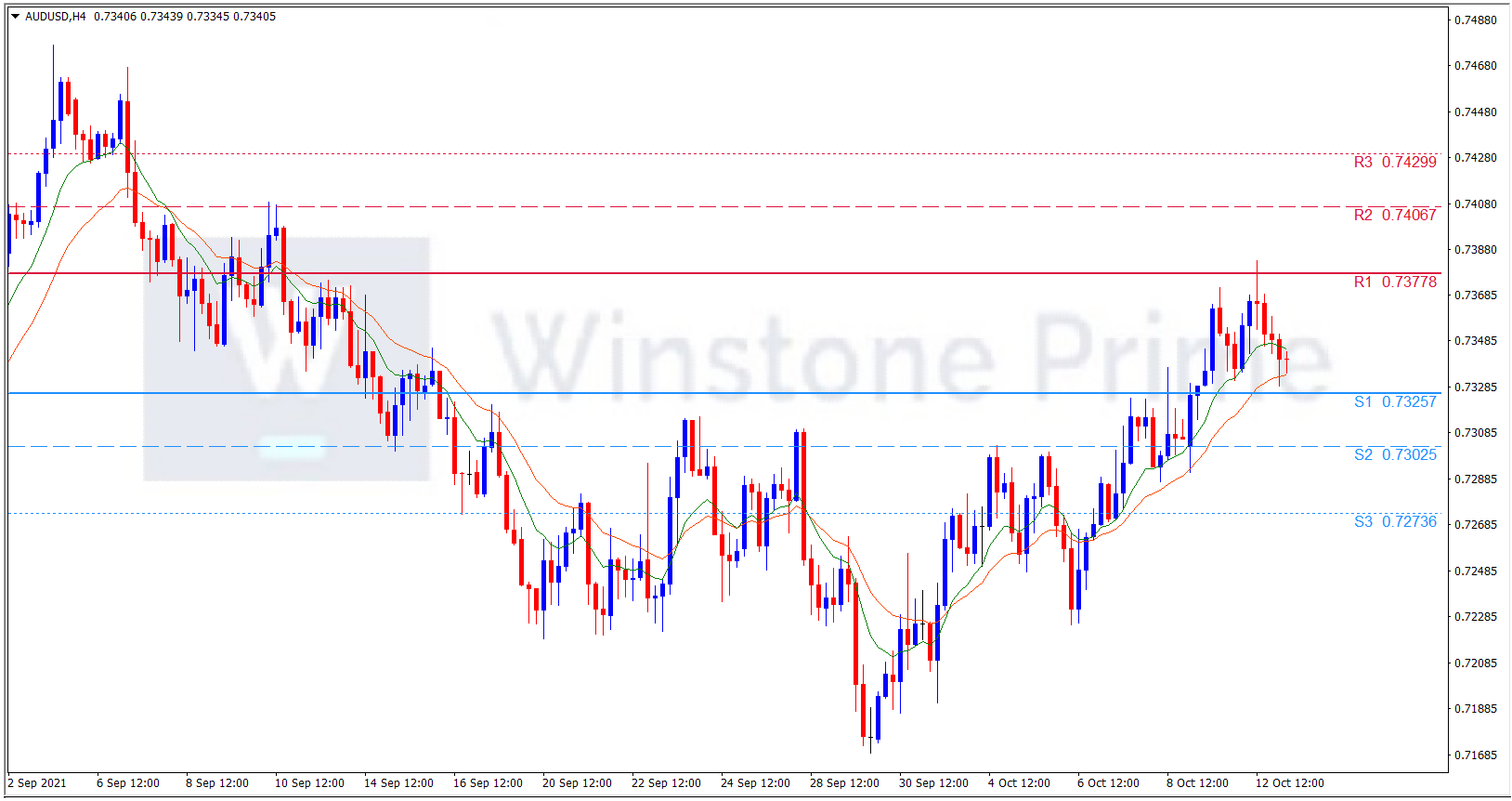
AUD/USD 4 Hour Chart:

 Support: 0.7326 (S1), 0.7303 (S2), 0.7274 (S3).

Resistance: 0.7378 (R1), 0.7407 (R2), 0.7430 (R3).

Amidst this above catalysts the Aussie is on downtrend. We expect a bearish trend for AUD/USD.

BoE interest rate decision impacts pound

The sterling is trading downside today against greenback amid the BOE interest rate decision and the concern over the fuel crisis. The greenback is uptrend against major currencies as investors rallied on rising energy prices and the Federal Reserve’s expectations of higher inflation. The British pound fears inflation and continues to struggle over the challenge of rising interest rates. Members of the Bank of England (BOE) and the Monetary Policy Committee (MPC) have suggested reversing last year’s interest rate cut at any time in the future. Under pressure as inflation rises to its 2% target, the Bank of England appears to be the first central bank in the world to raise interest rates since the onset of the corona virus epidemic.

In an interview released on Friday, Governor Andrew Bailey said inflation should be managed to prevent it from exceeding the target. While Britain shares its supply chain problems, rising energy prices and labor shortages with many countries around the world, it has exacerbated Brexit as a country where investors are particularly vulnerable to inflation and high policy rates. The BoE said last month that consumer price inflation would cross 4% by the end of this year, after which fuel prices and household energy costs have risen further.

In recent weeks, Britain’s limited stocks of natural gas left it heavily exposed to rocketing wholesale prices, while a shortage of truckers has dried up fuel pumps across the country. Governor Bailey has said the BoE can do nothing about supply chain sanctions that have raised inflation. Similarly, energy prices are beyond the control of the BoE. It is clear that the BoE will remain at historically low levels, even if rates increase in the future. Still, investors and economists are divided over the potential for a rise. But some BoE officials worry that individuals and businesses could lose confidence in their ability to control inflation if they do not act quickly.

Some economists are concerned because of  loss of momentum in Britain’s economy as it runs into post-lockdown shortages of supplies and staff, think the BoE will be forced to tighten policy only very gradually. British shopkeepers raised their costs in September at the lowest possible level since January as they worried about fuel shortages. Much of the country panicked last month over fuel purchases as supplies were disrupted due to a shortage of tanker drivers.

Nine out of 10 respondents were concerned about the impact of inflation on their household finances, with the Bank of England considering when to raise interest rates for the first time since the pandemic struck. The optimistic rate for the economy fell from 37% in August to 31%. Meanwhile, the British Retail Consortium (BRC) retail sales fell 0.6% year-on-year in September. Fuel shortages lead to poor performance. For now, traders are focusing their attention on measuring the UK’s Claimant Count Change, ILO unemployment rate, US JOLTS job opening market sentiment.

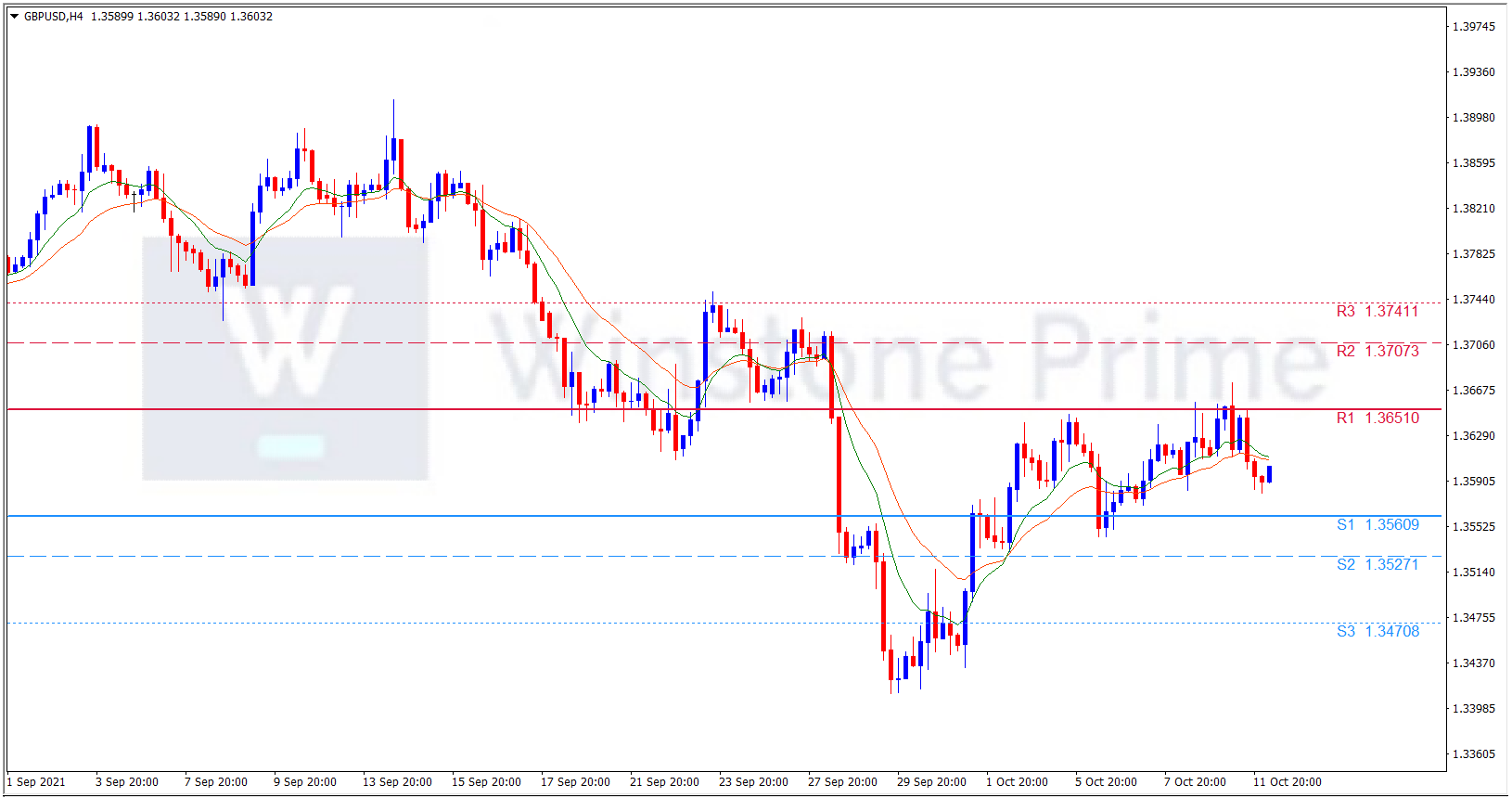
GBP/USD 4 Hour Chart:

Support: 1.3561 (S1), 1.3527 (S2), 1.3471 (S3).

Resistance: 1.3651 (R1), 1.3707 (R2), 1.3741 (R3).

Amidst this above catalysts the sterling is on lack of confidence among BOE interest rate decision and uncertainty over Energy crisis. We expect a bearish trend for GBP/USD.