RBNZ – Why it matters to traders?

Reserve Bank of New Zealand is the central bank of New Zealand, founded in 1934 which is wholly owned by the Government of New Zealand since 1936 with the aim of maintaining the stability of the country’s financial system. The financial sector is constantly innovating and finding ways to use technology to improve its processes and services. The currency of New Zealand is called the New Zealand dollar, sometimes referred to as the “kiwi”. RBNZ is responsible for formulating monetary policy to maintain price stability and for promoting the maintenance of a good and efficient financial system.

In this article we will look into the role of the central bank on New Zealand (RBNZ Role) in detailed.

The origins of the Reserve Bank stretch back many years before its finding in 1934. Initially except for a short-term experiment, the Central Bank was unable to issue currency to New Zealand. Notes were issued by the main trading banks. The British were keen to own New Zealand and Australia, modeled on the Bank of England. Despite the interest, the New Zealand government was initially reluctant. But that changed in the 1920s; in 1930, the British expert Otto Niemeyer recommended the Central Bank of New Zealand. The government of the day was still reluctant, but some of the economic problems that the central bank faced — including exchange rates and foreign reserve control — were exacerbated by the Great Recession of 1930-31. Finance Minister JG Coates, the talented economist Bernard Ashwin and others began to draft legislation to create the Central Bank of New Zealand. This work continued in 1932 and 1933, with the completion of the Reserve Bank Act 1934, which came into force on 1 April. The bank began operations on August 1, when the new governor, Former Bank of England Chief Cashier Leslie Lefeaux, began work.

RBNZ was finally constituted in 1934 by the Reserve Bank of New Zealand Act 1933. It has been owned by the country’s government since 1936 and remains so today. Its functions have not changed greatly since the day it was installed. In 2007, the government decided to expand its role on banking terms and policies. In addition to the monetary terms, the governor of RBNZ was also responsible for the rules on finance and insurance companies, among other private entities related to banking services.

The Reserve Bank of New Zealand operates under an administrative hierarchy, which means that responsibilities are divided between different management levels. Adrian Orr is the current Governor of the Reserve Bank of New Zealand and he has the sole right to issue New Zealand legal tender notes and coins as of July 2020. He is also in charge of the primary roles of the Reserve Bank related to monetary regulation and policies. RBNZ is wholly owned by the New Zealand government, in contrast to other central banks with elements of a private entity. This means that Parliament responds and must pay an annual dividend to the New Zealand Government. Eight times a year, the governor, along with the finance minister decides on policies and makes appropriate changes.

Role of RBNZ

RBNZ plays a similar role like other central banks, working to maintain the New Zealand financial system and to protect its participants and the public from criminal activity. For this purpose, the general role and responsibilities of RBNZ are as follows:
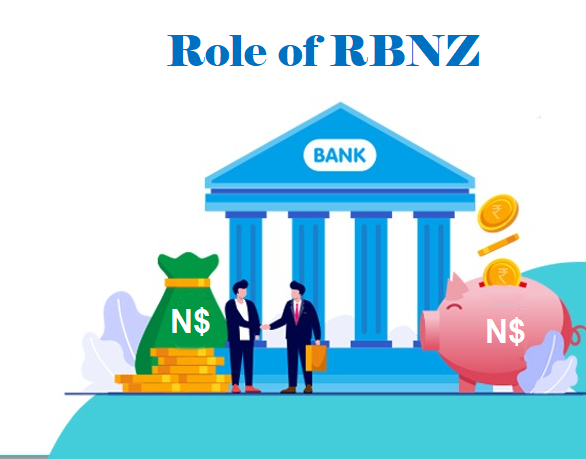
  • Main responsibilities of the RBNZ are to issuing the country’s currency the New Zealand Dollar (Kiwi). Maintaining foreign currency reserves.
  • Regulating private and public banks, insurers and non-bank depositors such as credit unions. This includes overseeing the broader operations of banking institutions and the overall financial system.
  • The RBNZ designs the monetary policy framework in the country aimed at maintaining price stability.
  • The Bank is responsible for implementing effective payment methods for overseeing and operating the payment systems within the country.
  • Providing the Annual Report, Annual Accountability Document to the Minister of Finance within three months of the end of the fiscal year.
  • Beginning of each fiscal year RBNZ provides a Statement of Intent (SOI) to the Minister of Finance. This document outlines the way the RBNZ intends to operationally carry out its duties over the following three years.


Monetary Policy Tools of RBNZ

The Reserve Bank of New Zealand deploys both regular and alternative monetary policy tools to help drive the economy forward. Some of the monetary policy mechanisms used by the RBNZ include:

Monetary Policy Statement: The Reserve Bank publishes Monetary Policy Statement (MPS) quarterly. Reserve Bank uses monetary policy to control inflation and keep it within a specific target band. The policy generally outlines how the central bank intends to achieve the specific target.

RBNZ Rate Statement: It is the primary tool used by the central bank to communicate with investors regarding their monetary policy.  It contains the outcome of the vote on interest rates, discusses the economic outlook and offers clues on the outcome of future votes. 

Forward Guidance: It refers to information provided by the central bank about future policy settings. The purpose of the forward guidance is to attempt to influence the financial decisions of investors, businesses and households. This is done by providing guidance on the expected path of interest rates.

Official Cash Rate (OCR) : It is the interest rate which is set by the RBNZ. The purpose is to meet the dual mandate specified in the Remit to the Monetary Policy Committee. The OCR influences the price of borrowing money in New Zealand. As such, it provides the RBNZ with the ability to influence inflation and the level of economic activity. 

Interest Rate Swaps: The RBNZ enters interest rate swaps as a way to reinforce forward guidance and reduce market interest rates. Interest rate swaps and bank bills make up the benchmark commercial bank liability yield curve.

How can you trade economic reports?

New Zealand has strong economy ties with China so that the Kiwi is affected by certain financial policies and also the Kiwi has correlation with Aussie. Any mention of trade terms with China or other trade partners is usually closely observed by investors, which then leads to an immediate reaction in the price of the NZD. As New Zealand is a major milk exporter, the NZD is particularly prone to fluctuations in dairy prices.
The NZD pair reacts to the Employment (Quarterly employment change), PMI (Monthly PMI Report), Inflation, GDP, Central Bank meeting and Minutes of it and trade report (Monthly balance trade – Difference between imports and exports). The traders can watch and predict the reports using our economic calendar make trade with using Winstone Prime trading platform MT4 and MT5.

Economic reports can be traded in 2 ways.

Proactive trading: Trade is made before the announcement, trying to predict the economic data and the direction of the pair.

Reactive trading:  Trade is made after the announcement and using technical analysis following the release sentiment.

Conclusion

The above information is designed to provide a broad overview of the structure of the New Zealand financial system and its responsibilities on the Country’s economy. The Reserve Bank regulates banks, insurers, and non-bank deposit takers for the maintenance of a sound and efficient financial system. The Reserve Bank also plays a significant role in promoting financial and economic education, and regularly releases various publications, videos and activities explaining financial concepts. And the most important thing is that the NZD is the 10th most actively traded currency and the NZDUSD the 9th most actively traded pair. It’s accounting for 2% of the global currency trade volume, an exaggerated share of the size of the country’s economy.  So grab the benefits of Reserve Bank of New Zealand meetings and Minutes and execute it in your trade. If you already have a trading account with us enjoy the RBNZ minutes or else Open your trading accoun with Winstone Prime.

Gold is on midtrend ahead of US payroll

Gold prices moved up and down today against greenback and prices have consolidated within a range this week. The yellow metal has been sidelined as energy commodities roared and inflation fears fueled the US Dollar higher.  Today it was stuck in a narrow range, as investors sought more direction from the U.S. non-farm payrolls report, considered key to the U.S. Federal Reserve’s stimulus taper schedule. Investors expect the central bank to begin reducing its bond purchases by the end of 2021, and have begun to set prices on the potential for a rate hike in 2022. The prospects for an early policy tightening by the Fed should act as a headwind for the non-yielding yellow metal.

According to a Reuters survey of economists, non-farm payrolls earners are expected to raise 500,000 jobs in September. Federal Reserve Chairman Jerome Powell signaled last month that there would be broad agreement among policymakers to reduce the central bank’s monthly asset purchases in November, until the September work report is “decent”. Reduced stimulus and higher interest rates boost bond yields, which translates into higher chance costs of holding interest-free gold.

Gold and energy products dominate the market focus because supply barriers have not been able to sustain demand in the Northern Hemisphere during the winter. The skyrocketing prices seen in this sector spread to some commodities outside of energy, but not so much for gold at this time. The dollar, which normally moves against gold, rose on Friday but was below a one-year high. The Federal Reserve’s potential plan to reduce its monthly bond purchases by the end of the year continues to weigh on the gold market as prices support about $ 1,750 an ounce. However investment firm raises the price of gold by thousands of dollars in the long-term.

On the other hand yesterday new jobless claims data showed the number of Americans filing new claims for jobless benefits dropped by the most in three months last week, suggesting the labour market recovery was regaining momentum after a recent slowdown. US number of initial jobless claims filed during the past week also dropped to 326,000, the most in three months, and indicated further recovery in the country’s job market. Meanwhile, the U.S. Senate on Thursday approved legislation to temporarily raise the federal government’s $28.4 trillion debt limit and avoid the risk of default within the month. It will put off a longer-term solution until early December 2021.

While considering major economic data, U.S. initial unemployment claims fell to 326K from 348K, forecast by analysts meanwhile the BLS will release today non-farm payrolls for September. Investors expect to create at least 488K new jobs in the economy and the Federal Reserve bond taper announcement better than estimate may open the door for yellow metal.

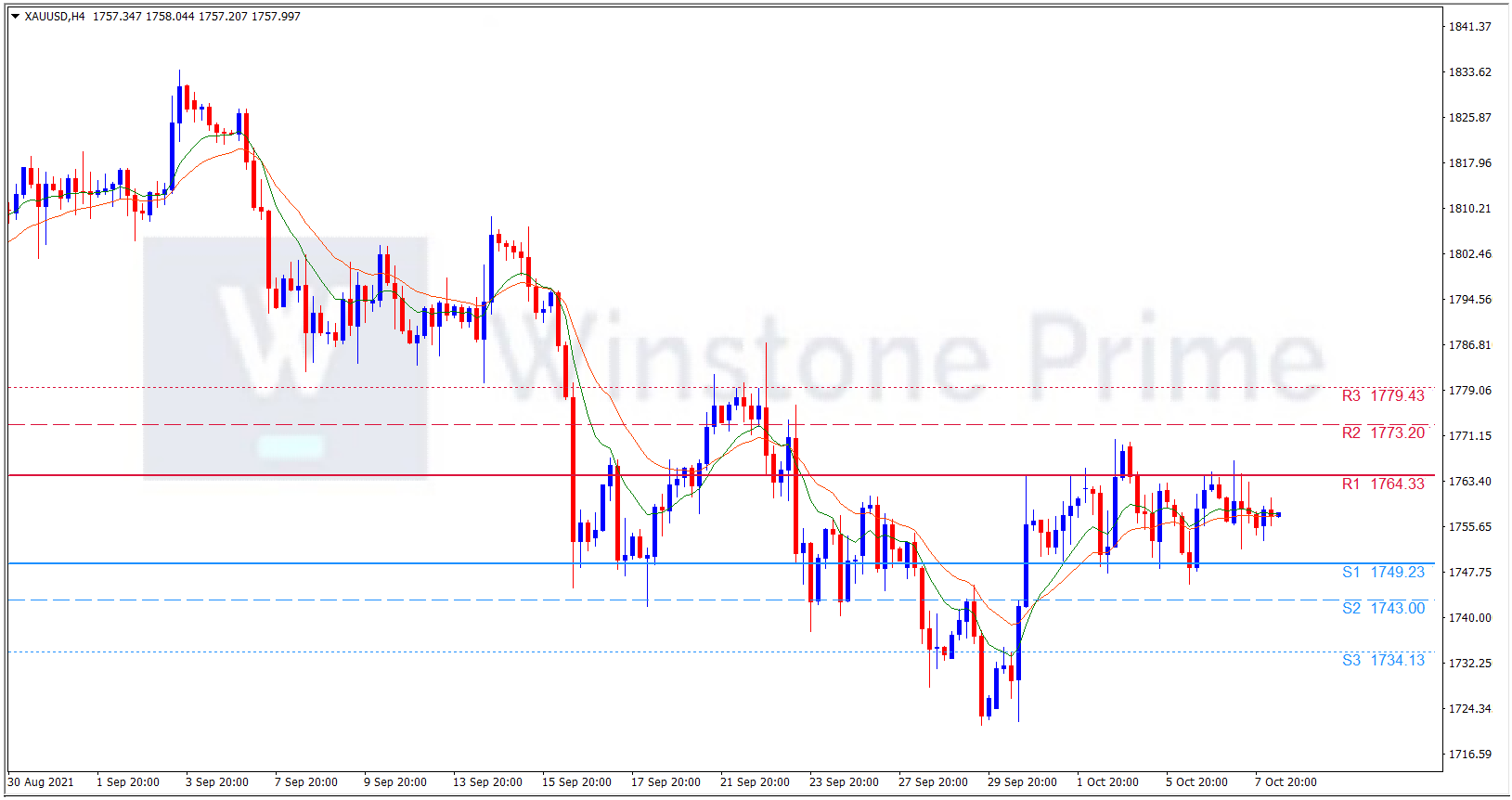
XAU/USD 4 Hour Chart:

Support: 1749.2 (S1), 1743.0 (S2), 1734.1 (S3).

Resistance: 1764.3 (R1), 1773.2 (R2), 1779.4 (R3).

All the above catalysts shows the non predictable moment for Bullion and investors are waiting for non-farm payrolls for September. We expect a mid-trend for XAU/USD.

Kiwi is on downtrend despite of RBNZ’s rate hike

The Kiwi is trading low today has and set aside the low in the early hours of Asian session. Despite the Reserve Bank of New Zealand (RBNZ) raising the rate hike yesterday, the Kiwi pair fell the most in a week. New Zealand’s central bank has raised interest rates for the first time in seven years as it tries to rein in property prices and inflation. The Reserve Bank of New Zealand (RBNZ) increased its cash rate by a quarter of a percentage point to 0.5%. Economists had expected the hike last month but the bank held off due to an outbreak of the Covid-19 Delta variant.

New Zealand is one of the first developed economies to reverse rate cuts put in place during the pandemic. The RBNZ also said it plans to remove more stimulus measures as the economy continues to recover. Prime Minister Jacinda Ardern said on Monday that New Zealand would begin to pull away from the Zero-Covid strategy of living with the virus, the latest country to abandon its eradication effort in the face of a highly contagious delta type. Since closing its borders at the onset of the pandemic, New Zealand has recorded 4,409 Covid-19 infections and 27 deaths, the lowest number in any country, according to Johns Hopkins University data. But due to the delta strain in August, the big city of Auckland was pushed into a long lockdown. Despite more than six weeks of restrictions on the city, New Zealand registered 24 new cases in the community on Tuesday – most of which were found in Auckland.

On the other hand US Private sector employment increased by 568,000 jobs from August to September according to the September ADP National Employment Report. The report, which is derived from ADP’s actual data of those who are on a company’s payroll, measures the change in total nonfarm private employment each month on a seasonally-adjusted basis. U.S. private payrolls increased more than expected in September as COVID-19 infections started subsiding, allowing Americans to travel, frequent restaurants and reengage in other high-contact activities, the ADP National Employment Report showed on Wednesday.

Although US Senate Republican Mitch McConnell said he would allow his party to extend the federal debt ceiling until December, investors were on the verge of negotiating a US debt ceiling, which could lead to a historic collapse and a major economic loss. The Federal Reserve, which until now has been arguing that mainly inflationary pressures will be provisional, has said it will begin reducing its monthly bond purchases in November, before continuing with interest rate hikes.

The US ADP job change, prior to 568K and 340K, coincides with RBNZ’s cautious confidence, New Zealand continued rises in Covid cases and the recent gas crisis in Europe exacerbate market difficulties and support the need for a safe haven for the US dollar. Employment has been the Fed’s other main focus, and the closely watched non-farm payrolls report on Friday could provide additional clues to the timing of the Fed’s next moves.

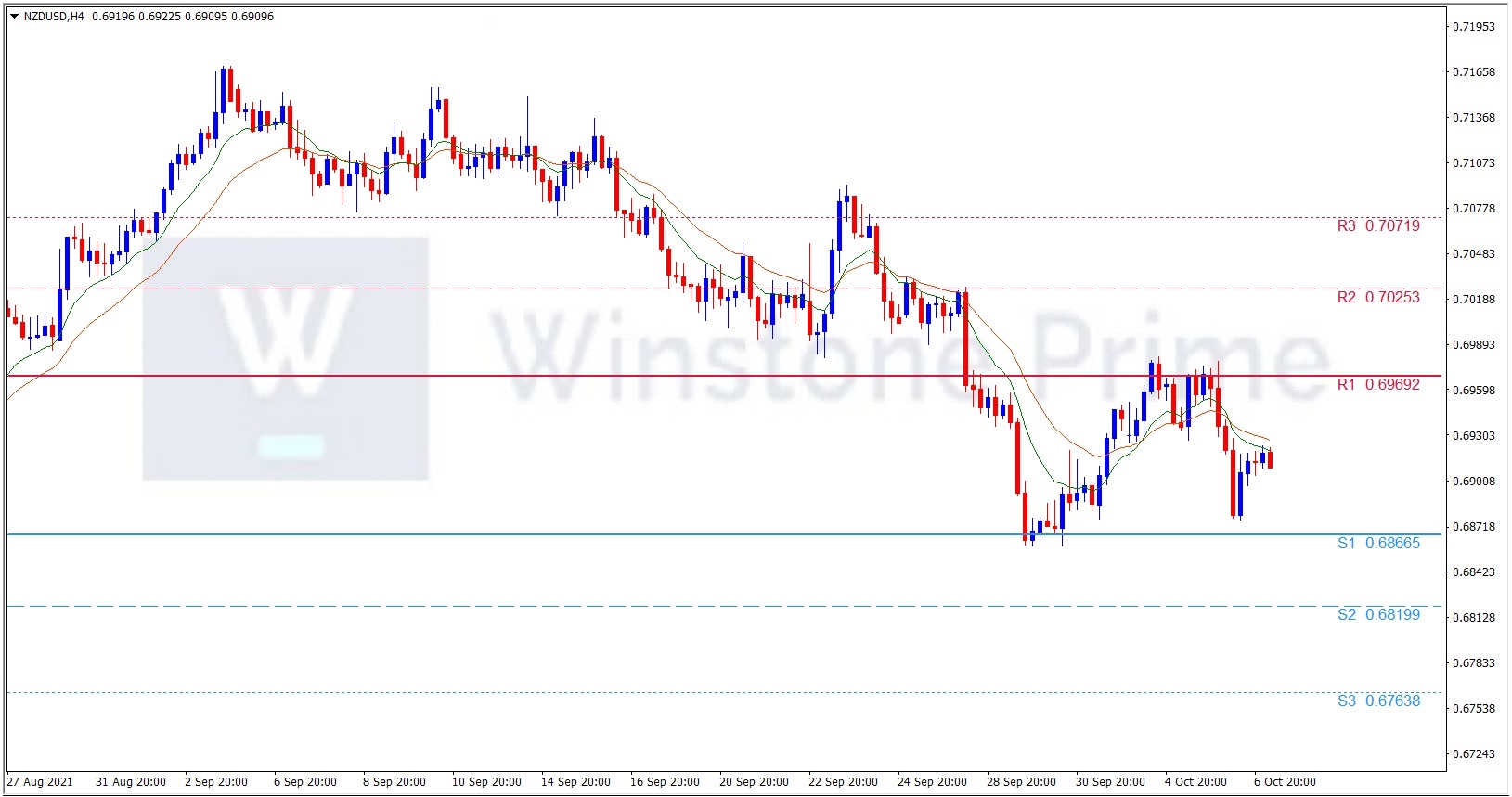
NZD/USD 4 Hour Chart:

Support: 0.6867 (S1), 0.6820 (S2), 0.6764 (S3).

Resistance: 0.6969 (R1), 0.7025 (R2), 0.7072 (R3).

Amidst all these above catalysts, the Kiwi is on downtrend against greenback. We expect a bearish trend for NZD/USD.

Who controls the flow of the Crypto Market

One of the most growing and lucrative markets are crypto markets. Many people run away with the idea of ​​making a profit by trading or holding. Both of these methods have made people millionaires in the market. The crypto market is known for its decentralized nature. This means that no one controls the market. However, in recent times, despite the market being said to be decentralized, many are said to be controlling the flow of the crypto market. They mention names like Elon Musk and some of the key players in the crypto market. However, is this true? Even if the crypto market is established as a decentralized site, do we have people who control it?

Governments all over the world are struggling to control Bitcoin as it continues to rise at exponential rates. It is done to both protect investors and raise tax revenue. Understanding and predicting the factors that drive Bitcoin’s ups and downs can help us better forecast and understand the cryptocurrency market as a whole. Here are few factors that influence the price of Crypto’s:

Supply and Demand

The sum of Bitcoin traded on exchanges represents a small percentage of the total supply in circulation. Since most Bitcoin is held as savings, it isn’t always available for purchase. The acceptance of Bitcoin by users is one aspect that can affect its price. The popularity of a currency will raise prices, while a low demand for the currency will lower the value. 

The increased demand and reduced supply drive up the price of bitcoin. Many people, corporations, and investors have begun to use Bitcoin as a means of conducting online transactions. Given the widespread acceptance of Bitcoin, it is fair to expect Bitcoin prices to increase in the foreseeable future.

Liquidity of Crypto

The price of most currencies on the market is very volatile. This is due to quick access to the purchase and sale of the coins – the exchange platforms being a huge help here. The amount that these currencies are traded every day makes the market flow so that anything is possible at any time.

Media

Another powerhouse that determines the movement of the crypto market is the mass media. Many studies elaborate on their relationship, but in simple terms, the theory is that positive media attention is a possible answer to why crypto’s value is going up. In contrast, negative attention can lead to price dips. 

The information released by the websites and media regarding the crypto market also goes a long way in affecting how the market would work. For instance, if a finance analyst makes a lousy analysis on bitcoin, many people might believe the analysis and remove their money from the market. This, in turn, leads to a gradual decrement in the value of the coin.

Let’s say you find an online news article highlighting the advantages of using Bitcoin and you feel absolutely enlightened after reading it. It’s safe to assume that you’ll be talking to your friends and family about it, and in turn, they’ll be doing the same.  It’s the same as stumbling upon that same article and thinking: “Wow, I need to get on this!” Upon reading it, you feel the FOMO (fear of missing out) and buy Bitcoin right away. At the same time, an article that paints a negative picture of Bitcoin can scare you into selling the coins you’re holding. 

In today’s age of social media, any kind of crypto news has the potential to affect Bitcoin value.

Internal Competition

The market is unpredictable. And the beginning of something new can foreshadow the end of something old. Speaking of cryptocurrencies, this means that the appearance of new, faster and more efficient technologies on the market will affect the demand for older ones.

Bitcoin is without a doubt the most well-known and accepted cryptocurrency throughout the world. However, there are thousands of other cryptocurrencies vying for our consideration, such as Tether (USDT) and Ethereum (ETH). Although bitcoin remains the most valuable cryptocurrency in terms of market capitalization, altcoins such as Ethereum (ETH), Tether (USDT), Binance Coin (BNB), Cardano (ADA), and Polkadot (DOT) are among its big competitors. The market cap is also a factor that can influence the currency price in this ever-changing scenario.

Conclusion

Cryptocurrencies are decentralized, the market is not. Each participant has cryptocurrencies, but absolute power over the market is in the hands of the elite controlling the significant share of total supply. Artificial “pumping” is more like an exponential graph. The same concerns the fall (“dumping”) of the course. Namely, cryptocurrencies with small trading volumes are subject to speculation most.

Internal market factors are highly applicable to short-term, volatile market speculations and “subversive” news, therefore, all those considering investing in cryptocurrencies should manage and deal with short-term wild fluctuations. To analyze the fundamentals of cryptocurrency market, long-term global factors such as legal and regulatory framework, measurement and recognition need to be taken into account as well as performance and perspectives when considering a particular currency.