
Central Bank Digital Currencies

Today we can observe changing habits and patterns of how payments are conducted. Although still prevalent, cash is becoming less popular and it is being replaced by different kinds of digital payments. The financial ecosystem is growing rapidly and many digital currency concepts have emerged that make it easier to get away with money. Moreover, as more purchases are made online, the pandemic has naturally helped to increase the use of digital currencies.

A central bank digital currency (CBDC) could completely revamp the global financial system as we know it. Through CBDC’s, fiat money will become truly digitalised and finalise the merger between monetary and fiscal policy.

The development and implementation of digital government money is not necessarily a trend or development one might trade, but rather represents what could be the biggest change to how the financial system is constructed and operates, and is a development everyone must be aware of and would do well to educate them on.

Central Bank Digital Currency

The currency is controlled by the central bank – i.e. the CBDC supply is fully regulated and determined by the central bank. A CBDC differs from a traditional cryptocurrency stable coin where the issue is not controlled by the bank, but rather a group of individuals. Cryptocurrencies, as we know them today, are very volatile and lack government support – the CBDCs address these concerns while at the same time using the basic distributed ledger technology of cryptocurrencies. 

Governments that legally recognize the CBDC in the jurisdiction of the central bank can use them to make payments to anyone and every business must accept them.

In simpler terms, CBDC is short for Central Bank Digital Currency, an electronic form of central bank money that citizens can use to make digital payments and store value. A CBDC offers three main elements:

  • A digital currency
  • Issued by the central bank
  • Universally accessible

CBDCs are categorized into two different proposals based on the targeted users:

Retail Central Bank Digital Currency

Retail CBDC, based on distributed ledger technology, is traceable, anonymous, and available around the clock. It offers possibilities for interest rate applications, as well. Due to these advantages, a retail central bank digital currency focuses, in particular, on supporting the general public. Additionally, it helps lower the cost of cash printing and promotes financial inclusion.

Wholesale Central Bank Digital Currency

Wholesale CBDC increases payments and security settlement efficiency while resolving liquidity and counterparty risk issues. It’s a great fit for financial institutions which have reserves deposited in a central bank. With their capability to improve wholesale financial systems’ speed and security, even central banks consider wholesale central bank digital currency a favored alternative to existing systems today.

Currently, several central banks are considering issuance of CBDC and they are working on the general design of such a system. There are various CBDC setups considered. Depending on the setup that is finally applied, there is a different impact on banks. The strength of this impact will be determined by several features of this newly designed system.

One of the most important questions is how CBDC will be stored. It is assumed that there are three major options for this matter. It could be stored directly in accounts held at the Central Bank, in banks or at various third party providers as tokens in electronic wallets or combinations of the above options. From a bank’s perspective of course the least impactful solution would be a setup with CBDC assets stored only at banks. The most impactful one for banks would be a setup where various providers are entitled to keep CBDC and can offer additional payment services also related to fiat currency. Clients will be enabled to keep this currency (CBDC) on wallets provided by these third parties.

Way of exchanging CBDC

It will be crucial from a bank’s perspective which entity will have an entitlement to exchange CBDC against fiat currency. Opening this service to various providers would have the most serious impact on banks, however restricting it to the Central Bank only, will also deprive banks of profits from transaction processing due to outflow of deposits in fiat currency to CBDC.

Means of exchange

Decision on how CBDC could be obtained will be another factor impacting the whole financial system and banks. There are different considerations which setup should be applied. The least impactful approach would be when only government bonds are directly exchangeable for CBDC. A more liberal approach would enable purchasing CBDC by cash. The most impactful approach would allow direct exchange of banking deposits in fiat currencies into CBDC.

Regulatory requirements

Minimum requirements defined by local regulatory bodies in order to offer services related to CBDC (e.g. a wallet for CBDC storage, payments and exchange) will determine the entry barriers and thus the competition in the CBDC system. While these features are the most important when analyzing the potential impact of the CBDC system on banks, there are also other considerations that should be mentioned. They include the approach to the CBDC implementation itself – whether it will be done gradually or issued as a one batch (“big-bang”). Moreover, there is the question whether CBDC will bear interest rates and if yes, how they are different compared to fiat currency interest rates. Also the level of existing interest rates and the economic situation in general will have considerable importance, because they will trigger general demand for CBDC (considered as a safe form of holding assets) and consequently the total value of assets converted into CBDC.

Difference between CBDC and Cryptocurrency
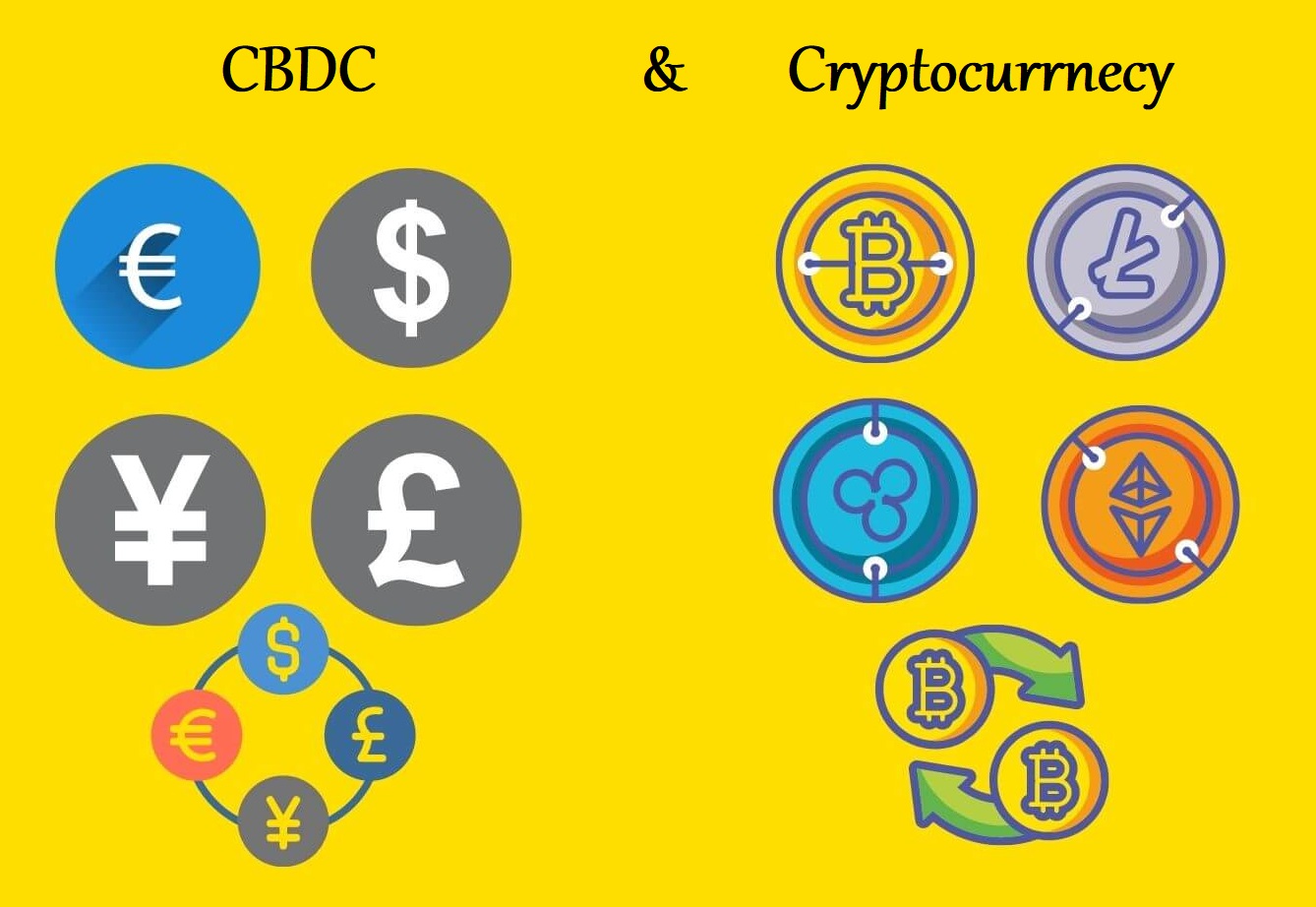
CBDCs are not designed to compete with crypto currency. Crypto assets are based on technology designed to circumvent authority and banish central bank money to create economic anarchy. They have become popular more as an investment vehicle and less of a medium of exchange. CBDCs on the other hand will essentially track physical currency. 

Whether it can emerge as an instrument of investment will be dependent on its design, ease of availability and fluctuations in value, if any. CBDCs will have to be a public good provided by the central bank. The pandemic has pushed consumers to go increasingly cashless and CBDCs might complement, rather than replace, physical cash in the system. If implemented, a CBDC would be a claim on the central bank issuing it.

A main difference that CBDC would have from cryptocurrencies is that the former would be centralized unlike the latter.

Conclusion

Central Banks have started exploring CDBC issuance as a new form of money. CBDC is expected to serve as digital money to solve the diminishing use of cash in some countries and others are considering CBDC as an innovative method that brings financial stability in the economy. However, CBDC acting as a new payment technology may soon be available in a number of countries around the world and situations like COVID-19 may ignite this process. Central Banks can benefit and learn from each other by sharing best practices, approaches and technologies mutually and thus contribute to the most advanced payment platform in the financial system. Central banks in the UK, Sweden, Euro Area, Canada, China and India are among those who are exploring the feasibility of a CBDC.

Pound is at downtrend ahead of election outcome

The cable pair is traded at its low level today London session. Amid widespread risk-on sentiment, the US dollar withdrawal, the recent resilience of the cable pair, and the pessimism surrounding Brexit-led challenges have recently reassured pair sellers in the UK petrol supply.  The UK government has decided to temporarily suspend competition rules for the country’s downstream oil sector in an attempt to alleviate supply-chain issues at fuel service stations. The measure known as the Downstream Oil Protocol will exempt the industry from competition legislation so information can be shared and fuel supply optimised. “While there has always been and continues to be plenty of fuel at refineries and terminals, we are aware that there have been some issues with supply chains,” business secretary Kwasi Kwarteng said.

The government has implemented the long-standing contingency plans after a sustained period of panic buying by motorists over the past few days forced many UK fuel service stations to close, with others running short of at least one grade of gasoline or diesel. The rush on service stations began late last week when it emerged that a shortage of qualified heavy goods vehicle (HGV) drivers had disrupted fuel supply to some forecourts. BP, which operates the largest number of filling stations in the UK, said at the time that 50-100 of its more than 1,200-strong network were running out of at least one grade of fuel and that a handful had been forced to close temporarily.

Unfortunately, this is just the start of price increases. The price cap changes each October and April, and experts are already warning that it will rise again next spring – to the equivalent of between £1,455 and £1,500 a year. This is for average use, with big-using households paying considerably more annually. The hope is that the market calms down and wholesale prices return to normal, at which point consumer prices should also fall. “Commerce Secretary Kwazi Kwarteng met with industry executives on Sunday and led them to panic over the purchase of fuel through supply chain pressures,” Sky News reported. To tackle the energy crisis, UK Prime Minister Boris Johnson and his team are ready to seek military support.

“Ministers should discuss Emergency Plan Operation Escalin after the PP reveals a one-third shortfall in its forecasts,” The Guardian said. There is weighing concern over the British pound (GBP) which has led to an increase in the number of virus-led deaths and manpower shortages in the UK. However, after the 16-year rule of Angela Merkel, a power vacuum in the German election camp is emerging, allowing the UK to benefit from the Brexit decision unless someone else, France, dictates it.

On the other hand the analyses by provisional count, Germany’s Social Democrats (SPD) won the federal election by a narrow margin, Reuters reports. Complex coalition negotiations involving the various parties will now take place in the weeks and even months ahead. More likely the successful coalition will see either of the two smaller-sized blocks, the Free Democrats (FDP) and Greens, govern with either the Conservatives (the so-called ‘Jamaica coalition’) or with the Social Democrats (the so-called ‘traffic light coalition’). 

Whichever form the new government takes and despite giving the two smaller parties tremendous power as king-makers, it is expected to be seen as a government providing stability and continuing to occupy the centre ground. When finding catalysts for market optimism, one can welcome US stimulus. It is noteworthy that the lack of Evergreen news and a little silence about the central bank’s concerns increases our bright risk appetite.

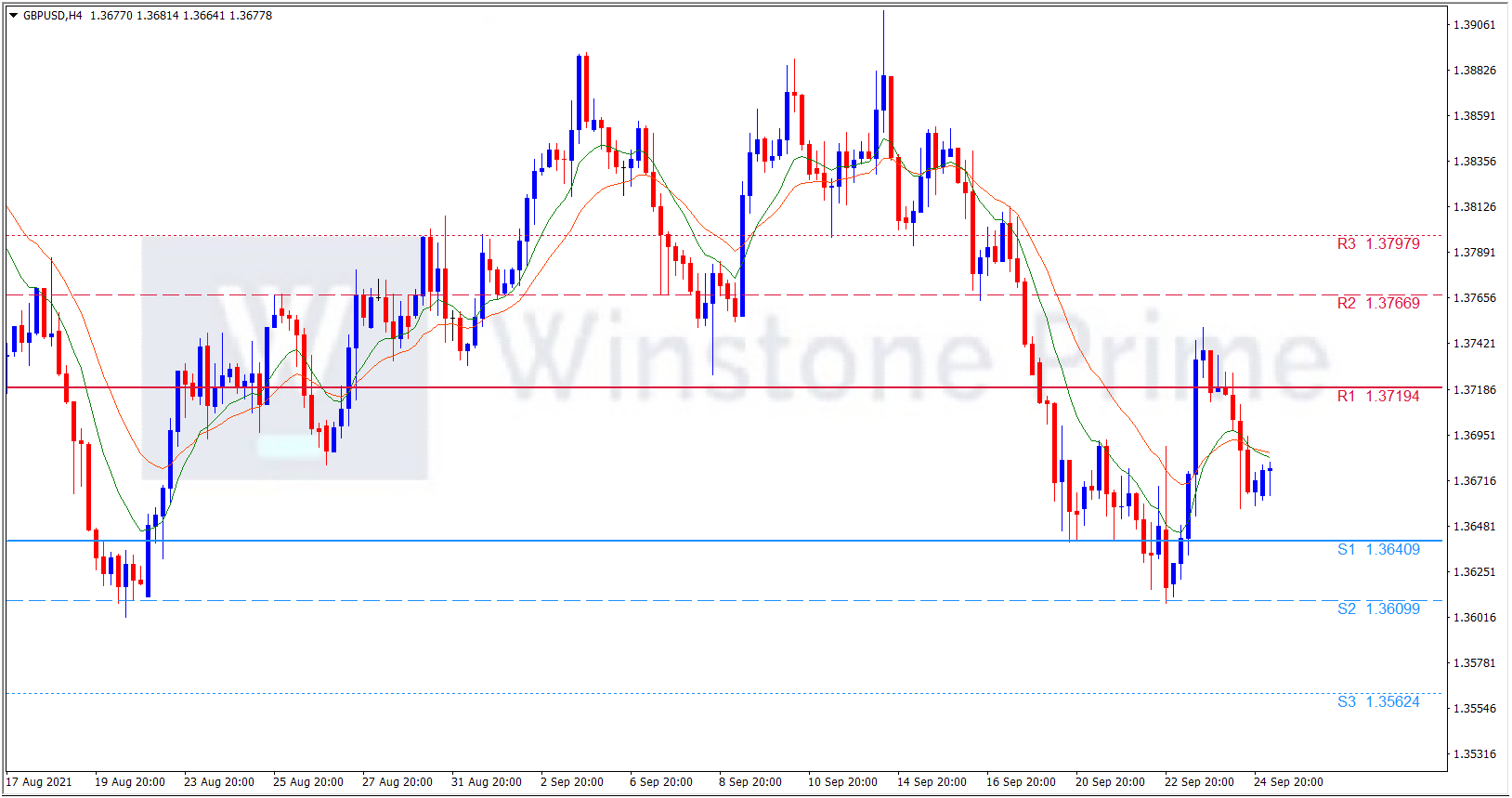
GBP/USD 4 Hour Chart:

Support: 1.3641 (S1), 1.3610 (S2), 1.3562 (S3).

Resistance: 1.3719 (R1), 1.3767 (R2), 1.3798 (R3).

Amidst this above catalysts the cable is on downtrend ahead of UK energy crisis and German Election outcome.  We expect a bearish trend for GBP/USD.

BTC/USD Weekly Forecast (27th September 2021 – 01st October 2021)

Fundamental view:

Bitcoin showed a downtrend against the dollar in this week. The adoption of the Bitcoin remains strong but investors does not seem to be interested in it. This week, Twitter released an update  providing Twitter users with a Strike account to tip BTC through the Lightning Network. While the rumors of this development were outed a while ago, this feature will allow users to send money across borders without going through intermediaries like Western Union or MoneyGram. According to a recent report by JP Morgan, the Bitcoin futures was in backwardation in May and July, indicating dwindling interest from institutions. All these has helped the Bitcoin Adoption.

On the other hand, Things are getting worse for crypto in China. The People’s Bank of China (PBOC) said bitcoin, ether and stablecoin tether do not qualify as legal tender and cannot be used in the currency market. According to China journalist Colin Wu, the latest central bank statement is quite detailed and mentions tether as illegal for the first time. Tether, the largest stablecoin per market value, is widely used to fund crypto purchases and as collateral in decentralized finance. Amidst all this catalysts Bitcoin showed a downtrend.

The major economic events deciding the movement of the pair in the next week are Core Durable Goods Orders monthly report at Sep 27, CB Consumer Confidence Index at Sep 28, EIA Crude Oil Stocks Change, Fed Chair Powell Speech at Sep 29, GDP quarterly report, Initial Jobless Claims at Sep 30, ISM Manufacturing PMI at Oct 01 for US.

BTC/USD Weekly outlook:

Technical View:

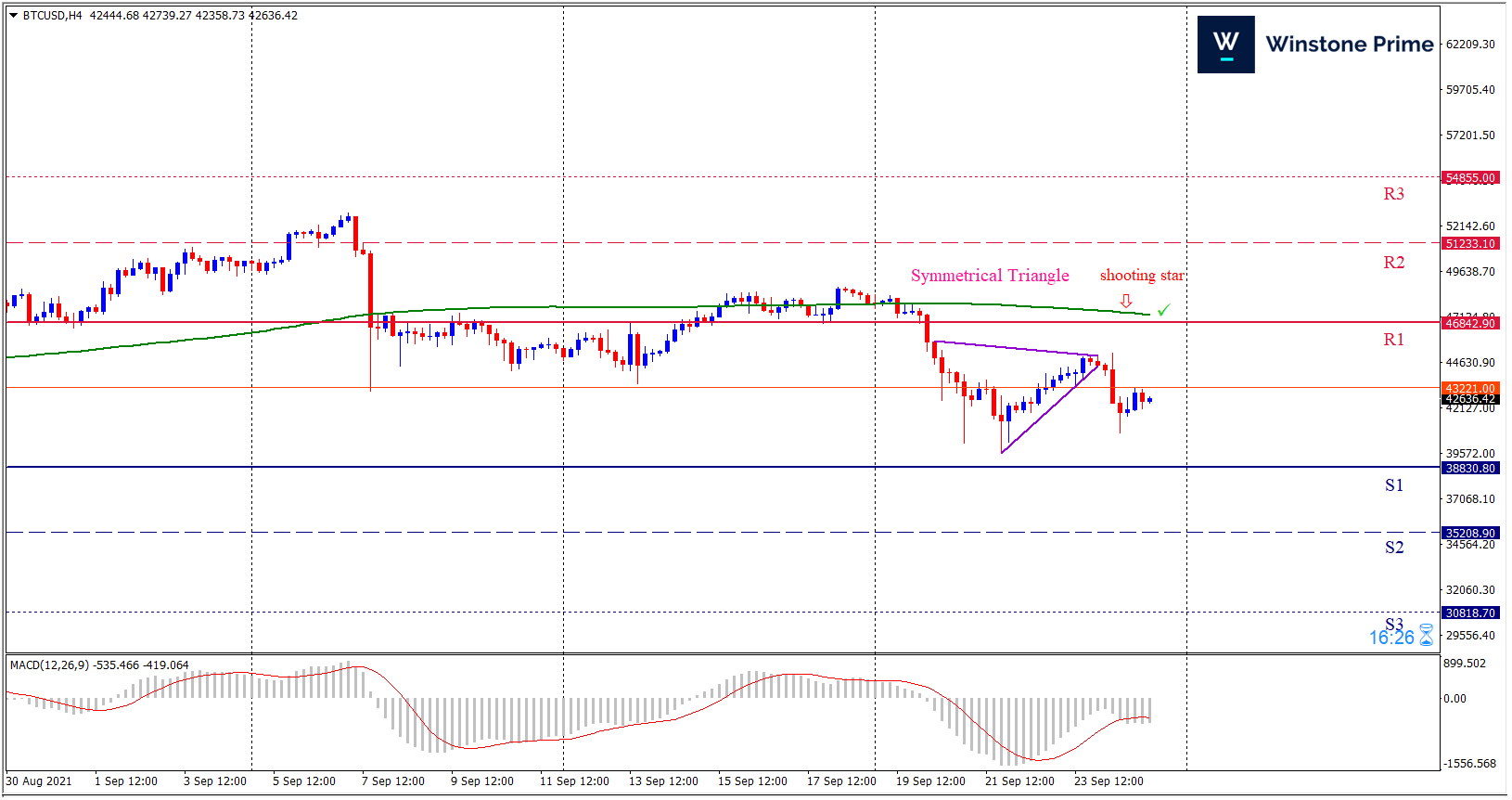
Last week’s high was 2.41% lower than the previous week. Maintaining high at 47611.1 and low at 39599.0 showed a movement of 8012 pips.

In the upcoming week we expect BTC/USD to show a bearish trend. The Instrument is trading below the 200 Simple Moving Average and the MACD trades to the downside. A solid breakout below 38830.8 may open a clean path towards 35208.9 and may take a way down to 30818.7. Should 46842.9 prove to be unreliable resistance, the BTCUSD may raise upwards 51233.1 and 54855.0 respectively. In H4 chart symmetrical triangle pattern breakout favors prospects of a bearish trend. Shooting star pattern constructs a bearish outlook for the pair in the upcoming week.

Preference
Sell: 42580.9 target at 35209.3 and stop loss at 46847.5


Alternate Scenario
Buy: 46847.5 target at 54854.4 and stop loss at 42580.9

XAU/USD Weekly Forecast (27th September 2021 – 01st October 2021)

Fundamental view:

Gold traded low against the greenback during the course of the week. At the start of the week, concerns over the Evergrande crisis turned into a global turmoil. Evergrande, was at risk of default, which could result in a disruption of the entire country’s financial system. People’s Bank of China announced that it left the 1-year and 5-year LPRs at 3.85% and 4.65%, respectively, as expected. On the other hand, The FOMC left the benchmark interest rate, the target range for federal funds, unchanged at 0%-0.25% as widely expected following the September policy meeting.

The updated Summary of Projections of FOMC revealed that the number of policymakers who see a rate hike in 2022 rose to 9 from 7 in June. FOMC Chairman Jerome Powell clarified that the language in the statement meant to taper could be met as soon as the next meeting. Additionally, Powell said that they are planning to conclude the taper around mid-year 2022. This has helped the greenback.              

The major economic events deciding the movement of the pair in the next week Core Durable Goods Orders monthly report at Sep 27, CB Consumer Confidence Index at Sep 28, EIA Crude Oil Stocks Change, Fed Chair Powell Speech at Sep 29, GDP quarterly report, Initial Jobless Claims at Sep 30, ISM Manufacturing PMI at Oct 01 for US.

XAU/USD Weekly outlook:

Technical View:

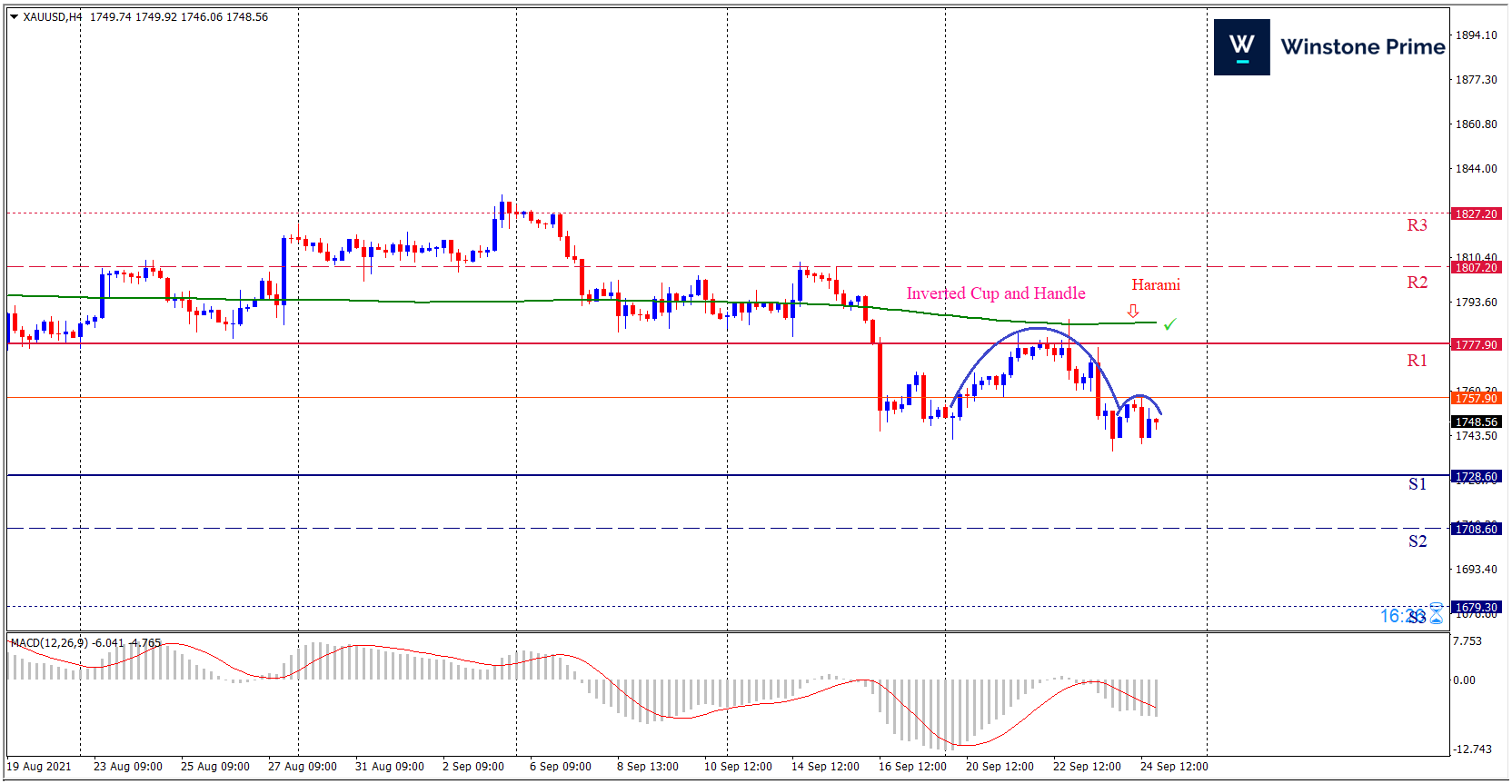
 Last week’s high was 1.18% lower than the previous week. Maintaining high at 1787.2 and low at 1737.9 showed a movement of 493 pips.

In the upcoming week we expect XAU/USD to show a bearish trend.  The Instrument is trading below the 200 Simple Moving Average and the MACD trades to the downside. A solid breakout below 1728.6 may open a clean path towards 1708.6 and may take a way down to 1679.3. Should 1777.9 prove to be unreliable resistance, the XAUUSD may raise upwards 1807.2 and 1827.2 respectively. In H4 chart inverted cup and handle pattern formation favors prospects of a bearish trend. Also to be noted bearish harami formation exerts the expectation of downtrend for the pair.

Preference
Sell: 1748.6 target at 1709.4 and stop loss at 1782.3


Alternate Scenario
Buy: 1782.3 target at 1826.8 and stop loss at 1748.6