
UK June PMI data indicated a vastly improved overall picture across the UK private sector, with the downturn in total business activity continuing to steady after the record rate of decline seen at the height of the lockdown during April. Another drop-in service sector activity contrasted with a return to production growth among manufacturing companies in June.
CIPS Flash UK Composite Output Index – which is based on approximately 85% of usual monthly replies – rose to 47.6 in June, from 30.0 in May. The latest reading was below the 50.0 no-change threshold, but signaled the slowest pace of decline since the start of the downturn in March.
On Monday, Bank of England Governor Andrew Bailey said that its time for the central bank to sell government bonds back to the market before it raises interest rates significantly, which can represent a reversal of long-standing BoE policy. Any bond sales are some way off, as just last week the BoE increased its bond-purchase target by 100 billion pounds to 745 billion pounds to support the economy through the unexpected flop caused by COVID-19.
Bailey also said this level of central bank asset purchases, known as quantitative easing (QE), “shouldn’t always be taken for granted” and emphasized the central bank’s independence from government.
“When the time comes to withdraw monetary stimulus, in my opinion, it may be better to consider adjusting the level of reserves first without waiting to raise interest rates on a sustained basis,” he wrote in an article.
This news impacted the market immediately, showing how Britain’s recovery from the massive economic shock of corona virus will be the main driver of BoE policy.
GBP/USD 4 Hours Chart:
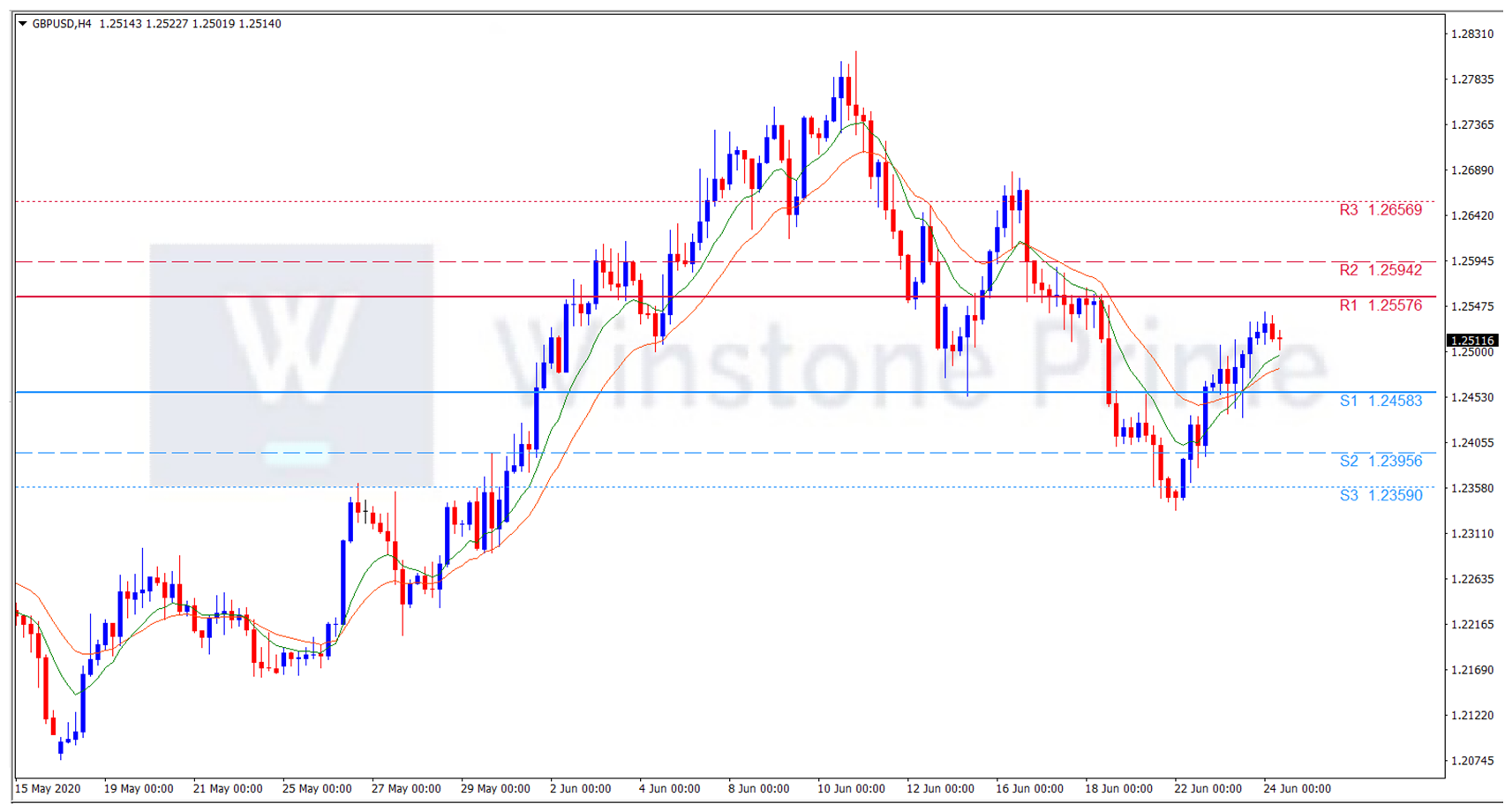
Support: 1.2458 (S1), 1.2396 (S2), 1.2359 (S3).
Resistance: 1.2558 (R1), 1.2594 (R2), 1.2657 (R3).
UK’s PMI data and Bailey’s speech drives a positive sentiment in the market henceforth we expect a bullish trend for GBP/USD.